




Q1. Is ReliaQuest GreyMatter a SIEM replacement or a managed layer on top of your SIEM?
Full disclosure before we start: UnderDefense competes in this market. On a piece promising honest clarity, that disclosure belongs up front, so you can weigh every line accordingly.
GreyMatter is not a traditional SIEM. It is ReliaQuest’s agentic AI and Open XDR security operations platform that can run two ways: as a managed layer working with your existing SIEM, or as an at-source model that reduces reliance on it. ReliaQuest markets both messages, “upgrade your SIEM” and “skip the SIEM,” so the honest 2026 answer depends on the tier and deployment you actually bought.
See how the UnderDefense Agentic AI SOC investigates, triages, and resolves real alerts.
🧩 The real question buyers are asking
I keep hearing the same worry from CISOs on scoping calls. It usually sounds like this: “Is GreyMatter a legitimate way to unbundle my SIEM and own my logic, or am I paying for a black-box layer that parrots alerts back to me while I stay locked into their proprietary stack?”
That worry is fair. Under it sits a quieter fear every security leader knows, being alone when the breach finally lands. So let me answer the surface question plainly, then hand you a way to answer it for your own contract. If your concern is getting trapped, our guide on avoiding SIEM vendor lock-in covers the structural traps in detail.
📄 Why the label itself is slippery
Here is the part that trips people up. ReliaQuest’s own material carries two stories at once. One page frames GreyMatter as a way to get more from the SIEM you already run. Another positions the platform as a security operations layer that unifies detection, investigation, and response across your tools.
Both can be true, because the product is configurable. My read, and I could be off on the exact tier boundaries, is that the label depends less on the technology and more on how your specific deal was scoped. If you are weighing this category broadly, our roundup of the best ReliaQuest alternatives lays out the field.
- Layer configuration: your SIEM stays the data home; GreyMatter adds detection and response on top.
- Reduced-reliance configuration: at-source detection shifts work upstream, so you lean on the SIEM less.
- The gray zone: most real deployments sit somewhere between these two, which is exactly why buyers get confused.
⭐ What this article gives you
Rather than manufacture a verdict, I will give you a six-question framework that tells you which model you are running. It works on GreyMatter. It works on any vendor making the same dual pitch, including our own AI SOC approach.
The category boundary blurred in 2026 as platform vendors converged upward into the SIEM layer. Knowing where your vendor sits on that spectrum is worth more than any headline label, and the next sections build that map step by step.
Q2. What actually is a SIEM replacement versus a managed SIEM layer, and why does the distinction have real consequences?
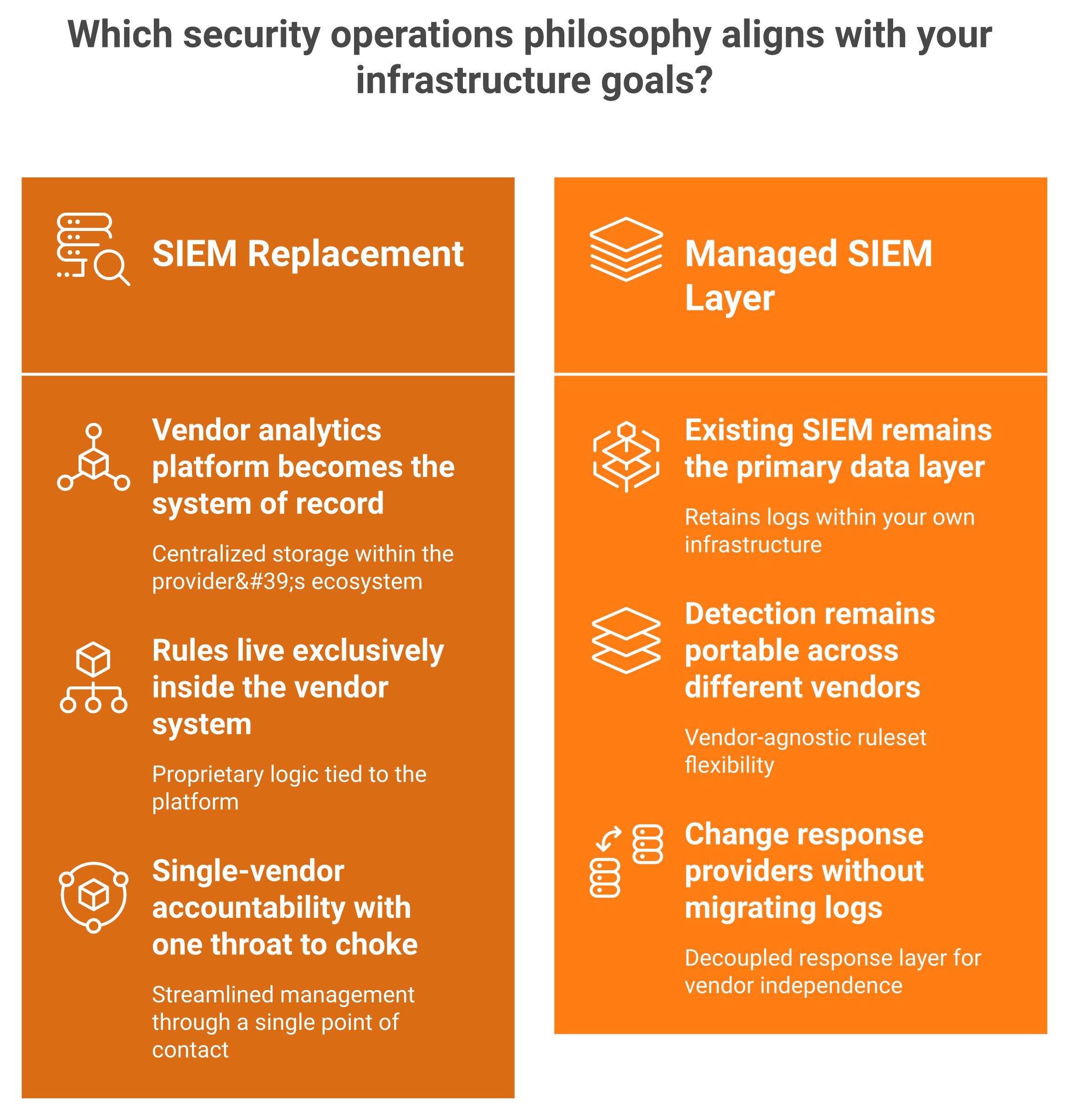
A SIEM replacement means the vendor’s analytics layer becomes where your data lands and your detection logic lives. One platform, one throat to choke. A managed SIEM layer keeps your SIEM (Splunk, Sentinel, QRadar) as the data layer and adds detection, investigation, and response on top. The difference decides who owns your data, your rules, and what leaves with you at contract end.
🏗️ The replacement model, in plain terms
Picture moving houses. In the replacement model, you pack everything into the vendor’s house. Your logs land in their analytics platform. Your detection rules get rebuilt in their language. Their platform becomes your system of record.
The upside is real. One place to look, one vendor accountable end to end. The trade-off is equally real. Your data and your logic now live under their roof, on their terms.
🔗 The managed layer model
Now picture hiring a great crew to run the house you already own. In the layer model, your SIEM stays put. Your data keeps landing where it lands today. The vendor adds detection engineering, investigation, and response on top of it. This is the core idea behind co-managed SIEM.
I think of it like an army. The AI agents act as foot soldiers doing routine work at scale. Human engineers and analysts act as generals, directing them and handling the calls that need judgment. The key structural point is that the data layer and the response layer stay decoupled. You can change who runs response without moving your data.
⚖️ Why the distinction has teeth
This choice is not cosmetic. It sets five things you will care about deeply at renewal or exit. If you want to see how these tradeoffs stack against adjacent models, our breakdown of managed SIEM versus MDR versus MSSP is a useful companion.
| Dimension | Replacement (rip out SIEM) | Managed layer (keep SIEM) |
|---|---|---|
| Where data lands | Vendor’s analytics platform | Your own SIEM |
| Detection-logic ownership | Vendor’s platform, vendor’s format | Yours, in your SIEM |
| SIEM licence fate | Reduced or retired | Retained |
| Cost structure | Consolidated under one vendor | SIEM licence plus service fee |
| Exit mechanics | Migration project to leave | Swap the service, keep the data |
Both are coherent philosophies, and both are defensible for the right company. NIST CSF 2.0 splits “Detect” and “Respond” into separate functions for a reason. A layer model keeps those functions portable across vendors. A replacement model consolidates them for simplicity. Neither is wrong. They are different bets on ownership versus convenience.
Q3. What six questions tell you which model you’re actually running?
Six questions reveal which model you are on. Where does your data land, the vendor’s analytics layer or your SIEM? Where does detection logic live, and who owns it at contract end? What happens to your SIEM licence, retained, reduced, or retired? Are you paying for both? What leaves with you on exit, and in what format? What changes at renewal versus the initial purchase?
Take these into any vendor conversation, including one with ReliaQuest or with our team. Each has a Monday-morning action attached, so you can start before your next demo. For a deeper checklist, see our AI SOC evaluation questions.
📍 3.1 Where does your data land?
This is the root question. If your logs land in the vendor’s analytics platform, you are closer to replacement. If they stay in your SIEM, you are closer to a layer.
Monday action: draw your log flow on one page. Mark the exact system where raw data comes to rest.
🔑 3.2 Where does detection logic live and who owns it?
Detection logic is your institutional memory. When you switch vendors, the business logic, the correlation rules, and the automation rules often do not come with you. You can lose years of tuning, not just a software contract.
Monday action: ask, in writing, whether your rules are exportable and in what format.
💰 3.3 What happens to your SIEM licence?
A replacement model should reduce or retire that licence over time. A layer model keeps it. If neither happens, you may be paying twice for overlapping capability.
Monday action: pull your current SIEM licence cost and note its renewal date. Our managed SIEM ROI calculator helps you frame that spend.
💸 3.4 Are you paying for both layers?
Some buyers keep the full SIEM licence and add a platform fee on top, with no net reduction. That is fine if you chose it on purpose. It hurts when it happens by drift.
Monday action: add the two line items together and compare against last year’s total.
📦 3.5 What leaves with you on exit?
A rule you can unit-test and move is an asset. A rule trapped in a proprietary format is a liability. Ask what format your detections, dashboards, and case history come back in.
Monday action: request a sample export today, not at renewal.
🔄 3.6 What changes at renewal?
Initial scope and renewal scope can differ. As vendors converge upward, a layer you bought can quietly renew as a platform.
Monday action: diff your original SOW against the renewal quote, clause by clause.
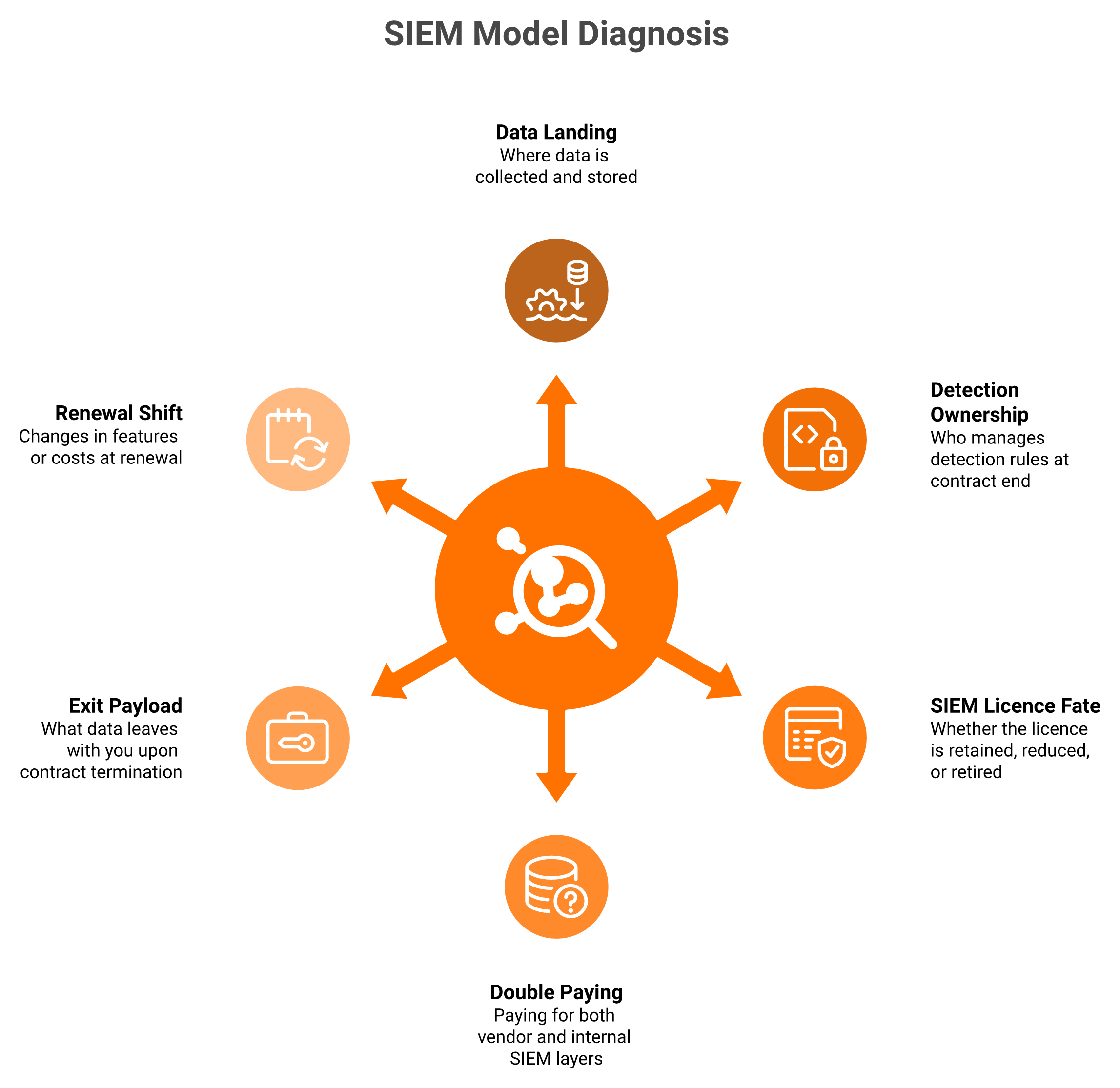
Run all six and you stop guessing at the label. You will know which model you are on, and we built this framework to be vendor-agnostic on purpose, so it holds up no matter whose logo is on the contract.
Q4. What is GreyMatter architecturally, and how do its speed claims map to your compliance clocks?
GreyMatter is ReliaQuest’s agentic AI and Open XDR platform. Its Transit component runs detection on data in transit before storage, claiming a 5-second mean time to detect. Whether it replaces or layers over your SIEM depends on tier and deployment, and some specifics are not fully clear publicly. Detection and response speed matters because it directly affects your ability to meet SEC 8-K, NIS2, and GDPR Article 33 disclosure deadlines.
🔬 What is verifiable about the architecture
Start with what ReliaQuest states plainly. GreyMatter is positioned as a security operations platform that unifies visibility, detection, investigation, and automated response across your existing tools. It connects to endpoints, cloud, and your SIEM rather than demanding you move everything first.
The agentic pieces, marketed as AI “teammates,” handle triage and investigation steps at machine speed. That framing is consistent across their public material, so I treat it as reliable. Our own work on AI SOC explainability holds any such layer to an auditable standard.
⏰ The Transit and 5-second MTTD claim, in context
Transit is the notable architectural move. It inspects data as it flows, before it lands in storage, and ReliaQuest reports a 5-second mean time to detect from that at-source approach. Detecting upstream is genuinely useful, because it can flag a threat before it settles into an expensive storage tier.
I will add a practitioner caveat. A 5-second detection number describes one stage. It says nothing about how fast a human confirms and acts, so treat the figure as a real strength on detection, and ask separately about response.
❓ Why the tier dependence is honest uncertainty
Here the dual positioning matters again. Because GreyMatter can reduce SIEM reliance or sit on top of it, the “replace versus layer” answer moves with your tier. Some deployment specifics are not spelled out publicly, so I will not pretend otherwise.
A related point I hold firmly: if any vendor tells you their AI is unbiased, be skeptical. Models reflect their training and their tuning. Ask what the AI does when it is unsure, and who checks it. Our note on human-in-the-loop SOC design explains why that check matters.
📅 Mapping speed to your compliance clocks
This is the part most buyers skip, and it is where speed earns its keep. Detection and response timing feeds directly into legal deadlines. Our AI SOC compliance guide maps these clocks in full.
- GDPR Article 33: notify the relevant authority within 72 hours of becoming aware of a personal-data breach.
- SEC Item 1.05: disclose a material cybersecurity incident on Form 8-K, generally within four business days of the materiality decision.
- EU NIS2: submit an early warning to your CSIRT within 24 hours for significant incidents.
Fast detection helps only if it shortens the whole chain to a defensible decision. A 5-second detection that waits hours for a human verdict still risks your 24-hour NIS2 clock.
🧾 How to confirm this against your own contract
Do not take the marketing number into your board deck unedited. Map the claim to your reality using the framework from the last section.
Ask ReliaQuest to state, in writing, the detection-to-human-verdict time and the response ownership at your tier. Then hold that against your fastest regulatory clock. In our UnderDefense Agentic AI SOC we run this same math for clients, pairing detection with a defined 2-minute Alert-to-Triage and a 15-minute escalation for critical incidents as two distinct commitments, so the compliance-clock question has a documented answer rather than a single headline metric.
Q5. What do customers report actually receiving from GreyMatter, and what does the research say about those claims?
Public reviews show a split. Buyers on G2 and Gartner Peer Insights praise GreyMatter’s visibility and integration breadth, and Forrester named ReliaQuest a Leader in its 2025 MDR Wave. Others report over-reliance on AI and tickets returned without clear answers. Academic research confirms alert fatigue is a chronic, documented problem, and granted patents show automated triage is now table-stakes rather than a unique edge.
✅ The strengths buyers name most
Let me be fair before I get skeptical. The recurring praise for GreyMatter is real and consistent across public review platforms.
- Unified visibility across endpoint, cloud, and existing tools, without ripping out the stack first.
- Integration breadth, which matters for teams juggling several data sources.
- Third-party validation, with ReliaQuest recognized as a Leader in Forrester’s 2025 MDR Wave.
That combination earns high marks on Gartner Peer Insights, where the platform holds a large body of reviews. When a vendor lands this much positive signal, I take it seriously. For a broader field view, our roundup of the best AI SOC providers puts this in context.
⚠️ The frustrations that repeat
The other side of the split matters just as much. Across public sources, a pattern shows up that any buyer should probe in a proof of concept.
Some customers report over-reliance on the AI layer, and tickets that come back without clear, actionable answers. That is the failure mode I watch for in any automated SOC. A managed layer that parrots alerts back to you produces exhaustion and a weaker posture, because your team still does the thinking. We dig into this pattern in our piece on alert fatigue in cybersecurity.
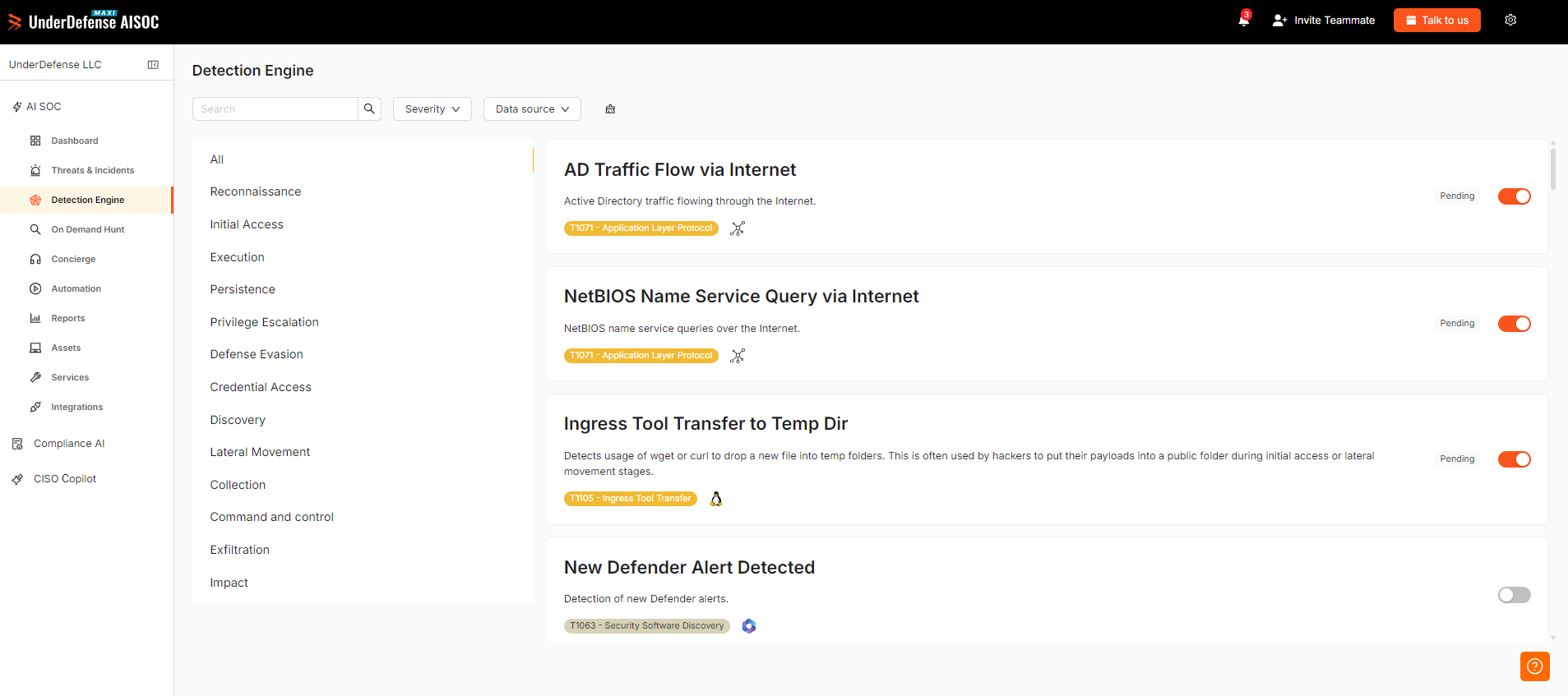
The tell is whether an escalation arrives with context. A good escalation says what happened, why it matters, and what to do next. A weak one just forwards a signal and waits for you. Our standard for AI SOC investigation speed holds the whole chain accountable, not one stage.
📚 What the research actually says
Here is where I want to ground the vendor debate in something sturdier than reviews. Alert fatigue is not marketing language. It is a documented, chronic problem in security operations.
A 2025 ACM systematization of SOC alert fatigue catalogs it as a persistent research challenge, not a solved one. Older industry survey work found that when queues overflow, a large share of analysts start ignoring alerts, and false-positive rates in managed models run high. So the problem GreyMatter targets is real, which is exactly why the quality of the automation matters so much. This is why AI SOC explainability is a purchase criterion, not a nicety.
⚖️ Why “unique AI triage” deserves a second look
Now the part the category avoids. Automated triage gets sold as a differentiator, and the patent record complicates that story.
Rapid7 holds a granted patent for machine-learned alert-triage classification. Separate published applications describe autonomous SOC investigation using LLM-based reasoning. My read, and I could be slightly off on claim scope, is that triage automation is becoming table-stakes across the category. The differentiator is no longer “we automate triage.” It is whether the output is explainable, auditable, and actually resolves work.
That is the lens I would carry into any GreyMatter evaluation, and it is the same standard we hold ourselves to in the UnderDefense Agentic AI SOC: show the workflow, show the reasoning trail, and let the buyer audit it rather than trust a black box. If a no-lock-in posture matters to you, see our guide to AI SOC platforms with transparent investigations.
Q6. Why is the replacement model genuinely attractive, including lower long-run TCO?
The replacement model has real advantages. Consolidating data and detection in one platform gives you unified detection engineering, a single vendor accountable end to end, and often lower long-run total cost of ownership by escaping per-gigabyte SIEM ingestion pricing. Some platforms also retain your SIEM rules and intelligence at contract end, which complicates any simple lock-in story and deserves honest weighting.
🧱 Consolidation buys you coherence
I have argued hard for keeping your data. So let me steel-man the other side properly. The replacement model has a genuine strength, and it is coherence.
When data and detection live in one platform, your detection engineering gets simpler. One rule language, one place to tune, one team building content. You stop stitching logic across systems that each speak a different dialect. Our overview of what an AI SOC is explains why that consolidation appeals to lean teams.
💰 One vendor, and often lower long-run cost
The second advantage is accountability. With a replacement model, there is one vendor to call when detection misses. No finger-pointing between the SIEM vendor and the response provider.
Cost is the part buyers underestimate. Traditional SIEM licensing often charges by data ingested, so bills climb as log volume grows. A model that decouples detection from raw ingestion can lower long-run TCO, and vendors like ReliaQuest lean on exactly that math when selling against per-gigabyte pricing. To pressure-test the numbers for your own stack, use our managed SIEM ROI calculator.
A quick contrarian note from years of these conversations. Trying to prove “breach-prevention ROI” is usually a trap, because you are proving a negative. The stronger comparison is the cost of delivering the same detection and response across your options, which is the logic behind our AI SOC ROI business case.
🔄 The fairness point on lock-in
Here is the strength that complicates my own narrative, and I will say it plainly. The lock-in worry is not absolute.
Some replacement arrangements retain your SIEM rules and intelligence at contract end, which softens the exit problem. On larger deals, that combination of lower long-run TCO and retained logic is why a consolidated platform can win over a layered competitor. If you have limited in-house detection engineering and want one accountable vendor, the replacement model is a defensible, sometimes smart, choice. At UnderDefense we still favor keeping your data and rules in your own environment, an approach we detail in our guide to AI SOC vendors with no lock-in and data sovereignty, and I hold that view while acknowledging the replacement case is real for the right org.
Q7. What changes at renewal versus your initial purchase, and how do you check?
Renewal is where scope quietly moves. As platform vendors converge upward into the SIEM layer, what you bought as a management layer can renew as something closer to a platform. Check three things in your agreement: the data landing zone, detection-logic ownership at termination, and your SIEM licence status. Ask your account team to state each in writing before you sign.
⏰ Why scope drifts at renewal
I hear a specific frustration from CISOs at renewal time. It sounds like this: “I need to stop feeling like the scope moved under me. I bought a management layer, and now I am being sold a platform.”
That feeling usually reflects a market shift, rather than bad faith. In 2026, the line between a management layer and a full platform blurred as vendors expanded upward. Your contract can drift toward “platform” simply because the category did. The fix is to read for structure, not for logos. Our note on SOC contract clauses shows where that drift hides.
📄 The three clauses to read first
Before you sign anything, pull the agreement and find these three items. They decide your ownership and your exit.
- Data landing zone. Does your raw data still land in your SIEM, or has it moved into the vendor’s platform?
- Detection-logic ownership at termination. Who owns the rules, and in what exportable format do they come back?
- SIEM licence status. Is your existing licence retained, reduced, or being retired under the new term?
If any answer is vague, that vagueness is the finding. Our AI SOC data residency guide helps you frame the first clause precisely.
💬 The exact questions to ask your account team
Now take it to the conversation. Ask these out loud, and get the answers in writing.
- “At this renewal tier, where does our data physically reside?”
- “If we leave in 18 months, what leaves with us, and in what format?”
- “Does this term change our SIEM licence commitment in any way?”
One more move that helps with your CFO and board. Map every security dollar into NIST CSF risk families on a single page. It turns a fuzzy renewal into a clear budget story leadership can follow, and our virtual CISO team does this exercise every week.
One architectural choice keeps this whole decision reversible, and I cover it in the next section.
Q8. Who does each model genuinely suit?
Choose replacement if you have limited internal detection engineering, want single-vendor accountability, and value consolidated analytics over stack independence. Choose the managed layer if you have an existing SIEM investment, data-residency constraints, in-house detection capability worth keeping, or you need the response layer decoupled from where your data lives. Both are defensible. They fit different organizations.
🧩 When replacement is the right call
Some teams should pick replacement, and I will not pretend otherwise. The profile is fairly clear.
You have limited internal detection engineering. You want one vendor accountable end to end. You would rather have coherent, consolidated analytics than the freedom to swap parts later. For a lean 600-person company with no detection team, that trade is often smart. Fewer moving pieces means fewer things to get wrong at 2 a.m. Our comparison of AI SOC deployment models maps these profiles in detail.
🌍 When the managed layer wins
The layer model fits a different shape of org. It shines when independence and data control carry real weight.
You have an existing SIEM investment worth protecting. You face data-residency rules that dictate where logs must live. You have in-house detection talent you want to keep, or you simply want response decoupled from storage. Full log visibility matters here for a concrete reason. One odd login from Thailand or Singapore can be a 2020 compromise still quietly logging in, and you only catch it if you kept and watched the logs. This is the core case for AI SOC platforms that keep your own SIEM data lake.
| Your situation | Model that usually fits |
|---|---|
| Little in-house detection engineering | Replacement |
| Want one accountable vendor | Replacement |
| Existing SIEM investment to protect | Managed layer |
| Data-residency constraints | Managed layer |
| In-house detection talent to keep | Managed layer |
| Want exit to stay simple | Managed layer |
⚠️ The prerequisite both models share
One hard truth sits under both choices, and the research backs it. Alert fatigue is a documented, chronic problem in SOCs.
So here is my contrarian line. If your alerts are noisy and poorly tuned, AI will not save you. Fix your detection engineering fundamentals first, because both models amplify whatever quality you feed them. The layer model only pays off when your response partner truly co-manages the SIEM you own, with clear ownership and fast, contextual escalation. That is the standard I would set, and it is exactly the bar the next section holds our own co-managed SIEM approach to.
Q9. Is there an architecture that keeps your SIEM, your data, and your rules yours?
Yes. Think of it as the managed-layer model taken to its logical end. A vendor-agnostic Agentic AI SOC co-manages the SIEM you already own (Elastic, Splunk, QRadar, LogRhythm), keeps your data and rules in your own cloud, and treats detection logic as versioned, unit-tested code so your rules stay portable assets. The UnderDefense Agentic AI SOC is one implementation of this decoupled model, one architectural choice among several.
🧩 What “decoupled” actually means
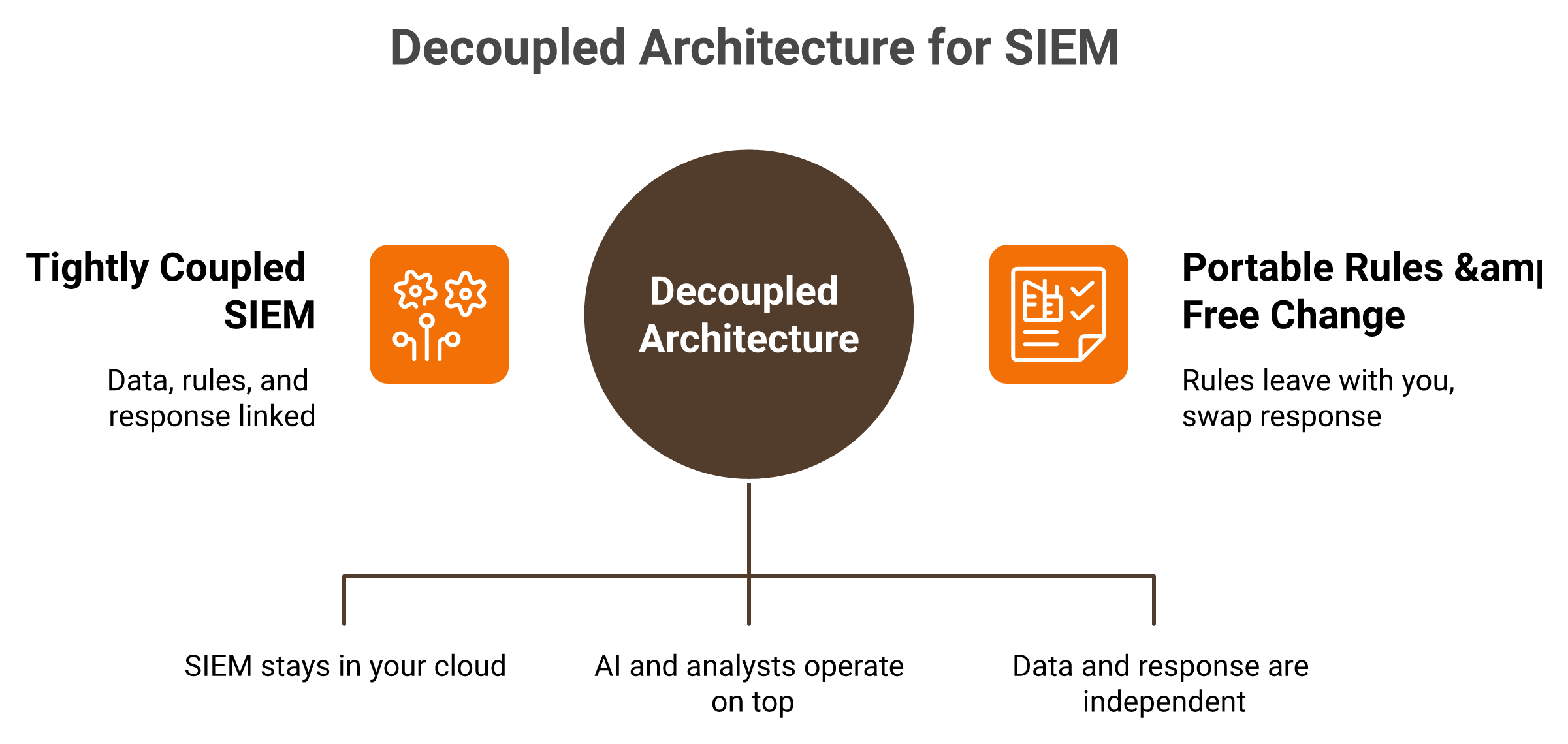
Let me define this plainly, because the word gets abused. A decoupled architecture keeps two things separate: the data layer, where your logs live, and the response layer, where detection and action happen.
Your SIEM stays your system of record. The agentic AI and human analysts operate on top of it. You can change who runs response without moving a single log, which is the whole point of keeping the layers apart. This is the model behind our co-managed SIEM approach.
🔑 Portability through Detection Logic as Code
Here is the mechanism that makes rules portable, and it borrows straight from software engineering. Treat every detection rule as code: versioned, stored in your repository, and unit-tested before it ships.
- Versioned: you can see who changed a rule, when, and why.
- Testable: you validate a rule against known cases before it goes live.
- Portable: because the logic lives in your environment, it leaves with you.
That last point is the exit insurance I kept pointing to earlier. A rule you can test and move is an asset. A rule trapped in a vendor’s format is a liability you rent. Our guide to detection as code with CI/CD for detection rules shows how this works in practice.
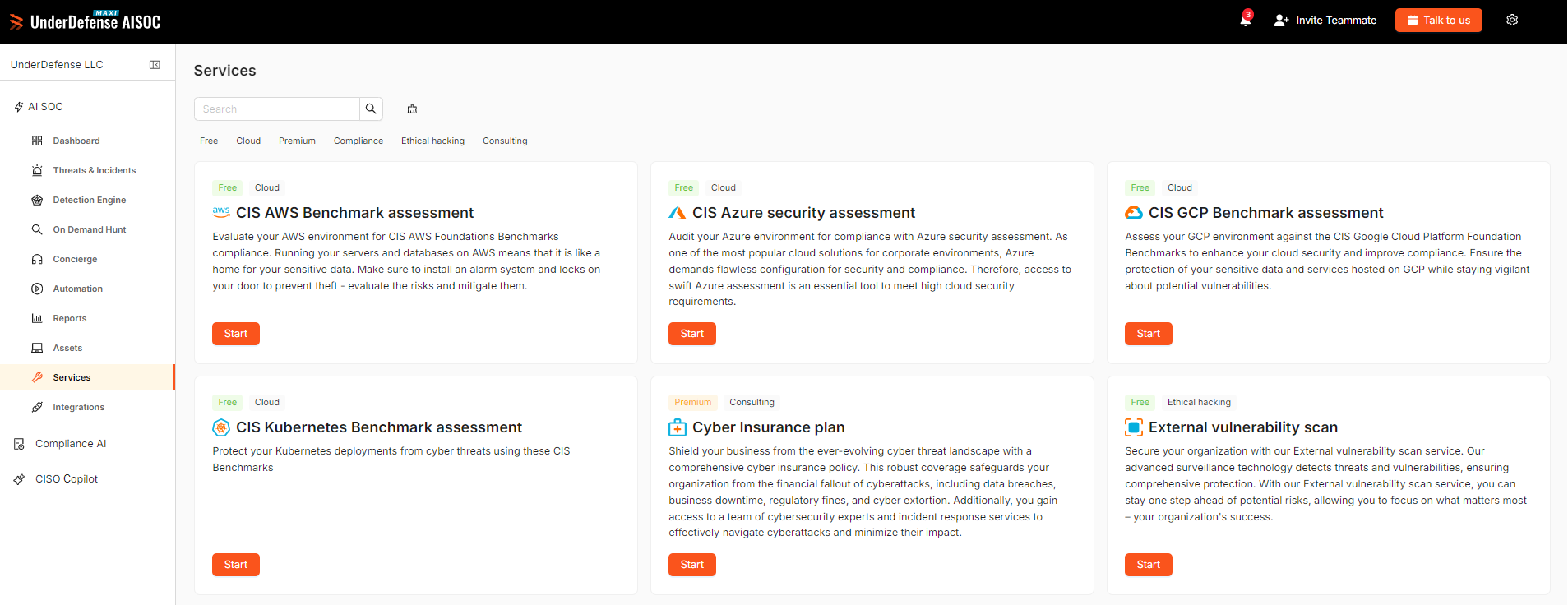
In practice, the agentic layer does heavy, repeatable work so humans handle the calls that need judgment. It can run many queries across your tools to investigate one alert, then resolve routine cases through ChatOps in your Slack or Teams channel rather than just escalating them back to you. Our note on human-in-the-loop SOC design explains why that division of labor holds up.
⚖️ The honest framing
Now the disclosure I promised at the top. UnderDefense builds this, so weigh my framing accordingly. The UnderDefense Agentic AI SOC is our take on the decoupled model: vendor-agnostic co-management of the SIEM you own, detection logic as code, deployment on-premises inside your own cloud (Azure, GCP, AWS, or Oracle), and agentic resolution through ChatOps. We commit to a 2-minute Alert-to-Triage and a 15-minute escalation for critical incidents as two distinct service levels.
This model has trade-offs too. It asks more of your relationship with the response partner, and it works best when your detection fundamentals are sound. Buyers tend to notice the difference in escalation quality, a point our roundup of AI SOC platforms with transparent investigations expands on.
“Their SOC team is responsive and knows their stuff. When they escalate something, they include the context we need to understand the issue quickly. We didn’t have to rip and replace anything.”
Verified User, Marketing and Advertising UnderDefense G2 Verified Review
“UnderDefense Agentic AI SOC integrates well with our systems, specifically with our SIEM, Splunk. Their team is proactive in identifying and addressing threats.”
Oleg K., Director of Information Security UnderDefense G2 Verified Review
Q10. How do you decide which model to run, and what should you do Monday morning?
Start by determining which model you are on today. Run the six clarity questions against your own contract and current data flows. If the model still fits your detection maturity, data-residency needs, and exit tolerance, renew with eyes open. If it does not, you now have defensible language for your CFO and a framework for negotiating or moving. Understand first, then choose.
🧭 The decision path
The order matters here, so do not skip a step. Diagnose before you decide.
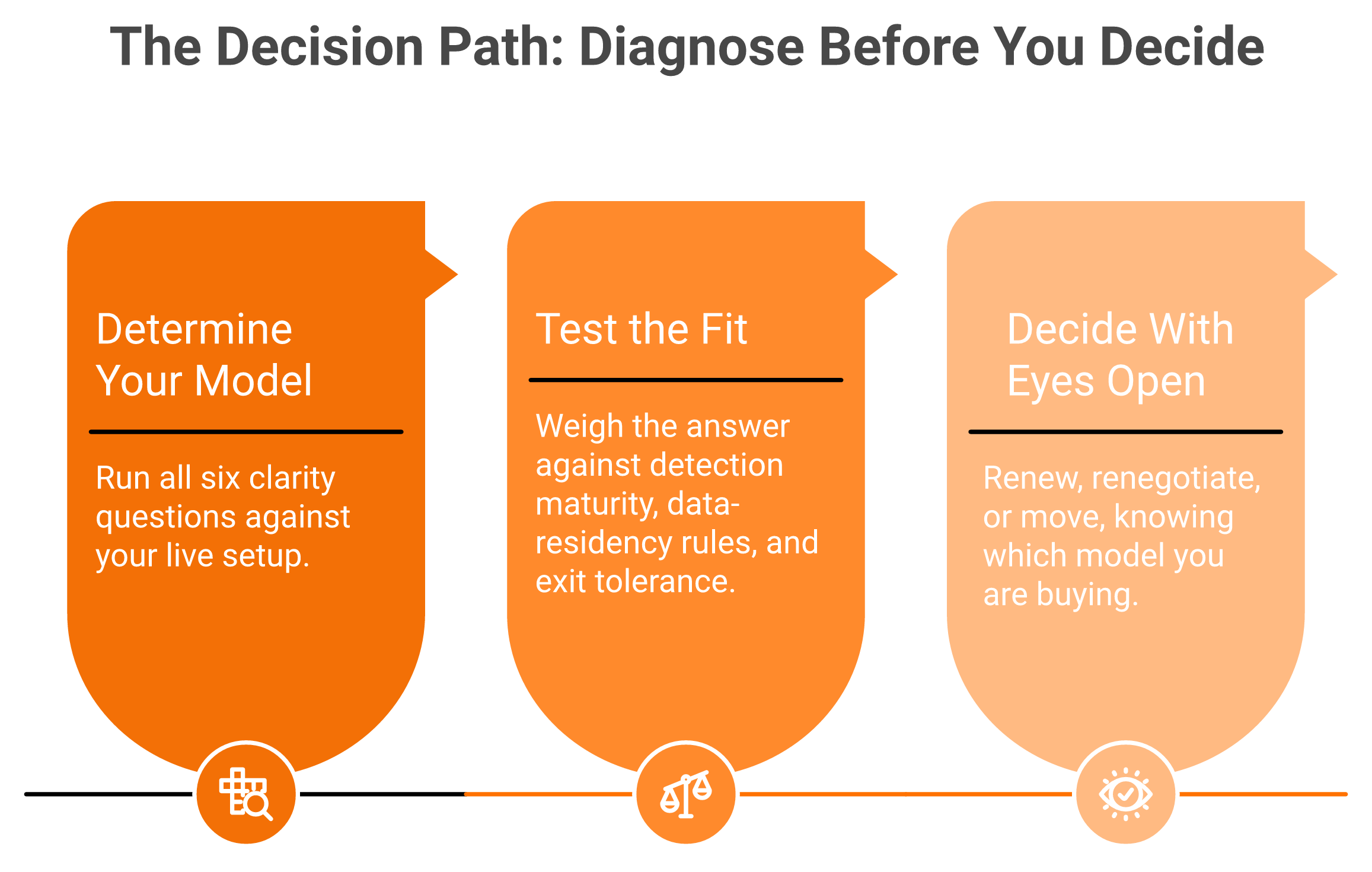
- Determine your model. Run all six questions from the framework against your live setup.
- Test the fit. Weigh the answer against your detection maturity, your data-residency rules, and how much exit pain you can tolerate.
- Decide with eyes open. Renew, renegotiate, or move, but do it knowing which model you are actually buying.
The goal is clarity before commitment. A label chosen by accident is how buyers end up paying for two layers or losing their rules at exit. Our list of AI SOC evaluation questions keeps that diagnosis honest.
✅ Three things to do Monday morning
You do not need budget approval to start. You need an hour and your existing logs.
- Map the layers. Draw where your data lands and where your detection logic lives, on one page.
- Read the exit clause. Find what leaves with you at termination, and in what format.
- Arm your next call. Bring the six questions to your next vendor conversation, and get answers in writing.
Here is a free bonus move I like. Run an OAuth shadow-IT hunt across your Microsoft 365 or Google Workspace logs. It costs nothing and often surfaces app grants nobody remembers approving, a habit our security log analysis guide encourages.
🗣️ Where I would leave you
I will close with a conviction, rather than a pitch. In 2026, being a human in the loop is a genuine advantage, because judgment is the part the machines still borrow from us.
You do not really “win” in security. You keep the doors boarded up until the sun comes out, night after night. Whether you keep your SIEM or consolidate it, the point is to choose the architecture on purpose. If you want a second pair of eyes, our virtual CISO team runs a plain “what are you actually running?” architecture review, and it stays useful to you whether or not you ever switch a thing.
So here is the question I am sitting with, and I would genuinely like your answer. As the line between a SIEM and a platform keeps blurring, will ownership of your own detection logic become the thing buyers negotiate hardest for? My current read says yes. If you want to compare vendors on exactly that axis, our guide to AI SOC vendors with no lock-in and data sovereignty is where I would start.
See how UnderDefense Agentic AI SOC resolves a real incident on your stack.
1. Is ReliaQuest GreyMatter a SIEM replacement or a managed layer on top of my SIEM?
Our honest read is that it depends on the tier and deployment you buy. GreyMatter is ReliaQuest’s agentic AI and Open XDR platform, and its marketing carries two stories at once.
- Layer configuration: your SIEM stays the data home, and GreyMatter adds detection and response on top.
- Reduced-reliance configuration: at-source detection shifts work upstream, so you lean on the SIEM less.
Most real deployments sit somewhere between these two, which is exactly why buyers get confused. The label matters less than where your data lands and who owns your rules.
Rather than accept a headline label, we recommend running a short diagnostic against your own contract. Our guide to managed SIEM versus MDR versus MSSP maps these boundaries so you can locate any vendor on the spectrum, including this one.
2. What is the difference between a SIEM replacement and a managed SIEM layer?
The distinction decides who owns your data, your rules, and what leaves with you at contract end. We think of it as two coherent philosophies.
- Replacement: the vendor’s analytics platform becomes where your data lands and your detection logic lives, giving you one throat to choke.
- Managed layer: your SIEM stays the data layer, and the vendor adds detection, investigation, and response on top.
The replacement model buys coherence and single-vendor accountability. The layer model keeps your data and detection functions portable across vendors, so you can change who runs response without moving a single log.
Neither is wrong; they are different bets on ownership versus convenience. If you want to keep the two layers separate, our co-managed SIEM approach shows how a response partner operates the SIEM you already own without a rip-and-replace.
3. How do I tell which model I am actually running today?
We use six questions that work on GreyMatter or any vendor making the same dual pitch. Each has a Monday-morning action attached.
- Where does your data land, the vendor’s analytics layer or your SIEM?
- Where does detection logic live, and who owns it at contract end?
- What happens to your SIEM licence, retained, reduced, or retired?
- Are you paying for both layers with no net reduction?
- What leaves with you on exit, and in what format?
- What changes at renewal versus the initial purchase?
Run all six and you stop guessing at the label; you will know which model you are on. We built the framework to be vendor-agnostic on purpose. For a deeper checklist to bring into any demo, see our AI SOC evaluation questions.
4. Does the replacement model really lower long-run total cost of ownership?
Often, yes, and we will say so plainly even though it complicates our own narrative. Traditional SIEM licensing frequently charges by data ingested, so bills climb as log volume grows.
- A model that decouples detection from raw ingestion can reduce long-run TCO.
- Consolidating data and detection also simplifies detection engineering under one rule language.
- Some arrangements retain your rules and intelligence at contract end, which softens lock-in.
One contrarian caution from years of these conversations: trying to prove breach-prevention ROI is usually a trap, because you are proving a negative. The stronger comparison is the cost of delivering the same detection and response across your options.
To pressure-test the numbers against your own stack before you commit, use our managed SIEM ROI calculator and model both scenarios side by side.
5. What do customers actually report receiving from GreyMatter?
Public reviews show a split, and both sides deserve fair weighting. On G2 and Gartner Peer Insights, buyers praise real strengths.
- Unified visibility across endpoint, cloud, and existing tools without ripping out the stack.
- Broad integration coverage for teams juggling several data sources.
- Third-party validation, including a Leader placement in Forrester’s 2025 MDR Wave.
Others report over-reliance on the AI layer and tickets returned without clear, actionable answers. That is the failure mode we watch for in any automated SOC, because a layer that parrots alerts back produces exhaustion and a weaker posture.
Academic research confirms alert fatigue is a chronic, documented problem, which is why automation quality matters more than any triage claim. We hold ourselves to the same bar we would apply here, detailed in our work on AI SOC explainability and transparency.
6. What changes at renewal versus my initial GreyMatter purchase?
Renewal is where scope quietly moves. As platform vendors converge upward into the SIEM layer, what you bought as a management layer can renew as something closer to a platform.
Before you sign, we recommend reading three clauses in the agreement.
- Data landing zone: does your raw data still land in your SIEM, or has it moved into the vendor’s platform?
- Detection-logic ownership at termination: who owns the rules, and in what exportable format?
- SIEM licence status: is your licence retained, reduced, or retired under the new term?
If any answer is vague, that vagueness is the finding. Ask the account team to state each in writing. Our virtual CISO team pressure-tests renewals like this every week, so you can walk in with defensible language for your CFO and board.
7. Who is each model genuinely best suited for?
Both are defensible; they simply fit different organizations. We would frame the choice around your detection maturity, data-residency needs, and exit tolerance.
- Choose replacement if: you have limited in-house detection engineering, want single-vendor accountability, and value consolidated analytics over stack independence.
- Choose the managed layer if: you have an existing SIEM investment, data-residency constraints, in-house detection talent worth keeping, or you need response decoupled from where data lives.
One hard truth sits under both: if your alerts are noisy and poorly tuned, AI will not save you. Fix your detection fundamentals first, because both models amplify whatever quality you feed them.
The layer model only pays off when your response partner truly co-manages the SIEM you own. Our comparison of AI SOC deployment models helps you self-identify the right fit.
8. Is there an architecture that keeps my SIEM, my data, and my rules mine?
Yes, and we consider it the managed-layer model taken to its logical end. A vendor-agnostic Agentic AI SOC co-manages the SIEM you already own, such as Elastic, Splunk, QRadar, or LogRhythm.
- Your data and rules stay in your own cloud, so the data layer and response layer remain decoupled.
- Detection logic is treated as versioned, unit-tested code, so your rules stay portable assets that leave with you.
- Deployment can run on-premises inside your own cloud, with routine cases resolved through Slack or Teams ChatOps.
This model has trade-offs too; it asks more of your relationship with the response partner and works best when your detection fundamentals are sound. We commit to a 2-minute Alert-to-Triage and a 15-minute escalation for critical incidents as two distinct service levels. See how the decoupled model works on the UnderDefense Agentic AI SOC platform.