






Managed Endpoint Security That Works With the EDR Agent You Already Run
24/7 human-led detection and response on your endpoints, run by our Agentic AI SOC on the EDR you already own — CrowdStrike, SentinelOne, Microsoft Defender. No rip-and-replace, no second agent and no vendor-lock, with one managed service in place of fragmented antivirus and unmanaged EDR licenses.
500+ clients protected





















You already bought the endpoint tool. Nobody is operating it.
Most teams do not have an endpoint detection problem. They have an endpoint response problem — alerts nobody triages, agents nobody tunes, and no cover at 3 a.m. That gap is what managed endpoint security closes.
Alerts nobody is correlating
Your EDR, your antivirus and your cloud tools each raise alerts in their own console, with nothing merging them into one prioritized queue.
No unified evidence trail when the auditor asks
SOC 2, ISO 27001 and CIS v8 all expect demonstrable endpoint monitoring. Exporting screenshots from three consoles the week before an audit is not evidence.
Containment that waits for business hours
A compromised laptop at 2 a.m. stays compromised until someone logs in. Detection without response just means the dwell-time clock keeps running.
Too many agents on a fragmented fleet
Different endpoint agents across Windows, macOS, servers and contractor devices, each with its own console, policy model and update cycle to babysit.
No 24/7 cover for after-hours endpoint alerts
A lean IT team cannot run a follow-the-sun rota. Nights, weekends and holidays are exactly when endpoint attacks land.
Locked into one EDR vendor's license
Providers that force their own agent to write off the endpoint investment you already made and make leaving expensive later.
Managed endpoint security, and where managed EDR fits
Put plainly, managed endpoint detection and response exists because EDR software is not a finished product. An EDR agent will faithfully raise thousands of signals a month. Deciding which forty matter, and which three are a live intrusion, is a staffing problem. It is not a tooling one. That is the gap managed EDR fills. Our analysts operate the endpoint tooling you already own and tune its detections to your environment. Then they take the containment action: isolating a host, killing a process, disabling an account. You get the outcome, not a ticket.
Antivirus → EDR → managed EDR → MDR
| What it is | Who operates it | What it covers | |
|---|---|---|---|
| Antivirus / AV | Signature-based blocking of known malware | Your team | Known threats on the endpoint |
| EDR | A tool recording endpoint behavior and raising alerts | Your team | Unknown and behavioral threats, if someone watches it |
| Managed EDR | A service. EDR plus a 24/7 SOC that triages and responds | Us | The endpoint, end to end |
| MDR | A service across the whole estate, not just endpoints | Us | Endpoint + cloud + identity + network |
Managed antivirus stops what it already recognizes. Managed EDR catches the behavior it has never seen before — and puts someone on it. If you need that same coverage beyond the endpoint, that is managed detection and response. For the tool-level definition on its own, see what is EDR.
Built to fit the endpoint stack you already bought
Managed endpoint protection only pays off when it works with the tooling you already own, and when somebody is actually operating it. Six things you can verify about our endpoint security services before you sign.
Your EDR agent stays. We operate it.
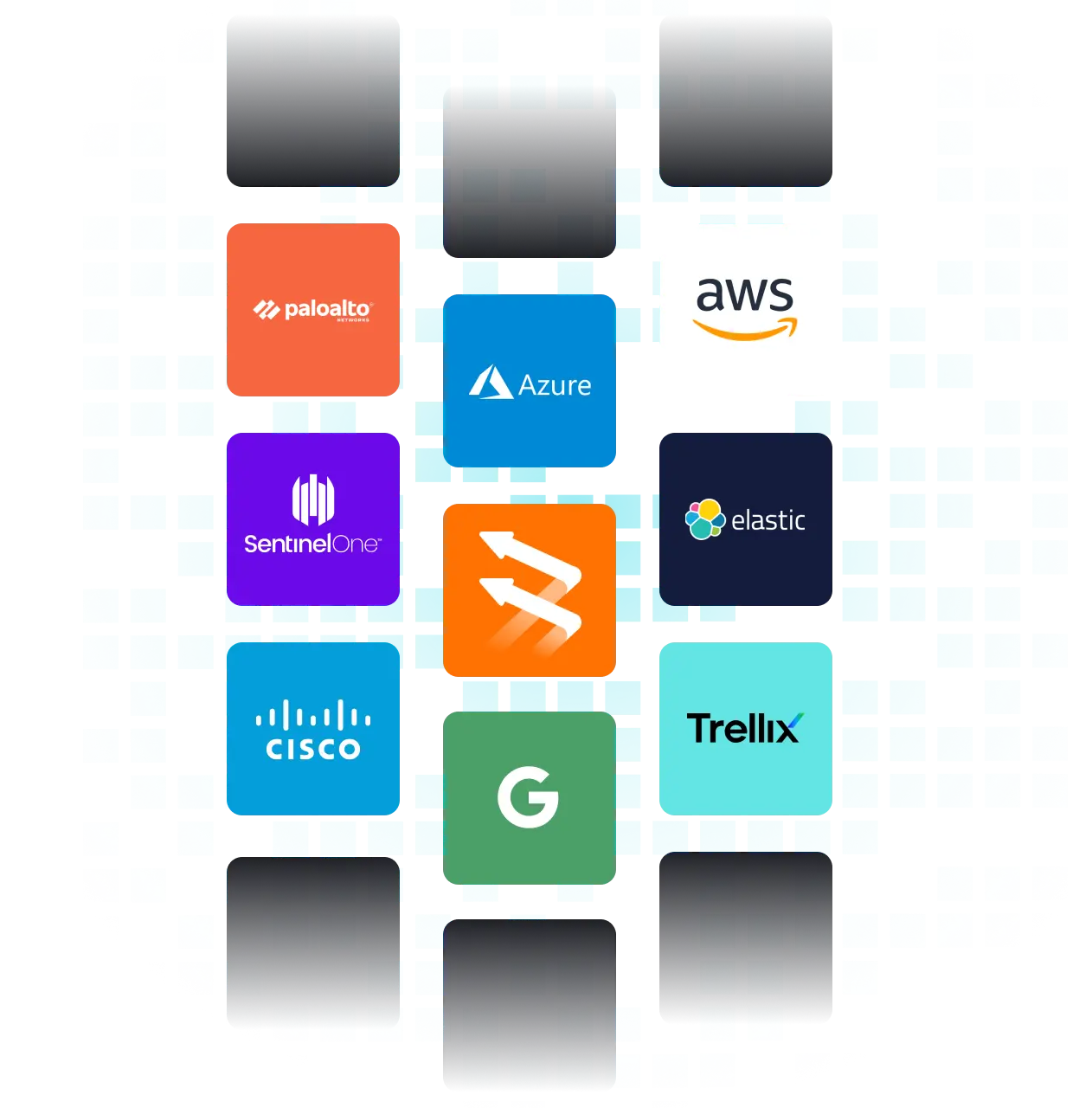
CrowdStrike, SentinelOne, Microsoft Defender — we run detection and response on the agent already deployed across your fleet. No second agent, no rip-and-replace, no re-imaging.
We resolve alerts, we don't forward them
Our Agentic AI SOC gathers the context automatically; our analysts make the call and take the containment action on the endpoint.
24/7 cover your team cannot staff
A round-the-clock SOC with a 15-minute critical-incident escalation, so the 2 a.m. laptop does not wait for the 9 a.m. standup.
One evidence trail instead of three consoles
Endpoint monitoring and response activity mapped to SOC 2, ISO 27001 and CIS v8, produced continuously rather than assembled the week before an audit.
Detection tuned to your fleet, not a default ruleset
We tune the policies on your existing tooling to your actual environment — contractor laptops, servers, mixed OS — instead of shipping one generic policy.
Consolidation, not another line item
One managed service absorbing fragmented antivirus and unmanaged EDR licenses, staffed by our own engineers rather than a subcontracted SOC.
Trusted by Security Leaders
What our customers say

"We fully automated T1-T2 manual triage with UnderDefense. AI SOC filters the noise so my team can focus on complex hunt missions and strategic security. We scaled our capacity 10x overnight, not by hiring, but by making our analysts investigators again."

"Zero ransomware cases and a 2-minute triage SLA. Agentic AI mapped our VIPs and high-value assets with surgical precision. It transformed how our board views security, shifting from a cost center to a strategic enabler of business resilience."
Excellence.
Our minimum bar for client delivery.




UnderDefense vs. the field
Tap any row for the detail. The points that decide the deal, at a glance.


One partner for your whole security program
MDR is the broadest coverage. These services plug into the same 24/7 team and platform.
Managed Detection & Response (MDR)
24/7 human-led detection and response focused on your core endpoint and SIEM surface.
Learn more →Managed Extended Detection & Response (MXDR)
Extended detection and response across endpoints, network, cloud, email, and identity, run 24/7 by our SOC.
Learn more →MDR for SaaS
Cloud-native detection and response for SaaS companies, with the security evidence enterprise buyers expect.
Learn more →MDR for FinTech
Detection and response built for financial platforms, with the compliance evidence regulators and partners require.
Learn more →MDR for Healthcare
HIPAA-aligned detection and response protecting PHI, EHR systems, and clinical operations around the clock.
MDR Integrations
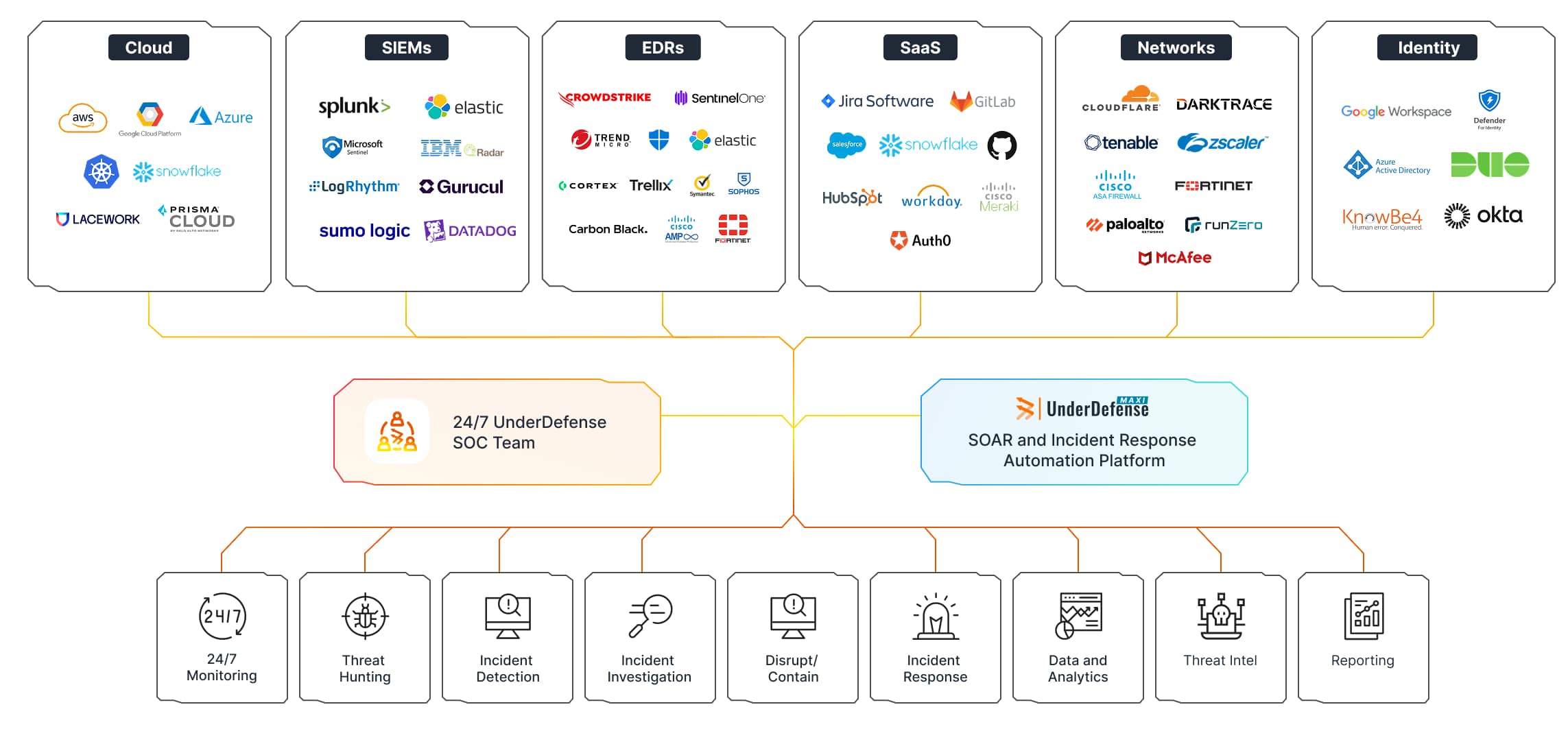
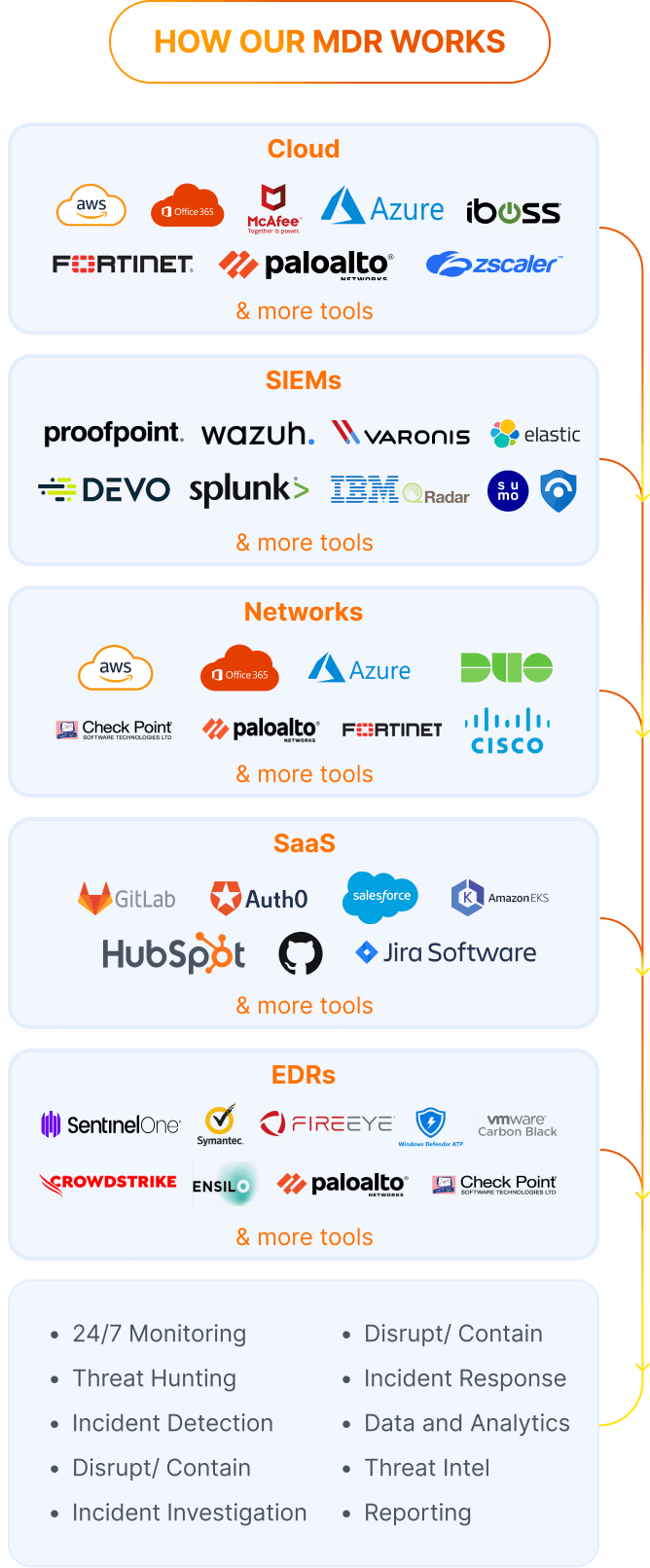
250+ integrations across your EDR, SIEM, cloud, and identity stack. See everything we connect to.
Six years. No ransomware incident across our MDR client base.
Endpoints are where ransomware lands first. We tune the tooling you already run so it catches the behavior that matters, and our SOC contains it before it spreads laterally. In six years of continuous MDR operation, no client under our monitoring has suffered a ransomware incident.
Get your custom managed EDR quote
Tell us which endpoint tooling you already run and how big the fleet is. We'll come back with a tailored proposal and an onboarding plan built around your existing agent.
- Works with the EDR you already own
- No new agent to deploy
- Start free with MAXI, no credit card
Choosing a managed EDR provider? Read this first.
How to choose an MDR provider for fintech in 2026: banking, payments, and crypto under one SOC
Choosing an MDR provider for a fintech is not the same as choosing one for a bank or a generic SaaS. Your attack surface spans payment rails, cloud-native APIs, identity providers, and often crypto custody, and the evidence an examiner wants is broader. This guide walks through what actually separates a fintech-ready MDR provider from one that stops at traditional IT.
What is managed endpoint security?
It's a fully managed service where an external 24/7 security team runs detection and response across your endpoints. You keep the EDR tooling; we operate it — tuning detections, triaging alerts, investigating real intrusions and containing them. It converts endpoint software you already own into an outcome somebody is accountable for.
How is managed EDR different from antivirus?
Antivirus blocks malware it already recognizes from a signature. EDR watches behavior, so it can catch an attack it has never seen — but it produces alerts somebody has to judge. Managed antivirus centralizes the former; managed EDR adds the 24/7 team that investigates and responds to the latter. Most teams end up needing both layers.
How is managed EDR different from MDR?
Scope. Managed EDR covers the endpoint. MDR covers the whole estate — endpoint plus cloud, identity and network — correlated together. Managed EDR is the right starting point if the endpoint is your gap; MDR is the step up when threats move between layers.
Do we have to replace our existing EDR or antivirus agent?
In almost every case, no. That is the point. We run managed detection and response on the agent already deployed — CrowdStrike, SentinelOne, Microsoft Defender — so there's no second agent, no re-imaging, and no writing off the license you already bought. You keep ownership of the tooling if you ever leave.
How fast can you start monitoring our endpoints?
Because we operate the agent already on your fleet, there's no deployment project to wait through. Onboarding connects your existing console and tunes detections to your environment, so monitoring starts without a fleet-wide deployment project.
Is antivirus still enough on its own?
Not for the attacks that matter now. Signature-based antivirus stops commodity malware. In the intrusions our SOC handles, operators increasingly use legitimate admin tools and stolen credentials, which leave no signature to match. That behavior is what EDR surfaces and what our SOC acts on.
What do we actually get that our EDR license doesn't already give us?
The team. An EDR license gives you telemetry and alerts; it doesn't give you anyone to judge them at 3 a.m. You get 24/7 triage with a defined SLA, tuned detections, hands-on containment, and an evidence trail mapped to SOC 2, ISO 27001 and CIS v8.