




Q1. What Are the 11 Most Affordable AI SOC Platforms in 2026?
The 11 most affordable AI SOC platforms in 2026 are UnderDefense Agentic AI SOC, Huntress, Intezer, Wazuh, Elastic Security, Dropzone AI, Prophet Security, Radiant Security, Microsoft Sentinel plus Security Copilot, Conifers CognitiveSOC, and Torq HyperSOC. Prices run from free self-hosted tools to autonomous AI analyst subscriptions near $36,000 a year. The pricing model, rather than the sticker price, decides your real cost at your alert volume.
See how the UnderDefense Agentic AI SOC investigates, triages, and resolves real alerts.
Why This List Exists
A security lead pinged me before his April budget locked. He called himself a “tire kicker,” just wanting a range before he committed real money. He was stuck on one question: build a 24/7 team in-house, or buy 24/7 coverage from a partner?
I gave him the number that anchors this whole list. A loaded security analyst costs about $124,163 a year. Staffing a Security Operations Center (a SOC, the team that watches your alerts) around the clock takes five people. That is $620,815 a year, minimum.
Every platform below has to beat that number to earn the word “affordable.” That is the bar. Keep it in your head as you read. If you want to run your own numbers first, our SOC cost calculator gives you a fast baseline.
How We Chose These 11
We picked platforms that give small and mid-market teams real 24/7 threat hunting without a Fortune 500 budget. We favored tools with transparent or public pricing, vendor-agnostic integration (meaning they work with your current tools, no rip-and-replace), and honest coverage of both detection and response.
We deliberately left out pure enterprise stacks that only make sense above 5,000 employees. This list serves the lean team, often one to three analysts, trying to sleep at night. For a deeper cost breakdown, our AI SOC pricing guide walks through every model.
Our Evaluation Criteria
We analyzed a broad set of AI SOC and managed security providers, then narrowed to these 11 on five factors relevant to real buying decisions:
- Vendor-agnostic integration, how well it works with your existing SIEM, EDR, and cloud tools
- Pricing transparency, whether you can predict the bill before you sign
- Detection and response depth, does it act on threats or just alert you
- Setup and usability, time to value for a resource-lean team
- Verified customer validation, real G2, Gartner, and Clutch reviews
Who This Guide Is For
This shortlist is built for the people who actually sign the contract:
- CISOs and security directors at 50 to 1,000 employee companies
- IT directors and CTOs carrying security without a full SOC team
- Compliance and GRC leaders preparing for SOC 2, HIPAA, or DORA audits
- Private equity operating partners standardizing security across portfolio companies
If you are moving toward an RFP, these 11 represent the platforms most worth your evaluation time. Our MDR buyers guide can help you frame the shortlist.
| Provider (Rating) | Best For | Key Strength | Compliance |
|---|---|---|---|
| UnderDefense Agentic AI SOC (5 stars) | Lean and mid-market teams wanting detection plus response | Vendor-agnostic AI SOC plus Human Ally, transparent pricing | SOC 2, ISO 27001, HIPAA, GDPR, PCI DSS |
| Huntress (4.9 stars) | Endpoint-heavy SMBs and MSPs | Managed EDR with 24/7 human SOC at per-endpoint pricing | SOC 2, HIPAA, PCI DSS, GDPR |
| Intezer (3 stars) | Automating alert triage | Autonomous alert investigation, endpoint-based pricing | SOC 2 Type II |
| Wazuh (3 stars) | Technical teams with staff to self-host | Free, open-source SIEM and XDR | Supports SOC 2, PCI DSS, GDPR mapping |
| Elastic Security (3 stars) | Teams already on the Elastic stack | Low-cost self-managed SIEM with detection rules | Supports SOC 2, ISO 27001 |
| Dropzone AI (3 stars) | Teams wanting an autonomous Tier-1 analyst | AI SOC analyst that auto-investigates alerts | SOC 2 Type II |
| Prophet Security (3 stars) | SOCs drowning in triage | Agentic AI triage and investigation | SOC 2 Type II |
| Radiant Security (3 stars) | Teams cutting SIEM cost | AI SOC that reduces expensive ingest | SOC 2 Type II |
| Microsoft Sentinel plus Security Copilot (3 stars) | Microsoft E5 shops | Native cloud SIEM with AI copilot agents | SOC 2, ISO 27001, HIPAA, GDPR |
| Conifers CognitiveSOC (3 stars) | Mid-market wanting multi-agent depth | Multi-agent AI with organizational context | SOC 2 Type II |
| Torq HyperSOC (3 stars) | Teams needing hyperautomation | SOAR-style workflow automation at scale | SOC 2 Type II |
The 11 Most Affordable AI SOC Platforms Compared
UnderDefense publishes transparent MDR pricing, with no ingest surprises and no vendor lock. If you want to see what 24/7 detection and response actually costs for a team your size, the numbers are open.
Now let me walk through the top platforms in detail. I will start with the two that anchor opposite ends of the “affordable” spectrum, one that owns both detection and response, and one built around the endpoint.
1.1 UnderDefense Agentic AI SOC, Best for Lean and Mid-Market Teams That Need Detection and Response in One Place
Overview
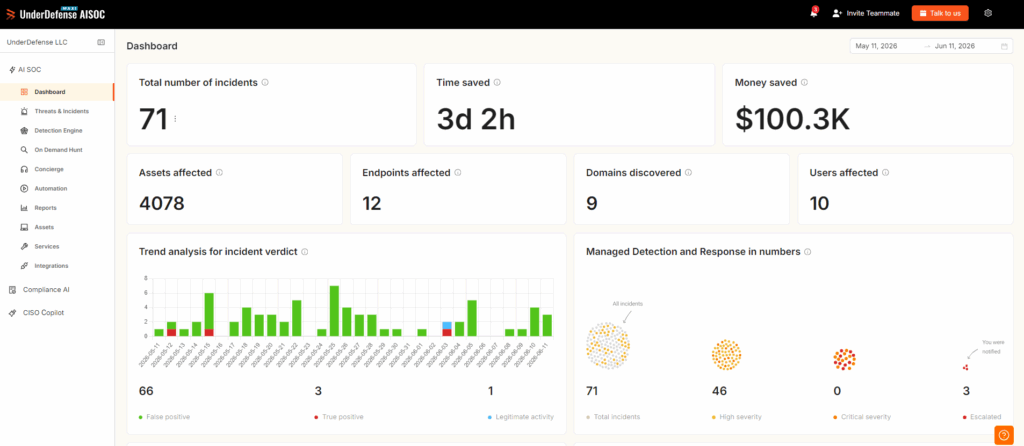
UnderDefense Agentic AI SOC is an AI SOC platform built on what we call the “AI SOC plus Human Ally” model. The AI agents handle the round-the-clock speed. Our analysts handle the judgment calls and talk directly to your affected users. I think of the agents as foot soldiers and our engineers as the generals directing them.
The platform is vendor-agnostic. It pulls signals from your existing security tools instead of forcing you to replace them. You keep your SIEM and your data. You avoid the “black box” trap where you can never take your toys and leave.
Core Services
- 24/7 threat detection and response across your existing stack through our MDR service
- Concierge analyst response, where we act on threats and verify with users, rather than just escalate alerts
- Vendor-agnostic integration across your SIEM, EDR, and cloud tools
- Managed SIEM and compliance reporting for SOC 2, ISO 27001, HIPAA, and GDPR
- ChatOps workflows, so you can handle incidents from Slack
Why Companies Consider UnderDefense
Most lean teams cannot build a 24/7 SOC for $620,815 a year. They also do not want a partner who just “parrots alerts” back at them, creating more work. We built Agentic AI SOC to close both gaps at once, real coverage plus real response, at pricing you can predict before you sign.
The other reason is ownership. Traditional MDR (Managed Detection and Response) providers often lock you into their proprietary tools. Switch vendors later and you lose your detection logic. Our approach lets you keep your stack and your data.
Ideal Customer Profile
- Companies with 50 to 1,000 employees and a security-lean team
- Mid-market and PE portfolio companies standardizing security
- Healthcare, SaaS, and fintech firms under compliance pressure
- Teams switching away from an opaque or vendor-locked MDR
Commercial Model
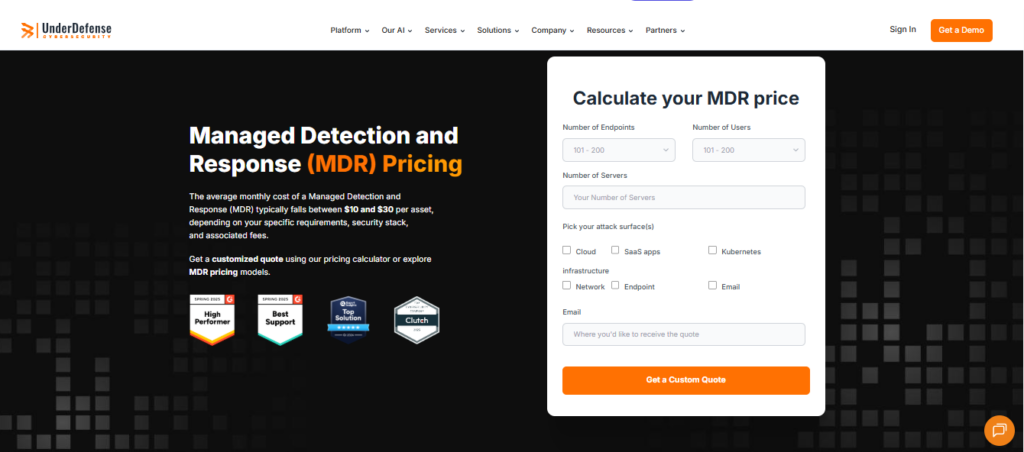
UnderDefense uses transparent, published pricing rather than the “call us” model that hides the real number until late in the sales cycle. Endpoint-based pricing avoids the “alert tax,” where consumption billing spikes as your alert volume climbs. You can see the numbers on the UnderDefense Agentic AI SOC platform page.
When to Shortlist
Shortlist UnderDefense when you need both detection and instant response, when you want to keep your existing tools, and when a predictable bill matters for your budget cycle. It fits especially well for teams preparing a compliance audit who also need 24/7 eyes through our SOC service.
Customer Reviews
“The biggest win for me was getting actual control over our security alerts. Before the guys from UD stepped in, we were getting bombarded with alerts from all our security tools. Their team cleaned up our configurations and got the noise under control within the first week. The platform itself pulls in data from all our existing security tools, so we didn’t have to rip and replace anything.” Verified User in Marketing and Advertising, Small-Business UnderDefense G2 Verified Review
“Honestly, some security tools are more complicated than the threats themselves. Underdefense isn’t just about catching bad stuff, they give proactive tips too. No Underdefense’s fault entirely, but getting all our logs and stuff flowing took longer than I expected.” Andriy H., Co-Founder and CTO UnderDefense G2 Verified Review
1.2 Huntress, Best for Endpoint-Heavy SMBs and MSPs Wanting Human-Backed EDR
Overview
Huntress is a managed EDR (Endpoint Detection and Response, software that watches your laptops and servers) platform built for small businesses and MSPs (Managed Service Providers, IT firms that run security for other companies). It pairs a lightweight agent with a 24/7 human SOC. The pitch is simple: enterprise-grade endpoint protection without needing security experts on staff.
The platform is purpose-built for teams without deep security skills. Deployment usually takes hours, rather than weeks, and the agents are light on resources.
Core Services
- Managed EDR with a 24/7 Huntress SOC investigating every alert
- Human-led threat analysis that validates threats and cuts false positives
- Multi-tenant management for MSPs running many clients
- Managed ITDR (Identity Threat Detection and Response) and security awareness training
Why Companies Consider Huntress
Small teams cannot staff a night shift. Huntress fills that gap by having its own analysts read alerts around the clock and report back on every response. That human layer is the real draw for shops without a security team.
Ideal Customer Profile
- Small businesses with 50 or fewer to a few hundred endpoints
- MSPs managing security across multiple clients
- Teams that want managed EDR over a full SIEM
Commercial Model
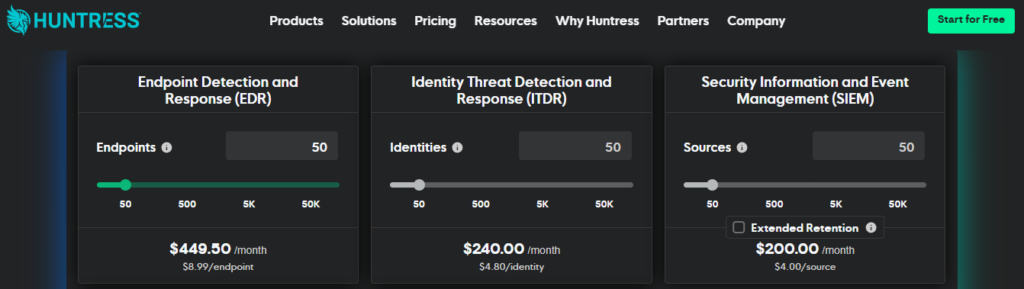
Huntress uses per-endpoint subscription pricing, with one price covering the EDR plus the 24/7 SOC, and no confusing tiers. A free trial is available. Published per-unit rates start around $8.99 per endpoint per month for Managed EDR, with a 50-endpoint minimum on direct and reseller purchases, and MSP-sold seats carrying no Huntress-mandated minimum.
When to Shortlist
Shortlist Huntress when your risk lives mostly on endpoints, when you want human-backed response at a low entry point, and when you do not need extended visibility across cloud, email, and identity in one platform. Its scope is narrower than a full XDR, which is a deliberate trade-off. If you outgrow endpoint-only coverage, our comparison of managed security alternatives is worth a read.
Customer Reviews
“Our company is too small to staff a 24/7 response team, but Huntress responds around the clock and reports to us on every response. It was very easy to get set up.” Verified User, Small-Business Huntress G2 Verified Review
“They are a great mdr/edr platform to have in your stack. We have done many tests and huntress outperformed all others. They will even find old items your team missed.” Verified Reviewer Huntress Gartner Verified Review
1.3 Intezer, Best for Automating Alert Triage
Overview
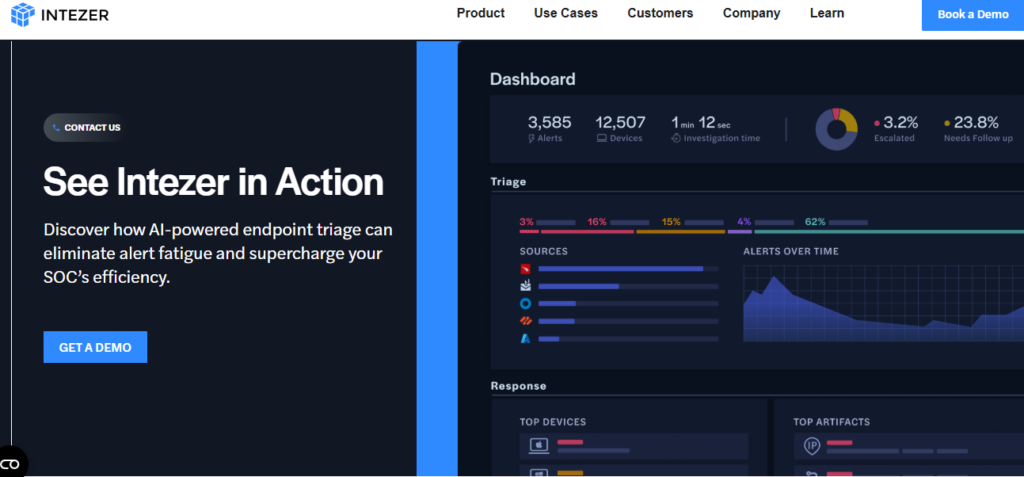
Intezer runs an Autonomous SOC platform that investigates alerts automatically and claims 100% alert coverage. It grew out of deep malware analysis roots, so its investigation of suspicious files is a genuine strength.
The core promise is simple: no alert goes uninvestigated, even the low-priority ones humans tend to skip.
Core Services
- Autonomous alert triage and investigation
- Malware analysis and threat intelligence
- Root cause and TTP mapping to MITRE ATT&CK
- Integrations with EDR, SIEM, and email security tools
Why Companies Consider Intezer
Teams choose Intezer to make sure nothing slips through the cracks. Its malware analysis depth helps confirm real threats and cut false positives. Reviewers call out the fast, detailed analysis that saves investigation time.
Ideal Customer Profile
- SOCs wanting full triage coverage
- Teams with heavy malware and file-based alert volume
- Mid-market to enterprise security operations
Commercial Model
Intezer prices by endpoint rather than by alert volume, so the bill tracks the size of your environment instead of spiking when alert traffic climbs. That sidesteps the “alert tax” you get with consumption billing. Subscription tiers layer on additional capabilities as you grow, which keeps the model both scalable and predictable, so map your needs to the right tier before buying.
When to Shortlist
Shortlist Intezer when triage coverage and malware analysis are your priorities. Because billing follows endpoint count rather than alert volume, you can forecast the spend as you scale, so just confirm which capabilities live in your tier before you sign. Our overview of AI-enabled incident triage covers what good coverage looks like.
Customer Reviews
“Intezer has been a solid addition to our SOC. It helps us quickly spot real threats and cut down on false positives, which saves a lot of investigation time.” Verified User Intezer Gartner Verified Review
“In my daily activities as a cybersecurity analyst, I must perform malware analysis every day. It is a bit costly for advanced usage and provides fewer features in the free version.” Rohan K. Intezer G2 Verified Review
1.4 Wazuh, Best for Technical Teams With Staff to Self-Host
Overview
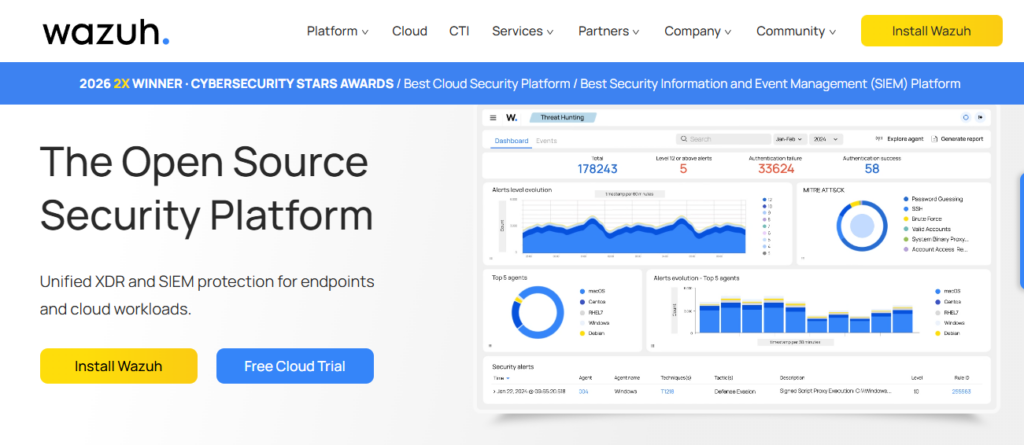
Wazuh is a free, open-source security platform that combines SIEM (Security Information and Event Management, software that collects and analyzes logs) with XDR (Extended Detection and Response). You download it, host it yourself, and pay nothing in license fees. The catch is that “free” means you supply the servers, the tuning, and the people.
I like Wazuh a lot as a piece of engineering. The honest truth is that the software is free, but running it is not.
Core Services
- Open-source SIEM and XDR with threat detection rules
- File Integrity Monitoring, UEBA, and threat hunting
- Log collection and compliance mapping for SOC 2, PCI DSS, and GDPR
- Active community support and broad technology integrations
- Self-hosted or self-managed cloud deployment
Why Companies Consider Wazuh
Teams with strong in-house engineers love Wazuh because it removes license cost and keeps full data ownership. You are never locked into a vendor. For a technical team, that control is worth a lot.
If you prefer that control without the staffing burden, our managed SIEM service delivers similar ownership with less overhead.
Ideal Customer Profile
- Teams with dedicated security engineers on staff
- Cost-sensitive organizations that can trade money for labor
- Companies wanting full control over detection logic and data
Commercial Model
The software is free and open-source. Your real cost is infrastructure plus the engineering hours to deploy, tune, and run it 24/7. Against the $620,815 baseline for a five-person SOC, “free” software still needs people to watch it.
When to Shortlist
Shortlist Wazuh when you have the security talent to run it, when data ownership is non-negotiable, and when you want to avoid license fees. Skip it if your team is already stretched thin, because it will not watch itself. Our guide on avoiding SIEM vendor lock-in covers the ownership trade-offs in depth.
Customer Reviews
“I love that Wazuh is open source and has active community support, along with support for various technologies like XDR, UEBA, threat hunting, and FIM.” Verified User Wazuh G2 Verified Review
1.5 Elastic Security, Best for Teams Already on the Elastic Stack
Overview
Elastic Security is a SIEM and detection platform built on the Elastic (ELK) stack, the same search engine many teams already use for logs. If your data already lives in Elasticsearch, adding security detection on top is a natural, low-cost move.
The tool is strong on log aggregation and search speed. That heritage shows in how fast it queries large data sets.
Core Services
- SIEM with prebuilt detection rules and MITRE ATT&CK mapping
- Endpoint visibility and log aggregation at scale
- Free and open tier, plus paid managed cloud options
- Fast search across endpoints and logs
Why Companies Consider Elastic Security
Teams pick Elastic when they already run the stack for observability. Reusing that investment for security cuts cost and shortens setup. Reviewers consistently praise its reliable performance and ease of setup once configured.
Ideal Customer Profile
- Teams already using Elasticsearch or the ELK stack
- Cost-conscious organizations with some engineering depth
- Companies wanting unified logs and security in one place
Commercial Model
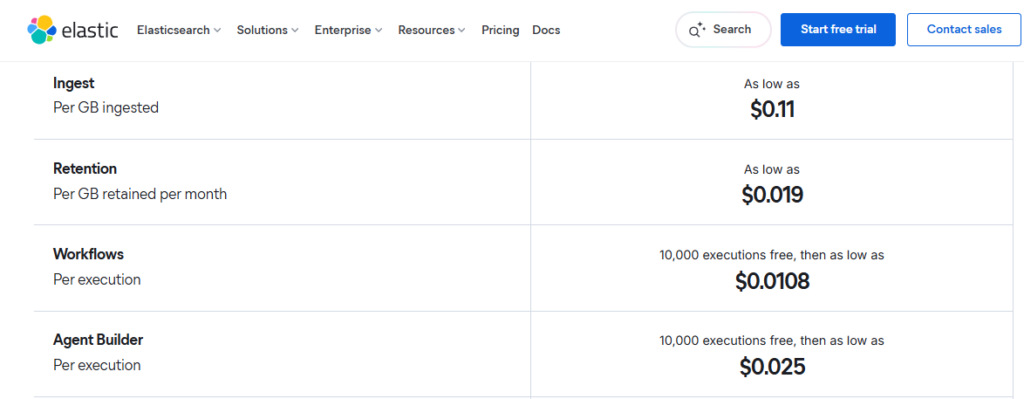
Elastic offers a free and open tier, with paid tiers priced by resource consumption or managed cloud usage. Like Wazuh, the self-managed path trades license cost for engineering hours.
When to Shortlist
Shortlist Elastic when your team already lives in the Elastic stack and wants to extend it to security without a new vendor. It is less of a fit if you want a fully managed, hands-off service. For a broader view, our SIEM solutions comparison maps the main options side by side.
Customer Reviews
“Elastic Security stands out for its powerful detection capabilities and deep visibility across endpoints and logs, while still being relatively easy to use once configured.” Verified User Elastic Security AWS Verified Review
1.6 Dropzone AI, Best for Teams Wanting an Autonomous Tier-1 Analyst
Overview
Dropzone AI is an autonomous AI SOC analyst. It investigates every alert on its own, writes up the findings, and hands your team a conclusion instead of a raw alert. Think of it as a tireless Tier-1 analyst (the first person who reviews an alert) that never sleeps.
The focus is narrow and deliberate: automate the investigation step that eats analyst hours.
Core Services
- Autonomous alert investigation across your existing tools
- Written investigation reports with reasoning
- Integrations with common SIEM and EDR platforms
- Tier-1 triage automation to cut queue time
Why Companies Consider Dropzone AI
Teams buried in alerts consider Dropzone to reclaim time. It removes the grind of manually chasing down each alert. Well-built triage AI can auto-close a large share of alerts, so the concept is sound when the accuracy holds up.
If chronic alert overload is your problem, our take on alert fatigue in cybersecurity explains where automation helps most.
Ideal Customer Profile
- SOC teams drowning in Tier-1 triage
- Mid-market companies with a SIEM already in place
- Teams that want investigation depth without more headcount
Commercial Model
Dropzone AI uses a flat annual subscription, reported to start near $36,000 a year. That is far below the cost of a single loaded analyst, though it covers investigation rather than full response.
When to Shortlist
Shortlist Dropzone when triage volume is your bottleneck and you already have people to act on its conclusions. It focuses on investigation, so you still own the response step and any user communication.
1.7 Prophet Security, Best for SOCs Drowning in Triage
Overview
Prophet Security is an agentic AI SOC platform that triages and investigates alerts, then explains its findings in plain language. Gartner has recognized it in its Hype Cycle for Security Operations, listing AI SOC agents as an emerging innovation trigger.
Prophet sits on top of your existing tools and works to cut dwell time (how long a threat sits undetected) and speed up investigation.
Core Services
- Agentic AI triage and alert investigation
- Timeline reconstruction and plain-language summaries
- Detection tuning and gap surfacing
- Integrations with SIEM, EDR, and SOAR tools
Why Companies Consider Prophet Security
Teams choose Prophet to handle the repetitive triage work that drags analysts down, without adding headcount. Its own framing leans on Gartner’s view that these agents augment analysts rather than replace them.
Ideal Customer Profile
- SOC teams with high alert volume and flat headcount
- Mid-market to enterprise security teams
- Teams wanting faster investigation closure rates
Commercial Model
Prophet uses a subscription model and recommends one-year terms to preserve flexibility and avoid lock-in. Public pricing is not disclosed, so you request a quote.
When to Shortlist
Shortlist Prophet when investigation speed is your pain point and you want an AI layer over your current stack. Confirm the false-positive and false-negative rates on your own data before you sign. Our list of AI SOC evaluation questions helps you pressure-test any vendor.
1.8 Radiant Security, Best for Teams Cutting SIEM Cost
Overview
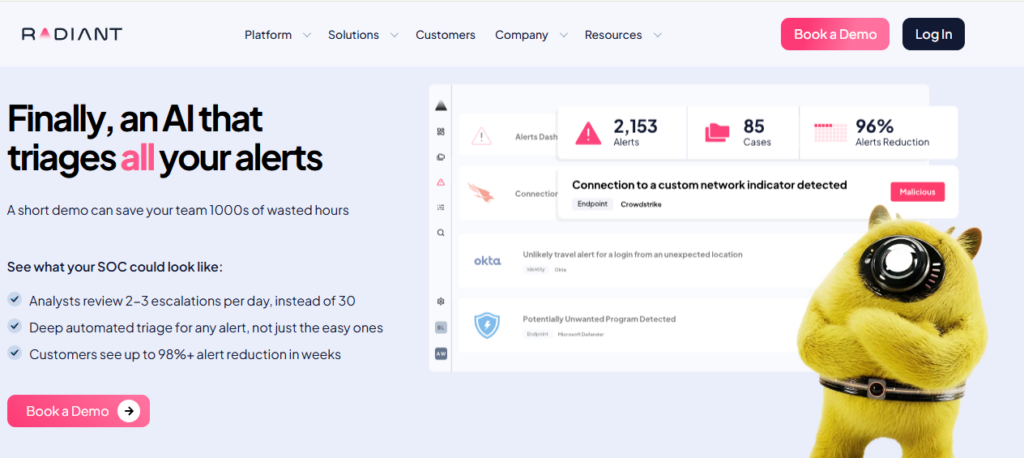
Radiant Security is an AI SOC platform for triage, investigation, and response. It pitches itself as a way to get full analysis on every alert while reducing dependence on expensive SIEM ingest. It won Best SOC Automation Solution at The Hacker News Cybersecurity Stars Awards 2026.
The angle I find interesting is the cost story. Radiant leans on reducing what you spend feeding a costly SIEM.
Core Services
- AI-driven triage, investigation, and response
- Root cause analysis on malicious alerts
- SIEM-cost reduction through smarter analysis
- Integrations across existing security tools
Why Companies Consider Radiant Security
Teams look at Radiant when their SIEM bill is climbing and they want AI to do the heavy analysis. The co-pilot approach gives analysts decision-ready results instead of raw alerts.
Ideal Customer Profile
- Teams facing rising SIEM ingest costs
- Mid-market SOCs wanting analysis plus response
- Security leads under budget pressure
Commercial Model
Radiant uses a subscription model without publicly listed pricing, so evaluation starts with a quote and a proof of concept. Model the ingest savings against the subscription cost to see the true math.
When to Shortlist
Shortlist Radiant when SIEM spend is your budget headache and you want AI-driven triage plus response in one place. As always, verify accuracy on your own alert stream first. Our managed SIEM pricing page shows how predictable that spend can be.
1.9 Microsoft Sentinel plus Security Copilot, Best for Microsoft E5 Shops
Overview
Microsoft Sentinel is a cloud-native SIEM. Paired with Security Copilot, it adds AI agents that help triage and investigate. If you already run Microsoft E5, a good chunk of this may already sit inside your license, which is the first thing I tell teams to check.
The strength is native integration across the Microsoft security estate. The watch-out is the pricing model.
Core Services
- Cloud-native SIEM with built-in analytics rules
- Security Copilot AI agents for triage and investigation
- Threat intelligence and playbook automation
- Deep integration across Microsoft security services
Why Companies Consider Microsoft Sentinel
Microsoft shops pick Sentinel because it plugs directly into tools they already own. The unified view across Microsoft services speeds investigation. Reviewers praise the centralized, cloud-native monitoring and automation.
If you run this stack, our MDR for Microsoft 365 service adds human-backed response on top.
Ideal Customer Profile
- Organizations standardized on Microsoft and Azure
- E5 license holders wanting to use what they already pay for
- Teams comfortable tuning connectors and rules
Commercial Model
Sentinel uses consumption-based pricing tied to data ingested, at roughly $2.46 per GB pay-as-you-go, with volume discounts down to about $0.87 per GB at 5,000 GB a day. This is the “alert tax” risk, since costs climb sharply with log volume unless you filter carefully.
When to Shortlist
Shortlist Sentinel when you live in the Microsoft ecosystem and can manage ingest costs with disciplined log filtering. Watch the consumption model closely, because reviewers flag the monthly intake bill as the main drawback.
Customer Reviews
“What I like most about Microsoft Sentinel is how it delivers centralized security monitoring across multiple data sources in a cloud-native environment. On top of that, the data-ingestion-based pricing model can get expensive if you collect large volumes of logs without proper filtering.” Verified User in Computer & Network Security, Enterprise Microsoft Sentinel G2 Verified Review
“Integrations with multiple cybersecurity tools. The cost of monthly intake is a high price that is paid.” Christian Noel C., Regional Head of Cybersecurity Intelligence, Enterprise Microsoft Sentinel G2 Verified Review
1.10 Conifers CognitiveSOC, Best for Mid-Market Teams Wanting Multi-Agent Depth
Overview
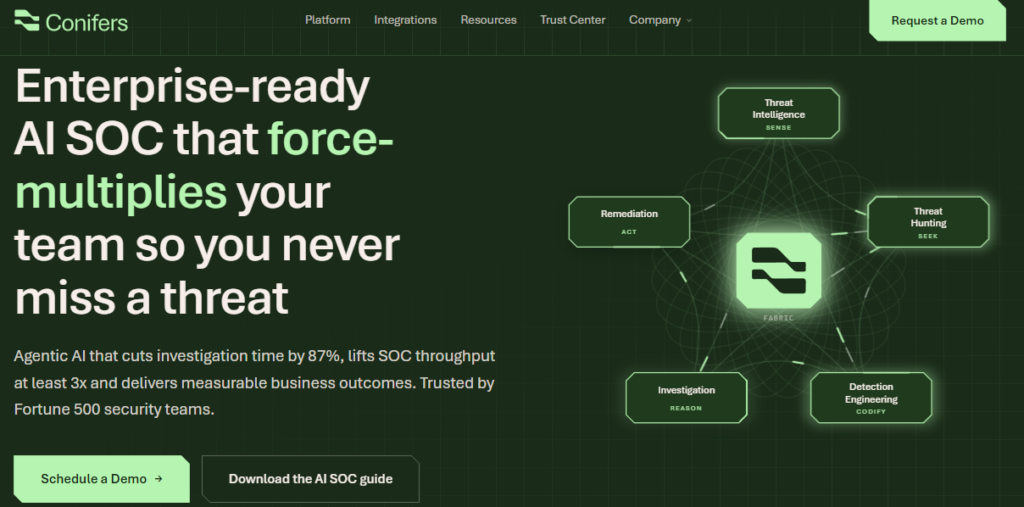
Conifers CognitiveSOC is a multi-agent AI SOC platform that layers organizational context onto investigation. Gartner named it a Sample Vendor in the AI SOC agents category in its 2025 Hype Cycle, and later called it “the company to beat” in AI SOC agents for threat investigation.
The differentiator is context. Conifers tries to understand your specific environment, rather than just the alert in isolation.
Core Services
- Multi-agent AI investigation with organizational context
- Threat investigation and triage across tools
- Strategic dashboard showing SOC impact on the business
- Integrations with existing security stack
Why Companies Consider Conifers
Teams pick Conifers for depth of investigation and the business-level visibility its dashboard provides. The Gartner recognition gives buyers a credible signal in a crowded, young category.
Ideal Customer Profile
- Mid-market SOCs wanting context-aware investigation
- Teams needing to show security impact to leadership
- Organizations evaluating agentic AI SOC platforms
Commercial Model
Conifers uses a subscription model without public pricing, so evaluation begins with a demo and quote. Given how new the category is, I would run a tight proof of concept before committing.
When to Shortlist
Shortlist Conifers when context-aware, multi-agent investigation matters and you want board-ready reporting. Because public review volume is still thin, lean on a hands-on trial to validate the claims. Our roundup of agentic SOC platforms puts this category in context.
1.11 Torq HyperSOC, Best for Teams Needing Hyperautomation
Overview
Torq HyperSOC is a hyperautomation platform, a modern take on SOAR (Security Orchestration, Automation, and Response, which runs automated playbooks). It automates security workflows at scale and connects the many tools in a mature stack. It is well reviewed on G2 for its automation depth.
Torq shines when you have repeatable processes you want to run without human clicks.
Core Services
- Workflow automation and orchestration at scale
- AI-assisted case management and response
- Broad integrations across security tools
- Automated playbooks for common incidents
Why Companies Consider Torq
Teams choose Torq to remove manual, repetitive response steps. When your playbooks are well defined, hyperautomation frees analysts for the harder edge cases. That maps to my core belief: automation should scale routine work while humans handle judgment.
Ideal Customer Profile
- Mature SOCs with defined processes to automate
- Teams with the engineering time to build playbooks
- Organizations wanting orchestration across many tools
Commercial Model
Torq uses a subscription model, reported to start around $300 a month at the entry level, scaling with usage and workflow complexity. Public enterprise pricing is not disclosed.
When to Shortlist
Shortlist Torq when automation and orchestration are your goal and you have the process maturity to feed it. It is a builder’s tool, so it rewards teams willing to invest in playbook design. Our guide to incident response automation shows where these workflows pay off.
Customer Reviews
“Torq has been rated highly by verified users for its automation capabilities and integrations across the security stack.” Verified Users Torq G2 Verified Reviews
Where This Leaves You
Notice the spread. Free self-hosted tools like Wazuh and Elastic, per-endpoint tools like Huntress, flat AI-analyst subscriptions like Dropzone, and consumption-based platforms like Sentinel all wear the word “affordable,” yet they cost wildly different amounts once you run them at your real alert volume.
The number that matters is not the sticker price. It is what you actually pay at your volume, plus the people needed to operate the tool. That gap between price and true cost is exactly what the next sections break down.
We built UnderDefense Agentic AI SOC to close that gap for lean teams, with transparent pricing, vendor-agnostic integration, and both detection and response in one place, so you keep your stack and still get 24/7 human-backed coverage. You can see how it works on the UnderDefense Agentic AI SOC platform page.
Q2. How Did We Score and Rank These AI SOC Platforms?
We scored each platform on five weighted criteria: Vendor-Agnostic Integration (25%), Pricing Transparency (25%), Detection-and-Response Depth (20%), Setup and Usability (15%), and Verified User Reviews (15%). Scores map to stars, where 0 to 20 equals 1 star and 81 to 100 equals 5 stars. UnderDefense Agentic AI SOC scores 5 stars for owning both detection and instant concierge response with no vendor lock.
Why These Five Criteria
I have watched too many teams buy on brand and regret it by the second invoice. So we weighted this list around the two fears operators actually voice to me: getting locked in, and getting a bill they cannot predict.
That is why Vendor-Agnostic Integration and Pricing Transparency carry the most weight. Most MDR tools come in two flavors. One lets you own your SIEM and take your tools and leave. The other quietly traps your detection logic inside their box. Our guide on avoiding vendor lock-in unpacks that split.
The Scoring Rubric
Here is exactly what each criterion measures and why it matters for a lean team.
| Criterion | Weight | What It Measures | Why It Matters |
|---|---|---|---|
| Vendor-Agnostic Integration | 25% | Works with your existing SIEM, EDR, and cloud | You keep your tools and data, no rip-and-replace |
| Pricing Transparency | 25% | Predictable, published, no ingest surprises | You can budget before you sign |
| Detection-and-Response Depth | 20% | Acts on threats, not just alerts you | Speed against attackers who move in minutes |
| Setup and Usability | 15% | Time to value for a small team | Fast coverage without a big project |
| Verified User Reviews | 15% | Real G2, Gartner, and Clutch feedback | Proof beyond the sales deck |
Scores translate to stars on a simple scale: 0 to 20 is 1 star, 21 to 40 is 2, 41 to 60 is 3, 61 to 80 is 4, and 81 to 100 is 5. If you want to structure your own evaluation, our list of AI SOC evaluation questions is a useful starting point.
How UnderDefense Earns 5 Stars
I want to be fair here. Plenty of tools on this list are strong at one thing. Where most lose points is transparency and vendor lock, the two heaviest criteria.
UnderDefense Agentic AI SOC scores well because it stays vendor-agnostic, publishes pricing, and owns both detection and response through our MDR service. One reviewer put the alert-noise payoff plainly.
“The biggest win for me was getting actual control over our security alerts. Their team cleaned up our configurations and got the noise under control within the first week. The platform pulls in data from all our existing security tools, so we didn’t have to rip and replace anything.” Verified User in Marketing and Advertising, Small-Business UnderDefense G2 Verified Review
“Honestly, some security tools are more complicated than the threats themselves. Underdefense isn’t just about catching bad stuff, they give proactive tips too.” Andriy H., Co-Founder and CTO UnderDefense G2 Verified Review
One caution I hold myself to: any vendor claiming a perfectly “unbiased” AI is either wrong or hiding something. Measurable and auditable beats magical every time. That principle drives our approach to AI SOC explainability and transparency.
Q3. What Is an AI SOC Platform, and Why Does Its Pricing Vary So Wildly?
An AI SOC platform uses autonomous AI agents to triage, investigate, and respond across your existing tools, with humans supervising the calls. A SIEM only alerts, and a SOAR only runs playbooks. Pricing follows four models: per-endpoint, per-alert, consumption or ingest, and flat platform. For lean teams facing roughly 960 alerts a day, per-endpoint or flat pricing runs cheapest, while consumption models trigger a hidden “alert tax.”
SIEM vs SOAR vs AI SOC, in Plain Terms
Let me strip the jargon. A SIEM (Security Information and Event Management) collects logs and raises alerts. A SOAR (Security Orchestration, Automation, and Response) runs pre-written playbooks when told to.
An AI SOC platform does the thinking in between. The AI agents are foot soldiers. Your analysts are the generals directing them. The agents chase every alert at machine speed, and the humans make the judgment calls. Our explainer on what an AI SOC is goes deeper on this model.
The Three AI SOC Archetypes
Not every AI SOC works the same way. From what I see across real deployments, they fall into three camps.
- AI-native investigation tools that autonomously triage and investigate alerts
- SIEM-embedded copilots that add AI on top of an existing SIEM
- Hyperautomation and SOAR platforms that automate response workflows at scale
Match the archetype to your bottleneck. If triage is your pain, buy investigation. If your playbooks are mature, buy automation. Our roundup of agentic SOC platforms maps these camps in detail.
Why Teams Buy Now
The trigger is alert overload. A typical team sits around 960 alerts a day, and large enterprises push past 3,000.
Running that manually is bringing a knife to a gunfight. Attackers move in minutes, and a tired human at 2 a.m. cannot keep pace. Being a human is a flex in 2026, but only for the judgment calls. If constant noise is your reality, our take on alert fatigue in cybersecurity is worth a read.
The Four Pricing Models
Here is where the sticker price lies to you. Same “affordable” label, wildly different bills.
| Pricing Model | How It Bills | Lean-Team Fit |
|---|---|---|
| Per-endpoint | Per device per month | Predictable, scales with headcount |
| Per-alert | Per alert investigated | Risky at high alert volume |
| Consumption / ingest | Per GB of data ingested | The “alert tax,” spikes fast |
| Flat platform | Fixed subscription | Easiest to budget |
Beating the Alert Tax
Consumption pricing is the one that ambushes small teams. The more you log, the more you pay, and alert volume only climbs.
We have cut a client’s ingestion by about 90%, from 300 GB a day down to 35 to 40 GB, without losing visibility. That is the real lesson: affordability is often a tuning problem, rather than a product problem. UnderDefense Agentic AI SOC leans on that discipline plus transparent, predictable pricing, so you avoid the ingest surprises that consumption-based tools spring on lean teams. You can see how it works on the UnderDefense Agentic AI SOC platform page.
Q4. What Does Each Pricing Tier Actually Cover, and What Gets Capped?
Entry tiers usually buy Tier-1 triage only, meaning automated alert closing with capped integrations and no autonomous containment or human analyst. Mid tiers add investigation and approve-to-act response. Enterprise tiers unlock full autonomous response, threat hunting, and 24/7 human backup. The trap is simple: a low entry price can hide that you still handle every real incident yourself.
The Coverage That Hides Behind the Price
Here is what nobody decodes for you. “Affordable” often means a black box that parrots alerts back and leaves the real work on your desk.
Tier-1 triage (the first-pass review of an alert) is not the same as response. Closing noisy alerts is useful, but it does not contain a live threat or talk to the affected user. Our comparison of AI SOC versus MDR, MSSP, and SOAR lays out where each model stops.
What Each Tier Really Includes
This matrix shows where the lines usually fall across representative tools.
| Capability | Entry Tier | Mid Tier | Enterprise Tier |
|---|---|---|---|
| Tier-1 triage | Yes | Yes | Yes |
| Deep investigation | – | Yes | Yes |
| Auto-containment | – | Approve-to-act | Yes |
| Integrations | Capped | Expanded | Full |
| 24/7 human SOC | – | Limited | Yes |
Well-built triage AI can cut the queue by about 61% at a 1.36% false-negative rate, so the entry tier can be genuinely useful. Layering AI onto existing detections has also suppressed false positives by roughly 54% while holding detection above 95%. Our overview of AI-enabled incident triage shows what that looks like in practice.
How to Read a Vendor Quote
Map every tier to the NIST CSF (Cybersecurity Framework, the standard families of security functions). That lets you show your CFO exactly where you spend and where you have nothing.
Before you sign, ask three blunt questions:
- Does this tier actually contain threats, or just close alerts?
- Are there human analysts at 2 a.m., or only automation?
- Which integrations are capped at this price?
I would rather a client pay for the right tier than discover, mid-incident, that “response” was an enterprise upsell. UnderDefense Agentic AI SOC includes both detection and instant concierge response at its transparent tier, so analysts act on threats and verify with users, instead of returning an alert without context and calling it done. Our MDR pricing page shows exactly what each level covers.
Q5. Should You Build a 24/7 SOC In-House or Buy an AI SOC Platform?
For most teams under 1,000 employees, buying beats building. A five-person in-house SOC costs at least $620,815 a year in salaries alone, before tools, training, and turnover. An AI SOC platform delivers 24/7 coverage for a fraction of that, often under $50,000 a year at the lean end. Build only when your scale, data-residency rules, or threat model demand full in-house control.
The Math That Settles It
A loaded security analyst costs about $124,163 a year. Covering nights, weekends, and holidays needs five of them, which puts the floor at $620,815 a year. That is before you buy a single tool.
Now weigh that against an AI SOC subscription. Even a mid-tier platform with human backup lands far below that number. For most lean teams, the build case collapses the moment you write down the fully loaded cost. Our build versus buy breakdown walks through the full model, and our SOC cost calculator lets you plug in your own numbers.
The Hidden Costs of Building
Salaries are only the visible part. Building your own SOC also means carrying costs most budgets forget.
- Recruiting and retention in a market with a chronic analyst shortage
- Tooling, SIEM licenses, and threat intelligence feeds
- Ongoing training to keep pace with new attack techniques
- Burnout and turnover, which reset your investment every time someone leaves
The talent gap is the real killer. You can fund the headcount and still fail to fill the seats, and our note on alert fatigue shows how fast that burns people out.
When Building Still Makes Sense
I will not pretend buying is always right. Building can be the correct call in a few specific situations.
- You operate at enterprise scale, typically above 5,000 employees
- Strict data-residency or sovereignty rules forbid outside handling
- Your threat model is unusual enough to demand fully bespoke detection
Even then, many large teams run a hybrid, keeping strategy in-house while outsourcing the round-the-clock watch. A virtual CISO can anchor that strategy without a full internal build.
The Buy Case in Practice
Buying is not about surrendering control. With a vendor-agnostic partner, you keep your tools and your data, and you gain the coverage you could not staff. That is the model behind our MDR service, and one reviewer summed up the payoff.
“Our company is too small to staff a 24/7 response team, but Huntress responds around the clock and reports to us on every response. It was very easy to get set up.” Verified User, Small-Business Huntress G2 Verified Review
UnderDefense Agentic AI SOC closes the same gap with transparent pricing and both detection and response in one place, so you get 24/7 human-backed coverage without the $620,815 build. You can see how it works on the UnderDefense Agentic AI SOC platform page.
Q6. Will an AI SOC Platform Work With Your Existing Security Stack?
The right one will. Vendor-agnostic AI SOC platforms sit on top of your current SIEM, EDR, and cloud tools, pulling signals without forcing a rip-and-replace. The danger is the “black box” vendor that locks detection logic inside its own tools, so switching later means losing your work. Always confirm that you keep ownership of your data and detection rules before you sign.
Vendor-Agnostic vs Black Box
This is the single distinction I push hardest with buyers. Two philosophies exist, and they lead to very different futures.
A vendor-agnostic platform integrates with what you already own, so you keep your SIEM, your data, and your detection logic. A black-box vendor traps that logic inside proprietary tools, and if you leave, you lose it. The difference is not the marketing but the ownership you walk away with. Our guide on avoiding vendor lock-in details the trap.
What Good Integration Looks Like
Strong integration is more than a logo wall of connectors. It means the platform actually reads and acts on your existing signals.
- Native connectors for common SIEM, EDR, and cloud platforms
- Two-way actions, so the platform can contain a threat, not just read alerts
- Support for your log sources without heavy custom engineering
- Clean export of your data and rules if you ever leave
If you run Microsoft, our MDR for Microsoft 365 shows what native depth looks like, and our AI SOC integration guide covers the wider stack.
The Integration Questions to Ask
Before you commit, get straight answers to a few pointed questions.
- Does it connect to my current SIEM and EDR out of the box?
- Can it take response actions, or only surface alerts?
- Do I keep my detection logic and data if I switch vendors?
- How much custom engineering does onboarding really need?
One UnderDefense reviewer captured the payoff of true vendor-agnostic integration.
“The platform itself pulls in data from all our existing security tools, so we didn’t have to rip and replace anything. Their team cleaned up our configurations and got the noise under control within the first week.” Verified User in Marketing and Advertising, Small-Business UnderDefense G2 Verified Review
We built UnderDefense Agentic AI SOC to stay vendor-agnostic on purpose, so you keep your stack and your data while gaining coverage. Our guide to running an AI SOC with your existing SIEM shows how that works in a live environment.
Q7. How Does an AI SOC Platform Support Compliance and Audit Readiness?
A strong AI SOC platform maps its coverage to frameworks like SOC 2, ISO 27001, HIPAA, and GDPR, and produces the logs, reports, and evidence auditors demand. Continuous monitoring plus documented response satisfies controls that manual, part-time coverage cannot. For regulated teams, that audit trail is often the deciding factor, rather than raw detection speed.
Why Compliance Drives the Purchase
For many teams I talk to, the audit is the forcing function. A looming SOC 2, HIPAA, or DORA deadline moves security from “someday” to “this quarter.”
AI SOC platforms help because they generate continuous evidence. Auditors want proof that monitoring runs around the clock and that incidents get handled, rather than a promise that someone checks alerts when they can. Our AI SOC compliance guide maps this out framework by framework.
What Auditors Actually Want
Passing an audit is a documentation exercise as much as a security one. The platform should hand you the artifacts, rather than force you to reconstruct them.
- Continuous monitoring logs that prove 24/7 coverage
- Documented incident response with timelines and outcomes
- Control mapping to the specific framework you are certifying against
- Reports you can hand directly to an assessor
This is where part-time coverage fails. You cannot document a 2 a.m. response that never happened, and our compliance services exist to close exactly that gap.
Framework Coverage at a Glance
Different platforms support different frameworks, so match coverage to your obligations.
| Framework | Who Needs It | What the Platform Provides |
|---|---|---|
| SOC 2 | SaaS and tech vendors | Continuous monitoring evidence and control mapping |
| ISO 27001 | Global and enterprise buyers | Documented controls and incident records |
| HIPAA | Healthcare organizations | Access logs and breach response documentation |
| GDPR | Companies handling EU data | Data-handling logs and incident reporting |
Regulated industries feel this most. Our MDR for Healthcare and MDR for Financial Services pages show how coverage maps to sector-specific rules.
Turning Coverage Into an Audit Pass
The goal is simple: walk into the audit with evidence already assembled. A platform that documents every investigation and response turns compliance from a scramble into a routine export.
UnderDefense Agentic AI SOC supports SOC 2, ISO 27001, HIPAA, and GDPR, and pairs continuous monitoring with documented concierge response, so the audit trail is built as you operate, rather than reconstructed under deadline pressure. If you want to see the reporting first-hand, the UnderDefense Agentic AI SOC platform page shows how the evidence comes together.
See how UnderDefense Agentic AI SOC resolves a real incident on your stack.
1. What is the most affordable AI SOC platform in 2026?
There is no single cheapest option, because affordability depends on your alert volume and whether you have staff to run the tool. We group the 11 most affordable AI SOC platforms into a few cost tiers.
- Free self-hosted: Wazuh and Elastic Security cost nothing to license, but you supply servers, tuning, and 24/7 people.
- Per-endpoint: Huntress bundles managed EDR with a human SOC at predictable per-device pricing.
- Flat subscription: Dropzone AI starts near 36,000 dollars a year for autonomous investigation.
The honest answer is that free software still needs people, so a five-person SOC floor of 620,815 dollars a year sets the real benchmark. We built UnderDefense Agentic AI SOC on transparent, published pricing so lean teams can predict the bill before signing. To model your own numbers first, our SOC cost calculator gives a fast baseline. Match the pricing model to your volume, rather than chasing the lowest sticker price.
2. How much does an AI SOC platform actually cost for a mid-market team?
Costs vary widely because platforms bill in four different ways, and the model drives the real number more than the headline price.
- Per-endpoint: predictable and scales with headcount.
- Per-alert: risky once alert volume climbs.
- Consumption or ingest: the alert tax, since costs spike with log volume.
- Flat platform: the easiest to budget.
A typical mid-market team sees around 960 alerts a day, so consumption-based tools can surprise you at the second invoice. For context, staffing a 24/7 in-house SOC costs at least 620,815 dollars a year, while lean AI SOC subscriptions can land under 50,000 dollars. We have cut a client’s ingestion by roughly 90 percent, from 300 GB a day down to 35 to 40 GB, without losing visibility, which shows affordability is often a tuning problem. Our AI SOC pricing guide breaks down every model so you can forecast spend before you commit to a vendor.
3. Should we build a 24/7 SOC in-house or buy an AI SOC platform?
For most teams under 1,000 employees, buying wins on math. A loaded security analyst costs about 124,163 dollars a year, and round-the-clock coverage needs five of them, putting the in-house floor at 620,815 dollars before a single tool.
Building also carries hidden costs that budgets forget:
- Recruiting and retention in a market with a chronic analyst shortage.
- SIEM licenses, tooling, and threat intelligence feeds.
- Ongoing training and the burnout that resets your investment.
Building can still make sense at enterprise scale above 5,000 employees, under strict data-residency rules, or with an unusual threat model. Even then, many large teams run a hybrid that keeps strategy in-house while outsourcing the night watch. Buying is not about surrendering control, because a vendor-agnostic partner lets you keep your tools and data. Our build versus buy breakdown walks through the full model so you can defend the decision to your CFO.
4. What does each AI SOC pricing tier actually cover?
Tiers differ sharply, and a low entry price often hides how much work still lands on your desk.
- Entry tier: Tier-1 triage only, with capped integrations and no autonomous containment or human analyst.
- Mid tier: adds deeper investigation and approve-to-act response.
- Enterprise tier: unlocks full autonomous response, threat hunting, and 24/7 human backup.
The trap is simple. Closing noisy alerts is useful, but Tier-1 triage does not contain a live threat or talk to the affected user. Well-built triage AI can still cut the queue by about 61 percent at a 1.36 percent false-negative rate, so the entry tier has real value. Before signing, ask whether the tier truly contains threats, whether humans are on at 2 a.m., and which integrations are capped. UnderDefense Agentic AI SOC includes both detection and instant concierge response at its transparent tier, and our MDR pricing page shows exactly what each level covers.
5. Will an AI SOC platform work with our existing security stack?
The right one will. Vendor-agnostic AI SOC platforms sit on top of your current SIEM, EDR, and cloud tools, pulling signals without forcing a rip-and-replace.
Good integration means more than a wall of connector logos. Look for:
- Native connectors for common SIEM, EDR, and cloud platforms.
- Two-way actions, so the platform can contain a threat, not just read alerts.
- Clean export of your data and rules if you ever leave.
The danger is the black-box vendor that locks detection logic inside its own tools, so switching later means losing your work. The difference is not the marketing but the ownership you walk away with. Always confirm you keep your detection rules and data before you sign. We built our approach to stay vendor-agnostic on purpose, and our guide to running an AI SOC with your existing SIEM shows how that works in a live environment without disrupting the tools you already own.
6. How does an AI SOC platform support compliance and audit readiness?
A strong AI SOC platform maps its coverage to frameworks like SOC 2, ISO 27001, HIPAA, and GDPR, then produces the logs, reports, and evidence auditors demand.
Auditors want proof, rather than promises, so the platform should hand you:
- Continuous monitoring logs that show 24/7 coverage.
- Documented incident response with timelines and outcomes.
- Control mapping to the specific framework you are certifying against.
This is where part-time coverage fails, because you cannot document a 2 a.m. response that never happened. For many teams, a looming audit is the forcing function that moves security from someday to this quarter. Continuous monitoring paired with documented response satisfies controls that manual coverage cannot. UnderDefense Agentic AI SOC supports SOC 2, ISO 27001, HIPAA, and GDPR, and builds the audit trail as you operate. Our compliance services exist to close exactly that evidence gap before your assessment deadline.
7. What is the difference between a SIEM, a SOAR, and an AI SOC platform?
These three tools do related but distinct jobs, and confusing them leads to buying the wrong thing.
- SIEM: collects logs and raises alerts.
- SOAR: runs pre-written playbooks when told to.
- AI SOC: does the thinking in between, autonomously triaging, investigating, and responding while humans supervise.
We describe the model as foot soldiers and generals. The AI agents chase every alert at machine speed, and our analysts make the judgment calls. That matters because a typical team faces around 960 alerts a day, and large enterprises push past 3,000, which no manual process handles well. AI SOC platforms also come in three archetypes: AI-native investigation tools, SIEM-embedded copilots, and hyperautomation or SOAR platforms. Match the archetype to your bottleneck, buying investigation when triage hurts and automation when your playbooks are mature. Our explainer on what an AI SOC is goes deeper on how these categories differ and overlap.
8. Are free open-source AI SOC tools like Wazuh actually affordable?
Free software is not the same as free operation. Wazuh and Elastic Security carry no license fee, which is genuinely attractive, but the running cost is real.
Your true spend on a self-hosted tool includes:
- Infrastructure and servers to host the platform.
- Engineering hours to deploy, tune, and maintain it.
- The people needed to watch it 24/7, since it will not watch itself.
Against the 620,815 dollar baseline for a five-person SOC, free software still needs staff to operate around the clock, so the labor cost dominates. Teams with strong in-house engineers love these tools for the control and full data ownership they provide, and I respect Wazuh a lot as a piece of engineering. But if your team is already stretched thin, a managed option often costs less once you count the hours. Our SIEM solutions comparison maps the trade-off between free tooling and fully managed coverage so you can price the true total.