




Q1: What Are the 10 Best Managed SIEM Providers for Companies Moving Off Splunk in 2026?
The best managed SIEM providers for a Splunk migration are the ones that take ownership of porting your detection logic, retention, and audit history, not the ones that hand you a mapping guide and wish you luck. The ten evaluated here are UnderDefense, Expel, ReliaQuest, Red Canary, Arctic Wolf, Deepwatch, Binary Defense, eSentire, Dropzone AI, and Hunters.AI, scored on migration ownership, detection-parity commitment, retention and audit-history handling, and time to parity.
Talk to a SIEM expert about fewer false positives.
The Real Switching Cost Is Not the License
Let me start where most buyers get surprised. When you move off Splunk, the expensive part is not the new license. It is the three years of tuned correlation rules, automation, and field mappings you built inside Splunk’s Search Processing Language (SPL).
Here is what I mean by SPL: it is Splunk’s query language, the thing every one of your detections is written in. Move to Microsoft Sentinel and you are now in KQL (Kusto Query Language). Move to Elastic and it is a different syntax again.
💸 Why This Blocks So Many Migrations
Rewriting every detection by hand is slow, risky work. One industry estimate puts enterprise Splunk migrations at $400,000 to $800,000 in Year 1 before the new license even starts. Much of that is engineer time spent translating rules and running both platforms in parallel for six to twelve months.
A senior analyst who has sat through these projects would put it plainly. You do not lose the license when you switch, you lose the tuning. That tuning is the asset, and starting over on it is the real cost, which is exactly why avoiding vendor lock-in matters so much during a move.
The Question That Actually Matters
Most buyers ask vendors, “Can you migrate me?” In my experience, that is the wrong question. Every vendor says yes.
The sharper question is, “Who is accountable for detection parity, and on what timeline?” Detection parity means your new SIEM catches the same threats your old one did, with no silent gaps in between.
⚠️ Mapping Guide vs Owned Migration
There is a real difference between a vendor who hands you a SPL-to-KQL cheat sheet and one who signs up to deliver working detections. A migration where you get a mapping guide is a different product from one where the vendor takes responsibility for parity. Both get called “migration support.” Only one protects you at 2 a.m. during cutover, which is where our managed SIEM team takes ownership.
The 10 Providers at a Glance
Here is the shortlist, framed around migration ownership rather than raw feature count. Detection as Code (DaC) means detections are written as portable, version-controlled files, so they survive a platform change instead of being rewritten. If you want a deeper checklist, our SIEM buyers guide breaks these criteria down further.
| Provider (Rating) | Managed / Co-Managed | Migration Support | Retention Model | Best For |
|---|---|---|---|---|
| UnderDefense (5 stars) | Co-managed, you keep the data | Detection Logic as Code, documented Elastic depth | Customer-owned data | Mid-market teams wanting parity ownership without vendor lock-in |
| Expel (4 stars) | Managed | Broad integrations, SIEM-agnostic | Customer SIEM | Teams keeping their own SIEM |
| ReliaQuest (4 stars) | Co-managed | GreyMatter overlay across SIEMs | Customer SIEM | Large enterprises with mixed tooling |
| Red Canary (4 stars) | Managed | EDR-led, lighter SIEM porting | Varies | Endpoint-heavy environments |
| Arctic Wolf (3 stars) | Managed | Proprietary platform ingest | Vendor-side | SMBs wanting fully outsourced SOC |
| Deepwatch (4 stars) | Co-managed | Splunk-heritage migration help | Customer SIEM | Splunk-committed shops |
| Binary Defense (3 stars) | Managed | Analyst-led, flexible ingest | Customer SIEM | Teams wanting human triage depth |
| eSentire (4 stars) | Managed | Atlas platform ingest | Vendor-side | Regulated mid-market |
| Dropzone AI (3 stars) | AI tier | AI triage layer, not full migration | Customer SIEM | Alert-triage automation add-on |
| Hunters.AI (3 stars) | Co-managed | Built-in DaC, SIEM replacement angle | Customer data lake | Teams replacing the SIEM itself |
How We Scored Each Provider
We used one rubric for everyone, weighted to 100 points. No provider gets a private curve.
- Migration Ownership and Detection-Parity Commitment (30%): Does the vendor own porting, or just advise?
- Retention and Audit-History Continuity (20%): Does your historical data and audit trail survive the move?
- Detection-as-Code Portability and Verification (20%): Are detections portable and testable, not locked in one syntax?
- Parallel-Run and Time-to-Parity (15%): How fast do you reach equal coverage?
- Pricing Transparency and Segment Fit (15%): Is pricing clear and right-sized for your team?
Star bands: 0 to 20 = 1 star, 21 to 40 = 2 stars, 41 to 60 = 3 stars, 61 to 80 = 4 stars, 81 to 100 = 5 stars.
⭐ A Note on Honesty in Scoring
Migration ownership is rarely published on vendor websites. So some scores here are deliberately conservative, based on what documentation and customer reviews actually show, not on sales claims. I might be wrong on a provider or two, and I would rather under-rate than over-promise on your behalf.
1.1 UnderDefense
UnderDefense earns the top spot because it treats a Splunk move as replacing the license plus owning the porting project, not as bolting on another tool.
⭐ Overview
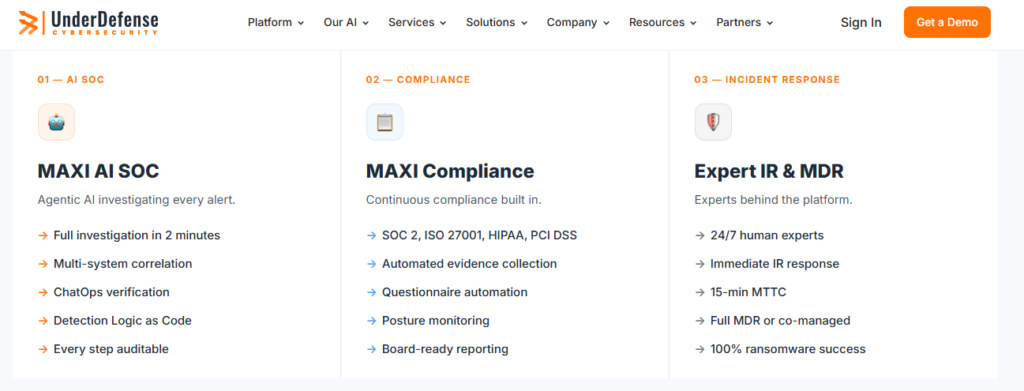
UnderDefense runs an Agentic AI SOC platform that combines automated detection with dedicated human analysts. For migrations, the approach is co-managed. We bring the SIEM, SOAR, and tools, and you keep the data through our WarRoom platform. That framing matters for anyone burned by vendor lock-in, where your detections and history live inside a platform you cannot easily leave.
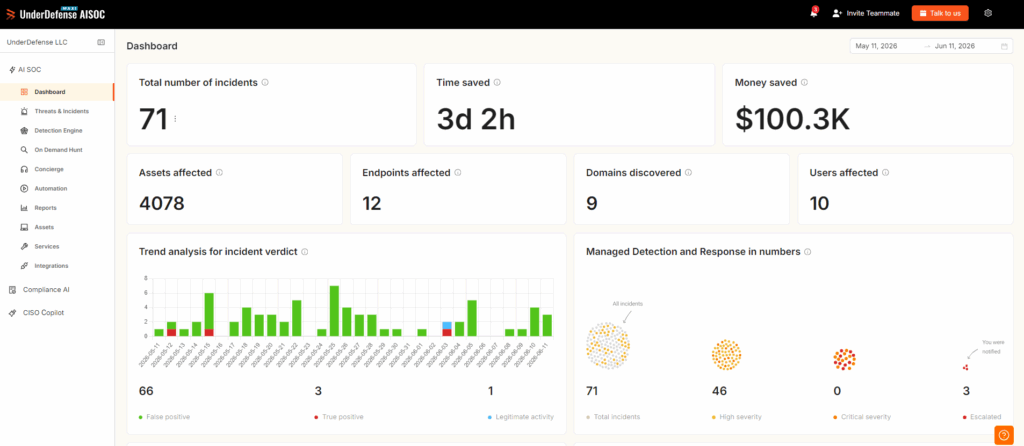
📊 Core Services
- Co-managed SIEM with detection-rule porting ownership
- Agentic AI SOC for 24/7 detection and triage
- Detection Logic as Code for portable, version-controlled rules
- Incident response with documented escalation SLAs
- Compliance support for SOC 2, ISO 27001, HIPAA
😊 Why Companies Consider UnderDefense
Most mid-market teams do not have the engineers to rewrite three years of SPL rules while keeping the lights on. UnderDefense positions itself as the team that owns that parity work through its Agentic AI SOC platform, so your internal staff are not doing rule-by-rule translation at 2 a.m. Reviewers consistently flag responsiveness and alert-noise reduction as the felt difference.
❤️ Ideal Customer Profile
Best suited for:
- Mid-market organizations (roughly 51 to 1,000 employees) moving off Splunk
- Teams that want to keep ownership of their data and detections
- Security-lean teams needing 24/7 coverage without building a SOC
- Compliance-driven companies needing audit-ready reporting
💰 Commercial Model
Subscription-based, sized to environment and monitored assets. Engagements fold in onboarding, migration support, continuous monitoring, and advisory. Reviewers repeatedly describe the pricing as strong value for the coverage level, and you can model it with our managed SIEM price guide.
⏰ When to Shortlist
Shortlist UnderDefense when you want a single accountable partner for detection parity during a Splunk migration, and you refuse to trade your data ownership to get it.
💬 Reviews
“UnderDefense Agentic AI SOC integrates well with our systems, specifically with our SIEM, Splunk. Their team is proactive in identifying and addressing threats, providing 24/7 oversight.”
– Oleg K., Director Information Security UnderDefense G2 – Verified Review
“Plus, their expert management of our SIEM has added to the value of our security investments and tools. At first, we hired them for managed SIEM service, but after they demonstrated the value of MDR, our management was motivated to act on it.”
– Yaroslava K., IT Project Manager UnderDefense G2 – Verified Review
“No Underdefense’s fault entirely, but getting all our logs and stuff flowing took longer than I expected.”
– Andriy H., Co-Founder and CTO UnderDefense G2 – Verified Review
1.2 Expel
Expel comes second because it does one thing very well. It watches your existing SIEM and stack without forcing you onto its own data platform, which suits teams that want to keep their SIEM after a Splunk move.
⭐ Overview
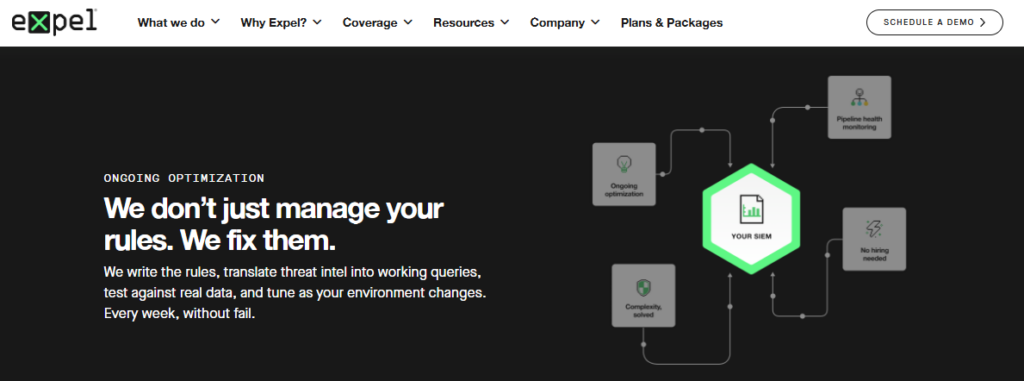
Expel is a managed detection and response provider built around a transparent workflow and heavy automation. It ingests from your security tools and delivers triaged, human-reviewed alerts. The structural trade-off is real. As a monitoring layer on top of your stack, Expel carries less deep knowledge of your specific environment than an embedded team would.
📊 Core Services
- 24/7 managed detection across endpoint, cloud, and SaaS
- Automated alert triage with human analyst review
- Broad API integrations and Slack-based support
- Investigative context pulled from multiple systems
- Detection tuning against your existing tools
😊 Why Companies Consider Expel
Teams that just finished a painful platform change often do not want another migration. Expel’s SIEM-agnostic model lets them keep their tooling and simply add expert eyes. Reviewers praise fast support and clean incident visibility, though a dedicated MDR service with embedded context can close the environmental-knowledge gap.
❤️ Ideal Customer Profile
Best suited for:
- Mid-market and enterprise teams keeping their own SIEM
- Small internal SOCs needing a force multiplier
- Cloud-heavy and SaaS-heavy environments
💰 Commercial Model
Subscription pricing aligned to monitored technologies and data sources. Onboarding is described as straightforward for a service that ingests multiple security platforms.
⏰ When to Shortlist
Shortlist Expel when you want a monitoring and triage layer over your current stack, rather than a partner to own a full SIEM migration. When you need parity ownership instead, compare it against our SOC service.
💬 Reviews
“The Expel team has a solid set of skills that span a reasonable breadth of what you would expect to find in a Security Operations organization… there is still a limit to the environmental/organizational knowledge inherent in the service. This leads to a fairly frequent need for engagement with our internal team.”
– Verified User in Computer Software, Mid-Market Expel G2 – Verified Review
“Lack of support for EKS in AWS GovCloud. This was promised to us before we signed our contract, but later was removed from the roadmap. GovCloud is an essential part of our business and this lack of support leaves a large gap in our monitoring and alerting.”
– Verified User in Manufacturing, Enterprise Expel G2 – Verified Review
1.3 ReliaQuest
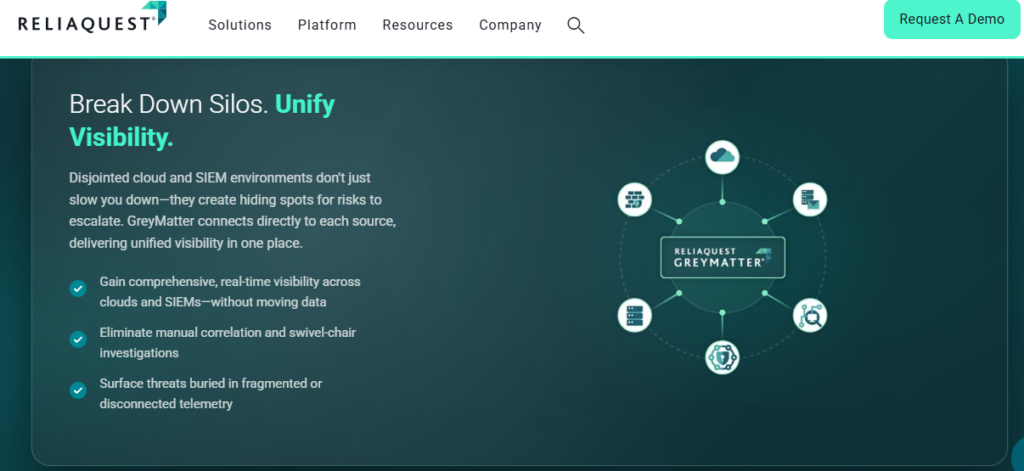
ReliaQuest earns a strong spot because its GreyMatter platform sits as an overlay across your existing tools, which helps large enterprises avoid ripping out a stack mid-migration.
Overview
ReliaQuest is a security operations provider built around GreyMatter, a layer that unifies detection across your SIEM, EDR, and cloud sources. The co-managed model suits complex, mixed-tooling environments. The structural trade-off is scale-fit. GreyMatter’s value shows most in large, heterogeneous estates, so leaner mid-market teams sometimes pay for breadth they will not use.
Core Services
- Co-managed detection across existing SIEM and security tools
- GreyMatter overlay for cross-tool visibility and automation
- 24/7 monitoring and threat hunting
- Automated response playbooks
- Detection content management
Why Companies Consider ReliaQuest
Large enterprises with several SIEMs and years of mixed tooling want one pane of glass without a forced platform swap. ReliaQuest positions GreyMatter as that connective layer during and after a Splunk transition, though teams weighing the fit often review ReliaQuest alternatives before committing.
Ideal Customer Profile
Best suited for:
- Large enterprises with mixed or multiple SIEMs
- Teams keeping existing tools during migration
- Security groups needing cross-tool correlation
Commercial Model
Subscription pricing tied to environment scope and data sources. Engagements include onboarding, content tuning, and ongoing co-management.
When to Shortlist
Shortlist ReliaQuest when you run a large, multi-tool estate and want an overlay for parity rather than a full platform migration.
Reviews
“GreyMatter gives us a single place to see detections across all our tools, which is huge for a team our size. The trade-off is it takes real effort to get the most out of it.”
– Verified User, Security Operations ReliaQuest GreyMatter G2 – Verified Review
“Strong platform and responsive team, but the onboarding and content tuning takes longer than we hoped before it fully clicks.”
– Verified User ReliaQuest GreyMatter AWS Marketplace – Verified Review
1.4 Red Canary
Red Canary ranks well for endpoint-heavy shops, though its SIEM porting is lighter than its endpoint detection depth.
Overview
Red Canary is a managed detection provider known for high-quality endpoint detection and clean, low-noise alerting. It reduces SIEM noise and integrates tightly with EDR (Endpoint Detection and Response) tools. The structural trade-off is source balance. Red Canary leans heavily on endpoint data, so cloud, identity, and SIEM-native coverage can feel secondary.
Core Services
- 24/7 managed detection and response
- EDR-led threat detection and hunting
- Alert noise reduction and triage
- Cloud and identity detection (growing)
- Incident investigation support
Why Companies Consider Red Canary
Teams drowning in false positives want fewer, sharper alerts. Red Canary’s detection quality is a common reason buyers pick it, especially where CrowdStrike or similar EDR is the backbone. For teams weighing endpoint coverage, our Managed EDR service addresses the same pain with broader source balance.
Ideal Customer Profile
Best suited for:
- Endpoint-heavy environments (EDR-first)
- Teams wanting reduced alert noise
- Organizations with a strong existing SIEM they keep
Commercial Model
Subscription pricing aligned to monitored endpoints and data sources, with onboarding and ongoing detection engineering.
When to Shortlist
Shortlist Red Canary when endpoint detection quality is your priority and your SIEM strategy is already settled.
Reviews
“Red Canary first and foremost has reduced the amount of noise we were getting from our various log sources in our SIEM. Set up relatively seamless… I wish the integrations beyond Crowdstrike were a bit more robust and greater in number. Red Canary is perhaps too reliant on Crowdstrike.”
– Verified User in Computer Software, Enterprise Red Canary G2 – Verified Review
“Over the past few years, we’ve undergone several external penetration tests, and during these assessments, Red Canary was not able to identify the malicious activity while the tests were ongoing. Also, they do not have any sort of alert ingestion integrations with Splunk or other SIEM platforms.”
– Verified User in Insurance, Enterprise Red Canary G2 – Verified Review
1.5 Arctic Wolf
Arctic Wolf is best for SMBs wanting a fully outsourced SOC, though its proprietary platform is the structural trade-off for a Splunk migration.
Overview
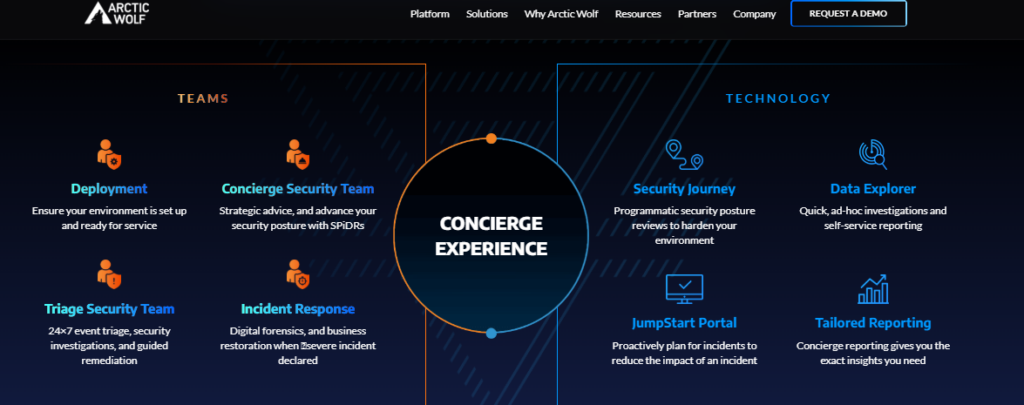
Arctic Wolf delivers a fully managed security operations experience through its Concierge Security model, giving customers a named team rather than just tooling. It suits organizations without an internal SOC. The structural trade-off matters here. Arctic Wolf ingests data into its own platform, so you gain a turnkey service while giving up some data ownership and portability.
Core Services
- 24/7 managed detection and response
- Concierge Security Team model
- Vulnerability and risk management
- Log monitoring and threat hunting
- Compliance readiness (SOC 2, HIPAA, PCI DSS)
Why Companies Consider Arctic Wolf
Many SMBs lack the budget or talent to run a SOC. Arctic Wolf packages monitoring, response, and advisory into one managed relationship, which is appealing for teams new to formal security operations, though buyers often compare it against Arctic Wolf alternatives that preserve data ownership.
Ideal Customer Profile
Best suited for:
- SMBs and lower mid-market (roughly 50 to 500 employees)
- Teams with no internal SOC
- Compliance-driven organizations wanting turnkey coverage
Commercial Model
Subscription pricing by organization size and monitored assets, with onboarding and ongoing advisory. Note the reported 60-day renewal notice, longer than the typical 30 days.
When to Shortlist
Shortlist Arctic Wolf when you want a fully outsourced SOC and data portability is a lower priority than turnkey coverage.
Reviews
“Arctic Wolf provides Solid detection and response capabilities, but overly relies on the client’s team for remediation, which really hurts the value of the service.”
– VP of Technology Arctic Wolf Gartner – Verified Review
“Anything you want to look at or changes you need to make in the product must go through their engineering team. As an MSP, this is a horrible way to do business for us.”
– Matt C., Manager, Cybersecurity Services Arctic Wolf G2 – Verified Review
1.6 Deepwatch
Deepwatch is a strong pick for Splunk-committed shops, since much of its heritage and tooling grew up around Splunk.
Overview
Deepwatch is a managed security provider with deep Splunk roots, offering co-managed SIEM and detection engineering. It suits teams that want to keep Splunk or move deliberately. The structural trade-off is platform gravity. Deepwatch’s Splunk affinity is a strength if you stay in that world, less so if you want a clean break to a different SIEM.
Core Services
- Co-managed SIEM and detection engineering
- 24/7 monitoring and response
- Splunk-heritage migration support
- Threat hunting and content tuning
- Compliance reporting
Why Companies Consider Deepwatch
Teams with heavy Splunk investment want a partner who speaks Splunk natively. Deepwatch’s detection engineering depth is the common draw, and our MDR for Splunk offering covers the same environments with vendor-agnostic parity ownership.
Ideal Customer Profile
Best suited for:
- Splunk-committed or Splunk-adjacent organizations
- Mid-market to enterprise teams keeping their SIEM
- Compliance-driven environments
Commercial Model
Subscription pricing by data volume and scope, with onboarding and ongoing co-management.
When to Shortlist
Shortlist Deepwatch when your Splunk investment is staying and you want a partner fluent in that ecosystem.
Reviews
“The whole team is flexible, responsive, and genuinely invested in our security outcomes. The 24/7 monitoring gives us peace of mind.”
– Verified User Deepwatch G2 – Verified Review
1.7 Binary Defense
Binary Defense earns a place for teams that value deep human triage, with flexible ingest that does not force a specific SIEM.
Overview
Binary Defense is an analyst-led managed detection provider with a strong human triage reputation and a co-managed SOC option. It suits teams that want experienced eyes on alerts. The structural trade-off is scale. As a more boutique, analyst-driven shop, its automation breadth can trail the larger platform vendors.
Core Services
- Analyst-led 24/7 detection and triage
- Co-managed SOC and SIEM support
- Threat hunting and counterintelligence
- Flexible log and tool ingest
- Incident response support
Why Companies Consider Binary Defense
Teams burned by black-box automation want humans who explain their reasoning. Binary Defense’s analyst depth is the reason buyers shortlist it, and the same human-plus-automation balance sits at the core of our SOC service.
Ideal Customer Profile
Best suited for:
- Mid-market teams wanting human triage depth
- Organizations keeping their own SIEM
- Security groups needing co-managed support
Commercial Model
Subscription pricing by scope and data sources, with onboarding and ongoing SOC support.
When to Shortlist
Shortlist Binary Defense when analyst quality and transparent investigation matter more than the broadest automation catalog.
1.8 eSentire
eSentire suits regulated mid-market teams wanting a mature, proven managed service, with its Atlas platform as the structural trade-off.
Overview
eSentire is a long-standing managed detection provider built around its Atlas platform, with a strong track record in regulated industries. It suits compliance-heavy buyers. The structural trade-off is platform ingest. Atlas pulls telemetry into eSentire’s environment, so you gain maturity and speed while accepting some vendor-side data handling.
Core Services
- 24/7 managed detection and response
- Atlas platform for detection and response
- Threat intelligence and hunting
- Incident response support
- Compliance-aligned reporting
Why Companies Consider eSentire
Regulated mid-market teams want a provider with years of audits behind it. eSentire’s long presence in Gartner’s MDR market guides is a common trust signal, and regulated buyers often pair detection with dedicated compliance services to keep audits clean.
Ideal Customer Profile
Best suited for:
- Regulated mid-market organizations
- Compliance-driven teams (finance, healthcare)
- Groups wanting a mature managed service
Commercial Model
Subscription pricing by scope and data sources, with onboarding and ongoing managed service.
When to Shortlist
Shortlist eSentire when regulatory maturity and a proven track record outweigh a preference for full data ownership.
Reviews
“eSentire’s SOC is responsive and the threat hunting is genuinely valuable. It does mean trusting their platform with our telemetry, which we were comfortable with.”
– Verified User eSentire Gartner – Verified Review
1.9 Dropzone AI
Dropzone AI is an AI triage layer rather than a full migration partner, which is exactly why it scores as an add-on rather than a SIEM owner.
Overview
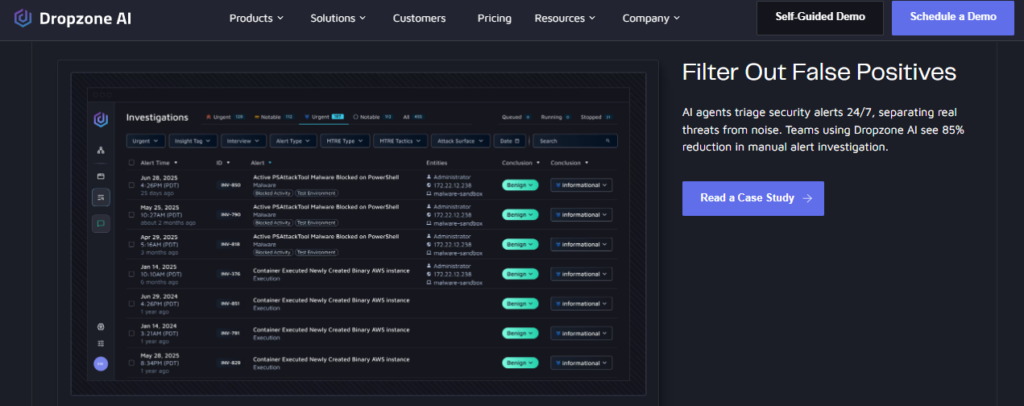
Dropzone AI is an autonomous AI SOC analyst that investigates Tier-1 alerts and returns evidence-backed reports. It augments a SOC rather than replacing a SIEM. The structural trade-off is scope. Dropzone automates triage, so it does not own your detection porting or retention during a Splunk move.
Core Services
- Autonomous Tier-1 alert investigation
- Evidence-backed, explainable reports
- Writeback to SIEM and ticketing systems
- 70+ integrations across endpoint, cloud, and identity
- Operational context memory for accuracy
Why Companies Consider Dropzone AI
Lean SOCs want to clear alert backlogs without hiring. Dropzone claims typical investigations complete in roughly 3 to 10 minutes, which appeals to teams drowning in Tier-1 noise, though buyers should weigh alert fatigue against who owns the migration itself.
Ideal Customer Profile
Best suited for:
- Lean SOC teams needing triage automation
- MSSPs wanting shared investigation capacity
- Teams keeping their SIEM and adding AI triage
Commercial Model
Subscription starting around $36,000 per year per AI SOC analyst, including up to 4,000 investigations, with enterprise and MSSP tiers.
When to Shortlist
Shortlist Dropzone AI as a triage-automation add-on, rather than as the party accountable for a full Splunk migration.
Reviews
“Dropzone AI autonomously investigates alerts with evidence-backed reporting and explainability, which offloads a big chunk of Tier-1 work. The pricing is relatively high and full details need a sales conversation.”
– RankNCompare, Dropzone AI Review 2025 Dropzone AI Verified Product Review
1.10 Hunters.AI
Hunters.AI rounds out the list for teams looking to replace the SIEM itself, with built-in detection-as-code and a data-lake model.
Overview
Hunters.AI is a SOC platform positioned as a SIEM replacement, built on a security data lake with built-in detection engineering. It suits teams rethinking the SIEM entirely. The structural trade-off is maturity and hands-on load. As a newer-architecture platform, it can ask more of your team during setup than a fully managed service would.
Core Services
- Security data lake with customer-owned data
- Built-in detection-as-code content
- Automated correlation and investigation
- SIEM-replacement architecture
- Threat intelligence integration
Why Companies Consider Hunters.AI
Teams tired of per-gigabyte SIEM bills want a data-lake model with reliable detections. Hunters’ correlation and detection quality are the common draws, and teams comparing architectures often start with our SIEM solutions comparison.
Ideal Customer Profile
Best suited for:
- Teams replacing the SIEM, not just co-managing it
- Cost-sensitive organizations with high data volumes
- Security groups wanting portable, code-based detections
Commercial Model
Subscription pricing by data and scope, positioned against per-gigabyte SIEM economics.
When to Shortlist
Shortlist Hunters.AI when you want to replace Splunk’s SIEM model itself and keep detections portable as code.
Reviews
“I like Hunters detections a lot as they are very reliable. Also, I appreciate the correlation mechanism that is used in order to get a complete picture of a threat.”
– Verified User Hunters SOC Platform G2 – Verified Review
Where UnderDefense Fits Against This Field
Here is the honest read across the field, framed by the one structural question that decides a Splunk migration: who owns detection parity, and who owns your data?
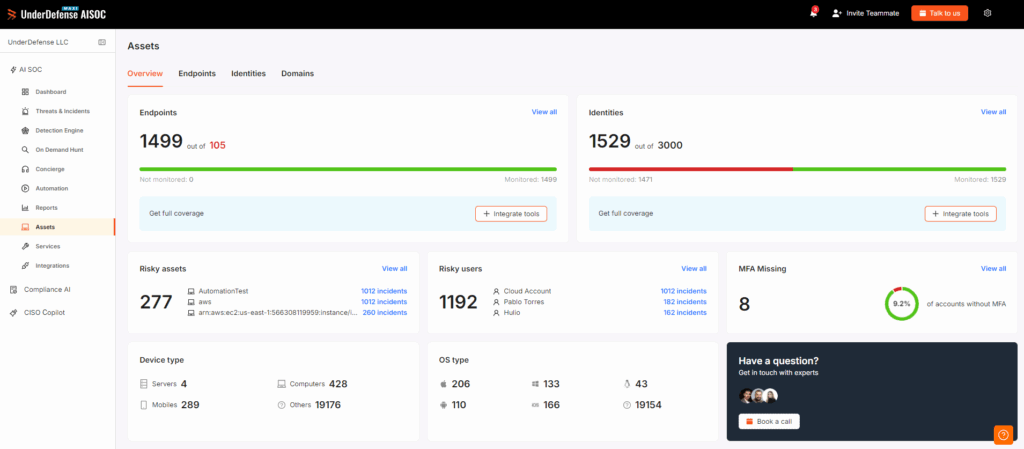
- UnderDefense is vendor-agnostic and co-managed, so we bring the SIEM, SOAR, and tools while you keep the data through our WarRoom platform.
- Our concierge analysts pair with the Agentic AI SOC to own porting and parity, with a 2-minute Alert-to-Triage target and 15-minute escalation for critical incidents.
- Fully managed platform models (the Arctic Wolf and eSentire category) ingest your telemetry into their environment, which trades away data portability.
- Detection Logic as Code keeps your rules portable and auditable, so a future platform change does not reset your tuning.
- AI-only triage layers (the Dropzone category) clear alerts fast but do not sign up to own your migration or retention.
That is the whole point of this shortlist. The best partner for a Splunk move is the one who takes contractual responsibility for parity while leaving your data in your hands, which is the standard our managed SIEM engagements are built around.
Q2: Why Are Splunk Customers Reassessing in 2026, and Does Migration Really Mean Losing Your Detection Work?
Companies are reassessing Splunk after the Cisco acquisition because pricing, packaging, and roadmap calculus changed, not because the platform stopped working. And no, migrating does not mean losing your detection work, but only if the provider owns the porting. Detection logic captured as code is portable and verifiable across platforms. What ports mechanically, what needs rewriting, and what is genuinely Splunk-specific are three different categories, and honest providers tell you which is which.
What Actually Changed in 2026
Let me be fair to Splunk here. You chose it deliberately, and it still works. What shifted is commercial, not technical.
After the Cisco acquisition, teams are re-running the math on pricing and packaging, and many are simply reassessing their options. That is prudent procurement behavior, not a betrayal.
The Ingestion Bill Drives Its Own Review
Separately, SIEM ingestion economics keep climbing. Per-gigabyte pricing means your bill grows every time you add a log source. That pressure alone pushes teams to reconsider, regardless of any acquisition, which is why many start by avoiding vendor lock-in in their next contract.
The Fear Behind Every Migration
Here is the blocker I hear on almost every call. A security leader says, “Migrating means losing my detection work.”
That fear is real and earned. You spent years tuning correlation rules inside Splunk’s Search Processing Language (SPL), the query language your detections are written in.
The Real Cost Is Memory, Not License
The expensive loss is not the license. It is the institutional memory baked into those rules and integrations.
One practitioner who has run four major SIEM implementations put the pain simply. When you switch vendors, the correlation and automation rules do not come with you, so you start the tuning process over. That restart is the true switching cost, and it is exactly the risk our MDR for Splunk team is built to absorb.
How Detection as Code Changes the Answer
This is where the standard read gets it backwards. Migration risk drops sharply when your detections live as code.
Detection as Code (DaC) means each detection is a version-controlled, testable file, not a setting buried in one platform. Written that way, rules become portable and their behavior becomes provable.
Three Categories Honest Providers Name
Not every rule moves the same way. A trustworthy provider sorts your detections into three buckets:
- Ports mechanically: logic that translates cleanly to the new query language.
- Needs rebuilding: rules that must be rewritten and re-tuned for the new platform.
- Genuinely Splunk-specific: logic tied to Splunk internals that has no clean equivalent.
At UnderDefense, we treat Detection Logic as Code as the substantive migration differentiator, because it lets us prove parity rather than assert it. This is the same discipline behind our managed SIEM engagements. I will be honest about the limit, though. Automated SPL translation is a starting point, and anyone promising push-button portability is overselling to a person who wrote those rules by hand.
Q3: What Does Each Provider Actually Offer for a Splunk Migration: Ownership, Parity, and Honest Limitations?
Providers differ most in one thing: who owns the porting. The ten here span from provider-owned detection-parity commitments to best-effort mapping guides. Each entry below scores migration ownership, parity commitment (contractual versus best-effort), destination options, retention and audit handling, parallel-run support, realistic timeline, and honest limitations, so you can match a provider to your actual continuity risk rather than to marketing claims.
How to Read These Entries
I will keep each provider to the same seven questions. That way you compare apples to apples, not marketing to marketing.
Where migration-specific data is thin, I mark it as lower confidence rather than inventing a number. Competitor notes here are fair structural observations, not published fact. If you want a structured scorecard, our SIEM buyers guide covers the same criteria.
UnderDefense (5 stars)
Migration ownership is provider-owned and co-managed. We bring the SIEM, SOAR, and tools, and you keep the data through our WarRoom platform. Parity is treated as a deliverable through Detection Logic as Code, with documented Elastic depth. Destination options include your chosen SIEM, retention stays customer-owned, and parallel-run is supported during a roughly 30-day onboarding. Honest limitation: initial log integration takes real setup time, as reviewers note. UnderDefense Agentic AI SOC handles triage with a 2-minute Alert-to-Triage target.
UnderDefense Reviews
“UnderDefense Agentic AI SOC integrates well with our systems, specifically with our SIEM, Splunk. Their team is proactive in identifying and addressing threats, providing 24/7 oversight.”
– Oleg K., Director Information Security UnderDefense G2 – Verified Review
“No Underdefense’s fault entirely, but getting all our logs and stuff flowing took longer than I expected.”
– Andriy H., Co-Founder and CTO UnderDefense G2 – Verified Review
See how the UnderDefense Agentic AI SOC investigates, triages, and resolves real alerts.
Expel (4 stars)
Ownership is managed monitoring over your stack. Parity is best-effort tuning against your existing tools, not a contractual porting commitment. Destination stays your own SIEM, retention stays with you, and parallel-run depends on your setup. Structural limitation: as an external layer, environmental knowledge sits partly outside the service.
“There is still a limit to the environmental/organizational knowledge inherent in the service. This leads to a fairly frequent need for engagement with our internal team.”
– Verified User in Computer Software, Mid-Market Expel G2 – Verified Review
ReliaQuest (4 stars)
Ownership is co-managed via the GreyMatter overlay. Parity comes from cross-tool detection content rather than deep SPL porting. Destination stays your existing SIEMs, retention stays with you, and parallel-run is feasible in large estates. Structural limitation: full value needs real onboarding effort, and some users cite tickets returning without clear answers. Teams weighing the fit often review ReliaQuest alternatives first.
Red Canary (4 stars)
Ownership is managed, endpoint-led detection. Parity is strongest on endpoint sources, lighter on SIEM porting. Destination varies, retention varies, and parallel-run is limited. Structural limitation: heavy CrowdStrike reliance and no native Splunk alert ingestion. For broader endpoint coverage, compare our Managed EDR service.
“Also, they do not have any sort of alert ingestion integrations with Splunk or other SIEM platforms, and we needed to rely on custom API scripts to ingest alerts into our SIEM.”
– Verified User in Insurance, Enterprise Red Canary G2 – Verified Review
Arctic Wolf (3 stars)
Ownership is fully managed on Arctic Wolf’s own platform. Parity is packaged detection, with limited customer customization. Destination is vendor-side ingest, so data portability is reduced. Structural limitation: changes route through their engineering team, which slows flexibility. Buyers often compare Arctic Wolf alternatives that keep data portable.
“Arctic Wolf provides Solid detection and response capabilities, but overly relies on the client’s team for remediation, which really hurts the value of the service.”
– VP of Technology Arctic Wolf Gartner – Verified Review
Deepwatch (4 stars)
Ownership is co-managed with strong Splunk heritage. Parity help is real if you stay Splunk-anchored, less so for a clean break. Destination favors Splunk, retention stays with you, and parallel-run is supported. Structural limitation: platform gravity toward Splunk.
Binary Defense (3 stars)
Ownership is analyst-led and co-managed. Parity comes from human triage depth and flexible ingest. Destination stays your SIEM, retention stays with you, and parallel-run is feasible. Structural limitation: automation breadth trails larger platform vendors. The same human-plus-automation balance underpins our SOC service.
eSentire (4 stars)
Ownership is managed on the Atlas platform. Parity is packaged detection with mature processes. Destination is vendor-side ingest, retention is vendor-side, and parallel-run varies. Structural limitation: telemetry lives in eSentire’s environment.
Dropzone AI (3 stars)
Ownership is an AI triage layer, not a migration service. Parity is out of scope, since it investigates alerts rather than porting rules. Destination is your own SIEM, and retention stays with you. Structural limitation: it augments a SOC and does not own migration or retention.
Hunters.AI (3 stars)
Ownership is co-managed with a SIEM-replacement angle. Parity uses built-in detection-as-code on a data lake. Destination is a customer-owned data lake, retention stays with you, and parallel-run is feasible. Structural limitation: newer architecture asks more of your team during setup.
Q4: How Do You Preserve Rules, Retention, and Audit History, and Verify Detection Parity Before Cutover?
The migration-continuity framework splits the move into four owned workstreams. Rules (what ports, what rebuilds, who is accountable), Retention (hot, warm, and cold data continuity against compliance), Audit history (searchability, evidence continuity, chain of custody), and Operational (parallel run, rollback, time to parity). You verify parity by proving new detections fire before retiring the old ones: adversary simulation, a parallel-run period, and coverage mapping against MITRE ATT&CK, never by assertion.
Part A: The Four Continuity Workstreams
A SIEM move is a program, not a one-time project. Breaking it into four workstreams keeps each risk owned.
Rules
The concept is simple. Your detections are the asset, so treat each one as a tracked item.
For example, a rule that flags logins from unexpected regions must keep firing after cutover. The application step is to sort every rule into ports, rebuilds, or Splunk-specific, and assign an owner to each.
Retention
Retention means how long your log data stays searchable, split into hot (fast), warm, and cold (archived) tiers. The concept is continuity of that timeline across platforms.
For example, if compliance requires one year of searchable logs, that clock cannot reset at cutover. The application step is to map each tier to the new platform and confirm the period holds. Whether it satisfies your obligation is the auditor’s call, so plan and verify rather than assume, ideally with support from dedicated compliance services.
Audit History
Audit history is your evidence trail, who did what and when, with chain of custody intact. The concept is that this trail must remain searchable and admissible.
For example, an auditor may ask for access records from eight months ago during cutover month. The application step is to confirm historical evidence stays retrievable and defensible throughout the transition.
Operational
The concept is running without a coverage gap. For example, both SIEMs watch the same traffic during a parallel-run window. The application step is a rollback plan and a defined time-to-parity target, which our incident response playbooks account for during cutover.
| Workstream | What to Verify | Who’s Accountable |
|---|---|---|
| Rules | Each rule ports, rebuilds, or is retired | Detection engineer / provider |
| Retention | Period continuity across tiers | SecOps + Compliance |
| Audit History | Evidence searchable, chain intact | Internal Audit + provider |
| Operational | Parallel run, rollback, parity date | SOC lead + provider |
Part B: Verifying Parity Before Cutover
You never retire the old SIEM on faith. You prove the new one catches what the old one did.
Three Methods, Compared
| Method | What It Does | Best Signal |
|---|---|---|
| Adversary simulation | Replays known intrusions and techniques | Confirms specific detections fire |
| Parallel run | Both SIEMs on identical live traffic | Surfaces silent gaps in real conditions |
| MITRE ATT&CK mapping | Maps coverage to known attacker techniques | Shows where coverage is missing |
The Six-Step Cutover Order
- Audit which rules actually fire today.
- Map those detections to MITRE ATT&CK techniques.
- Prune dead or duplicate rules.
- Translate the survivors into the new platform’s language.
- Parallel-run both SIEMs and compare.
- Cut over once parity holds.
At UnderDefense, we validate parity with adversary simulation and keep detections as code, and the platform can run in your own cloud (Azure, GCP, AWS, or Oracle), so your data and rules stay yours. One honest limit remains. Even where agentic AI assists translation, a human still gates the final parity call, because a language model regurgitates patterns rather than truly reasoning about your environment. Sequence it right: rules first, verified parity second, autonomous response third. Anyone promising AI response on day one is describing something that cannot work yet.
Q5: Which Destination Should You Choose: Elastic, Sentinel, QRadar, or Staying on Splunk Under New Management?
Elastic and Microsoft Sentinel have consolidated as the dominant Splunk migration destinations in 2026, with QRadar and cloud-native options serving specific cases, and staying on Splunk under co-management is a legitimate fourth path. Elastic suits open architecture, retention-cost control, and detection-as-code portability. Sentinel suits Microsoft-heavy estates. If your detections work and only economics changed, co-managed Splunk preserves everything while relieving pressure.
The Two Dominant Destinations
Most Splunk moves I see land in one of two places. The choice usually follows your existing tech stack, not a feature bake-off.
Elastic wins on open architecture and retention-cost control. Sentinel wins when you already live inside Microsoft.
Elastic
Elastic gives you an open platform where you own the build. I think of it like Lego bricks. You take the pieces, then assemble your own detection logic without a black box in the middle.
That openness helps with detection-as-code portability, so your rules stay yours. It also lets you tune ingestion hard, and heavy log pruning can cut volume dramatically when you drop duplicate or unused sources, which is central to managed SIEM cost control.
Microsoft Sentinel
Sentinel uses KQL (Kusto Query Language), and it fits teams already invested in Azure and Microsoft 365. The cloud-native scale is real, and licensing can fold into existing Microsoft agreements.
The trade-off is gravity. The deeper you go into Sentinel, the more your detections lean on Microsoft-specific data, which is why MDR for Microsoft 365 deployments plan for that dependency early.
The Niche and the Off-Ramp
QRadar and Cloud-Native Cases
QRadar still fits some regulated, on-prem-heavy shops. Cloud-native data lakes fit teams fighting per-gigabyte bills at very high volume.
Staying on Splunk Under Co-Management
Here is the honest part most vendors skip. If your detections work and only the economics changed, you do not have to move at all.
Co-managed Splunk keeps everything you built while a partner runs it and tunes cost. My medium-confidence caveat: Splunk-anchored vendors face a structural conflict as migration partners, though many are genuinely good at extraction and tuning. Our MDR for Splunk team supports this co-managed path directly.
Destination Comparison
| Platform | Best For | Retention Cost | Query Language | Trade-off |
|---|---|---|---|---|
| Elastic | Open architecture, DaC portability | Controllable | ES|QL / EQL | You own more of the build |
| Sentinel | Microsoft-heavy estates | Cloud-tiered | KQL | Microsoft gravity |
| QRadar | Regulated, on-prem shops | Higher | AQL | Legacy footprint |
| Co-managed Splunk | Detections that already work | Tunable | SPL | You stay on the platform |
At UnderDefense, we support Elastic, Sentinel, QRadar, and staying on Splunk, and Splunk-to-Elastic is the path we run most often. We bring the SIEM, SOAR, and tools, and you keep the data through our WarRoom platform.
Reviews
“Plus, their expert management of our SIEM has added to the value of our security investments and tools. At first, we hired them for managed SIEM service, but after they demonstrated the value of MDR, our management was motivated to act on it.”
– Yaroslava K., IT Project Manager UnderDefense G2 – Verified Review
“The platform itself is straightforward, it pulls in data from all our existing security tools, so we didn’t have to rip and replace anything.”
– Verified User in Marketing and Advertising, Small-Business UnderDefense G2 – Verified Review
What I keep wondering is how many teams move platforms when a co-managed off-ramp would have solved the actual problem. If you are unsure which camp you fall into, that is worth a conversation before you sign anything, and our SIEM buyers guide can help frame it.
Q6: How Do You Sequence Cutover Without a Monitoring Gap, and What’s the Real TCO and Time to Parity?
You avoid a monitoring gap by running both SIEMs in parallel until the new one proves parity, keeping rollback live, and never decommissioning before verification. Realistic time to parity runs a 30/60/90 arc: inventory and onboarding, then ported-rule verification and parallel run, then full parity with response layered on. On cost, measure TCO by analyst time saved and comparative cost of delivery, not just per-gigabyte ingest.
Part A: Sequencing the Cutover
The rule is boring and non-negotiable. Never decommission the old SIEM before the new one proves parity.
Run both in parallel on the same traffic. Keep a rollback path live the whole time.
The 30/60/90 Arc
Here is the sequence I would run, in order:
- Days 1 to 30: Inventory rules and complete onboarding.
- Days 31 to 60: Verify ported rules and run both SIEMs in parallel.
- Days 61 to 90: Confirm full parity, then layer automated response on top.
Response comes last for a reason. Attackers move fast, with the quickest break-ins clocking under a minute, so your detections must be proven before you automate any action on them through your incident response workflows.
Phase Map
| Phase | Milestone | What’s Verified | Owner |
|---|---|---|---|
| 1 (Onboard) | Rule inventory complete | What ports vs rebuilds | Provider + SecOps |
| 2 (Parallel) | Both SIEMs live | Detection parity | SOC lead |
| 3 (Cutover) | Old SIEM retired | Full coverage + response | Provider + SOC |
Part B: The Real TCO
Most TCO models stop at per-gigabyte ingest. That misses the biggest line item, which is people.
A 24/7 in-house SOC needs roughly five loaded staff to cover every shift, and that labor baseline dwarfs most license bills. So the honest comparison is delivery cost for a non-optional 24/7 capability, not breach-prevention ROI, which is a trap to model. Our SOC cost calculator helps size that baseline.
Where the Money Actually Moves
Measure TCO across three levers:
- Analyst time saved through alert-noise reduction, backed by alert-fatigue research.
- Retention economics, comparing per-gigabyte, compute-based, and tiered models.
- AI governance readiness, since ungoverned AI raised average breach cost in IBM’s 2025 study.
At UnderDefense, our 30-day onboarding targets 99% alert-noise reduction, with a 2-minute Alert-to-Triage and 15-minute critical escalation. That is the time-to-value number a board actually wants to see, and you can model it against our managed SIEM price.
My open question: how many teams will finally price the analyst hours honestly, rather than staring only at the license line? That single reframe changes most buy-versus-build decisions I see.
Q7: How Do You Take a Credible Splunk Migration Plan to Your Board and Auditors?
A board- and audit-credible migration plan shows continuity of coverage and evidence through the transition, so no one can claim you created a monitoring or audit gap. It names who owns detection parity, sets a verified 30/60/90 timeline, maps retention and audit history against compliance obligations, and commits to a parallel run with rollback. The fastest way to build it is a detection-portability audit: map what ports, what rebuilds, and the parity timeline before you commit.
What a Board-Ready Plan Must Show
Your board neither wants nor understands raw detection metrics. They want to know the risk is owned and bounded.
So lead with three things: continuity of coverage, a named parity owner, and a verified timeline. That framing survives the boardroom, and a virtual CISO can translate it into language the board acts on.
The Legal and Audit Lens
Retention and audit history are contractual and regulatory, not just technical. Frameworks like SOC 2, ISO 27001, and PCI DSS carry defined retention obligations.
Frame these as plan-and-verify items, since whether continuity satisfies the requirement is your auditor’s call. A CISO I know forwards exactly this section to Legal and Internal Audit, because it is the part they actually need, and dedicated compliance services keep that evidence audit-ready.
Build, Buy, and the First Step
Build vs Buy on the Migration Itself
Doing the migration in-house is possible, but the effort is heavy. Someone has to inventory rules, translate them, run both platforms, and prove parity while keeping the lights on.
Buying that work means a partner takes accountability for parity on a timeline. That is the honest trade, and it maps every security dollar to a risk family the CFO can read on one page as part of your 2026 cybersecurity budget playbook.
Start With a Portability Audit
The concrete first step is a detection-portability audit. You map what ports mechanically, what needs rebuilding, and the realistic parity timeline.
This step has value even if you ultimately stay on Splunk, because it inventories what you actually run. At UnderDefense, this is the open door. Send us your Splunk rule inventory, and we map what ports, what rebuilds, and the parity timeline. You can start that with our team.
If you have carried a migration to a skeptical board, I would genuinely like to hear what convinced them, because the pattern that works is still being written.
See tuned SIEM triage in action.
1. Does moving off Splunk mean losing our detection rules and tuning work?
No, but only if the provider owns the porting rather than handing you a mapping guide. The expensive loss in any migration is not the license, but the institutional memory baked into years of tuned correlation rules and integrations.
We sort every detection into three honest categories:
- Ports mechanically: logic that translates cleanly into the new query language.
- Needs rebuilding: rules that must be rewritten and re-tuned for the new platform.
- Genuinely Splunk-specific: logic tied to Splunk internals with no clean equivalent.
When detections live as code, they become portable and their behavior becomes provable. We treat Detection Logic as Code as the substantive differentiator in our managed SIEM engagements, because it lets us prove parity rather than assert it. We are honest about the limit too. Automated translation of Search Processing Language is a starting point, and anyone promising push-button portability is overselling to someone who wrote those rules by hand.
2. Why are Splunk customers reassessing their SIEM in 2026?
Teams are reassessing Splunk because the commercial calculus changed, not because the platform stopped working. After the Cisco acquisition, many are simply re-running the math on pricing, packaging, and roadmap, which is prudent procurement behavior rather than disloyalty.
Two pressures compound:
- Acquisition uncertainty: pricing and packaging shifts prompt a natural review of options.
- Ingestion economics: per-gigabyte pricing means the bill grows every time a log source is added.
That second pressure alone pushes teams to reconsider, regardless of any acquisition. The honest framing is that you chose Splunk deliberately, and it still works, so the decision to move is about economics and control. Many teams start by avoiding vendor lock-in in their next contract, whether they migrate or stay. We think the smarter first step is a portability audit that inventories what you actually run, because that clarity serves you even if you ultimately decide to remain on Splunk under co-management.
3. Which destination should we choose: Elastic, Sentinel, QRadar, or staying on Splunk?
Elastic and Microsoft Sentinel have consolidated as the dominant destinations in 2026, and the right choice usually follows your existing stack rather than a feature bake-off.
- Elastic: open architecture, strong retention-cost control, and detection-as-code portability, so your rules stay yours.
- Sentinel: best for Microsoft-heavy estates, using KQL and folding into existing Azure and Microsoft 365 agreements.
- QRadar: still fits some regulated, on-prem-heavy shops.
- Co-managed Splunk: a legitimate off-ramp when your detections work and only economics changed.
Here is the part most vendors skip. If your detections work and only the bill hurts, you may not need to move at all. Co-managed Splunk keeps everything you built while a partner runs it and tunes cost. We support all four paths, and Splunk-to-Elastic is the one we run most often through our MDR for Splunk team. What we keep wondering is how many teams migrate when a co-managed off-ramp would have solved the actual problem.
4. How do we preserve retention and audit history through a SIEM migration?
Retention and audit history are contractual and regulatory obligations, not just technical settings, so we treat them as owned workstreams with plan-and-verify discipline.
Two continuity streams matter most here:
- Retention: map hot, warm, and cold tiers to the new platform and confirm the searchable period holds. If compliance requires one year of searchable logs, that clock cannot reset at cutover.
- Audit history: keep the evidence trail searchable and admissible, with chain of custody intact, since an auditor may request access records from eight months ago during cutover month.
Whether continuity satisfies a given requirement is ultimately your auditor’s call, so we plan and verify rather than assume. Frameworks like SOC 2, ISO 27001, and PCI DSS carry defined retention obligations, which is why dedicated compliance services keep that evidence audit-ready throughout the transition. We have seen CISOs forward exactly this section to Legal and Internal Audit, because it is the part those teams actually need before signing off.
5. How do we verify detection parity before we cut over from Splunk?
You never retire the old SIEM on faith. You prove the new one catches what the old one did, using three complementary methods:
- Adversary simulation: replays known intrusions to confirm specific detections fire.
- Parallel run: both SIEMs watch identical live traffic, surfacing silent gaps in real conditions.
- MITRE ATT&CK mapping: maps coverage to known attacker techniques and shows where coverage is missing.
We run a disciplined six-step order: audit which rules actually fire today, map them to ATT&CK, prune dead or duplicate rules, translate the survivors, parallel-run both platforms, then cut over once parity holds. We validate parity with adversary simulation and keep detections as code, so your data and rules stay yours. One honest limit remains. Even where agentic AI assists translation, a human still gates the final parity call, because a language model regurgitates patterns rather than truly reasoning about your environment. Sequence it right: rules first, verified parity second, autonomous response third.
6. How do we sequence cutover without creating a monitoring gap?
The rule is boring and non-negotiable. Never decommission the old SIEM before the new one proves parity. Run both in parallel on the same traffic and keep a rollback path live the entire time.
We run a 30/60/90 arc:
- Days 1 to 30: inventory rules and complete onboarding.
- Days 31 to 60: verify ported rules and run both SIEMs in parallel.
- Days 61 to 90: confirm full parity, then layer automated response on top.
Response comes last for a reason. Attackers move fast, with the quickest break-ins clocking under a minute, so detections must be proven before you automate any action on them through your incident response workflows. Our 30-day onboarding targets 99% alert-noise reduction, with a 2-minute Alert-to-Triage and a 15-minute critical escalation. Those are distinct commitments, which is worth noting because a single blended mean-time-to-respond figure conflates two very different SLAs. That time-to-value framing is what a board actually wants to see.
7. What is the real total cost of ownership of managed SIEM versus staying on Splunk?
Most TCO models stop at per-gigabyte ingest, which misses the biggest line item: people. A 24/7 in-house SOC needs roughly five loaded staff to cover every shift, and that labor baseline dwarfs most license bills.
So the honest comparison is delivery cost for a non-optional 24/7 capability, not breach-prevention ROI, which is a trap to model. We measure TCO across three levers:
- Analyst time saved through alert-noise reduction.
- Retention economics, comparing per-gigabyte, compute-based, and tiered models.
- AI governance readiness, since ungoverned AI raised average breach cost in recent industry research.
The reframe that changes most buy-versus-build decisions is pricing the analyst hours honestly, rather than staring only at the license line. You can size that labor baseline with our SOC cost calculator, then compare it against actual delivery cost. That single move reframes the whole decision for the CFO and the board.
8. How do we take a credible Splunk migration plan to our board and auditors?
Your board does not want raw detection metrics. They want proof the risk is owned and bounded, so lead with three things: continuity of coverage, a named parity owner, and a verified timeline.
A credible plan also does the following:
- Maps retention and audit history against SOC 2, ISO 27001, and PCI DSS obligations as plan-and-verify items.
- Commits to a parallel run with a live rollback path.
- Sets a realistic 30/60/90 timeline with accountability at each phase.
The concrete first step is a detection-portability audit that maps what ports mechanically, what needs rebuilding, and the realistic parity timeline. This has value even if you ultimately stay on Splunk, because it inventories what you actually run. Send us your Splunk rule inventory and we will map it, and you can start that conversation with our team. If you have carried a migration to a skeptical board before, we would genuinely like to hear what convinced them, because the pattern that works is still being written.