




Q1. What Is a PCI DSS Audit and Why Is 2026 the Most Critical Compliance Year?
Here’s the uncomfortable truth: most organizations don’t fail PCI DSS audits because they lack security controls. They fail because they treat compliance as a once-a-year documentation sprint. And in 2026, that approach is a guaranteed path to failure.
PCI DSS v4.0.1 brought 47 newly mandatory requirements into enforcement as of March 31, 2025, and 2026 marks the first full audit cycle under complete v4.0.1 enforcement. The gap between “we passed last year” and “we’re ready this year” has never been wider.
⚠️ What a PCI DSS Audit Actually Involves
A PCI DSS audit is a formal assessment of your cardholder data environment (CDE) against the Payment Card Industry Data Security Standard’s 12 requirement families, 78 base requirements, and over 400 test procedures. It covers everything from network security controls and encryption to access management, logging, and security policy governance.
What changed in v4.0.1, and what makes 2026 different, is the shift from periodic validation to continuous monitoring. The standard grew from 370 to over 500 requirements, and four new mandates in particular are reshaping how organizations approach audit readiness:
- Requirement 6.4.3 — Maintain a complete inventory of every script on payment pages, with written business justification and integrity-checking mechanisms for each.
- Requirement 11.6.1 — Deploy automated change-and-tamper-detection that alerts on unauthorized modifications to HTTP headers and payment page content, in real time, not weekly.
- Requirement 8.3.6 — MFA now required for all access into the CDE, not just remote access.
- Requirement 12.3.2 — Targeted risk analysis must document and justify the frequency of every periodic control: scans, reviews, and training.
❌ The Annual Snapshot Trap
The legacy model, cramming for audits annually, collecting evidence across spreadsheets, and treating compliance as a one-time event, was already fragile under v3.2.1. Under v4.0.1, it’s architecturally broken.
Traditional MSSPs provide checkbox monitoring based on rigid playbooks rather than real-time threat context, leaving organizations “compliant on paper but vulnerable in practice.” Point-in-time vulnerability scans and annual penetration tests cannot meet v4.0.1’s emphasis on continuous monitoring and ongoing risk assessment. Yet the average payment card data breach costs millions, while most organizations spend under $250K on annual PCI compliance. That math doesn’t work.
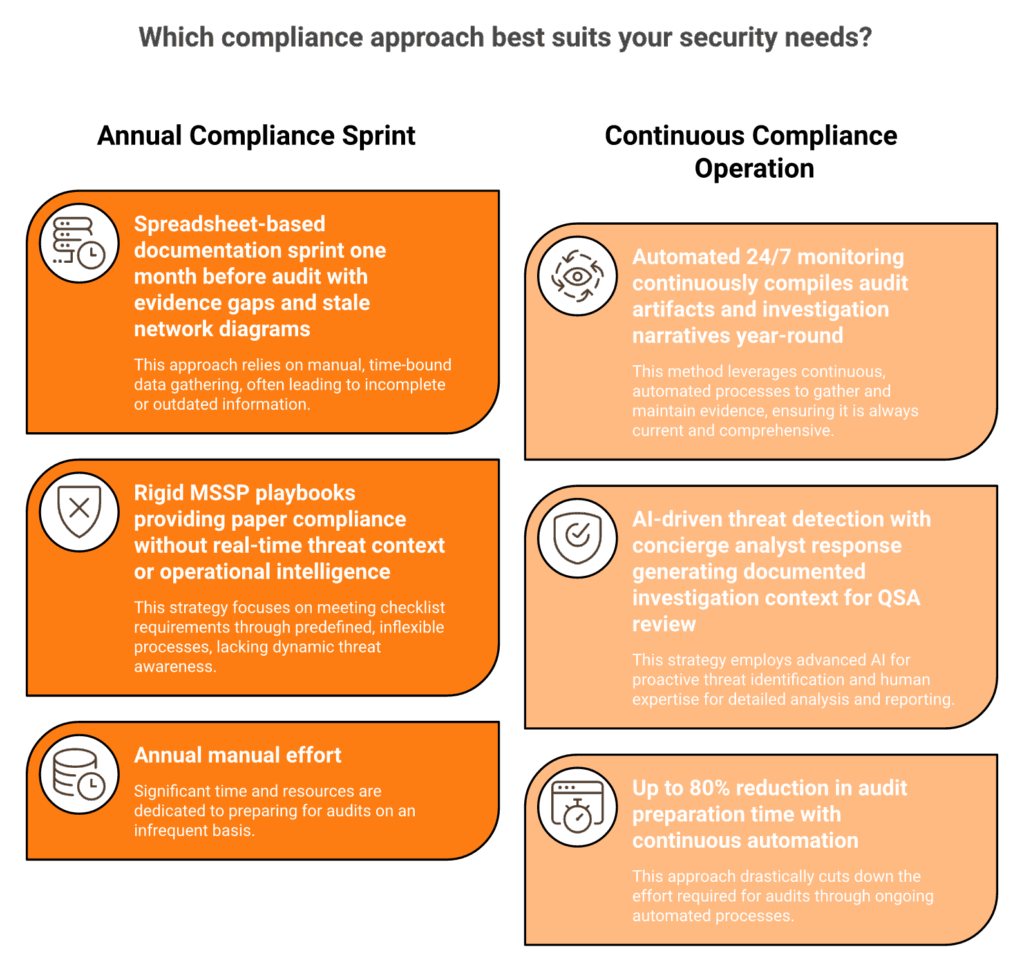
✅ From Fire Drill to Continuous Operation
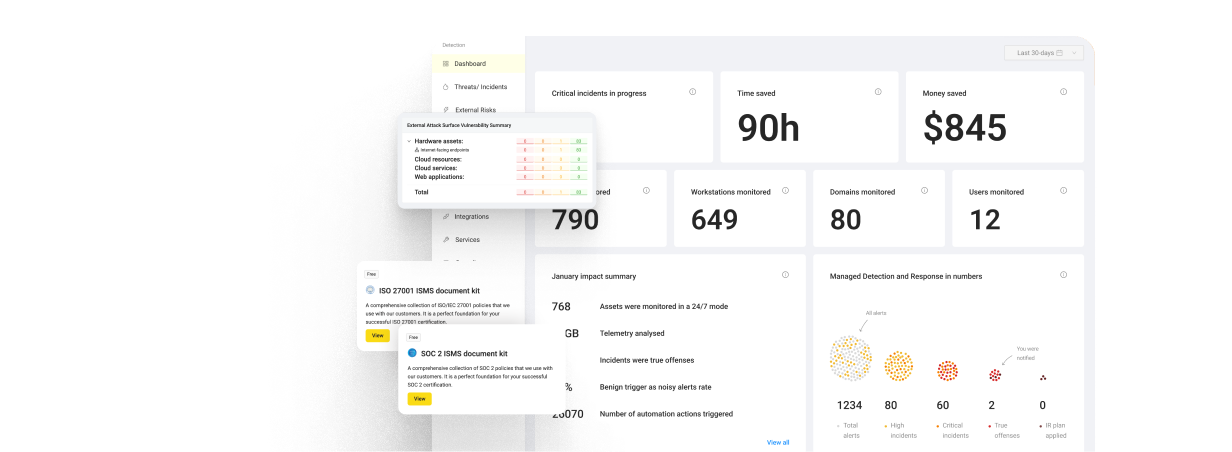
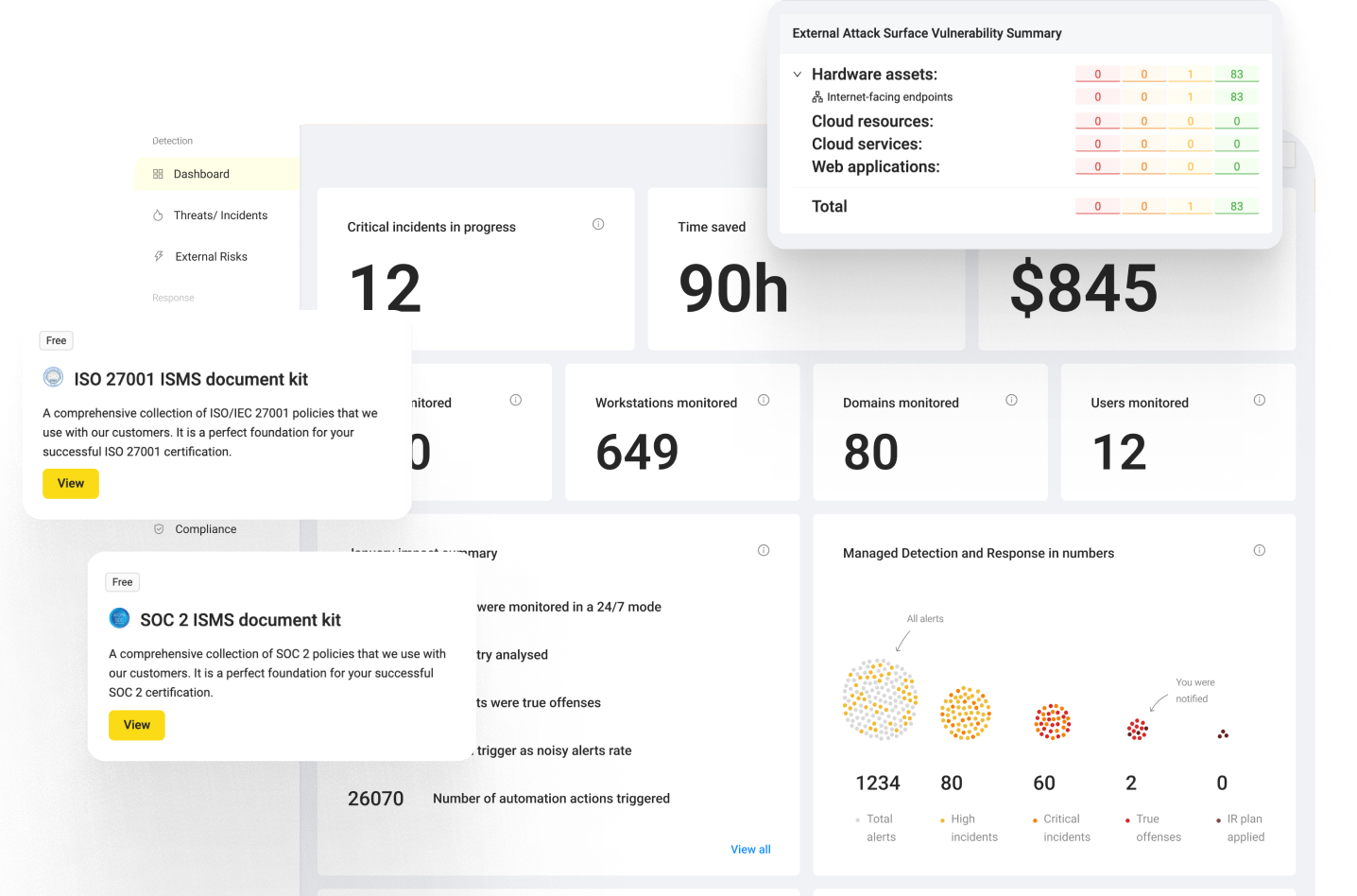
We built UnderDefense MAXI platform to make continuous PCI compliance an operational reality, not a theoretical goal. The platform integrates with 250+ existing security tools, delivers 24/7 AI-driven threat detection with 96% MITRE ATT&CK coverage, directly supporting Requirements 10 and 11 monitoring mandates, and provides concierge analyst response that generates the investigation context QSAs look for during evidence review. Our forever-free compliance kits auto-generate audit-ready documentation for PCI DSS alongside SOC 2, HIPAA, and ISO 27001.
Stop treating PCI compliance as an annual fire drill. Start running it as a continuous security operation with an AI SOC that never sleeps.
💰 The Automation Advantage, By the Numbers
Organizations that automate PCI compliance evidence collection reduce audit preparation time by up to 80% and cut remediation costs by 40–60% versus manual approaches. Yet fewer than 30% of mid-market companies have deployed continuous compliance monitoring, meaning the majority are entering 2026 audits relying on the same manual processes that failed under v3.2.1. For Level 1 merchants, realistic first-year budgets range from $245,000 to $600,000, with ongoing annual costs between $160,000 and $350,000. Every dollar you invest in automation reduces both the cost and the risk of that cycle.
Q2. Who Needs a PCI DSS Audit, Merchant Levels, SAQ Types, and Validation Paths?
PCI DSS applies to any organization that stores, processes, or transmits cardholder data (CHD) or sensitive authentication data (SAD). This includes merchants accepting card payments, service providers that handle CHD on behalf of merchants, and issuers and acquirers. Even organizations that outsource payment processing to third parties may still have PCI DSS obligations depending on their payment architecture. The scope is universal: if card data touches your environment, you’re in scope.
💳 Merchant Levels and Validation Requirements
Your merchant level determines how rigorous your validation must be. Here’s the breakdown:
| Merchant Level | Annual Transactions | Validation Required | Estimated Cost Range |
|---|---|---|---|
| Level 1 | >6M Visa/Mastercard | Annual RoC by QSA + quarterly ASV scans | $245K–$600K (Year 1) |
| Level 2 | 1M–6M | Annual SAQ (or RoC) + quarterly ASV scans | $30K–$120K |
| Level 3 | 20K–1M e-commerce | Annual SAQ + quarterly ASV scans | $5K–$15K (with consultant) |
| Level 4 | <20K e-commerce or <1M other-channel | Annual SAQ + quarterly ASV scans (recommended) | $5K–$15K |
⚠️ Acquirers may impose stricter requirements. A Level 2 merchant’s acquirer may require a QSA-led RoC even though the standard allows an SAQ. Service providers have separate levels: Level 1 (>300K transactions or on Visa’s Global Registry) and Level 2 (<300K transactions).
📋 SAQ Types, Decision Framework
Choosing the right SAQ type is where most mid-market organizations get tripped up. Here’s the decision tree:
- SAQ A — Card-not-present merchants with all payment processing fully outsourced; no electronic CHD storage, processing, or transmission.
- SAQ A-EP — E-commerce merchants whose websites impact payment page security but don’t directly receive CHD.
- SAQ B — Imprint-only or standalone dial-out terminal merchants.
- SAQ B-IP — Standalone PTS-approved payment terminals with IP connection.
- SAQ C — Merchants with payment application systems connected to the internet.
- SAQ C-VT — Merchants using only web-based virtual terminals on an isolated computer.
- SAQ D — All other merchants not meeting criteria above, and all service providers.
⏰ Quick Decision Path
- Does your website control the payment page? → If yes, SAQ A-EP or higher.
- Do you store CHD electronically? → If yes, SAQ D.
- Is all payment processing fully outsourced with no CHD touching your environment? → SAQ A.
RoC vs. SAQ vs. AoC: The RoC is the full assessment report completed by a QSA. The SAQ is a self-assessment questionnaire. The AoC (Attestation of Compliance) is the executive summary document submitted to acquirers and payment brands confirming compliance, required regardless of whether you complete an SAQ or RoC.
🔍 QSA, ISA, and ASV Roles, Selection Criteria
- QSA (Qualified Security Assessor) — PCI SSC-certified company authorized to conduct on-site RoC assessments.
- ISA (Internal Security Assessor) — Organization employee certified by PCI SSC to conduct internal assessments, supplementing QSA audits for Level 1 merchants.
- ASV (Approved Scanning Vendor) — PCI SSC-approved vendor performing quarterly external vulnerability scans (Requirement 11.3.2).
QSA selection criteria: PCI SSC listing verification, industry vertical experience, team size and availability, assessment methodology transparency, reference checks, and clear fee structure.
🚩 Red flags: QSAs who guarantee passing before scoping, offer unusually low fees suggesting rushed assessments, or lack experience with your specific payment architecture (e-commerce, POS, or cloud-native).
✅ How UnderDefense Complements Your QSA
UnderDefense’s MDR engagement generates continuous compliance evidence, including log analysis records, threat investigation documentation, and incident response artifacts, that your QSA can validate during assessment. This reduces the evidence-gathering burden on your compliance team.
Q3. What Are All 12 PCI DSS v4.0.1 Requirements for Audit Readiness?
PCI DSS v4.0.1 organizes security controls into 12 requirements across 6 goals. While the 12 high-level requirements remain consistent from v3.2.1, sub-requirements and test procedures have changed significantly, with 47 new requirements now mandatory as of March 31, 2025. Here’s the practical breakdown every compliance team needs for 2026 audit readiness.
🔒 The 12 Requirements by Goal
Goal 1: Build and Maintain a Secure Network
- Req 1 — Install and maintain network security controls (firewalls, NSCs).
- Req 2 — Apply secure configurations to all system components; eliminate vendor-supplied defaults.
Goal 2: Protect Account Data
- Req 3 — Protect stored account data through encryption, tokenization, or truncation.
- Req 4 — Protect cardholder data with strong cryptography during transmission over open, public networks.
Goal 3: Maintain a Vulnerability Management Program
- Req 5 — Protect all systems and networks from malicious software.
- Req 6 — Develop and maintain secure systems and software. ⭐ SPOTLIGHT: 6.4.3 — Client-side script inventory and integrity monitoring for payment pages.
Goal 4: Implement Strong Access Control Measures
- Req 7 — Restrict access to system components and cardholder data by business need-to-know.
- Req 8 — Identify users and authenticate access to system components. ⭐ SPOTLIGHT: 8.3.6 — MFA for all CDE access, not just remote.
- Req 9 — Restrict physical access to cardholder data.
Goal 5: Regularly Monitor and Test Networks
- Req 10 — Log and monitor all access to system components and cardholder data.
- Req 11 — Test security of systems and networks regularly. ⭐ SPOTLIGHT: 11.6.1 — Change-and-tamper-detection for payment pages.
Goal 6: Maintain an Information Security Policy
- Req 12 — Support information security with organizational policies and programs. ⭐ SPOTLIGHT: 12.3.2 — Targeted risk analysis for all periodic tasks.
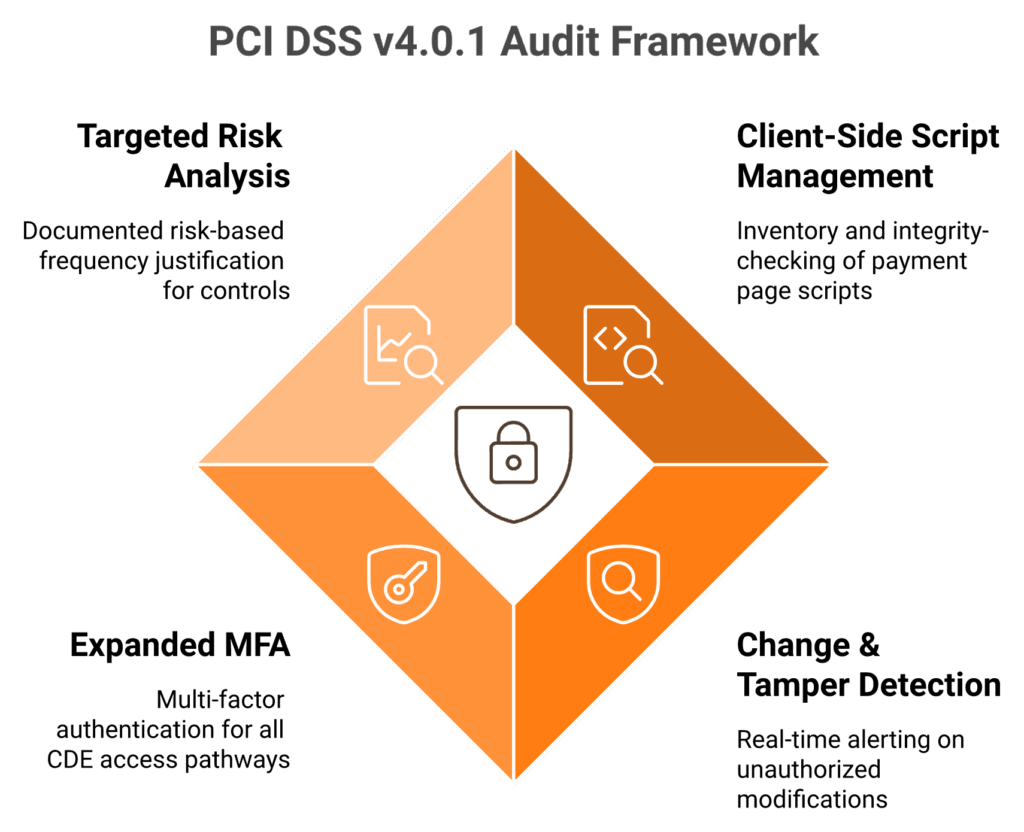
⚠️ The Four Most Consequential New Requirements
These are the primary failure points in 2025–2026 assessments. Get these wrong, and your audit stops here:
- Requirement 6.4.3 (Client Script Management) — Organizations must maintain an inventory of all scripts on payment pages with written business justification, ensure only authorized scripts execute, and implement integrity-checking mechanisms that detect tampering. This isn’t a quarterly review; it’s continuous.
- Requirement 11.6.1 (Change-and-Tamper Detection) — Automated detection must alert on unauthorized modifications to HTTP headers and payment page content. The standard explicitly requires real-time alerting, not daily, not weekly.
- Requirement 8.3.6 (Expanded MFA) — MFA is now required for all access into the CDE. The v3.2.1 requirement covered only remote access; v4.0.1 extends it to every access pathway, including local console access.
- Requirement 12.3.2 (Targeted Risk Analysis) — Every periodic task, including scans, log reviews, and training sessions, now requires documented risk analysis justifying its frequency. “We do it quarterly because we always have” is no longer an acceptable answer.
🔄 Compensating Controls and the Customized Approach
v4.0.1 introduces the customized approach as an alternative to the traditional defined approach. Organizations can implement alternative controls that meet a requirement’s stated objective, even if they differ from the prescribed method. Compensating controls remain available for organizations that cannot meet a requirement as stated due to legitimate technical or business constraints.
Both require rigorous documentation: the customized approach requires a controls matrix mapping the alternative control to the objective, while compensating controls require a compensating control worksheet demonstrating equal or greater security. Caution: QSAs scrutinize both heavily, and undocumented or weak customized approaches are a top failure point.
✅ UnderDefense’s Continuous Monitoring for Reqs 10 & 11
UnderDefense MAXI platform supports Requirements 10 and 11 through 24/7 log ingestion, AI-driven anomaly detection, and real-time alerting, generating the audit trail and evidence artifacts QSAs require. Concierge analysts provide investigation context that turns raw alerts into documented compliance evidence, so your QSA reviews complete incident narratives instead of raw log exports.
Q4. How Do You Scope Your CDE and Reduce Audit Complexity?
Accurate CDE scoping is the single most impactful step in audit preparation. Overscoping wastes resources and inflates costs. Underscoping creates compliance gaps that QSAs will find, and that attackers will exploit first.
📐 CDE Scoping Fundamentals
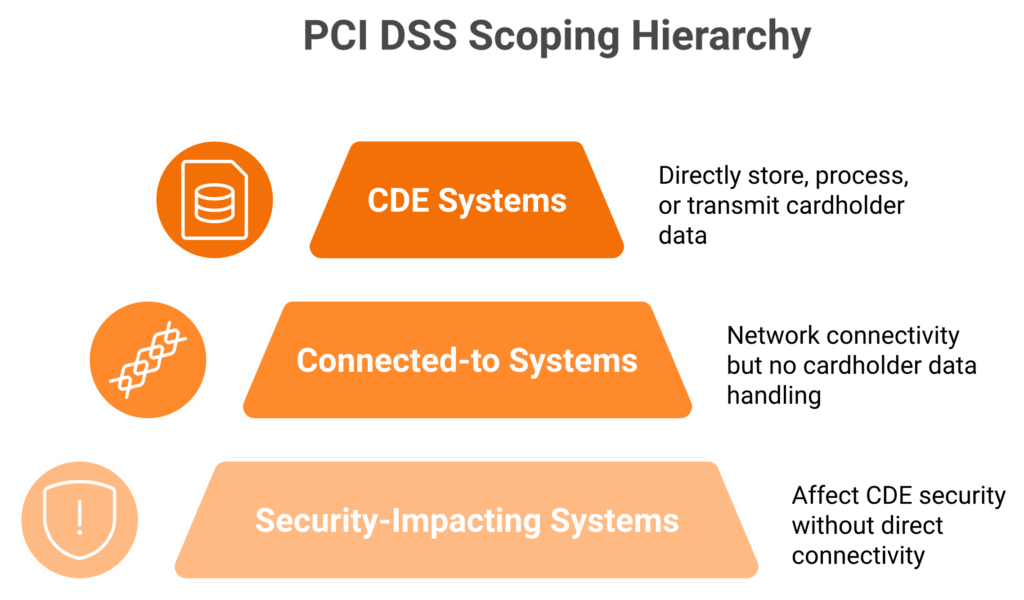
The cardholder data environment encompasses all people, processes, and technology that store, process, or transmit cardholder data, plus any systems connected to or that could impact the security of those systems. There are three scoping categories:
- CDE systems — Directly handle CHD (payment application servers, databases storing PANs, POS terminals).
- Connected-to systems — Have network connectivity to the CDE but don’t handle CHD (jump servers, DNS servers within the CDE network segment).
- Security-impacting systems — Could affect CDE security even without direct connectivity (authentication servers, logging infrastructure, patch management platforms).
Every system in scope increases audit complexity, cost, and time. The operational goal is clear: minimize what’s in scope by isolating CHD flows.
🧱 Network Segmentation and Scope Reduction
Network segmentation is not a PCI DSS requirement, but it’s the most effective strategy for reducing audit scope and cost. Three approaches, in order of isolation strength:
- Physical segmentation — Separate network infrastructure dedicated to CDE workloads. Highest assurance, highest cost.
- Logical segmentation — VLANs, ACLs, and firewall rules isolating CDE traffic. Most common approach for mid-market.
- Microsegmentation — Application-level isolation enforcing east-west traffic controls between workloads. Essential for cloud-native and containerized environments.
Practical Guidance
- Isolate the CDE in its own network segment with strict ingress/egress controls.
- Minimize the number of systems with CDE access.
- Use tokenization to remove CHD from non-essential systems. If the system only sees tokens, it’s out of scope.
- Segmentation must be validated through penetration testing (Requirement 11.4.6) every 6 months for service providers and annually for merchants.
🗺️ Data Flow Mapping and Network Architecture Diagrams
Requirement 1.2.3 mandates accurate network diagrams showing all connections between the CDE and other networks, and Requirement 1.2.4 requires data flow diagrams documenting all flows of account data across systems and networks.
The mapping process:
- Identify every point where CHD enters the environment: POS terminals, e-commerce checkout, call centers, and mobile payments.
- Trace the flow through processing systems: payment gateways, middleware, and encryption layers.
- Document all storage locations: databases, backup systems, and log archives containing PANs.
- Map disposal and destruction procedures: data retention policies and secure deletion processes.
⚠️ Diagrams must be current. Stale network and data flow diagrams are among the most common audit findings, and the easiest to prevent.
☁️ Cloud-Native CDE Strategies
Cloud and containerized environments introduce unique CDE challenges that traditional segmentation approaches don’t address:
| Strategy | Implementation | PCI Relevance |
|---|---|---|
| VPC/Subnet Isolation | Deploy CDE workloads in dedicated VPCs with private subnets; use security groups and NACLs | Segmentation evidence for Req 1 |
| Kubernetes Network Policies | Pod-to-pod isolation via network policies; ephemeral containers reduce persistent attack surface | Container-level segmentation validation |
| Infrastructure-as-Code | Terraform/CloudFormation templates codify security configs; drift detection flags non-compliant changes | Configuration compliance for Req 2 |
| Shared Responsibility Mapping | Document which requirements your cloud provider covers (physical security, hypervisor) vs. yours (application, access, monitoring) | Scoping clarity per AWS/Azure/GCP matrices |
| Serverless/Multi-Cloud | Ephemeral function environments reduce data residency but complicate logging; multi-cloud requires unified monitoring | Log aggregation for Req 10 |
✅ UnderDefense for Cloud-Native CDE Monitoring
UnderDefense MAXI platform monitors cloud-native CDE environments across AWS, Azure, and GCP, ingesting container runtime signals, Kubernetes audit logs, and CloudTrail events to provide the continuous monitoring layer (Requirements 10–11) that cloud architectures demand. Vendor-agnostic integration across your full multi-cloud stack means one platform covers every environment where cardholder data lives, without forcing tool replacement.
Q5. How Do You Prepare for a PCI DSS Audit Step by Step?
PCI DSS audit preparation is a structured, phased process, not a last-minute sprint you scramble through the month before your QSA shows up. Ideally, you start 12–16 weeks before the assessment window. Organizations that already have automated continuous monitoring in place can compress this to 8–10 weeks, because the evidence is collecting itself in real time.
Why a Phased Approach Matters
From what we see across our client base, teams that treat audit prep as a one-shot effort end up with gaps: missing documentation, untested controls, and evidence that doesn’t line up with what the QSA expects. A phased approach lets you identify issues early, remediate in parallel, and avoid the 2 AM scramble that burns out your compliance team.
The 9-Step Preparation Framework
- Conduct a Gap Analysis Against v4.0.1 — Assess current controls against all 12 requirements. Flag the 47 new mandatory requirements that took effect after March 31, 2025. Use PCI SSC’s prioritized approach to rank gaps by risk severity.
- Perform a Comprehensive Risk Assessment (Req 12.2) — Run an annual formal risk assessment identifying threats, vulnerabilities, and potential impacts to cardholder data. Use an accepted methodology (NIST, OCTAVE, or ISO 27005).
- Establish and Update Policies, Procedures, and Documentation — Review and update information security policies, incident response plans, and data retention/disposal policies. Ensure all policies reference v4.0.1 requirements explicitly.
- Build and Verify Network Diagrams and Data Flow Charts — Update architecture diagrams to reflect the current environment. Validate data flow accuracy with application owners and network engineers.
- Execute Infrastructure Testing — Quarterly ASV scans, annual penetration testing (internal and external), web application security testing (Req 6.4), and wireless analyzer scans if applicable. Document all results and remediation activities.
- Assess Third-Party and Vendor PCI Compliance — Collect Attestations of Compliance (AoCs) or compliance certificates from all third-party service providers. Verify the scope of their PCI obligations versus yours.
- Conduct Employee Security Awareness Training — Annual training covering cardholder data handling, social engineering, phishing recognition, and incident reporting. Include role-specific training for personnel with CDE access (Req 12.6).
- Engage a QSA for Pre-Audit Consultation — Optional but recommended for first-time or complex assessments. Validate scope agreement, discuss customized approach documentation if applicable, and align on evidence format expectations.
- Compile Evidence Artifacts Per Requirement — Gather configuration screenshots, scan reports, policy documents, training records, incident response logs, and access review documentation. Organize by requirement number for efficient QSA review.
The 12–16 Week Timeline
| Phase | Weeks | Activities | Milestone |
|---|---|---|---|
| Phase 1: Assessment | 1–4 | Scoping, merchant level confirmation, gap analysis, risk assessment | ✅ Gap report finalized |
| Phase 2: Documentation | 5–8 | Policy updates, network diagram verification, data flow validation | ✅ Documentation package complete |
| Phase 3: Testing | 9–12 | ASV scans, pen tests, web app tests, third-party verification, employee training, remediation of critical findings | ✅ All critical findings remediated |
| Phase 4: Evidence & Audit | 13–16 | Evidence compilation organized by requirement, pre-audit QSA consultation, formal assessment initiation | ✅ Assessment ready |
How UnderDefense Simplifies Steps 5 and 9
We built our MDR platform to make Steps 5 and 9 dramatically less painful. UnderDefense’s continuous monitoring auto-generates compliance evidence through 24/7 log analysis records, threat investigation documentation, and incident response artifacts that your QSA can validate during the assessment. Our 30-day onboarding means you can establish this evidence pipeline by Week 4 of your preparation timeline, so by the time you reach the testing sprint, the hardest evidence is already sitting in your dashboard.
Q6. What Should Your PCI DSS Audit Checklist and Evidence Collection Plan Include?
Your audit checklist serves two purposes: tracking remediation progress during preparation and organizing evidence artifacts for QSA submission. Under v4.0.1, your checklist must include the 47 new mandatory requirements plus targeted risk analysis documentation for every periodic control. Organize evidence by requirement number, not by system or department, so your QSA isn’t hunting across five folders for a single control.
Evidence Checklist by Requirement Family
| Requirement | Key Evidence Artifacts |
|---|---|
| Req 1–2: Network Security | Firewall/NSC rule sets with business justification, network diagrams, system hardening baselines, default credential removal evidence, configuration standards documentation |
| Req 3–4: Data Protection | Encryption key management procedures, PAN discovery scan results, tokenization/masking evidence, TLS/SSL configuration reports, data retention and disposal policy with evidence of execution |
| Req 5–6: Vulnerability Mgmt | Anti-malware deployment records and update logs, patch management log with SLAs, SDLC documentation, code review records, payment page script inventory with authorization records (6.4.3), script integrity-checking mechanism evidence (6.4.3) |
| Req 7–9: Access Control | RBAC policy with user access matrix, MFA deployment evidence for all CDE access (8.3.6), password/passphrase policy configuration, unique ID assignment verification, physical access logs, visitor management records, media destruction logs |
| Req 10–11: Monitoring/Testing | SIEM/log management configuration, audit trail samples showing all required event types, log retention evidence (12 months, 3 months immediately available), quarterly ASV scan reports, annual pen test results with remediation evidence, change-detection mechanism evidence for payment pages (11.6.1) |
| Req 12: Policy | Current information security policy, incident response plan and test records, targeted risk analysis documentation for each periodic requirement (12.3.2), security awareness training completion records, third-party service provider AoCs and compliance status |
⚠️ 2026-Specific Additions
These checklist items are new or newly mandatory, and they are where QSAs will focus the most scrutiny:
- Client-side script inventory with written business justification for each script on payment pages (Req 6.4.3)
- Automated change-and-tamper-detection logs for payment page HTTP headers and content (Req 11.6.1)
- Documented targeted risk analysis for every periodic requirement specifying frequency justification (Req 12.3.2)
- MFA evidence for all CDE access, not just remote access (Req 8.3.6)
- Security awareness training records that include social engineering and phishing simulations
- Evidence of authenticated internal vulnerability scanning (Req 11.3.1.2)
UnderDefense’s Compliance Kits
UnderDefense’s forever-free compliance kits include pre-built checklist templates mapped to PCI DSS v4.0.1 alongside SOC 2 and ISO 27001, so compliance teams track progress against all three frameworks simultaneously. Our continuous MDR monitoring auto-generates evidence for Req 10–11 checklist items, eliminating the manual log compilation that consumes weeks of audit preparation.
Q7. What Are the Most Common PCI DSS Audit Failures, and How Do You Prevent Them?
It’s two weeks before your QSA arrives. Your compliance lead discovers that marketing added four third-party analytics scripts to the checkout page six months ago, none documented, none authorized, none integrity-checked. Requirement 6.4.3 just became your biggest problem. This scenario played out across hundreds of organizations in the first post-enforcement audit cycle. Here are the failure patterns, and how to break them.
The Top 8 Audit Failure Points
| # | Failure Point | Root Cause | Prevention |
|---|---|---|---|
| 1 | Incomplete CDE scoping | Shadow payment flows, undocumented data stores | Quarterly data discovery scans and architecture reviews |
| 2 | Stale or missing script inventories (6.4.3) | Marketing/analytics teams adding scripts without security review | Automated client-side monitoring tools with approval workflows |
| 3 | Inadequate change-detection for payment pages (11.6.1) | No automated HTTP header monitoring | Deploy tamper-detection tools with real-time alerting |
| 4 | Log retention and monitoring gaps (Req 10) | SIEM misconfiguration, incomplete audit trails, uninvestigated alerts | 24/7 SOC/MDR with continuous log validation |
| 5 | Weak or inconsistent MFA deployment (8.3.6) | MFA for VPN but not CDE console access | MFA policy enforcement across all CDE entry points with centralized identity management |
| 6 | Missing targeted risk analysis documentation (12.3.2) | Periodic tasks performed without documented frequency justification | GRC platform with automated TRA templates tied to each periodic control |
| 7 | Compensating control documentation gaps | Controls implemented but not formally documented with required worksheets | Maintain living compensating control worksheets updated at each control change |
| 8 | Customized approach pitfalls | Choosing customized approach without adequate evidence of control effectiveness testing | Treat customized approach documentation as a mini-audit report with objective, control description, and testing evidence |
v4.0 Lessons Learned from Early Adopters
Organizations that completed audits under v4.0/4.0.1 in 2025 surfaced several hard-won insights:
⚠️ Script inventory was the single largest remediation effort. Most organizations discovered 3–5x more scripts on payment pages than expected.
⏰ Targeted risk analysis (12.3.2) consumed more QSA time than any other new requirement. Organizations that pre-documented frequency justifications with risk-based rationale passed significantly faster.
✅ Organizations with continuous monitoring before the audit reduced QSA assessment time by 30–40% because evidence was pre-compiled and investigation narratives were already documented.
The customized approach was used by fewer than 15% of organizations in the first cycle. Most found the documentation burden heavier than meeting the defined approach directly.
MFA expansion (8.3.6) created unexpected friction with legacy systems and service accounts. Plan for 4–6 weeks of MFA deployment testing in CDE environments.
💰 The Hidden Costs of Failure
| Cost Category | Range |
|---|---|
| Failed audit re-assessment fees | $15K–$75K |
| Non-compliance monthly fines | $5K–$100K/month from payment brands through acquiring bank |
| Per-cardholder breach exposure fines | $20–$50 per cardholder |
| Card replacement costs | $3–$5+ per compromised card |
| Forensic investigation | $50K–$500K |
| Total breach cost multiplier | Non-compliant organizations face ~2.7x higher total breach costs vs. compliant organizations |
| Revenue impact | Acquirers may increase transaction fees or terminate merchant agreements |
| Reputational damage | MATCH list placement can prevent card processing for years |
How Continuous Monitoring Eliminates Audit Surprises
UnderDefense MAXI platform eliminates failure point #4 (log gaps) and partially addresses #1 (scoping visibility) through 24/7 ingestion from your CDE stack, including SIEM, EDR, cloud, and identity, with AI-driven anomaly detection and concierge analysts who investigate alerts in real time. When QSAs ask “What happened when this alert fired?” we provide the investigation narrative, containment actions, and resolution timeline. We maintain a 100% ransomware prevention record across 500+ MDR clients over 6 years, because continuous monitoring with human-driven response catches what annual pen tests miss.
Q8. What Is PCI Compliance Automation and How Do You Map Requirements to Automated Controls?
PCI compliance automation is the use of technology platforms and integrated tooling to continuously validate security controls, auto-collect evidence artifacts, monitor the CDE in real time, and reduce the manual effort of maintaining PCI DSS compliance between audits. The goal isn’t to automate every requirement but to automate everything that can be automated so your team focuses on the controls that genuinely require human judgment.
Automation Spans a Spectrum
- Fully automatable: Log collection, vulnerability scanning, configuration monitoring, script inventory checks
- Partially automatable: Access reviews, policy updates, risk analysis documentation
- Inherently manual: Physical security inspections, security awareness training delivery, QSA interviews
Automation Tool Categories
| Category | Function | Example Tools |
|---|---|---|
| GRC/Compliance Platforms | Evidence collection, policy management, control mapping, audit readiness tracking | Drata, Sprinto, Scrut, Vanta |
| Vulnerability Management | Automated internal/external scanning, patch verification, remediation tracking | Qualys, Tenable, Rapid7 |
| Client-Side Monitoring | Script inventory, integrity checking, payment page change detection (Req 6.4.3 & 11.6.1) | Feroot, Jscrambler, Akamai Page Integrity |
| DAST/Application Security | Automated web application testing (Req 6.4) | Invicti, Burp Suite, HCL AppScan |
| File Integrity Monitoring (FIM) | Detection of unauthorized changes to critical system files (Req 11.5.2) | Tripwire, OSSEC, Qualys FIM |
| SIEM/MDR | Centralized log management, real-time event correlation, threat detection (Req 10 & 11) | Splunk, Microsoft Sentinel, UnderDefense MAXI |
| Infrastructure-as-Code Compliance | Configuration validation in CI/CD pipelines (Req 1, 2 & 6) | Terraform with Checkov/Bridgecrew, Ansible, AWS Config Rules |
| Policy Management | Policy distribution, acknowledgment tracking, version control (Req 12) | PowerDMS, PolicyTree, Hyperproof |
The Requirement-to-Automation Mapping
| Requirement | Control Description | Automation Feasibility | Tool Category | Evidence Generated | Frequency |
|---|---|---|---|---|---|
| Req 1 | NSC rule validation | ✅ Full | Network security + IaC | Config exports + drift alerts | Continuous |
| Req 3 | PAN discovery & encryption | ⚠️ Partial | Data discovery + encryption mgmt | Scan results + key rotation logs | Quarterly |
| Req 5 | Anti-malware management | ✅ Full | EDR/anti-malware | Deployment records + update logs | Continuous |
| Req 6.4.3 | Script inventory & integrity | ✅ Full | Client-side monitoring | Script inventory with authorization + integrity logs | Continuous |
| Req 8.3.6 | MFA enforcement for CDE | ⚠️ Partial | IAM platform + compliance platform | MFA config evidence + access logs | Continuous monitoring, quarterly review |
| Req 9 | Physical access control | ❌ Manual | Badge systems (partial) | Physical access logs + visitor records | Quarterly inspection |
| Req 10 | Log collection & monitoring | ✅ Full | SIEM/MDR | Audit trail exports + investigation records | Real-time |
| Req 11.6.1 | Payment page change detection | ✅ Full | Client-side monitoring + WAF | Change-detection alerts + tamper evidence | Continuous |
| Req 12.3.2 | Targeted risk analysis | ⚠️ Partial | GRC platform | TRA templates with frequency justification | Per-task frequency |
Continuous Monitoring Is the Highest-ROI Investment
The highest-ROI automation investment is continuous monitoring (Req 10–11) because it simultaneously provides real-time threat detection AND auto-generates the evidence QSAs most scrutinize. Real-time compliance dashboards show control status across all 12 requirements. Automated evidence collection timestamps and archives configuration snapshots, scan results, and alert investigation records. SIEM integration for PCI-specific correlation rules catches unauthorized CDE access attempts, cardholder data exfiltration patterns, and privilege escalation in payment systems, and triggers automated alerting for compliance drift between audits.
How UnderDefense Covers This Stack
UnderDefense’s vendor-agnostic UnderDefense MAXI platform integrates with 250+ tools across every category in this mapping, ingesting signals from your EDR, SIEM, cloud, and identity layers into a single detection and response platform. One integration covers Req 10 and 11 while providing the operational security foundation that validates Req 1–9’s control effectiveness. The forever-free compliance kits auto-generate documentation mapped to PCI DSS, SOC 2, and ISO 27001 simultaneously, because most organizations we work with are managing multiple frameworks at once, and duplicating effort across them is a waste of time your team doesn’t have.
Q9. What Are the Best PCI DSS Automation Tools for 2026?
Selecting PCI compliance automation tools means building a security stack you’ll depend on for continuous compliance, not just one audit cycle. The wrong choice locks you into tools that automate evidence collection but can’t detect or respond to the threats those controls are designed to prevent. That’s the real dilemma: platform solutions offer broad coverage with potential gaps, while point solutions deliver best-of-breed per category at the cost of integration complexity.
❌ The Wrong Way to Decide
Most teams select tools based on requirement-count coverage (“We support all 12 requirements!”) or lowest price. The problem? Most GRC platforms automate documentation but don’t provide operational security. You still need separate tools for threat detection, vulnerability scanning, and incident response. That tool sprawl recreates the fragmentation problem compliance automation was supposed to solve. Equally dangerous: choosing based solely on brand recognition without evaluating whether the tool covers v4.0.1’s new requirements (6.4.3, 11.6.1) that older platforms may not address.
✅ The Right Evaluation Framework, 7 Criteria
- Requirement Coverage Depth — Does it address all 12 requirements or focus on specific domains?
- Continuous Monitoring vs. Point-in-Time — Real-time control validation or periodic assessment?
- Evidence Auto-Collection — Automatic gathering of configuration snapshots, scan results, and log records?
- Integration Breadth — Works with existing SIEM, EDR, cloud, and identity tools, or forces a proprietary stack?
- Operational Security — Beyond compliance automation, can it actually detect and respond to CDE threats?
- Multi-Framework Support — Maps PCI evidence to overlapping SOC 2, ISO 27001, and HIPAA requirements?
- Pricing Transparency — Published, predictable pricing or hidden behind enterprise sales?
Vendor evaluation questions to ask: “How do you specifically address Req 6.4.3 and 11.6.1?” / “Can you show sample evidence artifacts your platform generates?” / “What is your onboarding timeline for our environment?” / “How do you handle multi-cloud CDE environments?”
📊 Automation Tool Comparison Matrix
| Tool | Category | PCI Reqs Addressed | v4.0.1 New Req Support | Pricing Model | Merchant Level Fit | Key Differentiator |
|---|---|---|---|---|---|---|
| UnderDefense MAXI | SIEM/MDR | Req 10, 11 + operational security across all | ✅ Yes (continuous 6.4.3/11.6.1 alerting) | $11–15/endpoint/month published | All levels | Only platform combining 24/7 threat detection + compliance evidence + concierge analyst response + forever-free compliance kits |
| Drata | GRC | All 12 (documentation/evidence) | Partial | Custom pricing | Level 1–2 | Strong multi-framework mapping |
| Sprinto | GRC | All 12 (documentation/evidence) | Partial | From $8K/year | Level 2–3 | Automated evidence collection |
| Qualys | Vuln Management | Req 5, 6, 11 | ✅ Yes | Per-asset pricing | All levels | Integrated ASV scanning + VMDR |
| Feroot PaymentGuard | Client-Side Monitoring | Req 6.4.3, 11.6.1 | ✅ Yes (purpose-built) | Custom pricing | All levels | Purpose-built payment page script monitoring |
| Invicti | DAST | Req 6, 11 | ✅ Yes | Custom pricing | Level 1–2 | Proof-based DAST scanning |
| Splunk | SIEM | Req 10, 11 | ✅ Yes | Ingest-based pricing | Level 1 | Deep log analytics |
| Akamai Page Integrity | Edge/Client-Side | Req 6.4.3, 11.6.1 | ✅ Yes | Bundled with CDN | Level 1–2 | Edge-integrated script monitoring |
⭐ Where UnderDefense Stands
Score UnderDefense against the 7 criteria above and it hits 2/2 on every single one: vendor-agnostic integration across 250+ tools, continuous real-time monitoring, automatic evidence generation, multi-framework compliance kits included, and transparent published pricing.
3-Phase Implementation Roadmap
- Phase 1, Pilot (Weeks 1–4): Deploy continuous monitoring for Req 10–11 and client-side monitoring for 6.4.3/11.6.1 in a staging CDE segment.
- Phase 2, Integrate (Weeks 5–8): Connect GRC platform, automate evidence collection for Req 1–9, and integrate with CI/CD pipeline for IaC compliance.
- Phase 3, Scale (Weeks 9–12): Extend to full CDE, activate multi-framework mapping, implement automated compliance dashboards, and conduct team training.
UnderDefense’s 30-day turnkey onboarding compresses Phase 1–2 with dedicated concierge support. The real question isn’t which tool automates the most PCI checkboxes but which partner can detect threats in your CDE, respond before damage occurs, AND hand your QSA audit-ready evidence. That’s UnderDefense.
Q10. How Much Does a PCI DSS Audit Cost, and What Is the ROI of Automation?
PCI DSS audit costs vary dramatically by merchant level, CDE complexity, and compliance maturity. The most common budgeting mistake is accounting only for QSA fees while underestimating remediation, tooling, and internal labor, which represent 60–70% of total compliance spend. Here’s what the numbers actually look like, plus a framework for calculating whether automation pays for itself.
💰 Cost Breakdown by Merchant Level
| Cost Category | Level 1 (6M+ txns) | Level 2 (1M–6M) | Level 3 (20K–1M) | Level 4 (<20K) |
|---|---|---|---|---|
| QSA-Led Assessment | $30K–$200K+ (RoC mandatory) | $10K–$50K (SAQ or RoC) | $5K–$20K (SAQ w/ possible QSA) | $1K–$5K (SAQ self-assessment) |
| Quarterly ASV Scans | $1K–$5K/year | $1K–$5K/year | $1K–$5K/year | $1K–$5K/year |
| Annual Pen Testing | $15K–$75K | $10K–$40K | $5K–$20K | $3K–$10K |
| Remediation (Year 1) | $50K–$500K+ | $25K–$150K | $10K–$50K | $5K–$25K |
| Automation Tooling | $20K–$100K/year | $10K–$50K/year | $5K–$25K/year | $2K–$10K/year |
| Internal Labor (FTE) | $80K–$200K/year | $40K–$100K/year | $20K–$50K/year | $5K–$20K/year |
| 💸 Total Year 1 | $200K–$1M+ | $100K–$350K | $50K–$150K | $15K–$70K |
| Annual Ongoing | $150K–$500K | $75K–$200K | $30K–$80K | $10K–$40K |
⚠️ Hidden costs to flag: CDE scoping consulting ($10K–$30K), network segmentation redesign ($25K–$150K), client-side monitoring tools for 6.4.3 ($5K–$50K/year), staff training ($2K–$5K/person), and re-assessment fees if the audit fails ($15K–$75K).
📊 Automation ROI Framework
Here’s the formula:
ROI = [(Manual Compliance Hours × Hourly Rate) + (Breach Probability Reduction × Average Breach Cost) + (Non-Compliance Fine Avoidance)] − (Annual Automation Investment)
Worked example for a Level 2 merchant:
- Manual compliance effort: 2,000 hours/year × $75/hour = $150K
- Automation reduces effort by 60%: savings = $90K
- Breach probability reduction: automated monitoring reduces breach likelihood by ~40%; average breach cost $4.44M (IBM Cost of a Data Breach 2025); risk reduction value = 0.04 (base probability) × 0.40 (reduction) × $4.44M = $71K annualized
- Non-compliance fine avoidance: $5K–$100K/month; assume $15K/month average for 3-month gap = $45K avoided
- Total annual benefit: $90K + $71K + $45K = $206K
- Annual automation investment: $50K (tooling + platform)
- Net ROI: $156K / $50K = 312% ROI
Adjust inputs for your merchant level, CDE complexity, and current maturity.
❌ The Cost of Non-Compliance, Quantified
- Monthly fines from payment brands: $5,000–$100,000/month through the acquiring bank, escalating over time
- Increased transaction fees from acquirer reclassification
- Breach liability: full card replacement costs ($3–$10/card), forensic investigation ($50K–$500K), and regulatory penalties. Non-compliant organizations face significantly higher total breach costs.
- Merchant agreement termination and MATCH list placement, preventing card processing for years
✅ Where UnderDefense Fits
UnderDefense’s transparent $11–15/endpoint/month pricing makes ROI calculation straightforward, with no hidden fees and no contact-sales opacity. For a 500-endpoint organization, that’s $5,500–$7,500/month for 24/7 threat detection, continuous compliance evidence generation, and concierge analyst response. The SOC Cost Calculator models exact costs against your endpoint count.
Most organizations spend more on annual QSA fees alone than on the continuous monitoring that prevents the failures QSAs find.
Q11. How Do You Maintain Continuous PCI Compliance After Passing the Audit?
Passing your PCI DSS audit is not the finish line. It’s the starting point for a continuous compliance cycle that requires quarterly scanning, ongoing monitoring, governance cadence, and automated drift detection to ensure you remain compliant between annual assessments.
✅ What Separates Organizations That Maintain Year-Round Compliance
- Quarterly ASV scans and annual penetration testing on fixed schedules with automated remediation tracking.
- Continuous monitoring of CDE systems, logs, and payment page integrity (not just during audit season).
- Compliance governance cadence: monthly compliance stakeholder meetings, a designated compliance leader with cross-functional authority, and organization-wide security ownership (not siloed to IT).
- Automated compliance drift detection: real-time alerts when configurations, access controls, or monitoring coverage deviates from PCI baseline.
- Annual reassessment planning: begin preparation 16 weeks before the assessment window; maintain a living evidence repository updated continuously rather than compiled annually.
- Post-incident compliance validation: after any security incident, re-validate CDE scope and control effectiveness before resuming normal operations.
⏰ Why Continuous Beats Periodic
Organizations that treat post-audit compliance as an ongoing security operation, not a quarterly checkbox, spend 40–60% less on each subsequent annual assessment because evidence is already compiled and controls are continuously validated. The right MDR partner eliminates the gap between “passing the audit” and “being actually secure.” Continuous compliance requires a security operations partner that monitors your CDE 24/7, generates audit evidence automatically, and responds to threats before they become compliance failures.
This guide is informed by operational outcomes across 500+ MDR deployments, documented case studies including 2-day-faster threat detection than CrowdStrike OverWatch, and 6 years of 100% ransomware prevention across UnderDefense’s client base.
1. What is a PCI DSS audit and why does 2026 mark the most critical compliance year?
A PCI DSS audit is a formal assessment of your cardholder data environment (CDE) against the Payment Card Industry Data Security Standard’s 12 requirement families, 78 base requirements, and over 400 test procedures. It evaluates everything from network security controls and encryption to access management, logging, and security policy governance.
2026 is the most critical compliance year because PCI DSS v4.0.1 brought 47 newly mandatory requirements into enforcement as of March 31, 2025, making this the first full audit cycle under complete v4.0.1 enforcement. The standard expanded from roughly 370 to over 500 requirements, with four new mandates reshaping audit readiness:
-
Requirement 6.4.3: Complete inventory of every script on payment pages with written business justification and integrity-checking mechanisms.
-
Requirement 11.6.1: Automated change-and-tamper-detection for HTTP headers and payment page content in real time.
-
Requirement 8.3.6: MFA required for all CDE access, not just remote access.
-
Requirement 12.3.2: Documented targeted risk analysis justifying the frequency of every periodic control.
We built our continuous monitoring platform to help organizations shift from annual compliance sprints to continuous security operations—because the legacy approach of cramming for audits annually is architecturally broken under v4.0.1.
2. How much does a PCI DSS audit cost by merchant level in 2026?
PCI DSS audit costs vary dramatically by merchant level, CDE complexity, and compliance maturity. The most common budgeting mistake is accounting only for QSA fees while underestimating remediation, tooling, and internal labor—which represent 60–70% of total compliance spend.
Here is the realistic cost breakdown:
-
Level 1 (6M+ transactions): $200K–$1M Year 1 total; $150K–$500K annually ongoing. QSA-led RoC mandatory ($30K–$200K), plus annual pen testing ($15K–$75K), automation tooling ($20K–$100K/year), and first-year remediation ($50K–$500K).
-
Level 2 (1M–6M): $100K–$350K Year 1; $75K–$200K ongoing. SAQ or RoC with QSA ($10K–$50K).
-
Level 3 (20K–1M e-commerce): $50K–$150K Year 1; $30K–$80K ongoing.
-
Level 4 (<20K): $15K–$70K Year 1; $10K–$40K ongoing.
Hidden costs to flag include CDE scoping consulting ($10K–$30K), network segmentation redesign ($25K–$150K), client-side monitoring tools for 6.4.3 ($5K–$50K/year), and re-assessment fees if the audit fails ($15K–$75K).
We publish our MDR pricing transparently at $11–15/endpoint/month so you can model the continuous monitoring investment against these audit costs without any “contact sales” opacity. Our SOC Cost Calculator lets you model exact costs against your endpoint count.
3. What are the most common PCI DSS audit failures and how do you prevent them?
From what we see across our client base and from the first post-enforcement audit cycle under v4.0.1, the top failure points fall into predictable patterns:
-
Stale or missing script inventories (Req 6.4.3): Marketing or analytics teams add scripts to payment pages without security review. Most organizations discovered 3–5x more scripts than expected.
-
Inadequate change-detection for payment pages (Req 11.6.1): No automated HTTP header monitoring leads to undetected tampering.
-
Incomplete CDE scoping: Shadow payment flows and undocumented data stores create compliance gaps.
-
Log retention and monitoring gaps (Req 10): SIEM misconfiguration and uninvestigated alerts leave audit trails incomplete.
-
Weak MFA deployment (Req 8.3.6): MFA for VPN but not CDE console access.
-
Missing targeted risk analysis documentation (Req 12.3.2): Periodic tasks performed without documented frequency justification.
The hidden cost of failure is severe: non-compliance fines range from $5K–$100K/month, failed audit re-assessment fees run $15K–$75K, and non-compliant organizations face 2.7x higher total breach costs.
We eliminate the monitoring failure points through our 24/7 MDR platform with continuous log validation, AI-driven anomaly detection, and concierge analysts who investigate alerts in real time—so when your QSA asks “What happened when this alert fired?” we provide the investigation narrative, not a blank screen.
4. What should a PCI DSS audit checklist include for v4.0.1 compliance in 2026?
Your audit checklist serves two purposes: tracking remediation progress during preparation and organizing evidence artifacts for QSA submission. Under v4.0.1, it must cover the 47 new mandatory requirements plus targeted risk analysis documentation for every periodic control.
Evidence should be organized by requirement number, not by system or department:
-
Req 1–2 (Network Security): Firewall/NSC rule sets with business justification, network diagrams, system hardening baselines, default credential removal evidence.
-
Req 3–4 (Data Protection): Encryption key management procedures, PAN discovery scan results, TLS/SSL configuration reports, data retention policy with execution evidence.
-
Req 5–6 (Vulnerability Management): Anti-malware deployment records, patch management logs, SDLC documentation, payment page script inventory with authorization records (6.4.3).
-
Req 7–9 (Access Control): RBAC policy with user access matrix, MFA deployment evidence for all CDE access (8.3.6), physical access logs, media destruction logs.
-
Req 10–11 (Monitoring/Testing): SIEM configuration, audit trail samples, log retention evidence (12 months), quarterly ASV scans, annual pen test results, change-detection evidence (11.6.1).
-
Req 12 (Policy): Security policy, IR plan and test records, targeted risk analysis for each periodic requirement (12.3.2), training records, third-party AoCs.
Our forever-free compliance kits include pre-built checklist templates mapped to PCI DSS v4.0.1, SOC 2, and ISO 27001—so compliance teams track progress across all frameworks simultaneously.
5. How do you scope your CDE to reduce PCI DSS audit complexity and cost?
Accurate CDE scoping is the single most impactful step in audit preparation. Overscoping wastes resources and inflates costs. Underscoping creates compliance gaps that QSAs will find—and that attackers will exploit first.
Your CDE encompasses three scoping categories:
-
CDE systems: Directly handle cardholder data—payment application servers, databases storing PANs, POS terminals.
-
Connected-to systems: Have network connectivity to the CDE but don’t handle CHD—jump servers, DNS servers within the CDE network segment.
-
Security-impacting systems: Could affect CDE security even without direct connectivity—authentication servers, logging infrastructure, patch management platforms.
The most effective scope-reduction strategies, in order of isolation strength:
-
Physical segmentation: Separate network infrastructure dedicated to CDE workloads.
-
Logical segmentation: VLANs, ACLs, and firewall rules isolating CDE traffic (most common for mid-market).
-
Microsegmentation: Application-level isolation enforcing east-west traffic controls (essential for cloud-native and containerized environments).
-
Tokenization: If a system only sees tokens instead of actual PANs, it’s out of scope.
Segmentation must be validated through penetration testing (Req 11.4.6) every 6 months for service providers and annually for merchants. Data flow diagrams must be current—stale diagrams are among the most common audit findings.
6. What are the best PCI DSS automation tools for 2026 and how do you choose?
Selecting PCI compliance automation tools means building a security stack you’ll depend on for continuous compliance, not just one audit cycle. We evaluate tools across seven criteria: requirement coverage depth, continuous monitoring vs. point-in-time, evidence auto-collection, integration breadth, operational security capability, multi-framework support, and pricing transparency.
The key tool categories and leading options:
-
GRC/Compliance Platforms (evidence + mapping): Drata, Sprinto, Scrut, Vanta
-
Vulnerability Management (scanning + patching): Qualys, Tenable, Rapid7
-
Client-Side Monitoring (Req 6.4.3 & 11.6.1): Feroot PaymentGuard, Jscrambler, Akamai Page Integrity
-
SIEM/MDR (Req 10 & 11 + threat detection): Splunk, Microsoft Sentinel, UnderDefense MAXI
-
File Integrity Monitoring (Req 11.5.2): Tripwire, OSSEC, Qualys FIM
-
DAST/Application Security (Req 6): Invicti, Burp Suite, HCL AppScan
The critical mistake most teams make: choosing GRC platforms that automate documentation but don’t provide operational security. You still need separate tools for threat detection, vulnerability scanning, and incident response—which recreates the fragmentation compliance automation was supposed to solve. UnderDefense MAXI is the only platform that combines 24/7 threat detection, compliance evidence generation, and concierge analyst response with transparent $11–15/endpoint/month pricing.
7. How do you prepare for a PCI DSS audit step by step in 2026?
PCI DSS audit preparation is a structured, phased process that ideally begins 12–16 weeks before the assessment window. Organizations with automated continuous monitoring in place can compress this to 8–10 weeks.
The 9-step preparation framework:
-
Conduct a gap analysis against all 12 v4.0.1 requirements—flag the 47 new mandatory requirements enforced after March 31, 2025.
-
Run a formal risk assessment (Req 12.2) using NIST, OCTAVE, or ISO 27005.
-
Update all policies and documentation—information security policies, incident response plans, data retention/disposal policies.
-
Verify network diagrams and data flow charts with application owners and network engineers.
-
Execute infrastructure testing—quarterly ASV scans, annual penetration testing, web application security testing.
-
Assess third-party vendor PCI compliance—collect AoCs from all service providers.
-
Conduct security awareness training—including social engineering and phishing simulations.
-
Engage a QSA for pre-audit consultation—validate scope, align on evidence format.
-
Compile evidence artifacts organized by requirement number.
Our MDR platform with 30-day onboarding makes Steps 5 and 9 dramatically less painful—continuous monitoring auto-generates compliance evidence so by your testing sprint, the hardest evidence is already in your dashboard.
8. How do you maintain continuous PCI compliance after passing the audit?
Passing your PCI DSS audit is not the finish line—it’s the starting point for a continuous compliance cycle that requires quarterly scanning, ongoing monitoring, governance cadence, and automated drift detection.
What separates organizations that maintain year-round compliance:
-
Quarterly ASV scans and annual penetration testing on fixed schedules with automated remediation tracking.
-
Continuous CDE monitoring—not just during audit season—covering system logs, access events, and payment page integrity.
-
Compliance governance cadence: Monthly stakeholder meetings, a designated compliance leader with cross-functional authority, and organization-wide security ownership (not siloed to IT).
-
Automated compliance drift detection: Real-time alerts when configurations, access controls, or monitoring coverage deviates from PCI baseline.
-
Annual reassessment planning: Begin preparation 16 weeks before the assessment window and maintain a living evidence repository updated continuously.
-
Post-incident compliance validation: After any security incident, re-validate CDE scope and control effectiveness.
Organizations that treat post-audit compliance as an ongoing operation spend 40–60% less on each subsequent annual assessment because evidence is already compiled and controls are continuously validated. The right MDR partner eliminates the gap between passing the audit and being actually secure—monitoring your CDE 24/7, generating audit evidence automatically, and responding to threats before they become compliance failures.