




Q1: What are the 11 best AI SOC platforms for manufacturing in 2026?
The 11 best AI SOC platforms for manufacturing in 2026 are UnderDefense Agentic AI SOC, CrowdStrike Charlotte AI, Intezer, Palo Alto Cortex, Splunk, Stellar Cyber, Simbian, Prophet Security, Dropzone AI, Radiant Security, and Exaforce. Most handle IT alert triage well. Few extend real coverage to the OT and ICS floor. UnderDefense leads for manufacturers that need vendor-agnostic IT and OT visibility with analysts who respond, not just alert.
See how the UnderDefense Agentic AI SOC investigates, triages, and resolves real alerts.
The short list, ranked for the factory floor
I picked these eleven because they show up in real manufacturing buying cycles, and because each one earns a place for a specific reason. Here is the one-line verdict on each.
- UnderDefense Agentic AI SOC, best for vendor-agnostic IT and OT coverage with concierge response.
- CrowdStrike Charlotte AI, best for shops already running the Falcon endpoint estate.
- Intezer, best for malware-centric forensics.
- Palo Alto Cortex, best for existing Palo Alto platform customers.
- Splunk, best for data-heavy IT and OT SIEM deployments.
- Stellar Cyber, best for Open XDR multi-tool consolidation.
- Simbian, best for multi-agent autonomous triage.
- Prophet Security, best for agentic alert investigation.
- Dropzone AI, best for lean IT security teams.
- Radiant Security, best for adaptive investigation depth.
- Exaforce, best for detection accuracy at scale
Why the OT floor changes everything
Here is the thing most lists skip. Manufacturing has been the most-attacked industry for five years running, and it drew 27.7% of all incidents in 2025, according to the IBM X-Force 2026 Threat Intelligence Index. That number is not an IT problem. It is a production problem.
Attackers move faster than your analysts can. The CrowdStrike Global Threat Report puts the median breakout time at 48 minutes, and the fastest observed at 51 seconds. A human reading a queue cannot win that race alone. As I like to put it, humans click, but agents swarm. This is exactly why automated threat detection paired with human response matters on the plant floor.
So most tools on this list detect threats well on laptops, servers, and cloud. Very few watch the SCADA systems, PLCs, and control loops on the plant floor. Fewer still catch the moment an attacker pivots from an IT laptop into OT. That gap is the whole story of this guide, and it is central to any honest AI SOC provider evaluation.
How to read the table below
The table scores each platform on two things buyers keep conflating: IT coverage and OT coverage. I kept it to four columns on purpose, so you can shortlist for an RFP in about ninety seconds. Detailed breakdowns of every platform follow further down.
| Provider (Rating) | Best For | Key Strength | Compliance |
|---|---|---|---|
| UnderDefense Agentic AI SOC (5 Stars) | Vendor-agnostic IT and OT coverage with concierge response | Detects across your existing stack, then human analysts respond with context | SOC 2, ISO 27001, HIPAA, PCI DSS |
| CrowdStrike Charlotte AI (4 Stars) | Existing Falcon endpoint estates | Deep endpoint telemetry and agentic triage | SOC 2, ISO 27001 |
| Intezer (4 Stars) | Malware-centric forensics | Deep malware analysis and forensics, with fast forensic verdicts | SOC 2 |
| Palo Alto Cortex (4 Stars) | Palo Alto platform customers | Unified XSIAM data layer, strong automation | SOC 2, ISO 27001 |
| Splunk (4 Stars) | Data-heavy IT and OT SIEM deployments | Broad ingestion, IT and OT data correlation | SOC 2, ISO 27001, PCI DSS |
| Stellar Cyber (3 Stars) | Open XDR multi-tool consolidation | Consolidates many tools into one view | SOC 2 |
| Simbian (3 Stars) | Multi-agent autonomous triage | Multi-agent coverage of core SOC tasks | SOC 2 |
| Prophet Security (3 Stars) | Agentic alert investigation | Autonomous alert investigation | SOC 2 |
| Dropzone AI (3 Stars) | Lean IT security teams | Fast autonomous triage for small teams | SOC 2 |
| Radiant Security (3 Stars) | Adaptive investigation depth | Adaptive investigation workflows | SOC 2 |
| Exaforce (3 Stars) | Detection accuracy at scale | High detection accuracy, low noise | SOC 2 |
1.1 UnderDefense Agentic AI SOC, Best for Vendor-Agnostic IT and OT Coverage With Concierge Response
Overview
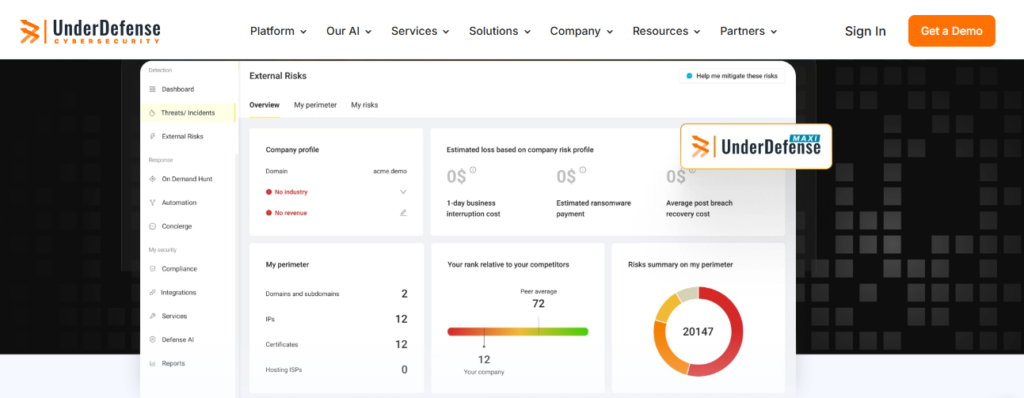
UnderDefense Agentic AI SOC is an AI SOC platform built on what we call the “AI SOC + Human Ally” model. The platform detects threats across your existing tools, and our analysts step in to respond with context. It reads your environment, validates suspicious activity, and acts, instead of dumping raw alerts on your team. You can see how the WarRoom platform works here.
For manufacturers, the draw is simple. You keep the security tools you already trust, and you gain 24/7 coverage across both IT and the plant floor. We built UnderDefense Agentic AI SOC to be vendor-agnostic, so it pulls data from your stack rather than forcing a rip-and-replace.
Core Services
- AI-driven detection across SIEM, EDR, cloud, and OT telemetry
- Concierge Response, where analysts communicate directly with affected users to own outcomes
- 2-minute Alert-to-Triage and 15-minute escalation for critical incidents
- Vendor-agnostic integration across 250+ security tools
- Proactive threat hunting and 30-day impact reporting
Why Companies Consider UnderDefense
Most mid-market manufacturers cannot staff a full 24/7 SOC. Hiring is hard, and burnout is real. I have felt that grind myself, working long weeks because the alerts never stop. Our MDR service gives lean teams a force multiplier without replacing their existing investment.
The other reason is context. Legacy MSSPs and black-box managed SOCs often escalate an alert with little explanation, which slows your response. We flip that. When we escalate, we include what happened, why it matters, and what to do next.
Ideal Customer Profile
Best suited for:
- Manufacturers and mid-market firms with 200 to 5,000 employees
- Teams running mixed IT and OT environments
- Security-lean organizations that need 24/7 coverage
- Companies preparing for SOC 2, ISO 27001, HIPAA, or PCI DSS audits
Commercial Model
UnderDefense uses transparent, published pricing, which is rare in this market. Our MDR pricing runs roughly $11 to $15 per endpoint per month, so you can budget without a sales negotiation. That transparency matters when a per-gigabyte model would otherwise punish you for ingesting OT data.
When to Shortlist
Shortlist UnderDefense when you want detection and response owned together, not split across a tool and an overloaded team. It fits well for manufacturers who need IT and OT visibility, transparent costs, and analysts who act during an incident. Teams preparing an RFP for MDR or a SOC service often include it alongside larger names.
Customer Reviews
“The biggest win for me was getting actual control over our security alerts. Before the guys from UD stepped in, we were getting bombarded with alerts from all our security tools. Their team cleaned up our configurations and got the noise under control within the first week. The platform itself is straightforward, it pulls in data from all our existing security tools, so we didn’t have to rip and replace anything.”
Verified User in Marketing and Advertising, Small-Business UnderDefense G2 Verified Review
“UnderDefense Agentic AI SOC integrates well with our systems, specifically with our SIEM, Splunk. Their team is proactive in identifying and addressing threats, providing 24/7 oversight.”
Oleg K., Director Information Security, Mid-Market UnderDefense G2 Verified Review
1.2 CrowdStrike Charlotte AI, Best for Existing Falcon Endpoint Estates
Overview
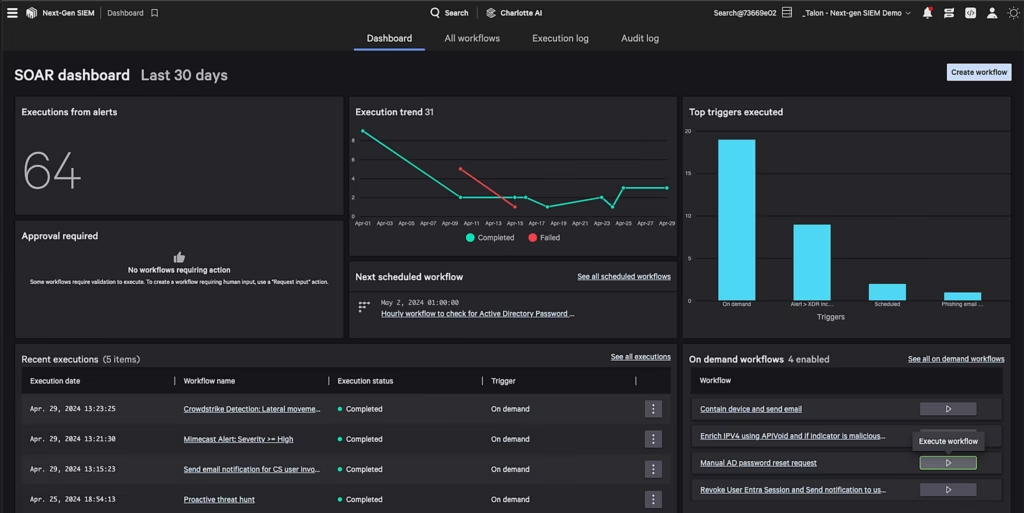
CrowdStrike Charlotte AI is the agentic layer that sits on top of the Falcon platform. It reasons over CrowdStrike’s endpoint telemetry to triage and summarize detections at machine speed. For shops already deep in Falcon, it turns existing data into faster answers.
The strength here is depth on the endpoint. CrowdStrike knows the endpoint better than almost anyone, and Charlotte AI applies that data to speed up analyst work.
Core Services
- Agentic triage and alert summarization inside Falcon
- Deep endpoint detection and response telemetry
- Threat intelligence built from CrowdStrike’s global sensor network
- Natural-language investigation for analysts
- Guided response actions on managed endpoints
Why Companies Consider CrowdStrike
Teams that standardized on Falcon get quick value, since Charlotte AI works on data they already collect. There is little new plumbing. The break-in speed data CrowdStrike itself publishes, 48 minutes median and 51 seconds at the fastest, makes the case for machine-speed triage on the endpoint. For teams weighing this against a broader Managed EDR approach, endpoint depth is the deciding factor.
Ideal Customer Profile
Best suited for:
- Enterprises already running CrowdStrike Falcon
- Endpoint-centric security teams
- Organizations wanting agentic triage inside one vendor’s stack
Commercial Model
CrowdStrike sells through module-based licensing tied to the Falcon platform, typically per endpoint with add-on modules. Charlotte AI capabilities layer onto existing Falcon subscriptions, so cost scales with your module choices.
When to Shortlist
Shortlist CrowdStrike when Falcon is already your backbone and you want faster endpoint triage. Weigh one trade-off for manufacturing: the view is strongest on the endpoint, so OT and organizational context outside Falcon can need extra work to see. A vendor-agnostic managed SIEM can close that context gap when endpoint tools alone fall short.
1.3 Intezer, Best for Malware-Centric Forensics
Overview
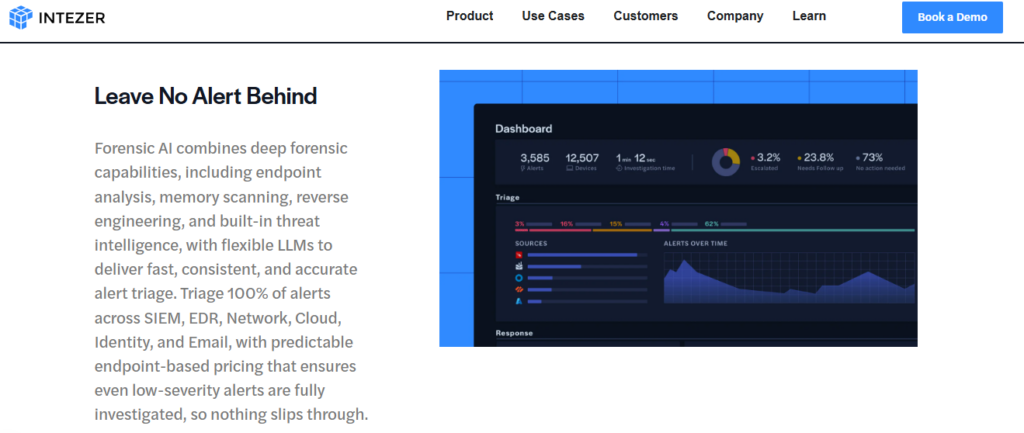
Intezer is an AI SOC platform with deep roots in malware analysis and forensics. Its strength is understanding what a suspicious file or process actually does. For teams facing frequent malware alerts, that depth speeds decisions.
Core Services
- Automated malware analysis and classification
- Alert investigation with forensic depth
- Integration with SIEM and EDR sources
- Threat intelligence enrichment
- Analyst-facing verdicts and reports
Why Companies Consider Intezer
Teams handling many malware alerts like Intezer’s forensic depth. It answers the “is this actually malicious” question fast, with evidence. The honest scope note: malware forensics is the specialty, so it complements rather than replaces broad IT and OT coverage.
Ideal Customer Profile
Best suited for:
- Teams with heavy malware-alert volume
- Incident responders needing fast file verdicts
- Organizations layering forensics onto a broader SOC
Commercial Model
Intezer generally prices on subscription tied to analysis volume and scale. Cost aligns with how much you route through its forensic engine.
When to Shortlist
Shortlist Intezer when malware triage and forensics are recurring pain points. Treat it as a specialist layer, and pair it with broader threat detection across IT and OT for full manufacturing protection.
1.4 Palo Alto Cortex, Best for Existing Palo Alto Platform Customers
Overview
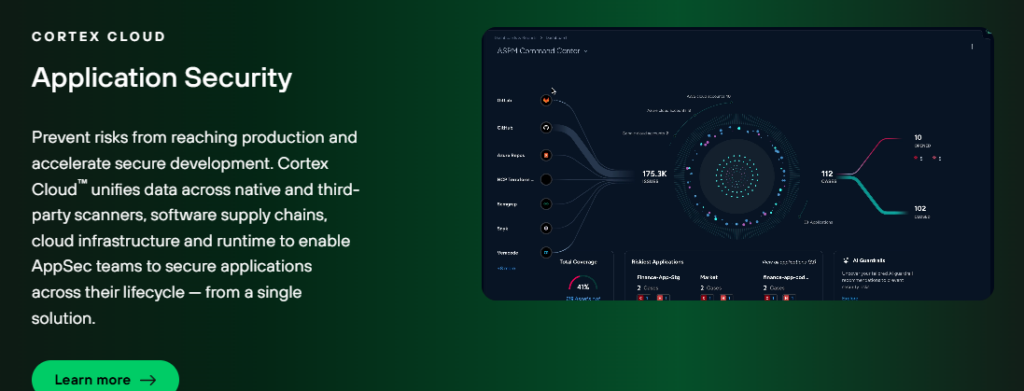
Palo Alto Cortex, built around Cortex XSIAM, is an AI-driven SOC platform that unifies detection, investigation, and response in one data layer. For shops already standardized on Palo Alto, it turns firewall, endpoint, and cloud telemetry into prioritized cases. The pull is consolidation, since one vendor covers many layers.
Core Services
- Cortex Agentic Assistant for autonomous investigation and threat hunting
- XDR-integrated detection across endpoint, network, and cloud
- 2,900+ ML models with 13,300+ built-in detections
- Natural-language investigation with enterprise guardrails
- Automation that Palo Alto says cuts manual work by 75%
Why Companies Consider Palo Alto Cortex
Teams deep in the Palo Alto ecosystem get fast value, since the data already flows in. The platform claims up to 99% less noise, which matters when your analysts are drowning. For manufacturers, the trade-off is honesty about OT: coverage is strong on IT layers, so plant-floor telemetry often needs separate handling. A vendor-agnostic agentic SOC platform can fill that plant-floor gap.
Ideal Customer Profile
Best suited for:
- Enterprises already running Palo Alto firewalls and Cortex XDR
- Large IT-centric security teams
- Organizations wanting one-vendor SOC consolidation
Commercial Model
Cortex sells through credit-based and platform licensing tied to data ingestion and modules. Costs scale with telemetry volume, so heavy OT and log ingestion can push the bill up.
When to Shortlist
Shortlist Palo Alto when the platform is already your backbone and you want agentic triage inside it. Weigh the vendor-consolidation trade-off. Deep value comes from committing to the Palo Alto stack, which can create lock-in for teams that value avoiding vendor lock-in and data ownership.
1.5 Splunk, Best for Data-Heavy IT and OT SIEM Deployments
Overview
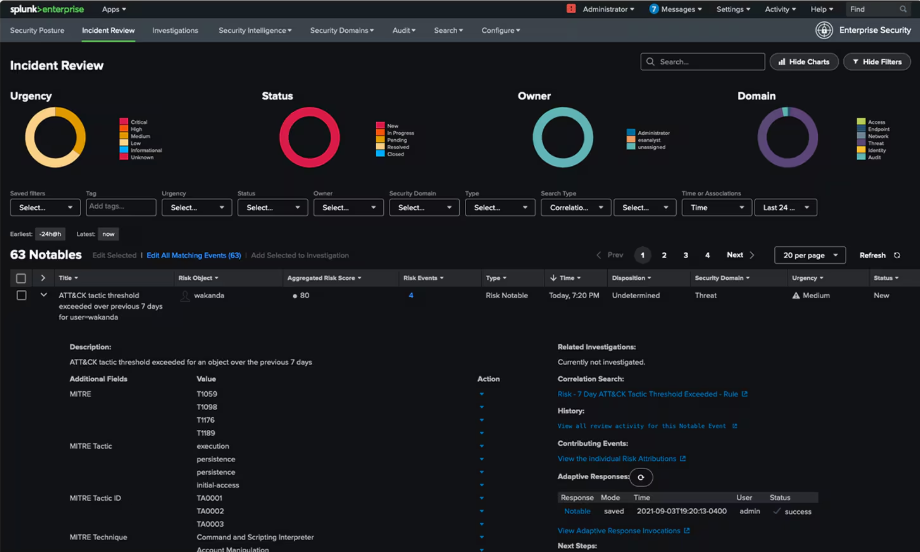
Splunk is the veteran SIEM (“security information and event management,” the system that collects and correlates logs) now layered with AI-driven analytics. It stands out on this list as the platform most openly built for manufacturing IT and OT data correlation. For data-rich shops, its ingestion breadth is hard to match.
Core Services
- Broad log ingestion across IT, cloud, and OT sources
- Correlation and analytics across manufacturing environments
- AI-assisted detection and investigation
- Dashboards and reporting for compliance evidence
- Large app and integration ecosystem
Why Companies Consider Splunk
Splunk shines when you already generate huge volumes of data and want one place to search it. It handles IT and OT correlation openly, which few rivals do. The catch is operational: Splunk is powerful, but it needs skilled hands to tune, and per-ingestion pricing can climb fast.
Ideal Customer Profile
Best suited for:
- Data-heavy enterprises with mature SIEM needs
- Manufacturers correlating IT and OT telemetry
- Teams with the staff to operate and tune a SIEM
Commercial Model
Splunk prices largely on data ingested per day (workload or volume pricing). That model rewards tight tuning and punishes uncontrolled log growth, so ingestion discipline directly protects your budget.
When to Shortlist
Shortlist Splunk when data breadth and IT/OT correlation matter most and you have analysts to run it. One reason we provide MDR for Splunk: many buy the platform, then find they lack the 24/7 team to act on what it surfaces.
1.6 Stellar Cyber, Best for Open XDR Multi-Tool Consolidation
Overview
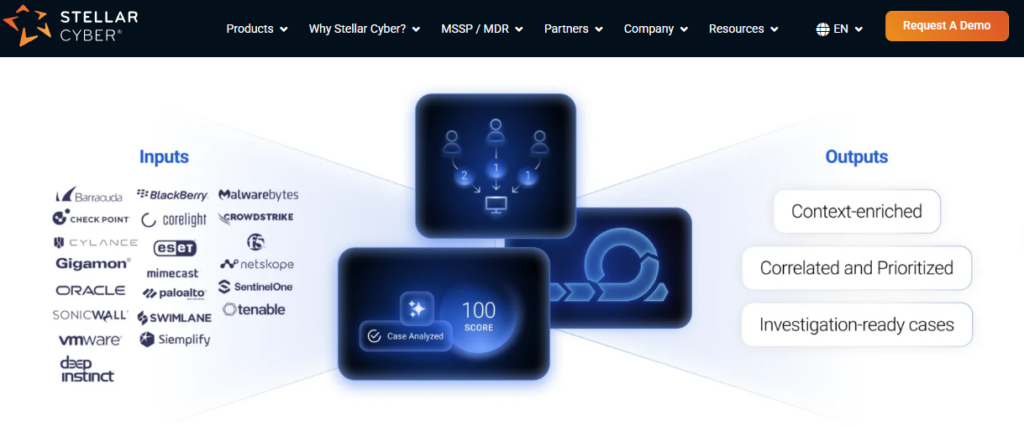
Stellar Cyber is an Open XDR platform, meaning it aggregates data from your existing tools into one view without forcing replacement. It markets coverage across cloud, on-prem, and IT/OT from a single console. The appeal is consolidation for teams juggling too many dashboards.
Core Services
- Open XDR aggregation across existing security tools
- Correlation and automated threat hunting
- IT/OT and cloud visibility in one platform
- AI-assisted detection and response
- Multi-tenant support for MSSPs
Why Companies Consider Stellar Cyber
Teams tired of tool sprawl like that Stellar Cyber keeps their stack and unifies the data. It does not demand rip-and-replace, which protects prior investment. The trade-off is that a unified view still needs skilled operators to act on it, since the platform provides software rather than a staffed 24/7 SOC.
Ideal Customer Profile
Best suited for:
- Mid-market teams consolidating many tools
- MSSPs serving multiple clients
- Organizations wanting IT/OT visibility without replacement
Commercial Model
Stellar Cyber typically prices on a subscription tied to data sources and scale. Cost aligns with the breadth of tools and volume you connect.
When to Shortlist
Shortlist Stellar Cyber when tool consolidation is the primary pain and you keep in-house analysts to run detections. It fits teams that want one pane of glass across an already diverse stack, though pairing it with a SOC service covers the staffing gap.
1.7 Simbian, Best for Multi-Agent Autonomous Triage
Overview
Simbian is an AI SOC platform built around multiple AI agents that handle core SOC tasks autonomously. Its focus is agentic triage, where agents investigate and act with limited human prompting. It is newer, so its strength is automation depth rather than a long track record.
Core Services
- Multi-agent autonomous alert triage
- AI-driven investigation across security tools
- Automated response workflows
- Analyst oversight and guardrails
- Integration with common SIEM and EDR sources
Why Companies Consider Simbian
Teams drawn to full agentic automation like Simbian’s multi-agent design. It aims to clear routine work so analysts focus on edge cases. My honest read: newer agentic platforms move fast, but you should test how well the agents learn your environment before trusting autonomous SOC action.
Ideal Customer Profile
Best suited for:
- IT security teams wanting heavy automation
- Organizations comfortable piloting newer platforms
- Teams with in-house oversight for agent actions
Commercial Model
Simbian generally prices on subscription tied to scale and agent usage. Confirm how pricing responds to alert volume during a proof of concept.
When to Shortlist
Shortlist Simbian when multi-agent triage is your priority and you can run a careful pilot. For manufacturing, verify OT telemetry support directly, since agentic IT triage rarely extends to the plant floor by default.
1.8 Prophet Security, Best for Agentic Alert Investigation
Overview
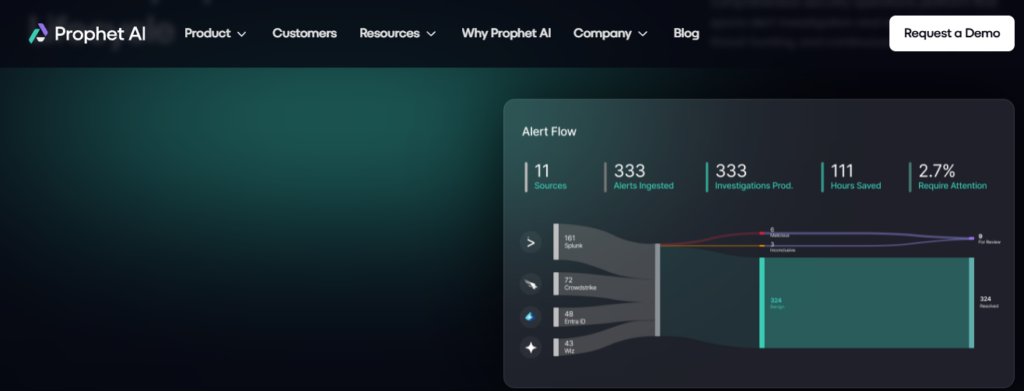
Prophet Security is an AI SOC platform focused on autonomous alert investigation. Its agents pull context, reason over alerts, and hand analysts decision-ready results. The core promise is speed on investigation, the step that eats most analyst hours.
Core Services
- Autonomous alert investigation with AI agents
- Context enrichment across security tools
- Decision-ready findings for analysts
- Integration with SIEM, EDR, and cloud sources
- Workflow support for faster response
Why Companies Consider Prophet Security
Teams that spend hours on triage like that Prophet automates the investigation grind. It targets the exact bottleneck that burns analysts out. The trade-off is scope: investigation depth is the strength, so response ownership and OT context are areas to probe during evaluation.
Ideal Customer Profile
Best suited for:
- Alert-heavy IT security teams
- Teams wanting to cut investigation time
- Organizations keeping response in-house
Commercial Model
Prophet Security generally uses subscription pricing tied to scale and alert volume. Clarify how cost behaves as your alert load grows.
When to Shortlist
Shortlist Prophet when investigation speed is your main gap and you already own response. Confirm whether the platform simply investigates or also acts, since that line decides how much still lands on your team, a distinction our incident response team closes.
1.9 Dropzone AI, Best for Lean IT Security Teams
Overview
Dropzone AI is an autonomous AI SOC analyst that investigates every alert across your SIEM, EDR, and cloud tools. It reports 5x faster mean time to respond and 85% less manual investigation, across 300+ deployments. Its design suits small teams that cannot staff 24/7 coverage.
Core Services
- Autonomous alert investigation across 90+ integrations
- “Glass box” reasoning with full audit trails
- Context memory that learns your environment
- Auto-containment for confirmed threats
- Built-in chatbot for ad-hoc investigations
Why Companies Consider Dropzone AI
Lean teams like that Dropzone investigates at 3 AM without new hires. Its “glass box” approach shows every query and finding, which supports compliance and trust. The honest trade-off for manufacturing: its integrations are IT-centric (Splunk, CrowdStrike, cloud), so OT coverage needs direct verification.
Ideal Customer Profile
Best suited for:
- Small SOC teams needing 24/7 investigation
- IT-focused organizations
- Teams wanting transparent, auditable AI reasoning
Commercial Model
Dropzone prices AI SOC agents according to the capacity you need, and says deployment takes hours with no playbooks or code. Capacity-based pricing scales with the workload you assign.
When to Shortlist
Shortlist Dropzone when a lean team needs Tier-1 investigation covered around the clock. For plant environments, confirm OT and ICS support, since the strength here is IT alert investigation. A staffed 24/7 AI SOC coverage model can extend that reach.
1.10 Radiant Security, Best for Adaptive Investigation Depth
Overview
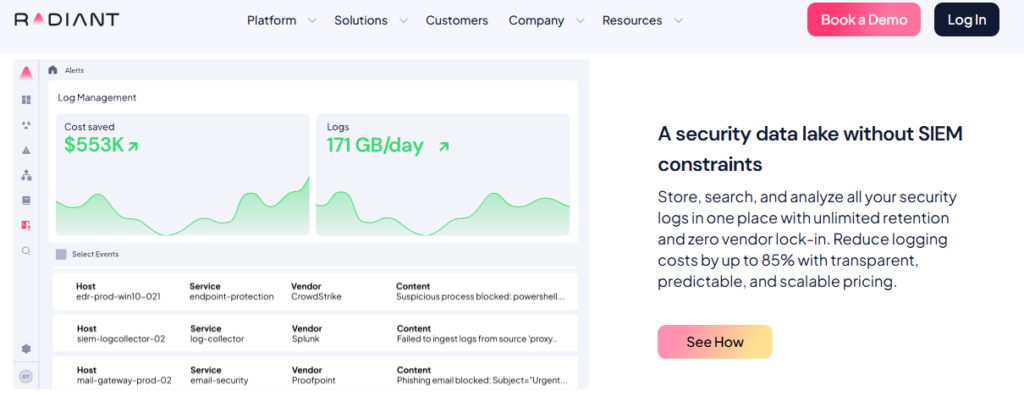
Radiant Security is an AI SOC platform that adapts its investigation depth to each alert. Rather than a fixed playbook, it decides how far to dig based on what it finds. The goal is thorough investigation without wasted effort on benign alerts.
Core Services
- Adaptive AI-driven alert investigation
- Dynamic response recommendations
- Integration across SIEM, EDR, and cloud
- Analyst-facing findings and guidance
- Automation for triage and enrichment
Why Companies Consider Radiant Security
Teams that dislike rigid playbooks like Radiant’s adaptive approach. It scales effort to the alert, which can cut wasted analyst time. My read: adaptive investigation is promising, but you should test consistency, since dynamic depth can vary in ways teams need to understand.
Ideal Customer Profile
Best suited for:
- IT security teams with varied alert types
- Organizations wanting flexible investigation logic
- Teams keeping response decisions in-house
Commercial Model
Radiant Security generally prices on subscription tied to scale and usage. Confirm how adaptive investigation affects cost as volume grows.
When to Shortlist
Shortlist Radiant when varied alert complexity is your challenge and you want investigation depth to flex. As with the other IT-native agents, verify OT coverage separately for manufacturing.
1.11 Exaforce, Best for Detection Accuracy at Scale
Overview
Exaforce is an AI SOC platform focused on high detection accuracy with low noise at scale. Its pitch is catching real threats while suppressing false positives, the balance every SOC chases. It targets teams handling large alert volumes.
Core Services
- High-accuracy AI-driven detection
- False-positive suppression at scale
- Investigation and triage automation
- Integration with major SIEM and EDR tools
- Analyst-facing prioritized findings
Why Companies Consider Exaforce
Teams buried in false positives like Exaforce’s accuracy focus. Cutting noise directly protects analyst attention for genuine threats. The trade-off to probe: accuracy claims should be tested against your own data, since detection quality varies by environment. Persistent noise is a known driver of alert fatigue.
Ideal Customer Profile
Best suited for:
- High-volume IT security operations
- Teams prioritizing signal quality over feature breadth
- Organizations with in-house response capacity
Commercial Model
Exaforce generally uses subscription pricing tied to scale and data volume. Validate cost behavior during a proof of concept with real alert loads.
When to Shortlist
Shortlist Exaforce when false-positive fatigue is your core pain and detection accuracy is the priority. Test its figures on your telemetry, and confirm OT support if the plant floor is in scope.
Where UnderDefense fits against this field
Reading across the eleven platforms above, a pattern holds. Most are strong on IT alert triage, and several are genuinely impressive there. The gap is response ownership and OT context. UnderDefense Agentic AI SOC detects across your existing stack, then our analysts respond with context, so the work does not land back on your team. Many agentic tools investigate well but stop short of owning outcomes, and few watch the plant floor. We built UnderDefense Agentic AI SOC to be vendor-agnostic with transparent pricing, so you keep your tools and know your costs. The common trade-off elsewhere is ingestion-based pricing and IT-only scope. You can see how the WarRoom platform works here.
Q2: How did we score these AI SOC platforms for manufacturing (our selection criteria)?
We scored each platform on five weighted criteria: IT/OT Coverage Breadth (30%), Autonomous Investigation and Response Depth (25%), Integration and Vendor-Agnosticism (20%), Pricing Transparency (15%), and User Reviews (10%). Scores of 0 to 20 earn 1 star, up to 81 to 100 earning 5 stars. UnderDefense scores 5 stars for uniting IT and OT visibility with transparent pricing and analysts who act.
Why these five criteria, and why OT gets the most weight
I weighted OT coverage highest on purpose. Most listicles score only IT capabilities, so they miss the plant floor entirely. For a manufacturer, the plant floor is where a breach halts production or risks safety, which is why our managed SIEM for manufacturing approach starts there.
The five criteria and their weights are below. They sum to 100, so nothing hides in a footnote.
| Criteria | Weight | What it measures |
|---|---|---|
| IT/OT Coverage Breadth | 30% | Does it see endpoints, cloud, and OT/ICS telemetry? |
| Autonomous Investigation and Response Depth | 25% | Does it investigate and act, or just alert? |
| Integration and Vendor-Agnosticism | 20% | Does it fit your stack, or force replacement? |
| Pricing Transparency | 15% | Can you budget without a sales call? |
| User Reviews | 10% | What do verified customers actually report? |
How the star ratings work, with no black box
The score bands are simple, and I want them auditable. Here is the map.
- 0 to 20 points = 1 star
- 21 to 40 points = 2 stars
- 41 to 60 points = 3 stars
- 61 to 80 points = 4 stars
- 81 to 100 points = 5 stars
User Reviews draw from verified G2, Gartner, and Clutch sources. A contrarian note from my own SOC years: if your team still reads the same alert volume, just faster, that is not transformation. So I scored response depth, not speed alone, the same lens we apply in our AI SOC provider analysis.
UnderDefense earns 5 stars because it scores high on all five axes at once. Most rivals win one or two, then lose on OT coverage or opaque pricing. We reject the black-box model, where a managed SOC triages alerts and omits the context that speeds your investigation. You can audit how our workflows run on the WarRoom platform here.
“UnderDefense Agentic AI SOC integrates well with our systems, specifically with our SIEM, Splunk. Their team is proactive in identifying and addressing threats, providing 24/7 oversight.”
Oleg K., Director Information Security UnderDefense G2 Verified Review
“The reports from their platform give us clear evidence of our security controls and incident response capabilities. When auditors or clients ask questions about our security posture, we can pull up exactly what they need to see.”
Verified User in Marketing and Advertising UnderDefense G2 Verified Review
Q3: What is an AI SOC, and why does manufacturing need one built differently?
An AI SOC is a security operations center where AI agents autonomously triage and investigate alerts, escalating only what matters to human analysts. Manufacturing needs it built differently because it has been the most-attacked industry for five years, and on a plant floor a wrong automated action can halt production or injure someone. So speed must pair with OT-safe guardrails.
The concept, in plain terms
Think of an AI SOC as a security team with tireless junior analysts built from software. These agents read alerts, gather context, and decide what is noise. A “SOAR” (security orchestration, automation, and response) runs fixed playbooks, and a copilot only answers questions. An AI SOC reasons and acts.
The difference from a legacy managed service matters too. Many providers monitor and escalate, then hand the work back to you. A real AI SOC closes more of the loop before a human steps in.
Why the work is heavier than it looks
Good investigation is not one query. Our system makes over 100 distinct model calls to autonomously investigate a single alert. That depth is what separates a real answer from a summary, and it is the core of AI-enabled incident triage.
I frame the human role like a general with foot soldiers. The AI agents do the tireless legwork, and the human keeps expertise in intent and architecture. You cannot automate everything, and you cannot scale with humans alone.
The manufacturing stakes, in numbers
Manufacturing accounted for 27.7% of all cyber incidents in 2025, the most-targeted sector for a fifth year, per IBM’s 2026 X-Force Threat Intelligence Index. The pressure is rising fast. Dragos tracked 119 ransomware groups hitting roughly 3,300 industrial organizations in 2025, a 49% jump from 80 groups in 2024.
That data is not abstract to me. One bad login from an unusual location can be a years-old compromise still logging in today. Attackers now map control loops, so silence in your OT is often a detection gap that stronger threat detection can close.
Why the plant floor flips the calculus
In IT, an automated block is cheap to reverse. In the OT and ICS (“industrial control systems”) world, a wrong action can stop production or cause injury. So the guardrails matter as much as the speed.
This is why we built UnderDefense on an “AI SOC + Human Ally” model. Agents triage at machine speed, and our analysts own the factory-floor judgment calls with you as part of our SOC service. You can see the workflow, since we show rather than tell, on the platform here.
Q4: How do the top platforms compare on IT versus OT coverage, including agentic-AI risk?
On IT coverage, most platforms are strong. CrowdStrike, Palo Alto, Splunk, Exaforce, and the agentic-native tools all triage endpoint, SIEM, and cloud alerts well. On OT and ICS coverage the field thins sharply, since few ingest SCADA or PLC telemetry, detect IT-to-OT pivots, or watch what production AI agents do. UnderDefense and Splunk stand out for spanning both.
The IT coverage tier is crowded
Here is the problem. Almost every platform on this list handles IT well, so IT alone no longer separates them. Endpoint, cloud, and SIEM triage are table stakes now.
That crowding is why I score OT so heavily. The gap between vendors opens up the moment you ask about the plant floor.
The OT coverage tier is where most fall short
Few platforms genuinely see OT telemetry. Splunk is openly built for IT and OT data correlation in manufacturing. Most agentic-native tools are IT-native, so OT is an afterthought you must verify, a point worth raising in any AI SOC evaluation.
| Coverage dimension | Strong IT | Genuine OT/ICS | AI-agent monitoring |
|---|---|---|---|
| UnderDefense Agentic AI SOC | Yes | Yes (vendor-agnostic ingestion) | Yes |
| Splunk | Yes | Yes (IT/OT correlation) | Partial |
| CrowdStrike, Palo Alto | Yes | Limited | Partial |
| Agentic-native tools | Yes | No, verify directly | Mostly no |
The attack path manufacturers actually face
The real risk is the pivot, not just the endpoint. Dragos found 73% of its all-time incident response cases involved compromised VPN or jumphost credentials, and 81% of assessments showed poor IT/OT segmentation. Attackers also encrypt VMware ESXi hypervisors hosting OT applications, so operators lose control while equipment still runs.
A common frustration I hear maps to this. Teams tell me they have a wealth of data in a tool like Sophos, but they cannot see it all in the SIEM because of data-source limits. That blind spot is exactly where a pivot hides, and closing it is what our managed SIEM is built to do.
Agentic-AI risk is now its own evaluation dimension
There is a new surface to score, too. A production AI agent can read an external email, get hijacked by a prompt injection, then use its internal access to delete a database. I have seen the “vibe-code” version, where an agent went and deleted someone’s production database.
Legacy vendors that rebranded as “agentic” monitor endpoint, SIEM, and network, yet they rarely watch what Copilot, Cursor, or a custom agent does in production, a gap our MDR for AI was designed to cover.
How I would shortlist by scenario
- Converged IT and OT plant: prioritize genuine OT ingestion and IT-to-OT pivot detection.
- IT-heavy shop with light OT: an agentic-native tool can fit, but verify OT support.
- Multi-tool sprawl: favor vendor-agnostic ingestion over rip-and-replace.
We built UnderDefense to be composable, the Lego bricks of an AI SOC, so you keep your tools and your data. Vendor-agnostic ingestion answers the SIEM data-source limit. Our analysts respond with context. Vendor-locked tools trap OT telemetry off-platform. We also watch AI-agent and dev-environment activity in production, while many rivals leave that exact gap open.
“The biggest problem they solved was our 24/7 coverage gap. We needed round-the-clock monitoring for compliance reasons, but building our own SOC wasn’t realistic with our budget.”
Verified User in Marketing and Advertising UnderDefense G2 Verified Review
“Underdefense act as an extension of our team, so we don’t need additional resources, ensuring 24/7 protection. It also solved our problem of having separate security tools that didn’t work well together.”
Inga M., CEO UnderDefense G2 Verified Review
Q5: Does the platform actually respond, or just send you more alerts?
Judge every platform on four capabilities: triage, autonomous investigation, response, and offensive validation. Many marketed as AI SOCs stop at detection, so they enrich and prioritize alerts, then hand them back to your overloaded team. The ones worth buying close the loop. Research-grade triage suppresses about 54% of false positives at a 95.1% detection rate, and top tools claim near-92% auto-resolution and 3x faster response.
The four capabilities most buyers conflate
Here is the trap. A platform can detect beautifully and still leave all the real work on your desk. Score each tool on four separate things.
- Triage: does it sort signal from noise?
- Investigation: does it dig for root cause, or just summarize?
- Response: does it act, or only escalate?
- Validation: does it test its own detections offensively?
Most tools nail triage and stop. The black-box managed SOC (“security operations center”) is worse, since it escalates an alert while omitting the context you need, which slows you down. Our AI SOC analyst approach exists to remove that bottleneck.
Why detection-only quietly burns teams out
I have felt this personally. I worked 70 to 80 hour weeks as the only specialist, because the alerts never stopped. Detection-only tools add volume without removing the human bottleneck, which is the root of alert fatigue.
Silence is not safety, either. After a penetration test, silence in your logs is a detection failure, not a clean bill of health. That gap is where dwell time grows.
What the research says to demand
Ask vendors for real numbers, and hold them to research-grade bars. The TEQ machine-learning framework suppressed 54% of false positives at a 95.1% detection rate, and cut response time by 22.9% on real-world data. Good investigation should reason toward root cause, not paste an alert summary, the standard we set for AI-enabled incident triage.
The economics back the loop-closing model, too. IBM found organizations using AI and automation extensively saved roughly $1.9 million per breach versus those that did not. Response, not just detection, is where that money lives.
Speed only counts when it hands off cleanly
Fast triage matters when it ends in action. In our own workflow, we can identify a risky development change within 13 seconds of the ticket being written, then hand it off. That is triage feeding response, not triage feeding a bigger queue.
This is UnderDefense’s sharpest wedge. Our “Concierge Response” means a transparent human analyst responds with you, at roughly 2-minute Alert-to-Triage and 15-minute escalation for critical incidents. We show the reasoning, so you can audit it. Black-box MSSPs omit context and slow you down. We close the loop across your existing stack, while detection-only tools leave response on your team. You can see how our MDR service handles this end to end.
“Now when we get an alert, we know it’s something worth looking into. When they escalate something, they include the context we need to understand the issue quickly. We’re not wasting time piecing together what happened from different systems anymore.”
Verified User in Marketing and Advertising UnderDefense G2 Verified Review
“With their guidance, we know precisely what steps to take next. The most notable outcome has been the drastic reduction in response time to potential threats.”
Valeriia D., Marketing Specialist UnderDefense G2 Verified Review
Q6: Which compliance frameworks should your AI SOC map to for manufacturing?
A manufacturing AI SOC should map to IEC 62443 (OT zones and conduits), ISA-95 (the IT/OT boundary), and NIST CSF 2.0, plus NIST SP 800-61 for incident response. Regulated and critical-infrastructure operators must also weigh EU NIS2, the SEC 8-K disclosure rule, ISO/IEC 27001, and SOC 2 Type II. Ask vendors to show framework alignment, not just certifications.
The OT standards that gate your choice
Start with the plant floor, since general IT frameworks miss it. Three standards matter most for manufacturing.
- IEC 62443: defines OT security zones and conduits, so your SOC must respect segmentation.
- ISA-95: models the IT/OT boundary, the exact line attackers cross.
- NIST CSF 2.0: frames govern, identify, protect, detect, respond, and recover.
Your AI SOC should map detections to these, not just watch endpoints. If a vendor cannot show where it fits, that is a gap our compliance services are built to close.
The regulatory obligations that raise the stakes
Now layer on disclosure and audit duties. These decide how fast you must report, and what evidence you keep.
| Framework | What it requires | SOC capability it demands |
|---|---|---|
| IEC 62443 | OT zone and conduit security | OT-aware detection, segmentation visibility |
| ISA-95 | IT/OT boundary model | IT-to-OT pivot detection |
| NIST CSF 2.0 | Full lifecycle controls | Detect and respond coverage |
| NIST SP 800-61 | Incident response process | Documented response workflow |
| EU NIS2 | Incident reporting for essential entities | Fast reporting, evidence trail |
| SEC 8-K Item 1.05 | Material incident disclosure | Rapid materiality assessment |
| ISO/IEC 27001, SOC 2 Type II | Information security management | Audit-ready control evidence |
Why compliance is architectural, not a checkbox
Compliance lives in how controls actually run. I once watched an audit fail because cleaners hung network cables across a whiteboard, briefly bridging an unclassified and a classified network. The control looked fine on paper, but the reality failed.
That is why I push for observable controls, where you can prove what happened. UnderDefense turns raw detections into audit-ready evidence mapped to SOC 2, ISO 27001, and OT frameworks, the kind of AI SOC compliance mapping auditors expect. That serves the GRC (“governance, risk, and compliance”) leader and the PE operating partner at once, since both need proof, not promises.
Q7: How do you choose the right AI SOC, and what does it cost?
Start by mapping your environment, a converged IT/OT plant, an IT-heavy shop with light OT, or a multi-site operation with legacy PLCs (“programmable logic controllers,” the small computers that run machines). Then match the criteria that gate your risk: OT coverage, response ownership, and integration. Pricing ranges from per-gigabyte-ingested to flat subscriptions. Calculate ROI against the cost of one day of line downtime, and run a proof of concept with a real IT-to-OT lateral-movement test.
Step one, segment your own environment
Do not shop before you know your shape. Your environment decides which criteria matter most.
- Converged IT/OT plant: prioritize OT ingestion and pivot detection.
- IT-heavy, light OT: an agentic-native tool can fit, but verify OT support.
- Multi-site with legacy PLCs: favor vendor-agnostic integration over rip-and-replace.
Step two, run a POC that proves response
A demo is theater. A proof of concept (“POC”) is evidence. Insist on a few things.
- Test a real IT-to-OT lateral-movement scenario.
- Measure false-positive suppression on your own data.
- Confirm the tool responds, and does not just alert.
- Watch how it reasons, so the logic is auditable.
These same checks form a solid list of AI SOC evaluation questions for any shortlist.
Step three, price it against downtime, not endpoints
Cost models vary. Per-gigabyte ingestion punishes OT data volume, while flat per-endpoint subscriptions are easier to budget. Our MDR pricing is published at roughly $11 to $15 per endpoint per month, so you can plan without a sales call.
Frame ROI against the real number. The global average breach cost was $4.44 million in 2025, and $10.22 million in the US. Do not judge ROI without pricing one day of line stoppage, since that figure usually dwarfs the subscription. One lever helps here: we have cut a customer’s ingestion from 300 GB per day to 35 to 40 GB just by tuning correlation rules, which directly lowers cost. Modeling this early is easier with an AI SOC ROI business case.
A quieter truth about the whole category
My honest read: cybersecurity over-specialized into tool babysitting. We need more people who trace business logic and find root causes, and fewer who just watch dashboards. Being a human who understands the business is a real advantage in 2026.
So here is my invitation. Tell us what you are actually securing, the plant, the sites, the legacy gear, and we will map coverage with you. We are vendor-agnostic, so you keep your tools. We prove response before you commit, while vendor-locked tools hide their gaps until you are already in. Run a scoped POC with a lateral-movement test, and judge us on outcomes. When you are ready, contact us to scope it.
“Underdefense is surprisingly affordable considering the level of protection we get. Their proactive threat hunting and rapid response have saved us from incidents that could have been incredibly costly.”
Verified User in Program Development UnderDefense G2 Verified Review
“Its reassuring to know they’re always watching for threats, and it doesn’t cost a fortune. They catch and stop problems quickly, which is a huge relief.”
Serhii B., Chief Information Security Officer UnderDefense G2 Verified Review
See how UnderDefense Agentic AI SOC resolves a real incident on your stack.
1. What is the best AI SOC for manufacturing IT and OT environments in 2026?
In our analysis, the strongest option for manufacturers that run both IT and OT is UnderDefense Agentic AI SOC, because it detects across your existing stack and then our analysts respond with context, rather than just alerting.
Most platforms on our list handle IT triage well. Very few genuinely watch the SCADA systems, PLCs, and control loops on the plant floor, and fewer still catch the moment an attacker pivots from an IT laptop into OT.
- Vendor-agnostic ingestion across 250+ tools, so you keep your stack
- Concierge Response with a 2-minute Alert-to-Triage and 15-minute escalation for critical incidents
- Coverage that spans endpoints, cloud, and OT telemetry
CrowdStrike, Palo Alto, and Splunk are strong for their own ecosystems, and several agentic-native tools investigate well, yet OT coverage and response ownership are where they thin out. We built our MDR service to close that exact gap for lean manufacturing teams.
2. Why do manufacturers need an AI SOC built differently from a standard IT SOC?
Manufacturing has been the most-attacked industry for five years, and it drew 27.7% of all incidents in 2025. On a plant floor, a wrong automated action can halt production or injure someone, so speed must pair with OT-safe guardrails.
In IT, an automated block is cheap to reverse. In the OT and ICS world, the same action can stop a line or create a safety event, so the guardrails matter as much as the raw speed.
- OT telemetry from SCADA, PLCs, and control loops, not just endpoints
- Detection of the IT-to-OT pivot attackers actually use
- Human judgment on factory-floor response decisions
This is why we built UnderDefense on an AI SOC plus Human Ally model, where agents triage at machine speed and our analysts own the plant-floor calls with you. You can see how our WarRoom platform runs those workflows transparently.
3. How do we tell whether an AI SOC actually responds or just sends more alerts?
We tell buyers to score every platform on four separate capabilities, because many products marketed as AI SOCs stop at detection and hand the real work back to your team.
- Triage: does it sort signal from noise?
- Investigation: does it dig for root cause, or just summarize?
- Response: does it act, or only escalate?
- Validation: does it test its own detections offensively?
Research-grade triage suppresses about 54% of false positives at a 95.1% detection rate, and IBM found organizations using AI and automation extensively saved roughly $1.9 million per breach. Response, not detection alone, is where that value lives.
Detection-only tools add alert volume without removing the human bottleneck, which is a direct cause of alert fatigue. Our Concierge Response closes the loop across your existing stack, so triage feeds action instead of a bigger queue.
4. Which AI SOC platforms genuinely cover OT and ICS, not just IT?
The honest answer is that the field thins sharply once you ask about the plant floor. On IT coverage, CrowdStrike, Palo Alto, Splunk, and the agentic-native tools all triage endpoint, SIEM, and cloud alerts well.
On OT and ICS coverage, few platforms ingest SCADA or PLC telemetry, detect IT-to-OT pivots, or watch what production AI agents do.
- UnderDefense Agentic AI SOC: vendor-agnostic IT and OT ingestion plus AI-agent monitoring
- Splunk: openly built for IT and OT data correlation
- Agentic-native tools: mostly IT-native, so verify OT support directly
Dragos found 73% of its all-time incident response cases involved compromised VPN or jumphost credentials, and 81% of assessments showed poor IT/OT segmentation. That pivot is exactly where blind spots hide, so we recommend vendor-agnostic ingestion over rip-and-replace. Our threat detection approach is designed to span both sides of that boundary.
5. How much does an AI SOC cost for a manufacturer, and how do we judge ROI?
Pricing models vary widely. Per-gigabyte ingestion punishes OT data volume, while flat per-endpoint subscriptions are far easier to budget.
We publish pricing at roughly $11 to $15 per endpoint per month, so you can plan without a sales call. That transparency matters when a per-gigabyte model would otherwise punish you for ingesting plant-floor data.
- Frame ROI against one day of line downtime, not endpoint count
- The global average breach cost was $4.44 million in 2025, and $10.22 million in the US
- Tuning correlation rules can cut ingestion dramatically, which directly lowers cost
We once cut a customer’s ingestion from 300 GB per day to 35 to 40 GB just by tuning rules. To model the numbers for your own environment, start with our transparent MDR pricing and weigh it against the cost of a single stoppage.
6. Which compliance frameworks should a manufacturing AI SOC map to?
A manufacturing AI SOC should map to the OT standards first, since general IT frameworks miss the plant floor entirely.
- IEC 62443: OT security zones and conduits
- ISA-95: the IT/OT boundary attackers cross
- NIST CSF 2.0 and SP 800-61: lifecycle controls and incident response
Regulated and critical-infrastructure operators must also weigh EU NIS2, the SEC 8-K Item 1.05 disclosure rule, ISO/IEC 27001, and SOC 2 Type II. We tell buyers to ask vendors to show framework alignment, not just a certificate on a wall.
Compliance is architectural, not a checkbox. We once saw an audit fail because cleaners bridged two networks with cables strung across a whiteboard. We turn raw detections into audit-ready evidence mapped to these frameworks, which is the heart of our compliance services.
7. How should we run a proof of concept when evaluating an AI SOC?
We tell buyers that a demo is theater, while a proof of concept is evidence. Before you shop, segment your own environment, since your shape decides which criteria matter most.
- Converged IT/OT plant: prioritize OT ingestion and pivot detection
- IT-heavy with light OT: an agentic-native tool can fit, but verify OT support
- Multi-site with legacy PLCs: favor vendor-agnostic integration
Then run a POC that proves response, not just detection.
- Test a real IT-to-OT lateral-movement scenario
- Measure false-positive suppression on your own data
- Confirm the tool responds, and does not only alert
- Watch how it reasons, so the logic is auditable
We prove response before you commit, which is why we encourage a scoped test using our AI SOC evaluation questions as a checklist.
8. What is the new agentic-AI risk that manufacturers must now evaluate?
There is a new attack surface to score. A production AI agent can read an external email, get hijacked by a prompt injection, then use its internal access to cause real damage.
We have seen the vibe-code version of this, where an agent went and deleted someone’s production database. That is no longer hypothetical for shops adopting AI in development and operations.
- Legacy vendors rebranded as agentic still watch only endpoint, SIEM, and network
- They rarely watch what Copilot, Cursor, or a custom agent does in production
- This gap widens as manufacturers deploy more AI into their workflows
We watch AI-agent and dev-environment activity in production, closing a gap many rivals leave open. This is the focus of our MDR for AI, which extends detection and response to the agents themselves.