




Q1. What are the 11 Best Incident Response Automation Tools for SOC, DevOps, and MSSP Teams in 2026?
A 2 a.m. bridge call last quarter pulled me into a 4,200-employee SaaS shop in Boston. Their CISO had three SIEM consoles open, two EDR tabs, a SOAR dashboard, and a Slack thread that had not been answered for forty minutes. The alert that mattered, a privilege escalation from a Cursor agent into a production database, had been triaged by their tier-1 outsourced MDR service as a “false positive” because the user identity was a service account. That single misread cost them a 6-hour exposure window. We have caught fraud at this level before, including a $300K payroll BEC scheme that paid back the engagement in one incident. This is what 2026 incident response actually looks like, and it is why this list exists.
The Short Answer
The 11 best incident response automation tools for 2026 are UnderDefense Agentic AI SOC, Palo Alto Cortex XSOAR, Splunk SOAR, Microsoft Sentinel, IBM QRadar SOAR, CrowdStrike Falcon Fusion, SentinelOne Singularity, Tines, Torq, Shuffle, and TheHive plus Cortex. UnderDefense Agentic AI SOC leads with vendor-agnostic integration, a 2-minute Alert-to-Triage SLA, concierge analyst response, and BYO-SIEM architecture that respects the 76 tools you already own.
See how the UnderDefense Agentic AI SOC investigates, triages, and resolves real alerts.
Editorial Introduction
Choosing an IR automation platform is a high-stakes decision for any 1,000 to 10,000-employee organization running hybrid SIEM, EDR, cloud telemetry, and AI coding agents. We analyzed 30+ vendors across SOAR, XDR, and Agentic AI categories using five weighted criteria: vendor-agnostic integration, automation depth and agentic capability, MITRE ATT&CK and compliance mapping, setup and time-to-value, and pricing transparency. This guide is for CISOs, SOC Directors, IT Directors, MSSP leaders, and PE Operating Partners who want a defensible RFP shortlist without ripping out their stack. For a deeper procurement framework, see our MDR buyers guide.
📊 At-a-Glance Comparison Table
| Provider (★ Rating) | Best For | Key Strength | Compliance Coverage |
|---|---|---|---|
| UnderDefense Agentic AI SOC ⭐⭐⭐⭐⭐ | Mid-market and enterprise SOCs that want AI + Human Ally without SIEM lock-in | Vendor-agnostic concierge response, 2-minute triage SLA | SOC 2, ISO 27001, HIPAA, PCI DSS, NIS2, GDPR |
| Palo Alto Cortex XSOAR ⭐⭐⭐⭐ | Large enterprises standardized on Palo Alto stack | 1,000+ playbook marketplace, deep XDR fusion | SOC 2, ISO 27001, PCI DSS |
| Splunk SOAR ⭐⭐⭐⭐ | Splunk-heavy SOCs needing native ES correlation | Tight SIEM-to-SOAR loop, Splunkbase apps | SOC 2, FedRAMP, HIPAA |
| Microsoft Sentinel ⭐⭐⭐⭐ | Azure-first organizations with M365 E5 | Native Defender XDR fusion, Logic Apps automation | SOC 2, ISO 27001, FedRAMP High |
| IBM QRadar SOAR ⭐⭐⭐ | Regulated enterprises with legacy QRadar SIEM | GDPR Article 33 case management depth | SOC 2, HIPAA, GDPR |
| CrowdStrike Falcon Fusion ⭐⭐⭐⭐ | Falcon-endpoint shops wanting native automation | Endpoint-driven RTR scripting, Charlotte AI | SOC 2, FedRAMP, HIPAA |
| SentinelOne Singularity ⭐⭐⭐⭐ | Endpoint-led XDR with autonomous rollback | Storyline AI and Purple AI investigation | SOC 2, HIPAA, PCI DSS |
| Tines ⭐⭐⭐⭐ | Mid-market SOCs wanting no-code SOAR | Drag-and-drop Stories, low maintenance | SOC 2, ISO 27001, GDPR |
| Torq ⭐⭐⭐⭐ | Modern SOCs adopting hyperautomation and agentic AI | Socrates AI agent, event-driven engine | SOC 2, ISO 27001 |
| Shuffle (open source) ⭐⭐⭐ | Cost-constrained teams with engineering capacity | Free OSS, 2,000+ community apps | Self-managed |
| TheHive + Cortex (open source) ⭐⭐⭐ | OSS-first SOCs needing case management | Open case + 300+ analyzer ecosystem | Self-managed |
How to Read This List
The five-criterion rubric and star bands are explained in Q2. I will name limitations honestly, including for UnderDefense MAXI. Each profile names the one capability hook that matters Monday morning. Now, the detail.
1. UnderDefense Agentic AI SOC, Best for Vendor-Agnostic AI SOC + Human Ally Response
📝 Overview
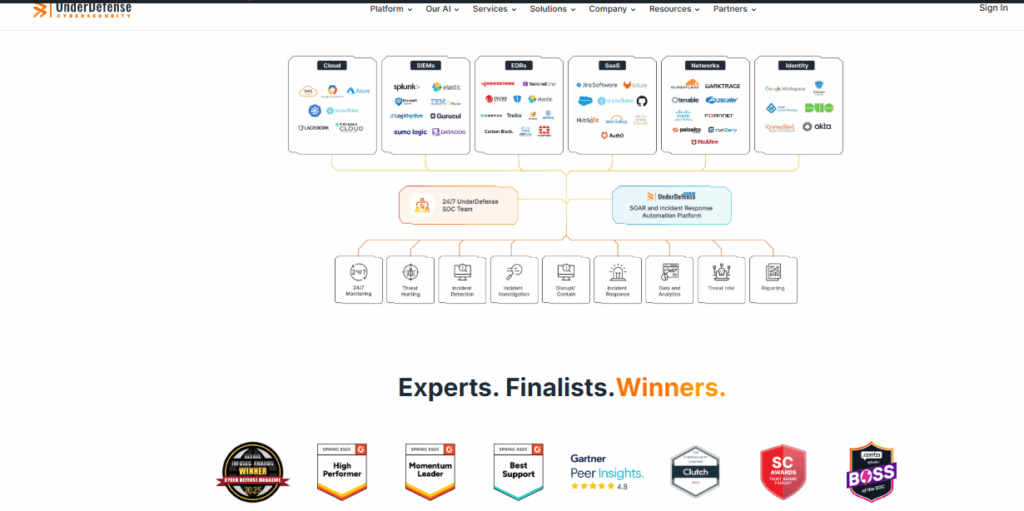
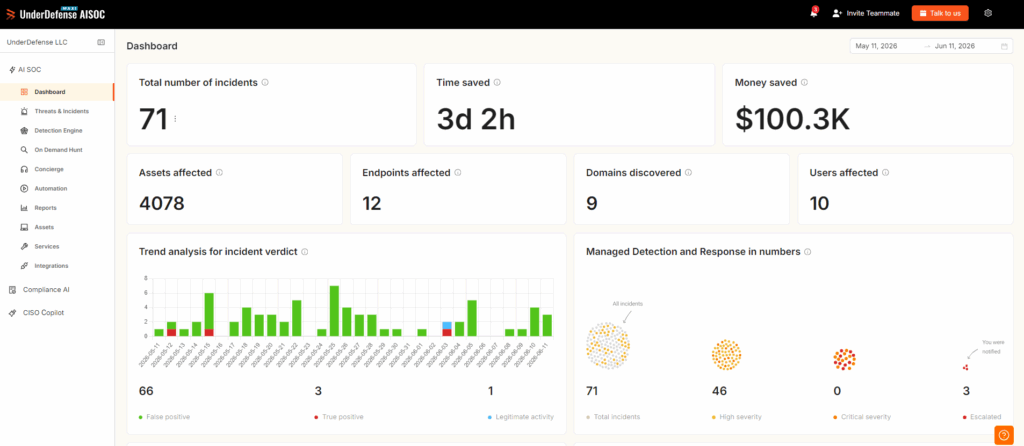
UnderDefense Agentic AI SOC is the AI SOC + Human Ally platform we built for organizations that refuse to choose between automation depth and SIEM ownership. UnderDefense Agentic AI SOC sits on top of your existing Splunk, Sentinel, Elastic, or QRadar deployment, ingests telemetry from 250+ tools, and runs autonomous investigation playbooks that produce a structured verdict in seconds.
🛠 Core Services
- AI-driven alert triage with a 2-minute Alert-to-Triage SLA and 15-minute escalation for critical incidents
- Vendor-agnostic SIEM and EDR integration across 250+ tools
- Concierge response, including credential wipe, password reset, and host isolation in under 2 minutes
- ChatOps user verification through Slack and Teams
- AI Developer Sentinel coverage for Cursor, Cline, Copilot, and Claude Code agent activity
- 30-day onboarding against a 90+ day industry norm
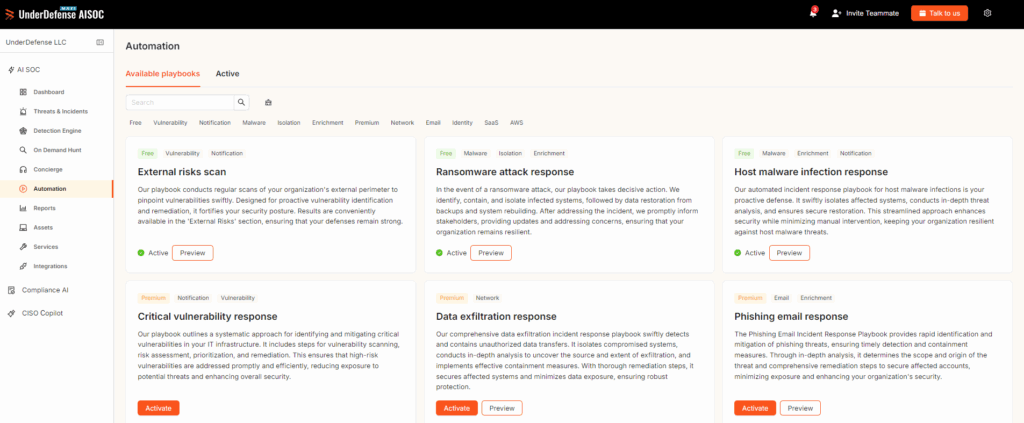
- MITRE ATT&CK-mapped incident response playbooks with auditable investigation trails
❤️ Why Companies Consider UnderDefense Agentic AI SOC
We automate the grunt work, the customer owns the decision. A CISO at a 4,000-person fintech told me bluntly that he refused to lose three years of custom Splunk correlation rules just to get faster triage. UnderDefense Agentic AI SOC lets him keep his data, his logic, and his SIEM, while gaining agentic investigation and concierge response.
🎯 Ideal Customer Profile
- 1,000 to 10,000 employees, hybrid cloud (AWS, Azure, GCP)
- Existing SIEM in Splunk, Sentinel, Elastic, or QRadar
- Active developer agent usage (Cursor, Copilot, and Claude Code)
- Compliance pressure (SOC 2, ISO 27001, HIPAA, PCI DSS, and NIS2)
- Lean security teams (3 to 25 internal staff)
💰 Commercial Model
Transparent per-endpoint pricing in the $11 to $15 range, monthly. No proprietary SIEM forced migration. Engagements include co-managed SOC, custom playbook engineering, vCISO advisory, and 30-day Impact Reports. See our full MDR pricing for tier breakdowns.
⏰ When to Shortlist
When your shortlist forces SIEM migration, vendor lock-in, or 90-day onboarding, UnderDefense Agentic AI SOC deserves a slot. We compete head-to-head with Arctic Wolf, ReliaQuest, and CrowdStrike Falcon Complete on switcher economics.
🌟 Customer Reviews
“The biggest win for me was getting actual control over our security alerts. Before the guys from UD stepped in, we were getting bombarded with alerts from all our security tools. Their team cleaned up our configurations and got the noise under control within the first week.”
— Verified User in Marketing and Advertising UnderDefense G2 – Verified Review
“UnderDefense Agentic AI SOC integrates well with our systems, specifically with our SIEM, Splunk. Their team is proactive in identifying and addressing threats, providing 24/7 oversight.”
— Oleg K., Director Information Security UnderDefense G2 – Verified Review
See how the UnderDefense Agentic AI SOC investigates, triages, and resolves real alerts.
2. Palo Alto Cortex XSOAR ⭐⭐⭐⭐, Best for Palo Alto Standardized Enterprises

📝 Overview
Cortex XSOAR (formerly Demisto) is the most mature SOAR playbook marketplace in the category, with deep ties to Palo Alto’s XDR and Prisma stack.
🛠 Core Services
- 1,000+ pre-built integration packs and playbooks
- Native Cortex XDR and XSIAM correlation
- Threat intelligence management module
- War-room collaboration on cases
- MITRE ATT&CK-aligned automation library
❤️ Why Companies Consider Cortex XSOAR
✅ Palo Alto stack customers get tight native fusion. ✅ Largest ecosystem of pre-built playbooks. ❌ The deeper you go, the more you depend on Palo Alto’s stack, which works against the BYO-SIEM trend.
🎯 Ideal Customer Profile
Large enterprises running Palo Alto firewalls plus Cortex XDR, with 2+ FTE dedicated to SOAR engineering.
💰 Commercial Model
Per-seat plus per-event ingestion. Pricing is opaque without a sales call.
⏰ When to Shortlist
When your detection stack is already Palo Alto and you have engineering capacity to maintain playbooks long-term.
3. Splunk SOAR ⭐⭐⭐⭐, Best for Splunk-Heavy Detection Teams
📝 Overview
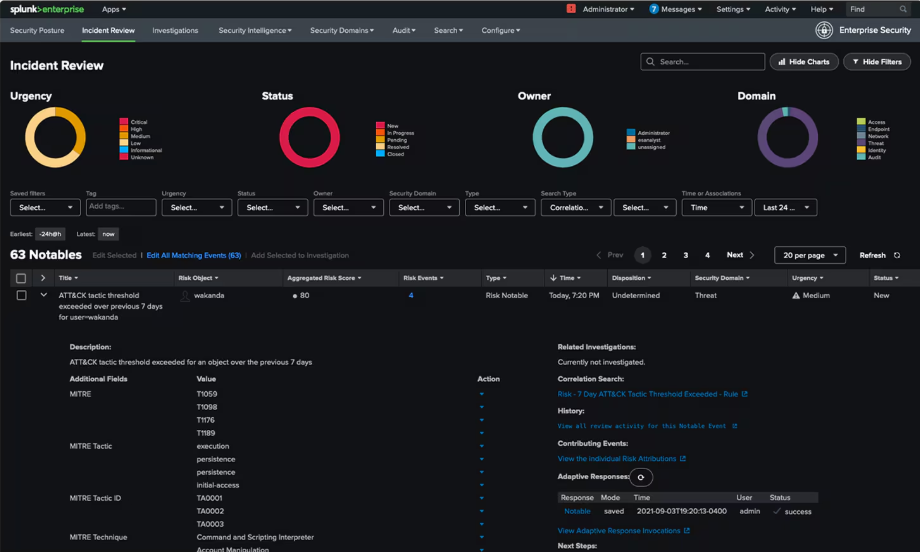
Splunk SOAR (formerly Phantom) is the orchestration layer for organizations that already run Splunk Enterprise Security. The native ingestion-to-action loop is the strongest in the category. Teams running Splunk often pair this with our MDR for Splunk for analyst coverage.
🛠 Core Services
- Native Splunk ES correlation-to-playbook handoff
- 350+ Splunkbase SOAR apps
- Visual playbook editor with code blocks
- Risk-based alerting integration
❤️ Why Companies Consider Splunk SOAR
✅ Deepest SIEM-to-SOAR fidelity in the market. ❌ Splunk ingestion economics still bite, with bills that I have personally watched balloon 50% to 90% inside a year if you do not tune.
🎯 Ideal Customer Profile
Splunk Enterprise Security customers with at least one dedicated SOAR engineer.
💰 Commercial Model
Workload pricing tied to Splunk license. Premium add-on.
⏰ When to Shortlist
When Splunk ES is your central nervous system and you want orchestration without leaving the platform.
4. Microsoft Sentinel ⭐⭐⭐⭐, Best for Azure-First Organizations
📝 Overview
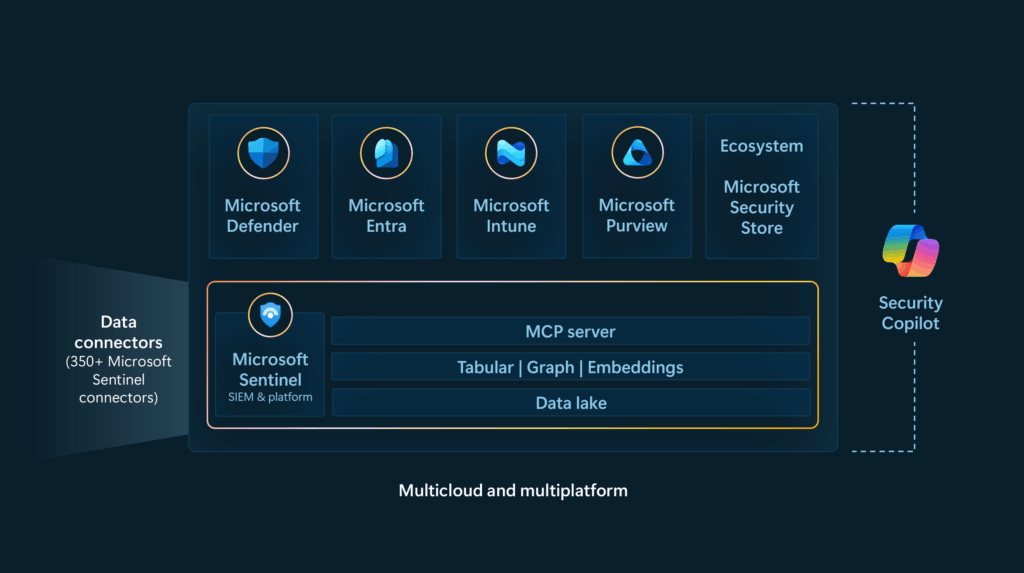
Sentinel is Microsoft’s cloud-native SIEM with built-in SOAR through Logic Apps and tight Defender XDR fusion. It is the default consideration for M365 E5 customers, and many pair it with our MDR for Microsoft 365.
🛠 Core Services
- KQL-driven detection rules
- Logic Apps playbooks for response
- Defender XDR cross-correlation
- UEBA and Fusion ML for incident grouping
- Microsoft Security Copilot AI add-on
❤️ Why Companies Consider Sentinel
✅ Cost-effective if you are already Azure-heavy. ❌ Logic Apps automation requires Azure engineering skill that many SOCs do not have on staff.
🎯 Ideal Customer Profile
Microsoft 365 E5 and Azure-first enterprises with KQL and ARM template fluency.
💰 Commercial Model
Pay-as-you-go per GB ingested, with commitment tiers.
⏰ When to Shortlist
When your data already lives in Azure and you want SIEM, SOAR, and XDR under one bill.
5. IBM QRadar SOAR ⭐⭐⭐, Best for Regulated QRadar Estates
📝 Overview
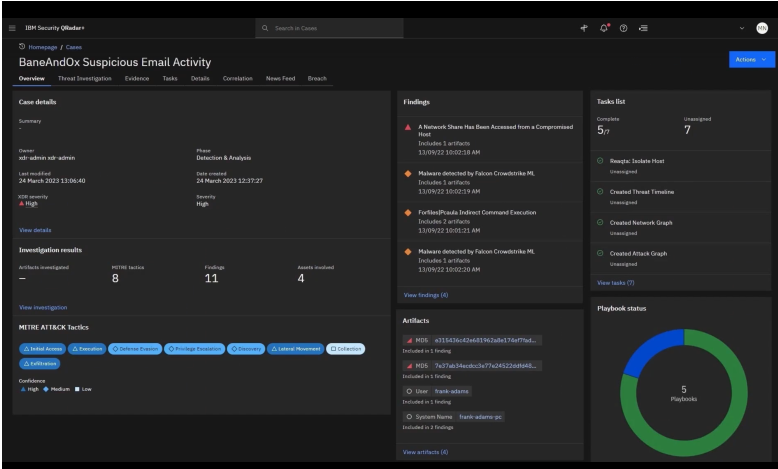
Born from the Resilient acquisition, QRadar SOAR pairs with QRadar SIEM and is particularly strong in regulated industries.
🛠 Core Services
- Dynamic playbook generation with ML inputs
- Privacy breach response module (GDPR Article 33, HIPAA)
- Case management with full audit trail
- IBM Watson assistant integration
❤️ Why Companies Consider QRadar SOAR
✅ Regulatory-grade case management. ❌ Modernization lags newer agentic platforms. IBM’s QRadar SaaS migration to Palo Alto creates roadmap uncertainty.
🎯 Ideal Customer Profile
Banks, insurers, and healthcare orgs on legacy QRadar with GDPR Article 33 reporting workflows.
💰 Commercial Model
Enterprise license, custom-quoted.
⏰ When to Shortlist
When privacy breach reporting and audit trail depth outweigh modern UX.
6. CrowdStrike Falcon Fusion ⭐⭐⭐⭐, Best for Falcon Endpoint Shops
📝 Overview
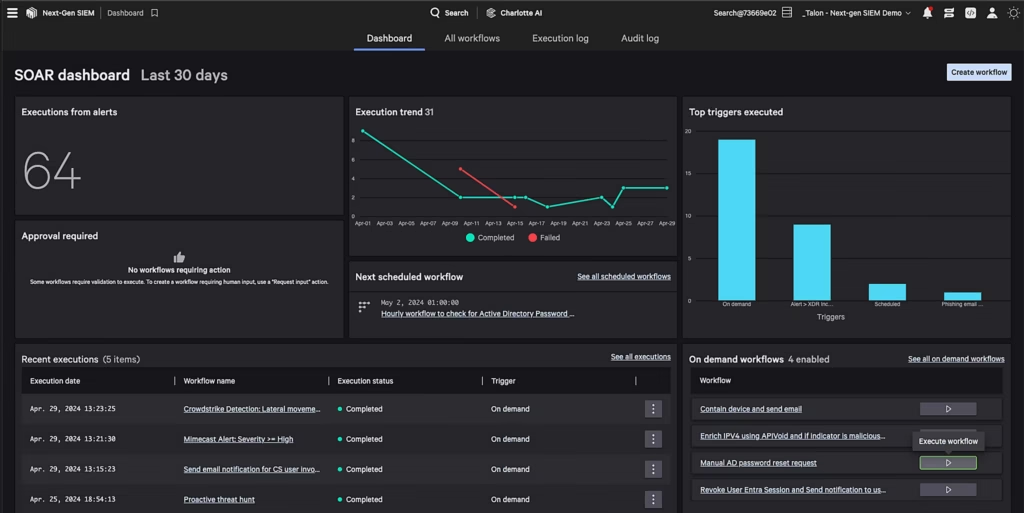
Fusion is CrowdStrike’s native SOAR layer inside the Falcon platform, designed to convert endpoint detections into automated response actions without leaving the console. For pricing context, see our CrowdStrike pricing 2026 breakdown.
🛠 Core Services
- Native Falcon EDR and Identity automation
- 100+ trigger-based workflows
- Real-time response (RTR) scripting
- Charlotte AI assistant for investigation
❤️ Why Companies Consider Falcon Fusion
✅ Fastest endpoint containment in the category. ❌ Strong only inside Falcon’s perimeter. Cross-stack workflows require third-party glue.
🎯 Ideal Customer Profile
Falcon-standardized organizations prioritizing endpoint-first IR.
💰 Commercial Model
Bundled with Falcon Enterprise and Elite SKUs.
⏰ When to Shortlist
When Falcon is your primary EDR and you want automation without buying a separate SOAR.
7. SentinelOne Singularity ⭐⭐⭐⭐, Best for Autonomous Endpoint Containment
📝 Overview
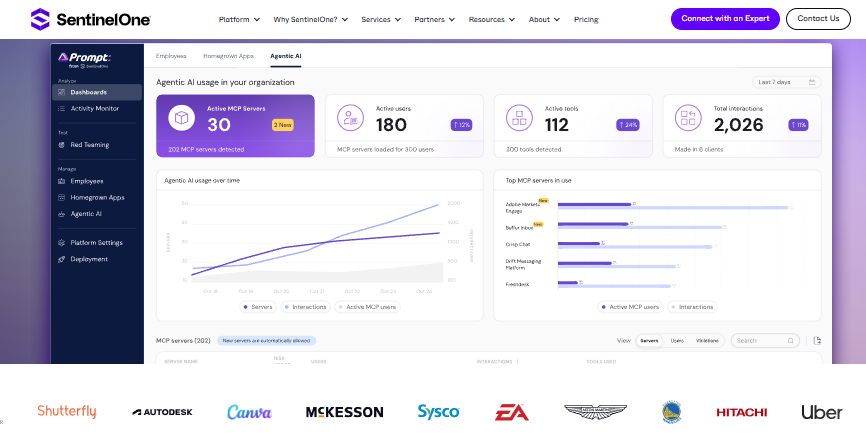
Singularity combines XDR with Storyline AI and Purple AI for autonomous endpoint and identity response. For comparison context, see our CrowdStrike vs SentinelOne deep dive.
🛠 Core Services
- Storyline AI attack reconstruction
- Purple AI assisted investigation
- Singularity Hyperautomation (no-code SOAR)
- Identity threat detection and response
- MITRE ATT&CK-mapped detections
❤️ Why Companies Consider Singularity
✅ Genuinely autonomous endpoint rollback. ❌ XDR breadth still skews toward endpoint and identity over network and SaaS.
🎯 Ideal Customer Profile
Mid-market and enterprise endpoint-led security teams in HIPAA or PCI environments.
💰 Commercial Model
Per-endpoint subscription, modular SKUs.
⏰ When to Short/om
When endpoint autonomy and rollback are top decision criteria.
8. Tines ⭐⭐⭐⭐, Best for No-Code SOA
📝 Overview
Tines is the no-code automation platform for mid-market SOCs that want orchestration without writing Python.
🛠 Core Services
- Drag-and-drop Stories builder
- 1,000+ pre-built actions
- Tines AI for natural-language workflow generation
- Case management module
❤️ Why Companies Consider Tines
✅ Lowest maintenance burden of any commercial SOAR. ❌ Less depth for very large enterprises with thousands of custom integrations.
🎯 Ideal Customer Profile
200 to 5,000 employee security teams without dedicated SOAR engineers.
💰 Commercial Model
Subscription tiers based on workflow runs.
⏰ When to Shortlist
When you need automation results inside 30 days, not 6 months.
9. Torq ⭐⭐⭐⭐, Best for Hyperautomation and Agentic AI
📝 Overview
Torq is the most explicitly agentic SOAR, with Hyper SOC and Socrates AI agents pitched at autonomous tier-1 operations. For broader context on agentic operations, see our analysis on SOC automation.
🛠 Core Services
- Event-driven automation engine
- Socrates AI agent for autonomous triage
- 300+ integrations
- HyperSOC managed service tier
❤️ Why Companies Consider Torq
✅ Cleanest agentic AI architecture in the SOAR category. ❌ Younger ecosystem. Integration breadth still maturing.
🎯 Ideal Customer Profile
Modern SOCs explicitly buying for an autonomous SOC thesis.
💰 Commercial Model
Per-workflow run, transparent tiers.
⏰ When to Shortlist
When you are replacing legacy SOAR with an AI-first architecture.
10. Shuffle ⭐⭐⭐, Best Open Source SOAR
📝 Overview
Shuffle is the OSS SOAR platform that has matured into a credible commercial alternative, with self-hosted and SaaS options.
🛠 Core Services
- Visual workflow editor
- 2,000+ community apps
- MITRE ATT&CK Navigator integration
- Self-hosted and cloud options
❤️ Why Companies Consider Shuffle
✅ Free at the OSS tier, and powerful enough for production. ❌ You are the maintainer. No 24/7 vendor support unless on paid tier.
🎯 Ideal Customer Profile
Engineering-rich, budget-constrained teams, and MSSPs building internal automation.
💰 Commercial Model
Free OSS, with paid cloud and enterprise tiers.
⏰ When to Shortlist
When you have engineering depth and refuse vendor lock-in.
11. TheHive + Cortex ⭐⭐⭐, Best Open Source IR Case Management
📝 Overview
TheHive plus Cortex is the de facto open source IR pair, used by CERTs, CSIRTs, and OSS-first SOCs worldwide. If you are weighing build versus buy, see our take on the outsourced vs in-house SOC decision.
🛠 Core Services
- Open source case and alert management
- Cortex analyzer ecosystem (300+)
- MISP threat intelligence integration
- TheHive 5 with built-in automation hooks
❤️ Why Companies Consider TheHive
✅ Trusted by global CERT community. ❌ Manual playbook authoring, and no agentic decisioning.
🎯 Ideal Customer Profile
CERT, CSIRT, and academic SOCs, and OSS-first MSSPs.
💰 Commercial Model
Free Community Edition, with paid Gold and Platinum tiers from StrangeBee.
⏰ When to Shortlist
When transparency, control, and zero licensing cost outrank turnkey speed. If you want to validate any of these tools against your real telemetry, contact us for a scoped working session.
Q2. How Did We Select These Tools? (Selection Criteria and Star Rating Methodology)
Every “best of” list in cybersecurity has a dirty secret. Most of them are ranked by who spent the most on affiliate deals, not by what actually works inside a 3,000-person hybrid-cloud SOC at 2 a.m. I built this rubric to answer one question: if I were a CISO putting this on my RFP shortlist, what would I actually measure? For a deeper procurement framework, see our MDR buyers guide.
We scored all 11 platforms on five criteria. Every criterion ties to a real failure mode I have seen in the field while delivering MDR services across global enterprises.
📊 Scoring Rubric
| Criterion | Weight | What We Measured |
|---|---|---|
| Vendor-Agnostic Integration | 25% | Does it run on top of your existing SIEM (Splunk, Sentinel, or Elastic), or does it force migration? |
| Automation Depth and Agentic Capability | 25% | Does the platform make autonomous decisions, or just surface recommendations? |
| MITRE ATT&CK and Compliance Mapping | 20% | Can playbooks be mapped to specific techniques and triggered by SEC 8-K, NIS2, or CISA KEV obligations? |
| Setup and Time-to-Value | 15% | How long before the first alert is triaged meaningfully? 30 days or 90? |
| Pricing Transparency | 15% | Is pricing public and per-endpoint, or buried behind a sales call? See our MDR pricing for a transparent example. |
⭐ Star Bands
- ⭐⭐⭐⭐⭐ 81 to 100 points
- ⭐⭐⭐⭐ 61 to 80 points
- ⭐⭐⭐ 41 to 60 points
- ⭐⭐ 21 to 40 points
- ⭐ 0 to 20 points
❌ What We Cut
We excluded platforms that simply renamed their SOAR product to “agentic” without rebuilding the underlying decision engine. If your ML model is a rules-tree behind a chatbot frontend, I am not counting it as agentic capability. Patent US20250047698A1 from 2025 defines AI-driven workflow modification as continuous ML-based optimization and regression testing of workflows against live threat data. We used that as the architectural bar. For more on what separates real agentic platforms from rebrands, see our take on AI SOC red flags.
Working with 500+ security teams, what I have felt is this: vendors who cannot show you an auditable trace of how their AI reached a verdict are not agentic, they are theatrical.
Q3. SOAR vs. XDR vs. Agentic AI: Why Modern SOCs Need a Unified Response Layer
SOAR (Security Orchestration, Automation, and Response) orchestrates playbooks across existing tools. XDR (Extended Detection and Response) correlates telemetry across endpoint, network, and cloud in one platform. Agentic AI autonomously selects and executes playbooks based on machine-learned context. SOCs running only one of these are losing. Attackers using agentic AI compress the kill chain to under 10 minutes, while over 45% of alerts in legacy SOCs go uninvestigated due to volume. For a primer on the underlying log engine, see our explainer on understanding SIEM.
The Three Categories, Side by Side
| Dimension | SOAR | XDR | Agentic AI |
|---|---|---|---|
| Primary Job | Orchestrate playbooks across existing tools | Unify telemetry across all layers | Autonomously decide and execute response |
| Data Model | Pull from existing stack | Native cross-layer ingestion | Learn from historical incident patterns |
| Decision Authority | Human triggers playbooks | Human reviews correlated alerts | AI selects and runs playbooks autonomously |
| Best Fit | Teams with mature, multi-tool stacks | Teams wanting single-pane telemetry | Teams where alert volume exceeds analyst capacity |
⚠️ The Tier-1 Burnout Problem
Tier-1 analyst roles have become what I call “eyes on glass” jobs. Alert volumes in a 2,000-seat enterprise routinely hit 4,000 to 10,000 per day. The SANS 2024 SOC Survey puts over 45% of those alerts never resulting in an opened case. That is not a detection failure. It is a triage capacity failure.
The SIEM (Security Information and Event Management, your log aggregation and correlation engine) is drowning the very analysts it is supposed to empower. SOAR was supposed to fix that with playbook automation. But most SOAR deployments I have walked into are barely past “create a Jira ticket and send a Slack ping.” A disciplined approach to SOC automation changes that math.
❌ The 76-Tool Trap
Mid-to-large organizations average 76 security tools in their stack. That is not a hypothesis. It is a pattern I have seen across dozens of enterprises. Telemetry gets trapped in siloed data islands. The SIEM gets fed partial context. The analyst sees an alert that makes no sense without three other data sources that were never joined.
XDR was supposed to solve the unification problem. And for organizations that standardize entirely on one vendor’s stack, it works well. The 42% of North American practitioners who cite attack-chain visualization as XDR’s top appeal are not wrong. But the moment your environment is multi-vendor, XDR’s single-pane promise breaks unless you have a platform that sits above the stack, the way UnderDefense Agentic AI SOC does.
The OODA Loop Reality Check
Attackers using agentic AI have collapsed what the military calls the F2T2EA cycle (Find, Fix, Track, Target, Engage, and Assess) to under 10 minutes. Defenders relying on manual handoffs from SIEM to analyst to response are already behind. The OODA loop (Observe, Orient, Decide, and Act) was designed for human decision speed. Agentic adversaries have exited that loop entirely.
I might be wrong about the exact timing, but when we ran a live agentic attack simulation against our own UnderDefense Agentic AI SOC environment, we saw automated lateral movement pivot four times in under 8 minutes. A manual SOC would still be opening the first ticket. For more on this dynamic, see our piece on whether AI kills or saves your SOC team.
✅ The Case for a Unified Layer
The answer is not choosing between SOAR, XDR, or Agentic AI. It is running Agentic AI as the decision layer on top of both. SOAR becomes the execution engine. XDR provides the telemetry surface. Agentic AI connects them with learned context and autonomous decisioning.
The vendors that get this right let you BYO SIEM and add the agentic layer on top. The vendors that get it wrong lock you into their data plane and call it a “unified platform.” If you are weighing a switch, our guide on why businesses switch cybersecurity providers covers the common triggers.
“We received little value from Arctic Wolf. Anything you want to look at or changes you need to make in the product must go through their engineering team. As an MSP, this is a horrible way to do business.”
— Matt C., Manager, Cybersecurity Services Arctic Wolf – G2 Verified Review
“Arctic Wolf provides solid detection and response capabilities, but overly relies on the client’s team for remediation, which really hurts the value of the service.”
— VP of Technology Arctic Wolf – Gartner Verified Review
Q4. How Do You Map IR Automation to NIST SP 800-61, MITRE ATT&CK, and Compliance Frameworks?
Map SOAR to NIST SP 800-61’s Detection and Containment phases, XDR to Detection across telemetry layers, and Agentic AI to autonomous Containment and Recovery. For each MITRE ATT&CK (a globally adopted framework cataloging adversary tactics and techniques) technique, automate a specific response action and connect it to a compliance trigger: the SEC 8-K four-day disclosure clock, NIS2’s 24-hour early warning, or CISA KEV (Known Exploited Vulnerabilities catalog) auto-escalation. For a structured starting point, see our free IR plan template.
📊 Table A: Tool Category to NIST SP 800-61 Lifecycle Mapping
NIST SP 800-61 Rev. 3 defines four IR phases: Preparation, Detection and Analysis, Containment and Eradication, and Recovery.
| IR Phase | SOAR Role | XDR Role | Agentic AI Role |
|---|---|---|---|
| Preparation | Playbook authoring and SLA definition | Sensor deployment and telemetry baseline | ML model training on historical incidents |
| Detection and Analysis | Alert enrichment and triage routing | Cross-layer attack chain correlation | Autonomous alert classification and priority scoring |
| Containment and Eradication | Playbook-driven response actions | Endpoint isolation and lateral move blocking | Autonomous credential wipe, host isolation, and password reset in under 2 minutes |
| Recovery | Ticket closure and evidence collection | System restore and hygiene validation | Automated evidence packaging for compliance reporting |
📊 Table B: Top 5 Playbook Templates (MITRE ATT&CK to Compliance Trigger)
This is your downloadable reference. Copy this into your SOAR or agentic AI platform. For email-specific workflows, see our free phishing playbook.
| ATT&CK Technique | Automated Response Action | Compliance Trigger |
|---|---|---|
| T1078 Valid Accounts | Disable account, force MFA enrollment, and query SIEM for lateral movement in last 72 hours | SEC 8-K materiality assessment, and NIS2 early warning if scope exceeds critical infrastructure |
| T1059 Command Execution | Terminate process, isolate endpoint, pull memory dump, and open IR case | CISA KEV auto-escalation if technique matches advisory, and SOC 2 incident log entry |
| T1486 Data Encrypted (Ransomware) | Network segment isolation, credential rotation, and snapshot all affected volumes | SEC 8-K four-day disclosure clock starts, NIS2 24-hour notification, and cyber insurance notification |
| T1566 Phishing | Quarantine email, extract IOCs (indicators of compromise), and scan mailbox for lateral distribution | HIPAA breach notification assessment if PHI accessed, and PCI DSS incident record |
| T1041 Exfiltration Over C2 | Block outbound IP, revoke session tokens, and pull DLP (Data Loss Prevention) logs | GDPR Article 33 breach assessment, and SEC 8-K assessment for publicly traded companies |
⏰ SEC 8-K: The Four-Day Clock
Since December 2023, the SEC Cyber Disclosure Rule requires public companies to disclose material cybersecurity incidents within four business days of determining materiality. That determination window is where IR automation pays for itself. The question is not whether you were breached. It is: can your IR system produce a timestamped evidence package, a containment confirmation, and a scope assessment fast enough to support a board decision in 96 hours?
Agentic AI that auto-generates incident timelines, queries every affected system, and packages evidence artifacts is no longer a nice-to-have. It is a disclosure risk management tool that an experienced incident response team can operationalize.
⚠️ NIS2 and CISA KEV: The EU and Federal Triggers
The EU NIS2 Directive (which took effect October 2024 across member states) requires a 24-hour early warning notification for significant incidents. If your IR automation cannot detect and produce a draft notification in under 24 hours, you are exposed. SOAR workflows with NIS2-specific notification playbooks are now a compliance necessity for any organization with EU operations. For broader regulatory context, see our compliance roadmap 2025.
The CISA KEV catalog is a live list of actively exploited CVEs. A practical automation pattern is straightforward: if your vulnerability scanner detects a CVE that appears in the KEV catalog, auto-escalate to P1, auto-assign a SOAR playbook, and trigger a patch verification workflow within the same business day. Most teams I speak with still do that manually.
The Ukrainian Zimbra Case
We worked a case involving a Zimbra mail server compromise where initial detection was a single anomalous SMTP relay log entry. Without playbook-to-technique mapping tied to T1078 (Valid Accounts), that entry would have been triaged as a low-priority misconfiguration. Because the playbook was mapped to the technique and tied to a 24-hour NIS2 window, we ran automated lateral movement queries across the full environment, found a credential re-use pattern across four internal systems, and completed containment in under 2 minutes. The total dwell time was under 11 minutes from detection to containment. Without the mapping, the manual team would have been working for hours. For a similar outcome at scale, see our Black Basta stopped in minutes case study.
Q5. What Should an Open Source IR Starter Stack Look Like, and When Do You Outgrow It?
A working open source IR starter stack pairs TheHive for case management, Cortex for analyzer enrichment, MISP for threat intelligence, Shuffle for SOAR workflow, and Velociraptor for endpoint forensics. This combination covers detection-to-response without licensing cost. It hits a practical ceiling around 500 alerts per day. Past that volume, agentic augmentation pays for itself inside a quarter. If you are weighing build versus buy, our take on outsourced vs in-house SOC is worth reading first.
🛠 The Five-Tool Reference Architecture
I have stood up this exact stack inside three customer environments before they upgraded to UnderDefense Agentic AI SOC. None of these tools is theoretical. All five are running in production at CERTs and Fortune 500 SOCs as we speak.
| Tool | Role | Primary Data Surface | Integration Point |
|---|---|---|---|
| TheHive 5 | Case management and alert triage | Cases, observables, and tasks | Receives alerts via webhook from SIEM, EDR, and MISP |
| Cortex | Analyzer engine for enrichment | IP, hash, domain, and URL enrichment | Called by TheHive, and runs 300+ analyzers including VirusTotal, AbuseIPDB, and urlscan.io |
| MISP | Threat intelligence platform | IOCs and TTPs | Pushes feeds into TheHive, Cortex, and SIEM |
| Shuffle | OSS SOAR workflow engine | Playbook execution | Triggers on TheHive case creation, and runs response actions |
| Velociraptor | Endpoint forensics and live response | EDR-grade endpoint telemetry, and hunts | Called by Shuffle for triage and evidence collection |
Suggested Topology (What I Would Build Tomorrow)
Run TheHive and Cortex on a hardened VM (8 vCPU, and 32 GB RAM) behind an Nginx reverse proxy with TLS. Deploy MISP on a separate VM with persistent storage for 12 to 18 months of IOC retention. Shuffle runs as a Docker stack on its own host. Velociraptor server lives in your management network, with agents on every endpoint via GPO push. For deeper architecture context, see our security stack guide.
A Concrete Workflow Example
Here is the Monday morning workflow this stack actually runs. A SIEM alert (Splunk, Elastic, or Sentinel) fires for a suspicious PowerShell parent process. The alert hits TheHive via webhook, creates a case, and auto-triggers a Cortex analyzer that hashes the binary and queries VirusTotal, MISP, and AbuseIPDB. Shuffle picks up the enriched case, calls Velociraptor to pull a memory dump and recent PowerShell history from the host, and posts a ChatOps message to the on-call channel. Total time from alert to enriched IR-ready case: under 4 minutes if the analyzers respond fast.
✅ What Open Source Does Well
Full data ownership. No per-seat licensing. Complete transparency into how every alert is processed. For a CERT, CSIRT, or academic SOC, that transparency matters more than turnkey speed. You can audit every line of every Shuffle workflow.
It also forces good engineering hygiene. There is no marketing-driven feature you can buy your way around. If your detection logic is bad, the stack will not save you. That discipline pays off later when you do graduate to a commercial platform, whether that is a packaged SOC service or a co-managed managed SIEM.
⚠️ The Ceiling: Three Signals You Have Outgrown It
Working with 500+ security teams, what I have noticed is that the OSS stack starts breaking around three signals.
- Alert volume crosses ~500/day. Shuffle playbooks need constant manual tuning and start lagging. Cortex analyzer queues back up.
- 24/7 coverage becomes mandatory. Your three engineers cannot all carry pagers indefinitely. SOC 2 Type II auditors will flag the gap.
- Audit deadlines compress. SOC 2, ISO 27001, or NIS2 demand documented SLAs and chain-of-custody artifacts the OSS stack does not produce natively.
The hardest signal is agentic decisioning. TheHive and Shuffle execute playbooks deterministically. They do not learn which playbook to choose for a never-before-seen incident the way patent US20250106247A1 describes for ML-driven SOAR playbook selection.
My Honest Take
I might be wrong, but my read is that most mid-market SOCs hit the OSS ceiling inside 12 months. Design your OSS stack so the upgrade path does not throw away the work. Keep detection logic in version control. Keep MISP as your threat intel source of truth. Keep Velociraptor agents deployed. Then, when you add a commercial agentic layer, it sits on top and you have not wasted a quarter of engineering time. For continuous coverage past that ceiling, see how teams approach continuous security monitoring.
Q6. How Do You Prove ROI, Avoid SIEM Lock-In, and Roll Out IR Automation in 30 Days (Including for MSSPs and Shadow AI)?
Top-tier IR automation delivers around 830% ROI over three years, 99% noise reduction, SIEM (Security Information and Event Management) bill cuts of 50% to 90%, and a 2-minute Alert-to-Triage SLA with 15-minute escalation for critical incidents against the 30 to 60-minute legacy benchmark. Vendor-agnostic BYO-SIEM architecture protects the CISO’s career from black-box lock-in. MSSPs (Managed Security Service Providers) need multi-tenant playbook isolation. Shadow AI agents like Cursor, Cline, and Copilot require first-class identity telemetry. A disciplined 30-day rollout beats the 90-day industry norm.
💰 Sub-Block A: The ROI Math
The board does not care about MTTD (Mean Time to Detect) or MTTR (Mean Time to Respond) on their own. They care about dollars. Here is the formula I walk every CISO through before a budget conversation. For a tighter unit-economics view, run your numbers through our SOC cost calculator.
| Metric | Legacy MDR | Agentic IR Automation |
|---|---|---|
| Alert-to-Triage SLA | 30 to 60 minutes | 2 minutes, with 15-minute escalation for critical incidents |
| Noise reduction | 40% to 60% | 99% |
| SIEM ingestion bill (annual) | Baseline | 50% to 90% lower with tuning |
| Tier-1 analyst hours saved | None | 1.5 to 3 FTEs equivalent |
| 3-year ROI | Below 200% | Around 830% |
The UiPath/Bain 2024 enterprise study found 85% of executives confirm AI-driven automation delivers value primarily through productivity gains. Use that as your board hook, alongside our 2026 cybersecurity budget playbook.
A Real Number From the Field
We caught a $300,000 payroll BEC (Business Email Compromise) scheme for a customer last quarter. Their previous malware-rule MDR had no detection for it. The single incident catch paid back the entire engagement. For more on this attack class, see our breakdown of business email compromise.
❌ Sub-Block B: Vendor-Agnostic vs. Closed Stack
This is the slide that costs CISOs jobs three years after a bad procurement.
| Dimension | Closed-Stack MDR (Arctic Wolf, ReliaQuest, and CrowdStrike Complete) | Vendor-Agnostic Model |
|---|---|---|
| SIEM ownership | Forced into vendor’s data plane | Keep Splunk, Sentinel, Elastic, or QRadar |
| Custom detection logic | Lost on switch | Portable across platforms |
| Switching cost | 12 to 18 months of re-engineering | Weeks |
| Pricing transparency | Opaque, sales-quoted | Public per-endpoint tiers |
✅ Vendor-agnostic platforms preserve your detection logic and your data lake. ✅ They sit above your existing 76-tool stack instead of replacing it. ❌ Closed-stack MDRs force migration into proprietary platforms. ✅ A vendor-agnostic concierge response model lets analysts act inside your stack, not just escalate alerts. ❌ Black-box investigation creates audit gaps that surface during SOC 2 or NIS2 reviews. For an alternative-vendor view, see our Rapid7 alternatives 2026 list.
“We received little value from Arctic Wolf. Anything you want to look at or changes you need to make in the product must go through their engineering team. As an MSP, this is a horrible way to do business for us.”
— Matt C., Manager, Cybersecurity Services Arctic Wolf – G2 Verified Review
⚙️ Sub-Block C: MSSP Multi-Tenant Requirements
MSSPs (Managed Security Service Providers) live or die by per-tenant isolation. Generic SOAR does not cut it. The non-negotiables are:
- Per-tenant playbook isolation, so a customer A workflow cannot leak data into customer B’s case
- White-labeled portals and ChatOps channels per tenant
- SLA automation that reports against contracted response times per tenant
- Role-Based Access Control (RBAC) granular enough to scope analyst access by client
- Per-tenant ingestion economics (no shared metering games)
Patent US20240414204A1 from 2024 describes policy-driven workflow generation for cybersecurity environments, which is exactly the architecture pattern MSSPs need. For pricing benchmarks, see our MSSP pricing breakdown.
🤖 Sub-Block D: Shadow AI and Agentic IDE Monitoring
Most legacy MDR platforms do not even have a data model for agent identities. Cursor, Cline, Claude Code, and Copilot now operate inside production environments with permissions no human would be granted. That is a greenfield risk. Our dedicated MDR for AI practice covers this surface end to end.
What to monitor:
- Agent identity as a first-class principal (not a service account masquerade)
- API call trail from the agent to your code repo, your build system, and your runtime
- Commit telemetry tied to the agent that authored the change
- Autonomous containment patterns, including credential wipe and key rotation in under 2 minutes when agent behavior crosses a baseline
I think we will see in the next 18 to 24 months an entirely new product category for AI agent observability inside the SOC. We are already building that into UnderDefense Agentic AI SOC as the AI Developer Sentinel layer.
⏰ Sub-Block E: The 30-60-90 Day Rollout
Most legacy MDR onboardings take 90+ days just to start ingesting logs. That is unacceptable in 2026. Here is the rollout I run with our customers.
- Days 1 to 30: Integrate one SIEM, ingest top 5 alert classes, deploy auto-triage playbooks for the highest false-positive volumes, and connect ChatOps to Slack or Teams.
- Days 31 to 60: Map playbooks to MITRE ATT&CK techniques, layer threat intelligence enrichment, expand integration to second SIEM and EDR, and run first purple-team exercise.
- Days 61 to 90: Deploy agentic AI decisioning over the highest-volume alert classes, publish the first ROI report to leadership, and formalize SLAs and audit artifacts for compliance.
“The biggest problem they solved was our 24/7 coverage gap. We needed round-the-clock monitoring for compliance reasons, but building our own SOC wasn’t realistic with our budget and the current hiring market. UnderDefense fills that gap without us having to hire a full team.”
— Verified User in Marketing and Advertising UnderDefense G2 – Verified Review
“UnderDefense Agentic AI SOC integrates well with our systems, specifically with our SIEM, Splunk. Their team is proactive in identifying and addressing threats, providing 24/7 oversight.”
— Oleg K., Director Information Security UnderDefense G2 – Verified Review
Q7. Ready to Replace Alert Theater with Real Response?
If you have made it this far, you already know the gap. Legacy MDRs forward alerts. UnderDefense Agentic AI SOC closes them. The fastest way to validate that claim against your stack is a scoped RFP, where you share your current SIEM, alert volume, and top three pain points, and we respond within 48 hours with a side-by-side detection and response demo against your real telemetry. If you are mid-incident right now, our team handles cases where you have experienced a breach.
The Decision Moment
You have three options sitting on your desk right now. Renew your existing MDR for another year and accept the same triage gap. Run an internal RFP and force every vendor onto your real environment, your real alerts, and your real SLAs. Or stay on the fence for another quarter while your alert backlog grows.
I am biased, but the second option is the only one that gives you data to defend at the next board review.
💬 Bridge to a Real Conversation
Share your SIEM, alert volume, and top three response pain points. We respond within 48 hours with a scoped RFP and a live detection and response walkthrough against telemetry from your environment. No slideware, and no gated whitepaper. Book a demo or contact us to start the working session.
Tell me what you are running, what is breaking, and where your team is bleeding time. We will reply with a scoped working session, not a slide deck.
What I Am Thinking About Next
The thing keeping me up right now is agent identity. We have spent a decade hardening human identity with MFA, conditional access, and zero-trust segmentation. We are nowhere on agent identity. Cursor, Cline, and Claude Code agents inside enterprise dev environments are running with permissions that no human would ever pass an audit on. My read is that the next 18 months will force a new identity primitive, somewhere between a service account and a workload identity, that the SOC can actually monitor. I want to be wrong about how fast this gets ugly. If you are testing agent identity controls inside your environment, write to me. I want to compare notes.
See how UnderDefense Agentic AI SOC resolves a real incident on your stack.
1. What are the must-have features in an incident response automation tool for 2026?
We evaluate every IR automation platform against five non-negotiables that we built from real SOC failures we have walked into. First, vendor-agnostic integration that respects the 76 tools the average mid-market enterprise already runs, so the platform sits above your existing SIEM (Splunk, Sentinel, Elastic, or QRadar) instead of forcing migration. Second, agentic automation depth: the platform must make autonomous, auditable decisions, not just surface recommendations behind a chatbot frontend. Third, MITRE ATT&CK and compliance mapping that ties playbooks to SEC 8-K, NIS2, and CISA KEV obligations. Fourth, a 30-day time-to-value benchmark against the 90-day legacy norm. Fifth, transparent pricing in a public per-endpoint range. We document this rubric in our MDR buyers guide, and we apply it to UnderDefense Agentic AI SOC itself. If a platform cannot show you an auditable trace of how its AI reached a verdict, it is theatrical, not agentic.
2. How is agentic AI different from traditional SOAR and XDR?
We treat SOAR, XDR, and agentic AI as three different jobs, not three names for the same thing. SOAR orchestrates playbooks across your existing tools, with a human triggering the workflow. XDR unifies telemetry across endpoint, network, and cloud in one platform, with a human reviewing correlated alerts. Agentic AI autonomously selects and executes the playbook based on machine-learned context from historical incident patterns. The unified pattern that wins is running agentic AI as the decision layer on top of SOAR (the execution engine) and XDR (the telemetry surface). Attackers using agentic AI have collapsed the kill chain to under 10 minutes, while over 45% of alerts in legacy SOCs go uninvestigated. A manual handoff loop cannot keep up. Our take on whether AI kills or saves your SOC team covers the operational implications in detail.
3. How do we map IR automation playbooks to NIST SP 800-61 and MITRE ATT&CK?
We map SOAR to NIST SP 800-61’s Detection and Containment phases, XDR to Detection across telemetry layers, and agentic AI to autonomous Containment and Recovery. For each MITRE ATT&CK technique, we automate a specific response action and tie it to a compliance trigger. For T1078 (Valid Accounts), we disable the account, force MFA, and trigger SEC 8-K materiality assessment. For T1486 (Data Encrypted), we isolate segments, rotate credentials, and start the SEC 8-K four-day disclosure clock plus the NIS2 24-hour notification window. For T1566 (Phishing), we quarantine the email, extract IOCs, and run HIPAA breach assessment if PHI was touched. We pair every playbook with a free IR plan template so the artifact set is audit-ready from day one.
4. What is the ROI of incident response automation in 2026?
Top-tier IR automation delivers around 830% ROI over three years, 99% noise reduction, SIEM bill cuts of 50% to 90%, and a 2-minute Alert-to-Triage SLA with 15-minute escalation for critical incidents against the 30 to 60-minute legacy benchmark. We caught a $300,000 payroll BEC scheme for one customer last quarter that paid back the entire engagement in one incident. The board does not care about MTTD or MTTR on their own. They care about dollars saved, FTEs not hired, and breach exposure avoided. We typically free up the equivalent of 1.5 to 3 Tier-1 FTEs in the first 60 days, which lets the CISO redeploy budget toward proactive work like threat hunting and tabletop exercises. Run your stack through our SOC cost calculator to model the savings before you brief the CFO.
5. How do we avoid SIEM and vendor lock-in when buying IR automation?
We insist on BYO-SIEM architecture. Closed-stack MDRs from Arctic Wolf, ReliaQuest, and CrowdStrike Falcon Complete force your data into their proprietary data plane, which means 12 to 18 months of re-engineering if you ever want to switch. Custom detection logic, correlation rules, and threat intel get stranded. Vendor-agnostic platforms preserve your detection logic, sit above your existing 76-tool stack, and publish per-endpoint pricing tiers. Under Defence MAXI runs on top of Splunk, Sentinel, Elastic, or QRadar without forced migration. The CISO keeps the data lake, keeps the years of tuning, and gains agentic investigation and concierge response. For a switch-cost framework, see our analysis of why businesses switch cybersecurity providers and the procurement gotchas to avoid.
6. Can an open source IR automation stack actually scale, and when do we outgrow it?
Yes, with limits. A working OSS stack pairs TheHive (case management), Cortex (analyzer enrichment), MISP (threat intel), Shuffle (SOAR workflow), and Velociraptor (endpoint forensics). It covers detection-to-response without licensing cost and runs in production at CERTs and Fortune 500 SOCs. The practical ceiling is around 500 alerts per day. Past that volume, three signals indicate you have outgrown it: Shuffle playbooks need constant manual tuning, 24/7 coverage becomes mandatory for SOC 2 Type II, and audit deadlines compress beyond what the OSS stack documents natively. Design the OSS stack so the upgrade path does not throw away the work, keep detection logic in version control, and plan for a commercial agentic layer on top. Our security stack guide covers the reference architecture in detail.
7. How do MSSPs and SOCs monitor shadow AI agents like Cursor, Copilot, and Claude Code?
Most legacy MDR platforms do not even have a data model for agent identities, which is a greenfield risk. Cursor, Cline, Claude Code, and Copilot now operate inside production environments with permissions no human would be granted. We monitor agent identity as a first-class principal (not a service account masquerade), the API call trail from agent to code repo to build system to runtime, commit telemetry tied to the agent that authored the change, and autonomous containment patterns including credential wipe and key rotation in under 2 minutes when agent behavior crosses a baseline. We built this into Under Defence MAXI as the AI Developer Sentinel layer, and our dedicated MDR for AI practice covers this surface end to end. The next 18 months will force a new identity primitive between a service account and a workload identity that the SOC can actually monitor.
8. How fast can we roll out IR automation, and what does a 30-60-90 plan look like?
We run a 30-60-90 day rollout that beats the 90-day legacy onboarding norm. In Days 1 to 30, we integrate one SIEM, ingest the top 5 alert classes, deploy auto-triage playbooks for the highest false-positive volumes, and connect ChatOps to Slack or Teams. In Days 31 to 60, we map playbooks to MITRE ATT&CK techniques, layer threat intelligence enrichment, expand integration to a second SIEM and EDR, and run the first purple-team exercise. In Days 61 to 90, we deploy agentic AI decisioning over the highest-volume alert classes, publish the first ROI report to leadership, and formalize SLAs and audit artifacts for compliance. If your team is mid-incident right now, our crisis line for organizations that have experienced a breach skips the sales motion entirely.