




Q1. How Much Does Radiant Security Cost in 2026?
A CISO I spoke with last quarter opened her browser, typed “Radiant Security pricing,” and hit the same wall every buyer hits. No number. Just a “Book a Demo” button. She wanted a budget line, but the market handed her a sales call.
Here is the direct answer, upfront.
Radiant Security publishes no public pricing. The product is quote-only, with no free tier and no self-serve checkout. Pricing is set by two things: the number of use cases and the number of end users, or analyst seats. It bills as a flat annual fee, and that fee covers unlimited alert volume plus log management.
See how the UnderDefense Agentic AI SOC investigates, triages, and resolves real alerts.
💰 What you should expect to budget
Public rate cards do not exist, so these are directional ranges drawn from buyer profiles, rather than quotes. Confirm every figure with Radiant directly before you build a board slide.
- Entry or small security team: roughly $60,000 to $100,000 per year.
- Mid-market (500 to 2,000 employees): roughly $100,000 to $175,000 per year.
- Enterprise: roughly $150,000 to $300,000 or more per year.
Every directory I checked confirms the opacity. G2 lists no pricing and shows a “Contact for pricing” state rather than a published tier. That matches what Radiant itself communicates through its per-use-case, per-user model announcements. If you are building this into a broader plan, our cybersecurity budget for mid-market firms walks through how to slot a line like this.
⚠️ Why a flat fee exists in the first place
The flat model is a direct response to a real budget fear in agentic AI. When your cost scales with consumption, a single misbehaving agent can wreck your forecast.
One security leader put the anxiety plainly. The cost of running AI agents has become a budget topic, “because these line items were never in anyone’s budget.” The sharper version is scarier: what you budgeted for a full year of token capacity, “an agent going awry could actually go out and consume within a matter of a week.”
I have felt that fear from the operator seat. A flat annual fee trades that volatility for predictability, which is exactly what a CISO needs when finance asks “what is the ceiling on this number?” For a deeper read on how these platforms price, see our analysis of AI SOC red flags.
At UnderDefense, we lean the same way with pricing transparency. Our UnderDefense Agentic AI SOC uses published price ranges, so buyers avoid the consumption surprises that turn a clean demo into an ugly renewal. I will hold the full comparison until later in this article, because the model deserves its own breakdown.
Q2. What Exactly Are You Paying For, Radiant’s SKUs and What’s Included Free?
I sat through a vendor deck recently where every slide had “AI” stamped on it. That moment opens what I call a window of distrust. Buyers have watched providers rename a product without rebuilding the outcomes underneath, so the first honest question is simple: what does the license actually contain?
With Radiant, the answer is refreshingly singular.
Your price buys one core platform, the Adaptive AI SOC. Integrated log management, one-click response, and a full explainable audit trail are all included at no extra charge. There are no named Essentials, Pro, or Enterprise tiers. Differentiation happens through how you configure use cases, rather than by unlocking a higher SKU.
✅ Included versus paid add-ons
The only paid add-ons are managed-service overlays. Radiant launched Night Shift, an after-hours coverage option, and a Vacation Coverage Package in April 2026.
| Component | Included or Add-on | Licensing unit |
|---|---|---|
| Adaptive AI SOC (investigation engine) | Included | Per use case and per end user |
| Integrated log management | Included | No separate fee |
| One-click response | Included | Bundled |
| Explainable audit trail | Included | Bundled |
| Night Shift (after-hours coverage) | Paid add-on | Managed-service overlay |
| Vacation Coverage Package | Paid add-on | Managed-service overlay |
 Detection Engine
⭐ The “AI is the whole product” point
Here is the part the spec sheet hides. Radiant’s AI is the entire product, so there is no separate AI carve-out and no per-query GenAI fee. That is a genuine structural difference from vendors who bolt an AI module onto a legacy SKU and meter it.
My read, and I will own this as opinion: a single AI-native platform earns more trust than an “AI add-on” line item, because the buyer is not paying twice for the same outcome. If you want the broader market view, our guide to the best SOC tools covers how these platforms stack up.
We took a similar path with the MAXI AI platform. It is AI-native with no bolt-on AI tax, and it adds vendor-agnostic integration so the platform watches your existing stack instead of asking you to rip and replace it.
Q3. How Does Radiant’s Per-Use-Case, Per-User Pricing Model Actually Work?
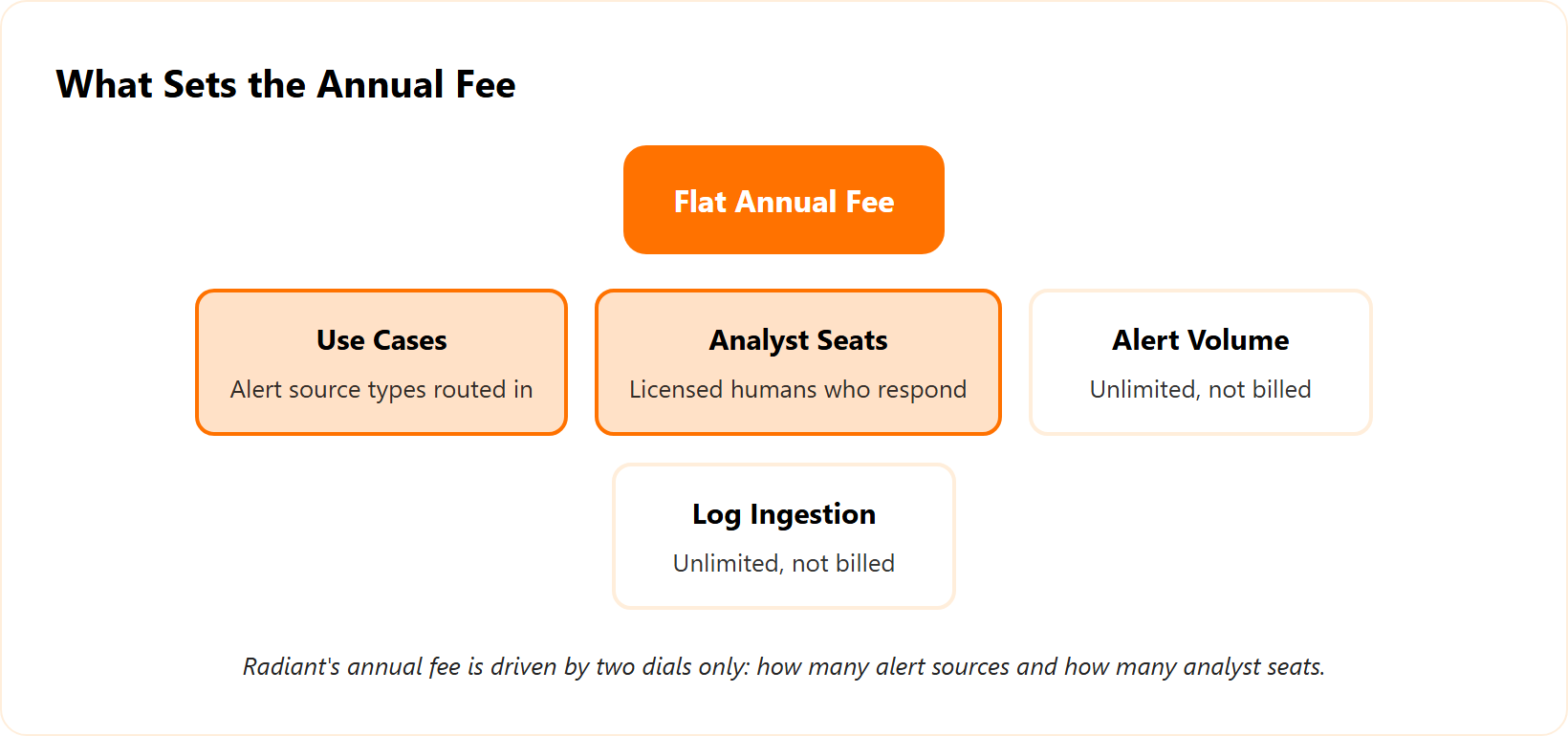
Picture two dials on the invoice. Turn one for use cases, turn the other for analyst seats. That is the whole pricing machine, and once you see it, the quote stops feeling mysterious.
What counts as a “use case” versus an “end user”
A use case is an alert-source type. Think CrowdStrike endpoint alerts, or email phishing reports, each one a distinct stream the platform investigates. An end user is a licensed analyst seat, a human who reviews escalations and clicks to respond.
Here is the part that matters for your wallet. Alert volume and log ingestion are explicitly excluded from billing. That is a deliberate break from per-alert or per-gigabyte SIEM and SOAR pricing, and it buys you genuine cost predictability. To see how the older model works, read our explainer on understanding SIEM.
⭐ A concrete example
Say you onboard four alert sources and five analyst seats. Your annual fee is fixed against those two numbers. If an attack storm triples your alerts next Tuesday, your bill does not move.
That design reflects a useful mental model. Think of AI agents as foot soldiers, and your human engineers and analysts as the generals directing them, with specialists handling the complex missions. Both layers exist for a reason, which is why both billing dials exist. A fully autonomous SOC remains technically out of reach, so you keep paying for seats because humans stay in command. Our piece on whether AI kills or saves your SOC team digs into that balance.
⚠️ Where the model bites
Now apply it. The trap sits at scope expansion. Add a fifth use case in month seven, and you trigger a commercial event, a mid-contract renegotiation. Budget for that before you sign, because it is the one variable the “100% predictable” pitch quietly sidesteps.
This is exactly how we frame our UnderDefense Agentic AI SOC too. Our “AI SOC plus Human Ally” approach keeps the same generals-and-foot-soldiers split: the AI collects context, and your people decide.
Q4. What Hidden Costs Don’t Show Up on the Radiant Invoice?
A finance lead once told me the invoice looked clean, then the cloud bill landed, and the “predictable” platform suddenly had a tail. That tail is the part nobody puts on a slide, so let me drag it into the light.
💸 The four costs that skip the invoice
Four real costs hit your budget without appearing on a single Radiant line item.
| Cost category | On the Radiant invoice? | Typical range |
|---|---|---|
| Your own cloud storage (logs in your S3 bucket) | No | About $0.023 per GB per month, roughly $10,000 to $42,000 per year at scale |
| Senior-analyst tuning labor | No | Several weeks of skilled time before full effectiveness |
| Night Shift activation | No (prerequisite) | Cannot start until full deployment is complete |
| Use-case expansion | No (triggers renegotiation) | New commercial event mid-contract |
The storage point deserves emphasis. Radiant’s model keeps logs in your cloud, which is great for data ownership, and a cost you carry directly at standard cloud storage rates. Our managed SIEM pricing guide breaks down how storage drives the real bill.
 Incidents Queue
✅ How to budget before you sign
The tuning cost is the one teams underestimate most. Early on, an AI SOC needs hands-on shaping, and reviewers say so plainly.
I respect that honesty, because it matches how AI testing actually works. When I validate a detection, I run each test case somewhere between five and 15 times to confirm a true positive versus a false positive. It works, you just have to try it a whole bunch of times, and that effort is real labor on someone’s calendar. Our checklist on SOC automation covers how to plan that work.
The lesson from our own customers is that the tuning burden is where lean teams quietly bleed hours. Reviewers describe the relief when that load gets absorbed for them.
“Before the guys from UD stepped in, we were getting bombarded with alerts from all our security tools. Their team cleaned up our configurations and got the noise under control within the first week.”
Verified User in Marketing and Advertising, Small-Business UnderDefense G2 Verified Review
“False positives have become a rarity, ensuring that our team’s focus remains on genuine threats.”
Valeriia D., Marketing Specialist UnderDefense G2 Verified Review
That is the model behind our UnderDefense Agentic AI SOC. Our concierge response and managed tuning carry the senior-analyst work a small team would otherwise absorb itself, so the hidden cost moves from your headcount to our SOC service.
Q5. How Much Does Radiant’s Log Management Save on the SIEM Tax?
Every CISO I talk to has felt the same sting on the SIEM invoice. You pay premium rates just to store logs you might never query, and the bill climbs with every new data source. That storage line is the “SIEM tax,” and it is the cost Radiant tries hardest to attack.
Here is the short version, upfront.
Radiant bundles log management at no extra license cost. It stores logs in your own cloud archive, an Amazon S3 bucket, and runs search and triage on top. Radiant says this cuts logging costs by up to 85% versus a legacy SIEM.
💰 How the included model actually works
Three things define the model, and each one matters to your budget.
- Log ingestion is unlimited and not separately billed.
- Log retention is unlimited, with no per-gigabyte tiering disclosed.
- The logs sit in your cloud, so you keep ownership of your own data.
That last point is the one I care about most. When you own the storage bucket, you avoid the quiet lock-in where a vendor holds your historical logs hostage at renewal. Our managed SIEM pricing guide breaks down where that tax really comes from.
⚠️ Where the 85% claim meets reality
Now apply it to a real number. For a team paying $300,000 a year for Splunk, an 85% reduction implies a Radiant figure near $45,000. I would not put that on a board slide, because it is marketing math applied directionally.
Two honest adjustments bring it back to earth.
First, you still pay your own cloud storage. At AWS standard rates of $0.023 per gigabyte per month, 100GB a day runs roughly $1,000 a year, and heavier volumes climb to $10,000 to $42,000 a year. That cost never shows on the Radiant invoice, but it is real. You can model that with our AWS security cost calculator.
Second, the all-in platform figure for a SIEM-replacement buyer lands closer to $80,000 to $175,000 a year once you combine platform and log management. The 85% headline describes the storage layer, rather than your total bill. If you are weighing a switch, our guide to choosing a SIEM covers the trade-offs.
What this means for your Monday
If your Splunk bill clears $300,000 and you already run an S3 archive, the SIEM-replacement story can deliver positive three-year value even after migration costs. Below that threshold, the math gets thinner. Our explainer on understanding SIEM helps frame that decision.
We see the same pattern from the other side of the table. Our managed SIEM cuts that same storage tax while keeping human analysts on the data, so you reduce spend without losing the people who actually read the logs. Preserving your data ownership stays central to how we deploy it.
Q6. Radiant Security vs Dropzone AI vs CrowdStrike Falcon Complete: Which Is Cheaper?
I get asked “which one is cheapest” almost weekly, and the honest answer annoys people: it depends entirely on your alert volume. The sticker price and the real cost-per-alert tell two very different stories.
💸 The cost picture across the market
Agentic SOC pricing runs from roughly $36,000 a year at the low end to $500,000 for enterprise platforms. Here is how the main options compare for a mid-market buyer.
| Vendor | Entry or 3-yr TCO | Cost per alert | Human coverage | Best for |
|---|---|---|---|---|
| UnderDefense Agentic AI SOC | Published ranges, transparent | Detect and respond, not alert-only | Concierge human analysts included | Teams wanting detection plus instant human response |
| Radiant Security | About $435K to $779K 3-yr (Core plus Night Shift) | About $0.44 to $0.66, unlimited | Night Shift add-on | High, unpredictable alert volume |
| Dropzone AI | About $36K per year base | About $9.00 at its 4,000 per year cap | Software-only | Low-volume, low-budget entry |
| CrowdStrike Falcon Complete | About $1M or more 3-yr | Per-endpoint model | Human MDR plus breach warranty | EDR plus managed response in one |
When each one wins
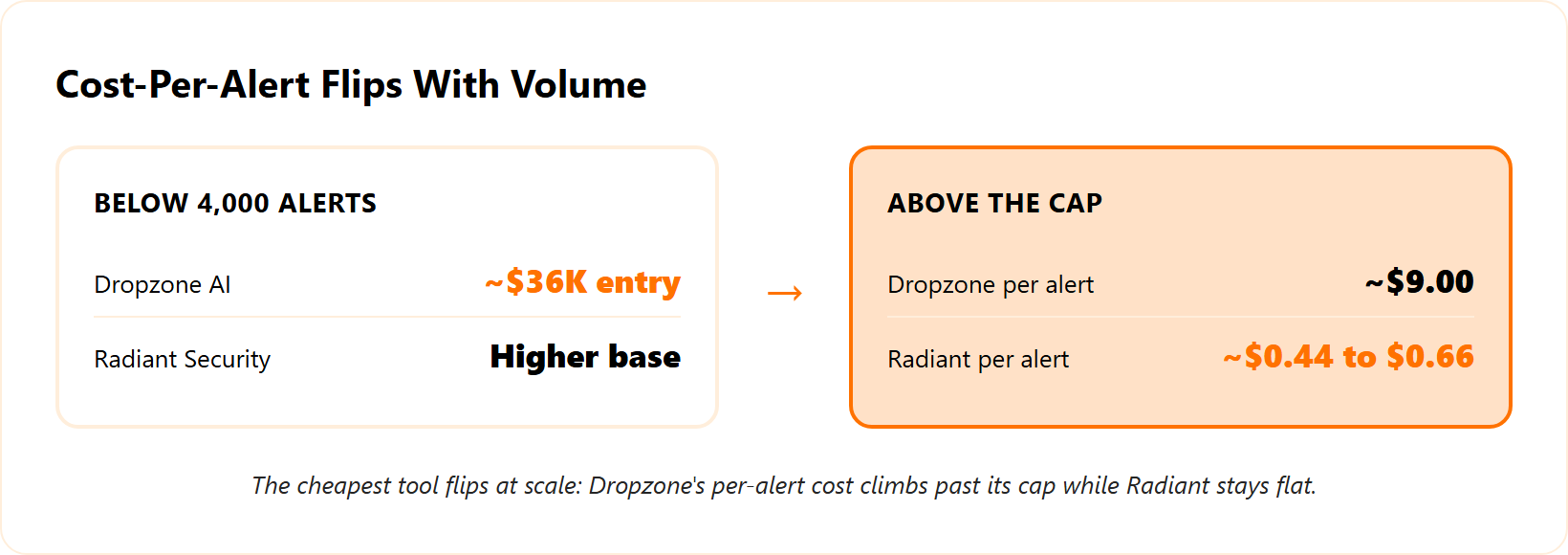
The verdict splits cleanly.
- Choose Dropzone when your alert volume sits below 4,000 a year, and you need a cheap entry point.
- Choose Radiant when alert volume is your main cost driver, because its unlimited model crushes per-alert economics at scale.
The unit-economics gap is stark. Above 4,000 alerts, Dropzone’s cap pushes its effective cost near $9.00 per investigation, while Radiant stays under $0.66. For a wider field, see our MDR vendors list and the CrowdStrike pricing breakdown.
⭐ The point most comparisons miss
Here is the contrarian piece. A lot of vendors I talk to pride themselves on reducing false positives, but all you do is, when they send you an event, you still have to take action on it. Cheap triage that hands you homework is not really cheap.
Proof of the gap shows up in customer tests. One customer ran a 12,000-investigation bake-off over two weeks, and the AI hit 99.3% agreement with their own SOC team, with an 11x faster mean time to investigate. Our piece on AI SOC red flags covers how to spot triage that quietly leaves work on your plate.
That gap between “triaged” and “resolved” is exactly where our UnderDefense Agentic AI SOC sits. We detect and respond with context, delivering 2-minute alert-to-triage and 15-minute escalation for critical incidents, so the alert does not bounce back to your team to action alone.
“When they escalate something, they include the context we need to understand the issue quickly.”
Verified User in Marketing and Advertising, Small-Business UnderDefense G2 Verified Review
See how UnderDefense Agentic AI SOC resolves a real incident on your stack.
Q7. Is Radiant Cheaper Than Keeping Your MDR?
Let me put a face on this, because the math only lands with a real scenario.
The situation
Picture a 1,200-employee pharma company. The CISO pays $320,000 a year to an MDR provider, runs a four-analyst SOC, and has no coverage after 6 PM. After a recent incident with slow, black-box reporting, she wants out.
The catch is that her MDR contract has eight months left, worth $213,000 in remaining value. Our analysis of why businesses switch cybersecurity providers covers exactly this friction.
⚠️ The complication
Two barriers usually freeze this decision. The first is the contract-exit cost, since walking away early means eating that remaining value. The second is the after-hours gap, because an in-house team of four cannot watch the night shift alone.
Most teams stall right here. The displacement looks smart on paper, and the exit penalty kills the business case.
✅ The resolution
Here is where the numbers move. Replacing a $300,000 MDR with Radiant Core plus Night Shift runs about $140,000 to $225,000 a year, a 33% to 67% reduction, and Radiant’s MDR Buy-Back Program then credits the remaining time on your current contract, which removes the exit barrier entirely.
Treat those figures as directional, and confirm them with sales, because no buyer has published actual deal terms.
The trade is real, and I will name it. You take operational ownership back in-house, so budget the tuning and after-hours coverage the MDR used to handle. Our take on outsourced versus in-house SOC weighs that shift honestly.
One more thing I have learned is that the ROI sometimes shows up in places you never modeled. One team told me, “We saved $300k during the first three months because it was a fraud that we accidentally discovered.” Visibility pays back in non-cyber ways too.
This is the exact switch we run with customers every week. Our MDR service helps teams exit an underperforming provider while keeping vendor-agnostic integration and concierge human response, so you are not locked to one EDR vendor to get coverage. You can check the numbers on our MDR pricing page.
“After they demonstrated the value of MDR, our management was motivated to act on it. Now, with their security monitoring and incident response, we know our endpoints are well-protected.”
Yaroslava K., IT Project Manager UnderDefense G2 Verified Review
Q8. What Is the Real ROI and Payback on an AI SOC Spend?
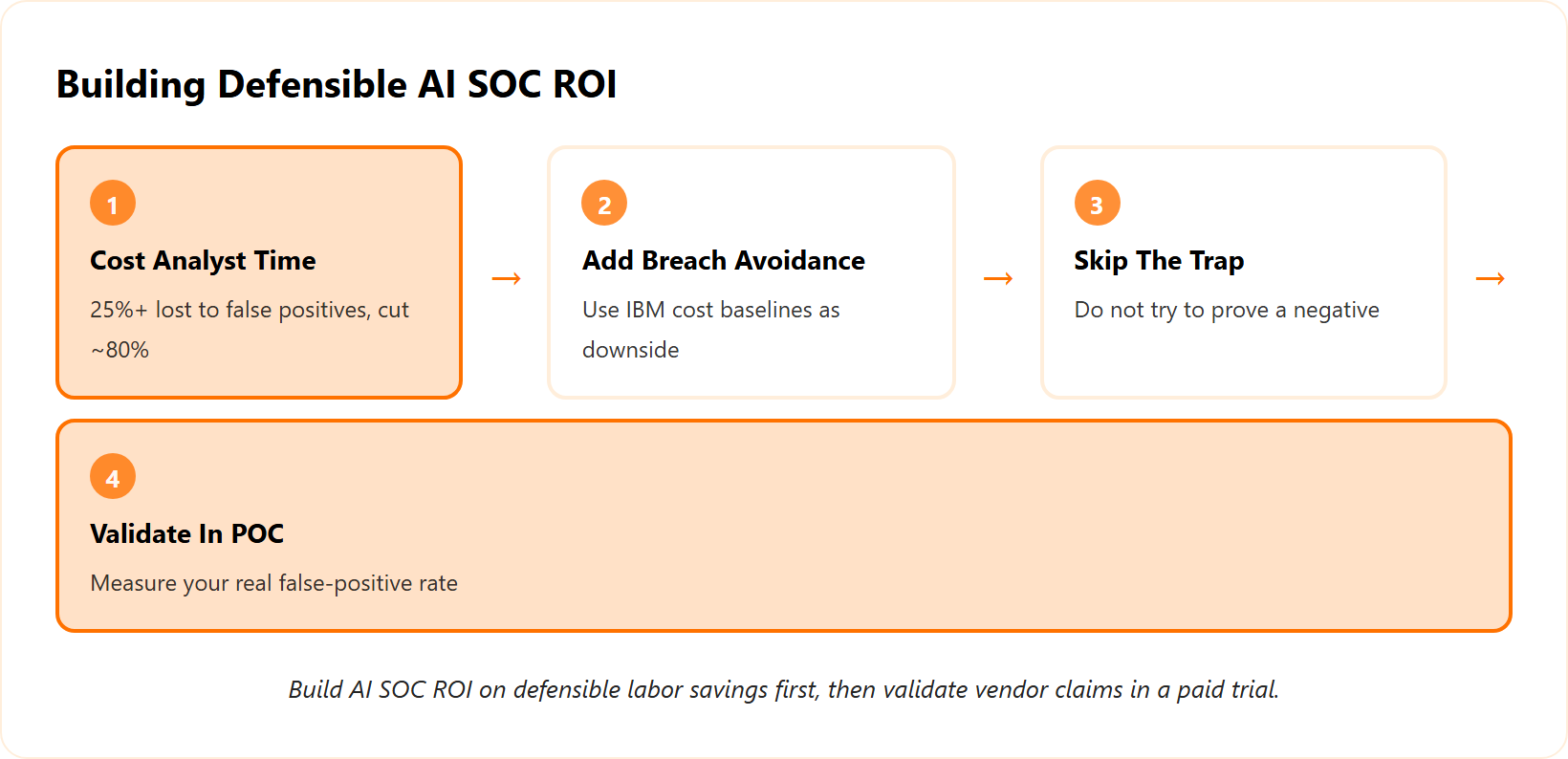
Most ROI decks for security tools lean on a number I refuse to trust: breach prevention. Proving you stopped a breach means proving a negative, and that is a trap. As one practitioner put it, it is difficult to point to the one thing that prevented a breach, so I would generally avoid that question.
Here is the honest model instead.
The labor case you can actually defend
Start with where analyst time goes. A 2025 ACM study on alert fatigue found that SOC analysts spend more than 25% of their time on false positives, and that 51% of SOC teams report being overwhelmed. That wasted time has a dollar figure you can calculate with our SOC cost calculator.
AI screening cuts that load hard. Research on machine-learning alert screening reports false-positive reductions around 80%, and a USENIX study documented the brutal “99% false positives” reality analysts face today.
How to turn that into payback
The model is simple. Take your analyst hours lost to false positives, apply the reduction, and cost it at a loaded analyst rate.
For a 1,000-employee team triaging 500 alerts a day, that recaptured capacity is large, on the order of tens of thousands of analyst-hours a year. Radiant claims an 830% three-year ROI and 99% noise reduction, and I would treat those as a starting point to validate, rather than gospel. Our checklist on SOC automation shows where the hours actually return.
 ROI Dashboard
⭐ The honest framing
Pair the labor math with downside avoidance using IBM’s 2025 breach-cost baselines as the denominator. And set expectations correctly, because Gartner’s 2025 MDR guidance is blunt: there will never be a fully autonomous SOC, so frame this spend as analyst augmentation, rather than headcount replacement. Our read on whether AI kills or saves your SOC team expands on that.
My advice for the buy is to require a measured false-positive rate in your paid trial. The price only earns its keep if the platform demonstrably removes false-positive labor in your environment.
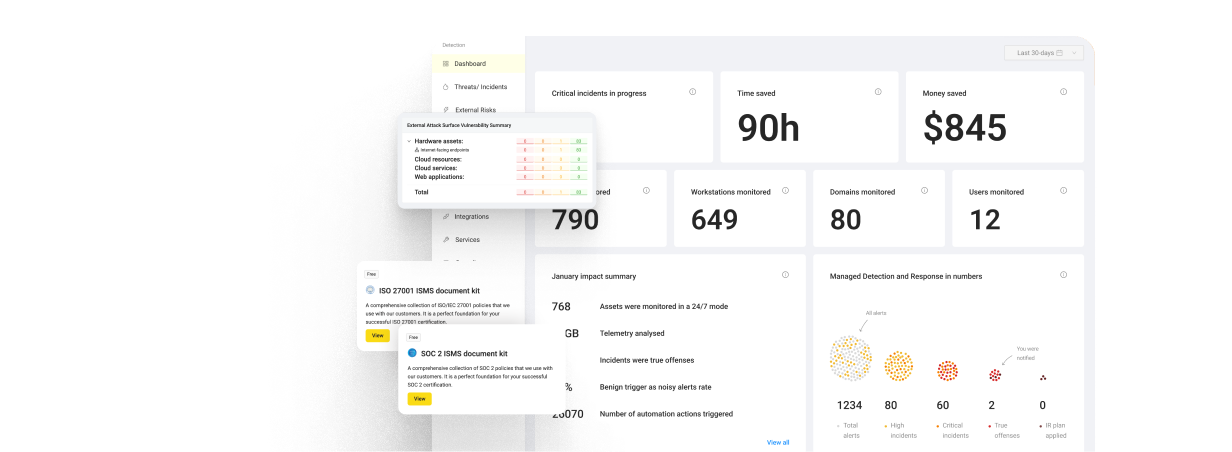
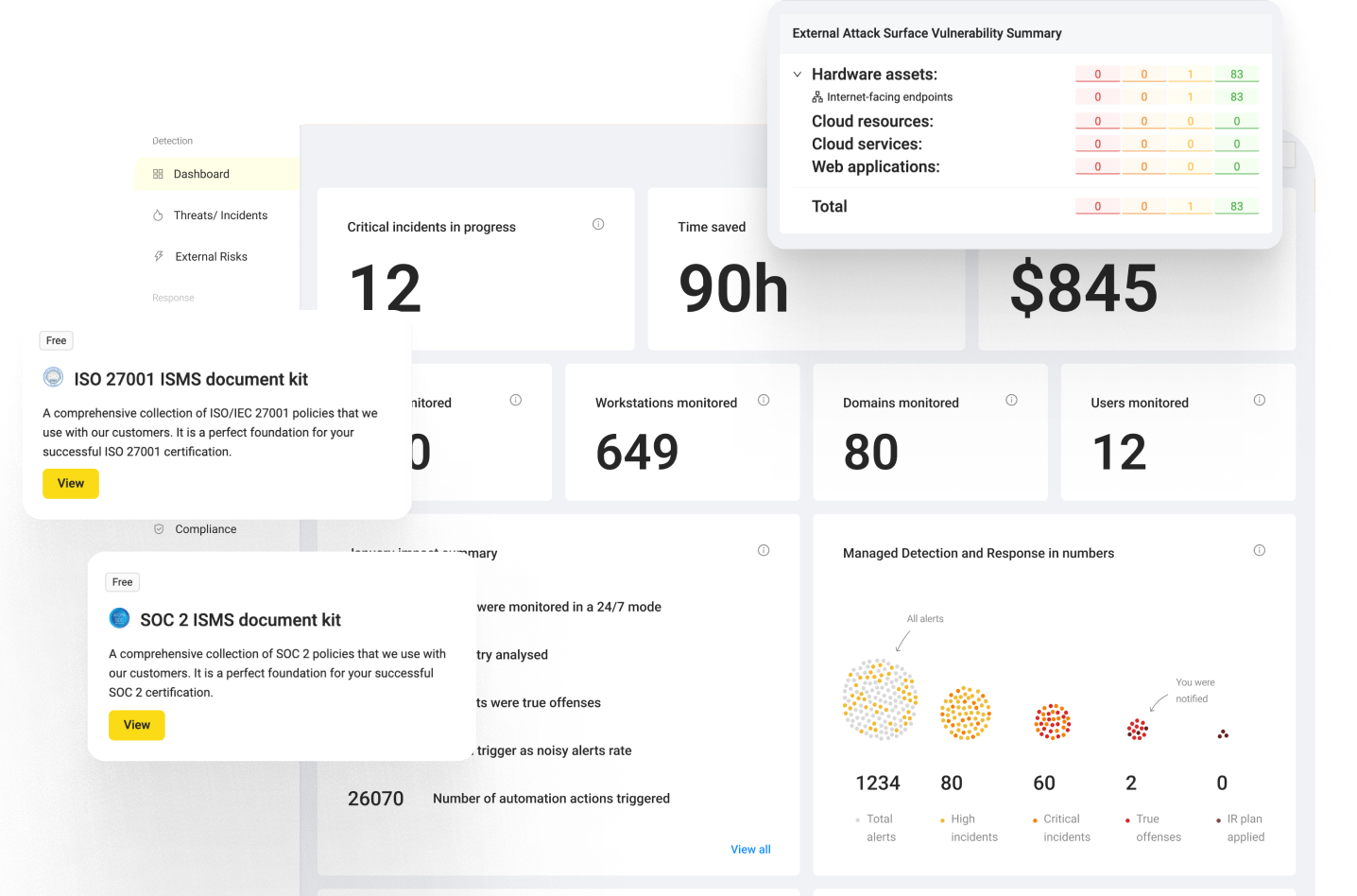
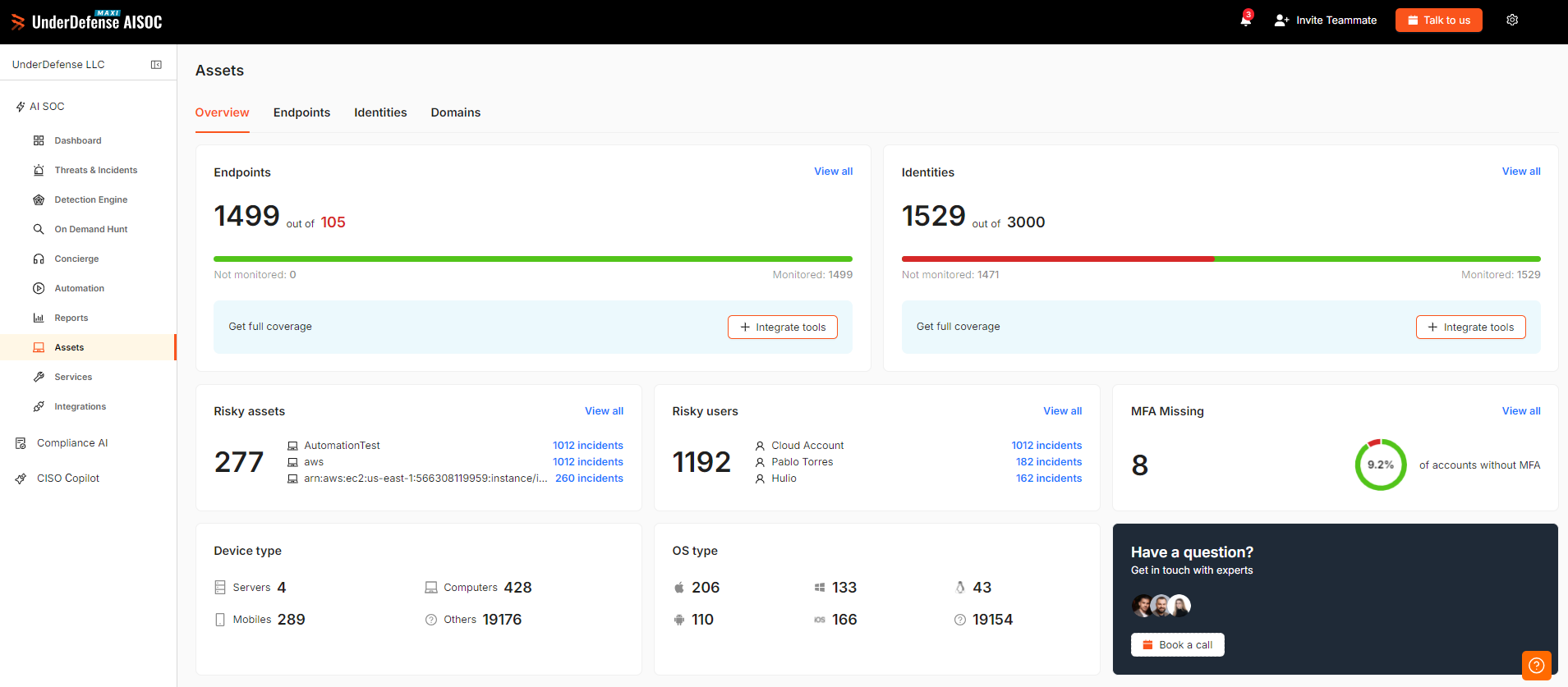
We built our UnderDefense Agentic AI SOC reporting around exactly this. The ROI dashboard shows analyst-time saved, cost saved, and the verdict trend over time, so a CISO walks into the board meeting with the labor math already done.
Q9. Am I Paying for a Black Box? The Real Risk Behind Agentic AI Pricing
Here is the question that keeps a CISO awake, and it has nothing to do with the subscription line. The scary part is the agent that goes off the rails over a quiet weekend.
I have watched this fear surface in real budget conversations. One security leader described an agent that “is getting a ton of tokens and is almost $24,000,” visible right there in the dashboard. The blunt version is this: what you budgeted for a full year of token capacity, an agent going awry could consume within a week.
💸 The unit economics nobody put in the budget
The cost risk is structural, rather than hypothetical. Agents are noisy by design, and that noise has a price.
- One misbehaving agent burned close to $24,000 in tokens inside a single environment.
- On average, every agent generates about 450% more network traffic than a human doing the same task.
This is exactly why Radiant’s flat-rate model matters. When the platform bills on use cases and seats, rather than consumption, a runaway agent cannot torch your annual budget in a weekend. The flat fee is a cost cap on chaos. Our take on AI SOC red flags covers what to scrutinize here.
I think about agents the way I think about teenagers. They are supremely intelligent, and they have no fear of consequence, so sometimes they do stupid stuff. You design the guardrails around that reality, which is a core theme in our guide to MDR for AI.
⚠️ The autonomous-SOC myth, and what you actually buy
Now the turn. The bigger black-box risk is believing the marketing that says the software runs your whole SOC. It does not. A fully autonomous SOC, from tier one to tier three, remains technically out of reach, and running software that quarantines users unsupervised is a real-world liability. Our analysis of whether AI kills or saves your SOC team unpacks that limit.
So you are buying augmentation, which means two things become the product you actually pay for.
- Explainability. Radiant includes an explainable audit trail, so every investigation decision is reviewable. The reasoning behind automated alert investigation is now mature enough to be patented, which signals the field is past pure black-box guesswork.
- Action control. As you move into the agentic world, you shift from plain access control to action control, verifying the agent’s behavior matches the intent you set.
 Automation Playbooks
In due diligence, ask the vendor to walk you through one full investigation trace, click by click. If they cannot show it, you are buying the box, rather than the outcome. Our phishing playbook shows what an auditable response flow should look like.
This is the line we hold with our UnderDefense Agentic AI SOC. The AI collects context, and your people decide, with human-in-the-loop concierge response standing between an agent’s suggestion and an action that touches production. That human checkpoint is the real answer to black-box anxiety.
Q10. How Do You Negotiate a Radiant Contract and What Should You Lock In at Signing?
A quote-only vendor hands you leverage you might not realize you have. With no public rate card, the terms you anchor in your first Order Form set the pattern for every renewal that follows. Here is what I would lock in before signing.
✅ Five levers to resolve before you sign
- Cap the Night Shift renewal uplift. Night Shift launched in April 2026 with no public market rate, so early buyers set the anchor. Demand a written cap, because AI-native tools have shown renewal increases of 20% to 37%.
- Pre-negotiate the per-use-case expansion rate. Pricing is per use case, so adding a new alert source mid-contract triggers a charge. Fix that unit price now, while you still have negotiating room.
- Budget your own cloud storage. Logs live in your S3 bucket at roughly $0.023 per gigabyte per month, a line that never hits the Radiant invoice.
- Lead with the MDR Buy-Back, then push further. Use the Buy-Back as your headline concession, and still negotiate a discounted platform fee on top of it.
- Start with a one-year term. The platform is young and shipping features fast, so avoid multi-year lock-in until it proves value in production.
Our cybersecurity budget guide for mid-market firms helps you frame these line items before the call. For the wider buying lens, see our MDR buyers guide.
⏰ Why the first contract is the one that matters
The renewal conversation for a flat-rate vendor is about use-case and seat growth, rather than alert volume. That means your expansion costs are baked in at signing, so the moment to win them is now, before you depend on the platform. Our piece on SLAs in cybersecurity shows which commitments to pin down in writing.
One tactical habit I lean on for any agent rollout is to write the implementation plan as a product requirements document first. It is way better to ask the vendor to write a PRD for how the agent will be deployed, because then you have a document you can edit and hold them to. Treat that PRD as part of your due diligence, much like our checklist on SOC automation.
My honest read is that opaque pricing is not malicious here, but early-stage. We took the other route at UnderDefense and publish pricing ranges on our MDR pricing page, which removes a lot of the adversarial back-and-forth before a single call. Less negotiation theater, more time spent on whether the fit is real.
Q11. When Is Radiant the Right Buy and When Is UnderDefense the Better Fit?
The honest answer is that both can be right, and the deciding factor is your alert volume and how much human response you need. Let me give you the decision rule I would use myself.
The governing logic
Radiant earns its place when alert volume makes per-alert pricing punishing, and you are exiting a $300,000-plus MDR. That is precisely where its flat-rate, unlimited model becomes decisive. The displacement and SIEM-tax stories are strong, and the unlimited economics are real. Our analysis of why businesses switch cybersecurity providers covers that trigger.
The gap opens elsewhere. A lot of vendors pride themselves on reducing false positives, but when they send you an event, you still have to take action on it. Triage that ends with an alert in your lap is only half the job.
⭐ Matching the buyer to the fit
| Buyer profile | Radiant fit | UnderDefense fit |
|---|---|---|
| Need detect and respond with human action | Software triage, you action it | 1.1 Strong: concierge human response, 2-minute alert-to-triage, 15-minute escalation for critical incidents |
| High, unpredictable alert volume | Strong: unlimited flat-rate | Strong: managed coverage on your stack |
| Want vendor-agnostic integration | Connects broadly via S3 ingest | Strong: vendor-agnostic across your existing tools |
| Want transparent, published pricing | Quote-only, no public rate | Strong: published price ranges |
| Exiting a $300K-plus MDR | Strong: MDR Buy-Back | Strong: migration plus human response |
✅ My take
The category did something lazy: everyone added “AI” to the deck, which opened a window of distrust. The work we cared about was rebuilding the SOC and the outcomes underneath, rather than renaming the product. Being a human is a flex in 2026, and the human ally is the part software cannot replace. Our MDR service is built around that principle.
“Before MAXI, we were slightly overwhelmed with alerts and often unsure of how to prioritize or respond to them. Now, not only do we get alerts, but we also get clear guidance on how to handle them.”
Valeriia D., Marketing Specialist UnderDefense G2 Verified Review
“They truly became our go-to cybersecurity ally, always by our side to solve problems and resolve incidents on our behalf.”
Oleksii M., Mid-Market UnderDefense G2 Verified Review
That “AI SOC plus Human Ally” model is what our UnderDefense Agentic AI SOC was built to deliver: vendor-agnostic detection, transparent pricing, and analysts who respond with context.
The question I am sitting with for the next 18 to 24 months is this: as agents take over more of the triage, will buyers pay a premium for the human who owns the consequence, or will price pressure push that human out of the loop right when we need them most? I would genuinely like to hear where you land on that. If you want to talk it through, you can always reach our team.
See how the UnderDefense Agentic AI SOC investigates, triages, and resolves real alerts.
1. How much does Radiant Security cost in 2026?
Radiant Security publishes no public pricing. The product is quote-only, with no free tier and no self-serve checkout. The fee is set by two things: the number of use cases and the number of analyst seats, billed as a flat annual amount that covers unlimited alert volume and log management.
Based on buyer profiles, we see these directional ranges:
- Entry or small team: roughly $60,000 to $100,000 per year.
- Mid-market (500 to 2,000 employees): roughly $100,000 to $175,000 per year.
- Enterprise: roughly $150,000 to $300,000 or more per year.
These are estimates, not quotes, so confirm every number with Radiant before building a board slide. The flat model trades consumption volatility for predictability, which is what finance wants when it asks where the ceiling sits. We lean the same way with published ranges on our MDR pricing page, so buyers avoid renewal surprises.
2. What does Radiant Security's price actually include?
Your price buys one core platform, the Adaptive AI SOC. There are no Essentials, Pro, or Enterprise tiers to unlock. Differentiation happens through how you configure use cases, rather than by climbing a SKU ladder.
Included at no extra charge:
- Integrated log management with unlimited retention.
- One-click response.
- A full explainable audit trail.
The only paid add-ons are managed-service overlays, Night Shift after-hours coverage and a Vacation Coverage Package, both launched in April 2026. Because the AI is the entire product, there is no separate AI module fee and no per-query GenAI charge. That is a genuine structural difference from vendors who bolt an AI tax onto a legacy SKU.
We took a similar path with the MAXI AI platform, which is AI-native with no bolt-on AI fee and adds vendor-agnostic integration across your existing stack.
3. How does Radiant's per-use-case, per-user pricing model work?
Picture two dials on the invoice. One turns for use cases, the other for analyst seats. That is the whole pricing machine.
- A use case is an alert-source type, such as endpoint alerts or email phishing reports.
- An end user is a licensed analyst seat, a human who reviews escalations and clicks to respond.
The key point for your wallet is that alert volume and log ingestion are explicitly excluded from billing. That breaks from per-alert or per-gigabyte SIEM and SOAR pricing, and it buys real cost predictability. If an attack storm triples your alerts on Tuesday, your bill does not move.
The trap sits at scope expansion. Adding a fifth use case mid-contract triggers a renegotiation, so budget for it before you sign. We frame our own UnderDefense Agentic AI SOC the same way, where AI collects context and your people decide.
4. What hidden costs are not on the Radiant Security invoice?
The invoice can look clean while real costs land elsewhere. Four costs hit your budget without appearing on a single Radiant line item:
- Your own cloud storage: logs sit in your S3 bucket at about $0.023 per GB per month, roughly $10,000 to $42,000 per year at scale.
- Senior-analyst tuning labor: several weeks of skilled time before the platform reaches full effectiveness.
- Night Shift activation: it cannot start until full deployment is complete.
- Use-case expansion: adding alert sources mid-contract triggers a new commercial event.
The storage point is a feature and a cost at once. Keeping logs in your cloud protects data ownership, and you carry that bill directly. The tuning burden is the one lean teams underestimate most. We absorb that work through managed tuning and concierge response in our MDR service, moving the hidden cost off your headcount.
5. How much can Radiant's log management save on the SIEM tax?
Radiant bundles log management at no extra license cost, storing logs in your own Amazon S3 archive and running search and triage on top. Radiant says this cuts logging costs by up to 85% versus a legacy SIEM.
Apply that to a real number. For a team paying $300,000 a year for Splunk, an 85% reduction implies a figure near $45,000. We would not put that on a board slide, because two honest adjustments bring it back to earth:
- You still pay your own cloud storage, roughly $1,000 a year at 100GB per day and far more at scale.
- The all-in platform figure lands closer to $80,000 to $175,000 once platform and log management combine.
The 85% headline describes the storage layer, rather than your total bill. We cut that same storage tax with human analysts kept on the data through our managed SIEM, while preserving your data ownership.
6. Is Radiant Security cheaper than Dropzone AI or CrowdStrike Falcon Complete?
It depends entirely on your alert volume, and the sticker price hides the real story.
- Dropzone AI is cheapest on entry cost, around $36,000 per year, but caps near 4,000 investigations, pushing its effective cost near $9.00 per alert above that line.
- Radiant Security wins on cost-per-alert at scale, roughly $0.44 to $0.66, because its flat-rate model is unlimited.
- CrowdStrike Falcon Complete bundles EDR, human MDR, and a breach warranty, but runs near $1M over three years.
The point most comparisons miss is that cheap triage which still hands you the action is not really cheap. One customer bake-off across 12,000 investigations showed 99.3% agreement with their SOC team and an 11x faster mean time to investigate. We detect and respond with context through our MDR service, delivering 2-minute alert-to-triage and 15-minute escalation for critical incidents.
7. Is Radiant cheaper than keeping my current MDR?
For the buyer Radiant targets most, directionally yes. Replacing a $300,000 per year MDR with Radiant Core plus Night Shift runs about $140,000 to $225,000 per year, a 33% to 67% reduction.
Two things make the switch work:
- The MDR Buy-Back Program credits the remaining time on your current contract, which removes the exit-penalty barrier.
- The flat model brings predictable spend with unlimited alert volume included.
The trade is real. You take operational ownership back in-house, so budget the tuning and after-hours coverage the MDR previously handled. Treat the figures as directional and confirm them with sales, since no buyer has published actual deal terms. We help teams exit underperforming providers while keeping vendor-agnostic integration and concierge human response through our guidance on switching providers, so you are not locked to one EDR vendor.
8. What is the real ROI and payback on an AI SOC spend?
The honest ROI case rests on labor and risk, rather than breach-prevention math, because proving a negative is a trap.
- Peer-reviewed research shows analysts spend more than 25% of their time on false positives.
- AI screening can cut that load by around 80%, time you can cost out directly.
- Pair that with IBM breach-cost baselines for downside avoidance.
Radiant claims an 830% three-year ROI and 99% noise reduction. We would treat vendor figures as a starting point, not gospel. Set expectations correctly too, because a fully autonomous SOC remains out of reach, so this spend is analyst augmentation rather than headcount replacement.
Our advice is to require a measured false-positive rate in your paid trial. We built our UnderDefense Agentic AI SOC reporting around analyst-time saved and cost saved, so a CISO walks into the board meeting with the labor math already done.