






Your endpoint detection and response (EDR) renewal quote just arrived with the vendor’s XDR tier bundled into the line, and a second vendor wants you to swap platforms before Q1. Before anyone signs, someone has to answer who investigates the extra correlated alerts at 3 a.m., because an unread alert during a live intrusion turns into a breach report.
Here is how seven XDR platforms answer the same seven questions, and what each one leaves to your team.
TL;DR
- Seven XDR platforms from CrowdStrike, Palo Alto Networks, Microsoft, SentinelOne, TrendAI, Sophos, and Cisco, compared one way.
- Seven questions to ask during a demo, covering telemetry, third-party data, retention, tests, response, identity, and staffing.
- How to read the 2025 MITRE ATT&CK Evaluations, which describe results and rank no vendor.
- Which platforms fit a single-vendor or a mixed stack, and who works their alerts around the clock: the vendor’s own service or a team that covers a mixed stack.
Table of contents
- Where UnderDefense Fits Next to an XDR Platform
- What an XDR Platform Correlates and What It Leaves to Your Team
- Seven Questions Before You Sign an XDR Contract
- XDR Vendors and Platforms Compared Side by Side
- The 7 Best XDR Platforms for 2027
- Native or Open XDR: Which XDR Solutions Fit Your Stack
- Frequently Asked Questions
This guide compares seven extended detection and response (XDR) platforms for security leaders who run CrowdStrike, SentinelOne, or Microsoft Defender on endpoints, with Sentinel or Splunk behind them. Every platform gets the same seven questions, the same entry template, and one row in the same table, built from each vendor’s own pages read in November 2026.
Disclosure: UnderDefense publishes this guide. UnderDefense operates XDR platforms and sells none, so it is not ranked, scored, or listed in the table.
See who works your XDR alerts at 3 a.m.
Where UnderDefense Fits Next to an XDR Platform
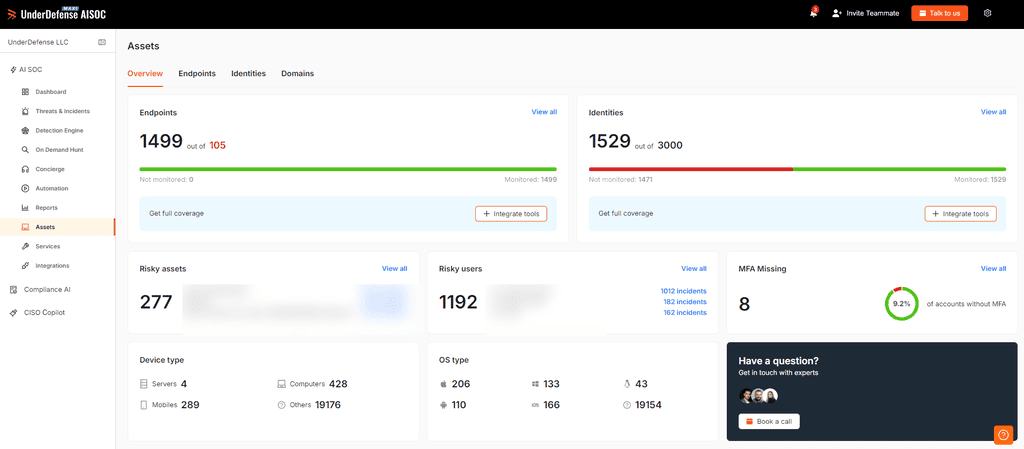
The UnderDefense Agentic AI SOC gives the XDR you pick a 24/7 operating team, so correlated alerts get worked at night while your own people sleep.
UnderDefense is rated 5.0 out of 5 from 83 reviews on G2 as of November 2026.
The Agentic AI SOC works on top of CrowdStrike, SentinelOne, Microsoft, Palo Alto, Okta, Splunk, and Elastic, so a change of XDR vendor at renewal does not change who works your alerts. Your team keeps the consoles it knows, and the night shift works inside them.
Four things change for your on-shift team when it adds this layer:
- One standard holds on every shift, so the 3 a.m. alert gets the same depth as the 10 a.m. one.
- Conclusions are verified: a second agent checks each one against the evidence, and before anyone escalates, analysts confirm suspicious activity with the affected user over Slack, Microsoft Teams, email, or SMS.
- Routine work drops off your desk: AI agents investigate every alert the platform raises, and analysts decide on escalation and containment.
- Your data stays under your control: there is no training on client data, and deployment can be SaaS, hybrid, on-premises, or air-gapped.
The user check keeps a legitimate late-night login from turning into a locked-out executive. Every investigative step is visible and auditable, and the platform connects to 250+ integrations.
Two separate clocks describe how fast an alert gets worked. Triage takes about 2 minutes from alert, and critical incidents are escalated within 15 minutes, so a critical alert at 3 a.m. has an analyst on it within that window.
The case of a US government financial organization with an IT team of 4 and 1,200+ endpoints shows the result.
According to that case study, “Throughout the first 11 months, 12,500 alerts were identified, analyzed, and resolved, with 1,500 being of high or critical risk,” and the time to handle high and critical alerts “was 9 minutes.” For an IT team of 4, that is roughly 37 alerts a day that someone else investigated.
A VP of Technology at an enterprise kept the stack in place as the estate grew:
“We went from 840 to 2,500+ endpoints across five countries without growing the security team.” “SentinelOne, Microsoft Defender, and our 4TB Elastic SIEM deployment stayed in place.” Oleksandr M., VP of Technology, Enterprise (> 1000 emp.), G2
Rollout runs in two stages: live within 10 days, then full onboarding with customized detections, which takes 30 days. Plan that month with your analysts from the start.
Published pricing starts at $11 per asset per month, and each tier is quoted for your environment. UnderDefense is ISO 27001 certified, and Clutch named it a Top Cybersecurity Company in 2025.
Plan 24/7 alert coverage for your XDR with UnderDefense
What an XDR Platform Correlates and What It Leaves to Your Team
An XDR platform pulls telemetry from endpoints, identities, cloud accounts, email, and network sensors into one data store, then links related events into a single incident. The category basics, with EDR, XDR, and MDR compared, explain where each tool stops and where managed detection and response (MDR) services begin.
The useful split is between native and open XDR. Native XDR correlates the vendor’s own sensors, so a CrowdStrike or Microsoft estate gets deep context with little setup work. Open XDR leans on connectors and a data layer like a security information and event management (SIEM) tool, so a mixed estate of Okta, Palo Alto firewalls, and SentinelOne can still land in one console.
Native correlation follows the licenses you hold, because the platform links only the sensors it can see. An identity product left out of the quote keeps identity alerts outside the incident, which is where a stolen session hides.
Most XDR tools now ship both styles at once. CrowdStrike, for example, adds third-party ingest next to its own sensor, and Sophos pairs its endpoint with hundreds of integrations, according to each vendor’s product page.
Correlation decides which events belong together and how severe the bundle looks. Whether the login from a new country was your CFO on a trip or a stolen session is a separate call, and it needs a person who can ask the user.
Here is what usually stays with your team after the platform goes live:
- Confirming whether flagged activity was the real user
- Choosing containment that will not stop a production system
- Tuning detections to your own environment
- Owning alerts outside business hours
The platform also knows little about business timing. It cannot tell that the finance file server is closing the quarter this week, so the moment to isolate it stays a human decision.
Each of those tasks takes analyst hours, and an on-shift team cannot cover them around the clock. The questions below test how much of that work each platform takes on, and how much it hands back.
Seven Questions Before You Sign an XDR Contract
Ask every vendor the same seven questions during a demo, in the same order, and write the answers into one sheet. The comparison table later in this guide uses exactly these seven. Write down what each vendor says it will need from your team, because those needs become line items later.
1. Which Telemetry Does the Platform Collect Natively?
Ask for the list of first-party sensors: endpoint, identity, cloud, email, and network. A platform that needs a separate product for identity changes your 2027 budget line, because the quote you are comparing may cover only the endpoint. Readers on Microsoft 365 E5, Microsoft’s top enterprise license, may already own several of these sensors, which lowers the cost of a native approach.
2. How Does Third-Party Data Get In, and What Does It Cost?
Ask which of your current tools have supported connectors and how ingestion is priced. CrowdStrike, for example, publishes a free daily ingest allowance on its product page, so a heavier log volume from Okta or your firewalls may need a separate SIEM module.
3. How Long Is Data Kept, and Where Does It Sit?
Retention varies by tier and decides how far back you can investigate, so ask for it per tier with the storage region. SentinelOne’s pricing page, for example, lists a different retention period for each tier, which matters for an intrusion that started last quarter.
4. What Does Independent Test Evidence Show?
A common public reference is the 2025 MITRE ATT&CK Evaluations, published December 10, 2025, so ask whether each platform took part. MITRE emulated Scattered Spider, its first cloud adversary scenario, and Mustang Panda, and for the first time it tested the Reconnaissance tactic.
MITRE states that “the evaluations do not rank vendors but provide objective, evidence-based results.” Its results page lists 11 participants, and Microsoft, Palo Alto Networks, and SentinelOne each published their own reason for sitting this round out. Read the results per step, and treat any “#1” claim as marketing.
5. Which Response Actions Run Automatically, and Who Approves Them?
Ask which actions fire without a person and where the approval queue lives. Microsoft documents an Action center for approving pending remediation, which tells you how much control your team keeps when the platform isolates a production server.
Ask a reference customer for last month’s log of automated actions, or check it at the end of the proof of concept, so you can see what ran and who signed off.
6. How Deep Is Identity and Cloud Coverage?
Ask whether identity detection reads Entra ID or Okta directly, and whether cloud detection covers the control plane in AWS or Azure: account-level actions such as creating users, changing permissions, or turning off logging.
MITRE’s 2025 protection tests included an AWS compromise and an identity provider attack, which shows where attackers now start. Ask the vendor to show one detection from each in the demo environment.
7. Who Operates the Platform 24/7?
Ask who reads the alert at 3 a.m. and how the answer reaches your team. Buyers who cannot staff nights usually add the vendor’s own MDR or an operating team that works across vendors, and the choice decides whether correlated alerts are worked or simply stored.
If every sensor you run comes from the XDR vendor, its own managed service covers what it sees. If your stack mixes vendors (Okta, Palo Alto firewalls, SentinelOne, an Elastic SIEM), ask whether that service works alerts from tools it does not sell. That is where an AI SOC layer across vendors fits.
💡 During the proof of concept, check the queue on Monday morning and count the weekend incidents nobody touched. That count shows whether nights and weekends will be covered.
XDR Vendors and Platforms Compared Side by Side
The table answers the seven questions in short form, with prices as each vendor published them on November 13, 2026. Read it together with the entries, which explain each cell.
| Vendor | Best for | Native telemetry | Third-party data | 2025 MITRE ATT&CK Evaluations | Vendor managed service | Published pricing |
|---|---|---|---|---|---|---|
| CrowdStrike Falcon Insight XDR | Falcon endpoint estates | Endpoint, identity, cloud, mobile | Free daily ingest allowance | Took part | Falcon Complete | Yes, per device yearly |
| Palo Alto Networks Cortex XDR | Palo Alto firewall estates | Endpoint, network, cloud, identity, email | Single data lake, REST API | Did not take part | Yes, vendor-run | Quote only |
| Microsoft Defender XDR | Microsoft 365 E3 and E5 | Endpoint, identity, email, apps | Through Microsoft Sentinel | Did not take part | Defender Experts for XDR | Yes, per user monthly |
| SentinelOne Singularity Platform | One-agent endpoint and identity | Endpoint, cloud, identity | Through AI SIEM | Did not take part | MDR add-on | Yes, per endpoint yearly |
| TrendAI Vision One | Broad native sensors | Endpoint, network, identity, email, cloud, data | Native and third-party in one console | Took part | MDR | Quote only, credits |
| Sophos XDR | Mixed stacks, long retention | Endpoint, email monitoring, cloud | Two-way integrations | Took part | Sophos MDR | Quote only |
| Cisco XDR | Cisco network and email estates | Network, endpoint, email, cloud, identity | Curated, Advantage tier up | Did not take part | Premier tier | Quote only |
The MITRE column records participation only. A “Did not take part” cell reflects a published decision by the vendor or its absence from MITRE’s list, and a “Took part” cell means results exist to read, with no score attached.
💡 Three of the seven list prices, and the units differ: per device, per endpoint, and per user. A 1,500-person company with 1,800 endpoints should convert every quote to the same unit before finance compares the lines.
The 7 Best XDR Platforms for 2027
The seven best XDR solutions below appear in a fixed order that carries no ranking. Each entry uses the same labels, so you can compare one field across all seven.
1. CrowdStrike Falcon Insight XDR: Best for Falcon Endpoint Estates That Want Published Prices
Overview: Falcon Insight XDR adds identity, cloud, and mobile telemetry to CrowdStrike’s EDR, on the Falcon sensor that many readers of this guide already own.
If your renewal quote comes from CrowdStrike, this is likely the XDR tier bundled into the EDR line. Ask which modules the bundle includes and which ones arrive as add-ons.
Key capabilities:
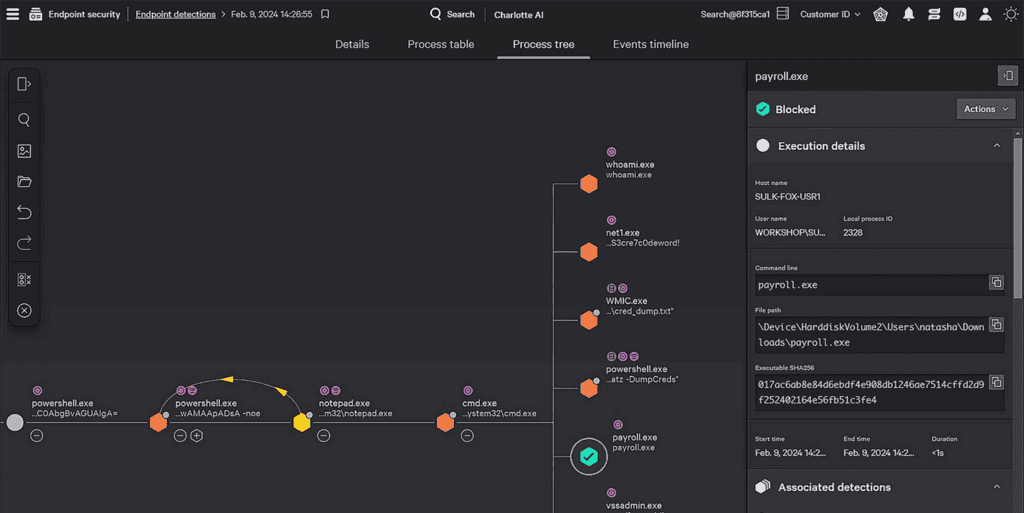
- Falcon Fusion SOAR for automated response playbooks, built into the console
- Real Time Response for remote system access
- Charlotte AI triage assistance
- Third-party ingest in the same console
These capabilities sit in one console, which matters when the same two people handle endpoint and identity alerts. When an incident crosses from a laptop to an Okta account, the analyst stays in one place.
Native telemetry and third-party data: Endpoint, identity, cloud, and mobile telemetry come from CrowdStrike’s own modules. The product page offers 10GB/day of free third-party ingest, and a separate SIEM module covers heavier volumes. The page also mentions context from “identity, cloud, mobile and data protection modules,” so each module you license adds signal.
2025 MITRE ATT&CK Evaluations: CrowdStrike took part in both the detection scenarios and the protection tests. MITRE’s results page shows, step by step, which parts of the Scattered Spider and Mustang Panda scenarios the product detected, and its outcome in each protection test, including the AWS and identity provider tests.
Response and automation: Real Time Response gives analysts direct host access, and Falcon Fusion runs automated workflows. The product page does not detail approval steps, so ask how a containment action gets signed off.
Pricing: On November 13, 2026, CrowdStrike listed Falcon Enterprise at $184.99 per device, billed annually, as the lowest bundle with EDR included. Falcon Go at $59.99 and Falcon Pro at $99.99 per device leave EDR out, so they do not cover XDR. Falcon Complete, its managed service, is priced through sales, so a 24/7 option means a second quote.
Pros:
- Prices you can model before a sales call
- A 15-day free trial with no card
- Vendor-run MDR with a breach warranty
Cons: EDR starts at the Enterprise bundle, and Identity Protection and the SIEM module are add-ons outside every listed bundle, per the pricing page. Your real quote will likely carry more than one line.
Who should skip it: Teams whose endpoints run another vendor’s agent and do not plan to switch. The platform is built around the Falcon sensor, so the value assumes it is deployed.
2. Palo Alto Networks Cortex XDR: Best for Palo Alto Firewall Estates That Want Wide Native Telemetry
Overview: Cortex XDR connects data from endpoint, network, cloud, identity, and email sources, and it suits teams that already run Palo Alto firewalls.
For a security lead weighing a platform swap at renewal, Cortex XDR is often the second vendor’s pitch. Ask which of the listed sources need extra Cortex modules before the quote covers them.
Key capabilities:
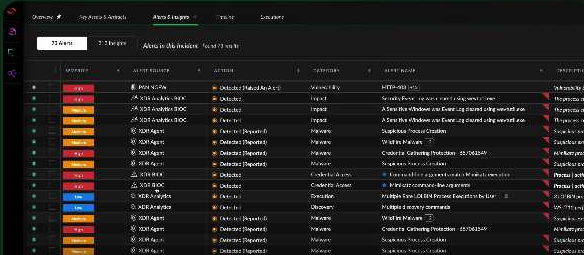
- Single data lake across Cortex modules
- AgentiX AI agents for investigation and response
- Custom behavioral indicator (BIOC), indicator of compromise (IOC), and correlation rules
- One sensor across endpoint and extended modules
A firewall team gains the most here, because network data from the same vendor arrives without extra parsing. The same data lake also serves the wider Cortex modules, so later purchases add to one store.
Native telemetry and third-party data: Telemetry from endpoint, network, cloud, identity, and email lands in one data lake. The FAQ describes forwarding alerts to Google Security Operations and pulling logs through the Cortex XDR REST API.
2025 MITRE ATT&CK Evaluations: Palo Alto Networks did not take part in 2025. In its own statement, the company said it decided “to adjust the focus of our engineering and testing resources,” so ask for the other independent tests it cites.
Response and automation: The Cortex AgentiX Assistant runs AI agents for investigation and response, per the product page. Ask how many of those actions need an analyst’s approval before they touch a production host.
Pricing: Quote only on November 13, 2026. Plan for a demo and a sales cycle before you can put a number in the 2027 budget. Ask for endpoint licenses and data lake charges as separate lines, so you can set them against published prices from other vendors.
Pros:
- Native telemetry across endpoint, network, cloud, identity, and email
- Strong fit with Palo Alto firewalls
- Vendor-run managed detection inside your tenant
Cons: The broader features sit on the wider Cortex Platform and its single sensor, so full value assumes more Palo Alto modules. There is no public price to model.
Who should skip it: Teams with no Palo Alto footprint that want a single, fixed per-device price. They will have more to buy before the platform reaches its full value.
3. Microsoft Defender XDR (Microsoft Defender Suite): Best for Microsoft 365 E3 and E5 Organizations
Overview: Microsoft now sells its XDR inside the Microsoft Defender Suite, while Microsoft Learn still calls the layer Microsoft Defender XDR. It “coordinates detection, prevention, investigation, and response across endpoints, identities, email, and applications.”
Many readers of this guide already pay for parts of it through Microsoft 365 E5. In that case the renewal question shifts from buying XDR to staffing the queue it already produces.
Key capabilities:
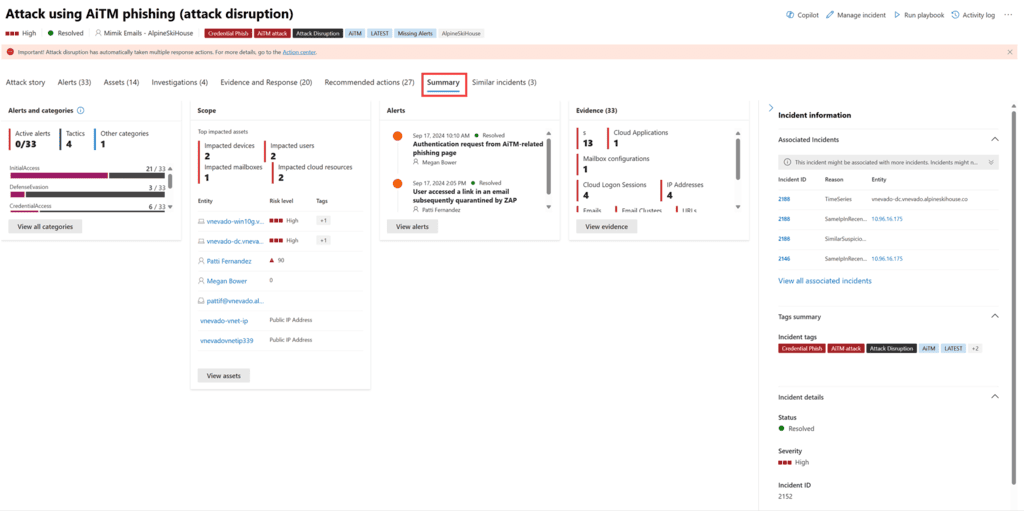
- Automatic attack disruption across workloads
- Email and collaboration coverage, including Teams and SharePoint
- Action center approval queue with an audit log
- Advanced hunting across licensed Microsoft products
For a company already on Microsoft 365, most of these features are licensing decisions, which keeps rollout short. Depth follows the licenses you hold, so check which Defender plans your tenant already has.
Native telemetry and third-party data: Defender for Endpoint, Identity, Office 365, and Cloud Apps feed one incident queue. Microsoft Learn notes it correlates “signals from Microsoft security products that you have licensed,” and third-party data usually arrives through Microsoft Sentinel. Learn also lists Defender for Cloud and Entra ID Protection as signal sources.
2025 MITRE ATT&CK Evaluations: Microsoft did not take part in 2025. Its own post said the decision “allows us to focus all our resources on the Secure Future Initiative and on delivering product innovation.”
Response and automation: Automatic attack disruption applies containment to stop in-progress attacks, and the Action center holds pending remediation for approval. Advanced hunting keeps 30 days of raw signals, so older investigations need data in Sentinel.
Pricing: On November 13, 2026, Microsoft listed the Defender Suite at $12.00 per user per month, paid yearly, with Microsoft 365 E3 as a prerequisite. Endpoint coverage runs “up to 5 devices per user license” and excludes servers, so count servers as a separate line.
Pros:
- Low added cost for E3 and E5 tenants
- Native email and identity coverage
- Built-in approval queue for remediation
- Defender Experts for XDR as a vendor service
Cons: Microsoft’s FAQ says Defender XDR “is not a standalone offering,” so it comes only with qualifying licenses. Correlation depth follows the Microsoft products you hold.
Who should skip it: Organizations outside Microsoft 365, or those whose endpoints and identity sit mostly with other vendors. E5 tenants that keep it still need someone to work its incident queue at 3 a.m.
Put a 24/7 team on the XDR you choose
4. SentinelOne Singularity Platform: Best for Teams That Want One Agent and Stated Retention per Tier
Overview: Singularity combines endpoint, cloud, identity, and AI security in one console on a shared data layer. Its pricing page states retention per tier, which few vendors publish.
A team that already runs SentinelOne on endpoints often hears the XDR pitch at renewal. Ask which tier your current contract sits on, because identity coverage and retention change between tiers.
Key capabilities:
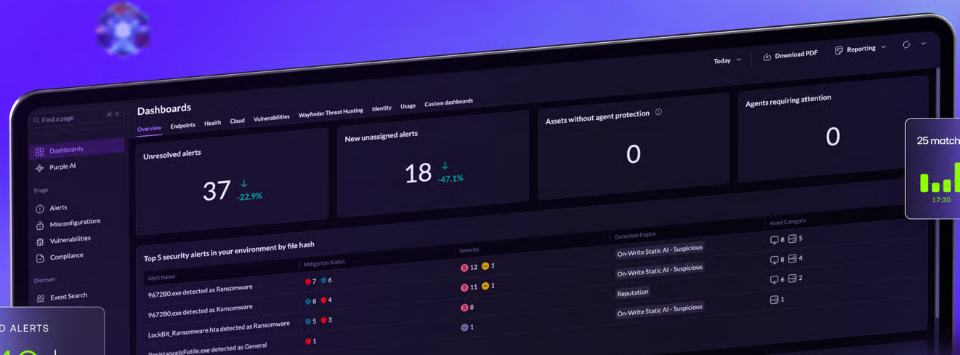
- One lightweight agent for endpoint and identity
- Purple AI for investigation
- Hyperautomation for response workflows
- Remote Shell for direct host access
- Managed threat hunting on Singularity Commercial
The single agent matters when your team has to deploy and patch it across 1,500 laptops and servers. One agent also means one update cycle to schedule across the estate.
Native telemetry and third-party data: Endpoint, cloud, and identity come from SentinelOne’s own agent and modules. The platform FAQ says it “ingests and normalizes third-party data through AI SIEM,” and Hyperautomation connects those signals to response workflows in other tools.
2025 MITRE ATT&CK Evaluations: SentinelOne did not take part in 2025. Its own post said it chose to “prioritize our product and engineering resources on customer-focused initiatives.”
Response and automation: Signals flow to Purple AI for investigation and Hyperautomation for response, per the platform page. Remote Shell gives analysts direct access to a host during an investigation.
Pricing: On November 13, 2026, SentinelOne listed Singularity Complete at $179.99 per endpoint per year and Singularity Commercial at $229.99, for 5 to 100 workstations. Purchases go through a partner whose price applies, so expect your quote to differ.
Pros:
- Published prices and retention per tier
- One agent across endpoint and identity
- Managed threat hunting included on Commercial
Cons: The entry tier keeps 14 days of data, and identity detection plus 90-day retention start at Commercial. Managed detection and response is an add-on.
Who should skip it: Teams that need to buy direct from the vendor, or that need long retention without a SIEM. Listed prices cover small workstation counts, and partners set the final price.
5. TrendAI Vision One: Best for Enterprises That Want Native Email, Network, and Cloud Sensors
Overview: Trend Micro now brands itself TrendAI, and its platform is TrendAI Vision One. The security operations page lists native sensors for endpoint, network, identity, email, cloud, and data.
The rename matters for procurement, since its MDR page still says Trend Micro. Confirm the company and product names on the quote before finance signs.
Key capabilities:
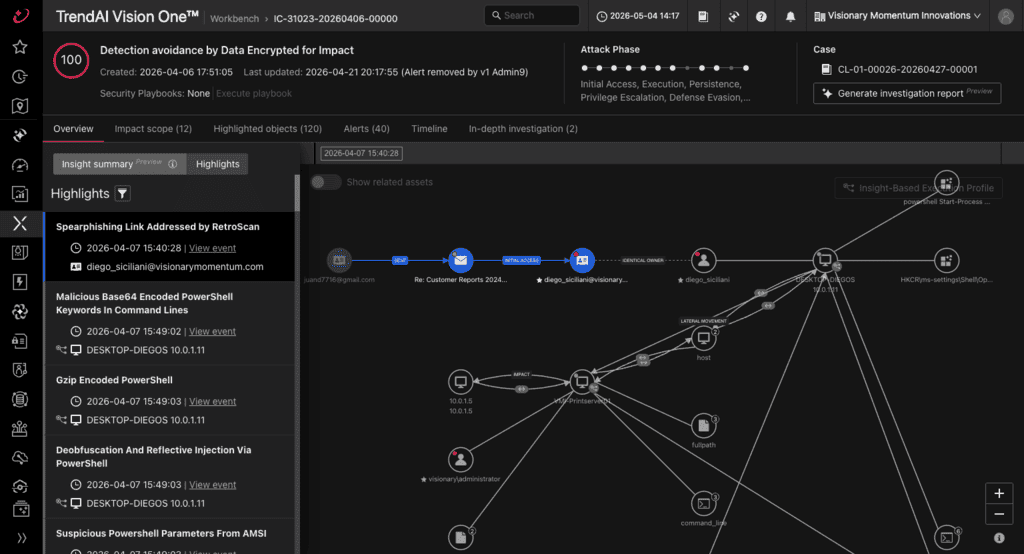
- Native XDR sensors from endpoint to data
- Agentic SIEM and Agentic SOAR in one offering
- Risk scores to prioritize assets and vulnerabilities
- Credit licensing across 30+ solutions
A team that wants email and network detection from the same vendor as the endpoint gets them on one platform. Each sensor you switch on also adds alerts to the same queue.
Native telemetry and third-party data: TrendAI lists XDR for Endpoints, Networks, Identity, Email, Cloud, and Data. Its Agentic SIEM brings native and third-party telemetry into one console.
2025 MITRE ATT&CK Evaluations: TrendAI took part as Trend Micro, and MITRE’s results page now lists it as TrendAI. The page shows, step by step, which parts of both scenarios the product detected and which protection tests it blocked.
Response and automation: Agentic SOAR runs response playbooks across your tools, per the security operations page. Ask how approvals work before automated actions reach production systems.
Pricing: Quote only on November 13, 2026, through TrendAI Flex credits that are “drawn down monthly based on actual usage.” You will need a usage forecast to turn credits into a budget line. TrendAI also lists AWS Marketplace as a way to buy, and offers a free trial.
Pros:
- Native sensors from endpoint to data
- SIEM, SOAR, and XDR in one offering
- Credits can move between solutions during the term
Cons: Credit-based pricing needs a usage forecast, and the vendor positions the platform for enterprises. Its MDR page says the service “capitalizes on Trend Micro product differentiators,” so ask how it covers other vendors’ tools.
Who should skip it: Teams that want a fixed per-device price for next year’s budget. Credit consumption varies with use.
6. Sophos XDR: Best for Mixed Stacks That Need Long Retention
Overview: Sophos sells Sophos XDR together with its SIEM, and after its 2025 acquisition of Secureworks it also brands the product “Sophos XDR Powered by Secureworks.” It is built to work with third-party tools.
For a mixed stack of Okta, Microsoft 365, and another vendor’s EDR, Sophos leads with integrations. Ask which integrations act in both directions and which only ingest.
Key capabilities:
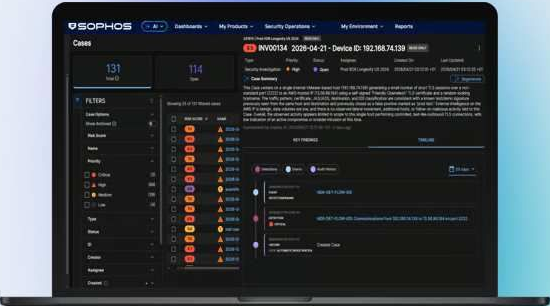
- Hundreds of technology integrations
- Prebuilt playbooks and connectors for security orchestration, automation, and response (SOAR) tools
- Up to 10 years of data retention
- Natural-language search across telemetry
Long retention matters when an investigation, an auditor, or an insurer asks about events from a year ago. The page offers it for security and compliance telemetry, so one store can serve both needs.
Native telemetry and third-party data: Sophos Endpoint and the Sophos Email Monitoring System are included, and cloud telemetry covers AWS, Azure, Google Cloud, and Oracle Cloud. The page describes ingesting “endpoint, identity, email, cloud, network, and business applications” through integrations. Email monitoring works next to third-party email security tools, so it can sit beside an existing gateway.
2025 MITRE ATT&CK Evaluations: Sophos took part in both the detection scenarios and the protection tests. MITRE’s results page shows, per step, what the product detected and blocked, so compare the steps that match your own attack paths.
Response and automation: Sophos lists “130+ Pre-built automation playbooks” and two-way integrations that act inside your existing tools. Email clawback works for Microsoft 365 and Google Workspace. Ask which playbooks run without approval.
Pricing: Quote only on November 13, 2026. Ask for the full price of retention and integrations in writing.
Pros:
- Open to other vendors’ tools
- Long-term retention for compliance data
- Sophos MDR available with a breach protection warranty
Cons: The product is combining Secureworks Taegis features into Sophos XDR, so confirm which console you will use. Identity and network detection appear as separate related products.
Who should skip it: Teams committed to a single-vendor stack from another provider. The open design pays off most in mixed estates.
7. Cisco XDR: Best for Cisco Network and Email Estates
Overview: Cisco XDR applies AI agents across network, endpoint, email, cloud, and identity data, led by Cisco’s built-in network detection. It comes in Essentials, Advantage, and Premier tiers.
Cisco XDR fits the reader whose network team already runs Cisco firewalls and Secure Network Analytics. Ask which tier the quote names, because integrations, forensics, and the managed option change by tier.
Key capabilities:
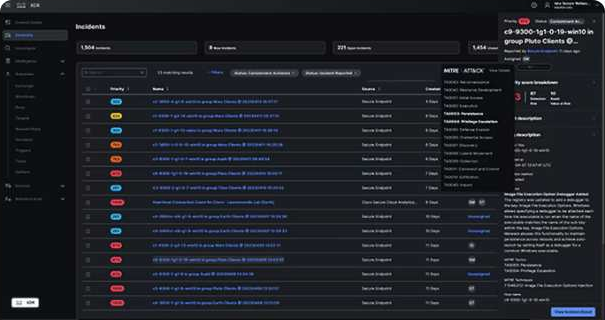
- Network-led detection backed by Cisco Talos intelligence
- Low-code automation and a workflow exchange
- Snapshot-based ransomware recovery
- Remote shell forensics from Advantage up
Network-led detection suits a team whose firewalls and switches already report to Cisco tools. Teams without Cisco network gear will see less of that advantage.
Native telemetry and third-party data: Secure Endpoint, Secure Email Threat Defense, and Secure Network Analytics are the native sources. Curated third-party integrations come with Advantage and Premier, per the licensing page.
2025 MITRE ATT&CK Evaluations: Cisco is not on MITRE’s participant list for the 2025 round. Ask Cisco which independent tests it cites for Cisco XDR.
Response and automation: Cisco XDR can contain critical alerts automatically, per the product page, and restore ransomware-hit systems from the last good snapshot. Every tier includes a built-in response playbook, and the licensing page lists 24/7 support with “a 30-minute response time” for the product itself.
Pricing: Quote only on November 13, 2026, across three tiers. The tier decides whether third-party tools connect, so price Advantage if your stack is mixed. Premier adds Cisco-run managed detection, penetration testing, and select Talos incident response services, per the product page.
Pros:
- Network visibility from Cisco tools
- Low-code automation in every tier
- Premier tier adds a Cisco-run managed service
Cons: Essentials integrates with Cisco’s own security portfolio, and curated third-party integrations and forensics start at Advantage.
Who should skip it: Teams with little Cisco network or email footprint. The detection strength leans on Cisco’s own sensors.
Native or Open XDR: Which XDR Solutions Fit Your Stack
Your current stack answers most of this choice. If endpoints, identity, and email already sit with one vendor, native XDR gives the deepest correlation for the least setup. It also means one support contract, which helps an on-shift team that cannot chase several vendors during an incident.
If your stack mixes Okta, Palo Alto firewalls, and an Elastic or Splunk SIEM, open XDR keeps those tools in play. Comparing EDR versus managed SIEM helps when the SIEM is the part you want someone else to run.
| Your stack | Platform style | Platforms to shortlist |
|---|---|---|
| Microsoft 365 E3 or E5 | Native | Microsoft Defender XDR |
| Falcon on every endpoint | Native | CrowdStrike Falcon Insight XDR |
| Palo Alto firewalls | Native | Cortex XDR |
| Mixed vendors, long retention | Open | Sophos XDR, TrendAI Vision One |
| Cisco network and email | Native | Cisco XDR |
TrendAI sits on both sides: its native sensors cover most layers, and its Agentic SIEM takes third-party data, which is why it appears on the mixed-stack row.
Use the table as a starting point, and test the finalists against your own alerts in a proof of concept. Count the incidents that still needed a person to close them, since that count is the staffing line in your 2027 budget.
Neither style closes the staffing gap by itself.
⚠️ A platform swap at renewal resets detection tuning, so count those weeks in the timeline. The team that tunes the platform is usually the same small team already short of hours.
Bring your XDR shortlist and see every alert investigated on your stack
- See AI agents investigate the alerts your XDR raises while an analyst decides on escalation and containment
- Check which of your tools connect among 250+ integrations, from CrowdStrike and SentinelOne to Microsoft Sentinel
- Get a rollout plan for your stack: SaaS, hybrid, on-premises, or air-gapped
Frequently Asked Questions
What is the difference between XDR and SIEM?
XDR correlates detections from security sensors into incidents and adds response actions. A SIEM collects logs from many sources for search, compliance, and long retention. Many teams run both, with XDR handling detection and the SIEM holding broader history. For a small team, the deciding question is which one your staff can actually watch.
Do you still need a SIEM if you buy an XDR platform?
Often, yes. XDR platforms keep limited raw data for hunting, and they ingest fewer non-security logs. A SIEM covers longer retention and audit logging, unless your XDR vendor bundles a SIEM module.
What do the MITRE ATT&CK Evaluations actually measure?
They measure how each participating product detected and blocked emulated attacks, step by step. The 2025 round emulated Scattered Spider and Mustang Panda and added protection tests. MITRE publishes the results and ranks no vendor. Read the per-step results for the techniques that worry you most, such as cloud credential abuse.
Can a small security team run an XDR platform without 24/7 staff?
It can run the platform, but nights and weekends stay uncovered. Correlated alerts still need someone to confirm, contain, and close them. Small teams usually add the vendor’s managed service or an operating layer that works the alerts around the clock.
How is XDR priced?
Pricing varies by unit. CrowdStrike and SentinelOne publish per-device or per-endpoint prices, Microsoft prices the Defender Suite per user, and Palo Alto Networks, TrendAI, Sophos, and Cisco quote. Convert every quote to one unit before comparing, and ask whether managed service, extra retention, and third-party ingest are priced separately.