




Q1: What Does an AI SOC Actually Do, and Why Are Your Alerts the Real Problem?
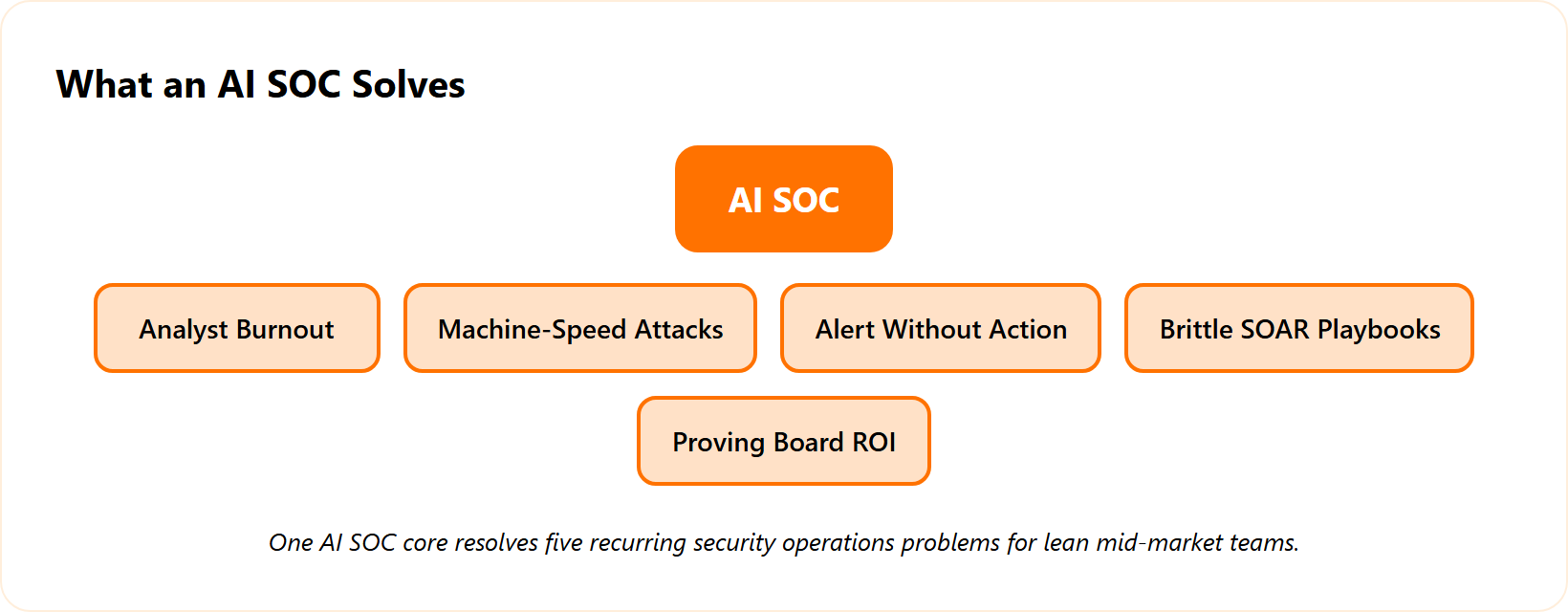
An AI SOC is a security operations model where agentic AI investigates every alert on its own, pulls context from all your tools, and hands a decision-ready case to a human analyst. It removes whole classes of investigation work, so your people decide instead of copy-paste. The hard truth holds: if your detection engineering is broken, neither AI nor SOAR will rescue you.
See how the UnderDefense Agentic AI SOC investigates, triages, and resolves real alerts.
The “Colossus of Logs” most teams live inside
Picture a Tuesday morning. Your lone analyst opens a queue with 4,000 alerts waiting. She sips cold coffee and starts triaging. By lunch, she has cleared 60.
This is the “Colossus of Logs,” my name for the wall of noise modern tools spit out. Every sensor screams. Almost none of it matters. And the few alerts that do matter sit buried under thousands that do not.
Why more automation alone fails
I have watched smart people drown in this for two decades. The instinct is to buy more automation. My honest take, after running detection across 500+ customer environments, is blunt: are your alerts mostly noise? The answer is usually yes. No AI in the world saves broken detection, and SOAR will not save it either.
So what does an AI SOC actually do?
An AI SOC is software plus agentic AI that does the grunt work of investigation for you. “Agentic” means the AI plans steps, runs queries, and gathers evidence like a junior analyst would, without you scripting every move.
Here is the plain version. A traditional setup sends you an alert and waits. An AI SOC takes that alert, investigates it across your logs, identity data, and endpoints, then closes the noise and escalates only the real thing with full context attached.
“AI in the SOC” versus a true AI SOC
Bolting a chatbot onto your SIEM is “AI in the SOC.” It makes a tired analyst slightly faster. A true AI SOC rebuilds the workflow so the machine carries the investigation end to end.
The distinction matters because of a brutal statistic. A 2022 USENIX Security study of SOC analysts was titled “99% False Positives” for a reason, with analysts reporting that almost every alarm they chase is noise. That erodes trust in the tooling, and trust is hard to rebuild. The same pattern shows up when we discuss AI SOC red flags with buyers.
What changes when investigation becomes automatic
Speeding up the same humans doing the same triage is not transformation. You just create the same noise faster. Real change comes when AI eliminates entire categories of work, so your team stops chasing ghosts.
This is the model UnderDefense built its AI SOC around. AI collects the context; your analyst makes the call. That single rule keeps a human accountable for every consequential decision, which is exactly where I want one.
Q2: How Does an AI SOC Work Across the Triage, Investigation, and Response Lifecycle?
An AI SOC works across five capabilities: alert triage, autonomous investigation, response and containment, case management, and executive reporting. Agentic AI runs each investigation across SIEM, EDR, identity, and cloud sources, auto-closes the noise, and escalates decision-ready true positives. A traditional SOC does this by hand; an AI SOC does it at machine speed, with humans approving consequential actions.
The five capabilities, mapped to one lifecycle
I like to think of AI agents as foot soldiers and your human engineers as the generals directing them. The agents do the running. The humans set direction and own the hard calls.
Across the triage-to-response lifecycle, an AI SOC handles five jobs:
- Alert triage: sorting real signals from noise the moment an alert fires.
- Autonomous investigation: gathering evidence and building the story behind an alert.
- Response and containment: isolating a host or account, with human sign-off on big moves.
- Case management: tracking every incident with a full record.
- Executive reporting: turning activity into something a board can read.
How agentic investigation spans your tools
A single real investigation is messy. It crosses your SIEM (your log brain), your EDR (endpoint sensors), identity systems, and cloud accounts. A human analyst hops between six consoles to piece it together.
An AI SOC runs those queries in parallel and maps findings to MITRE ATT&CK, the public catalog of attacker techniques. That mapping tells you which tactic an attacker used, like initial access or lateral movement, in a shared language auditors and engineers both understand. If you are weighing build options, our take on outsourced versus in-house SOC covers the trade-offs.
What the auto-close rate proves
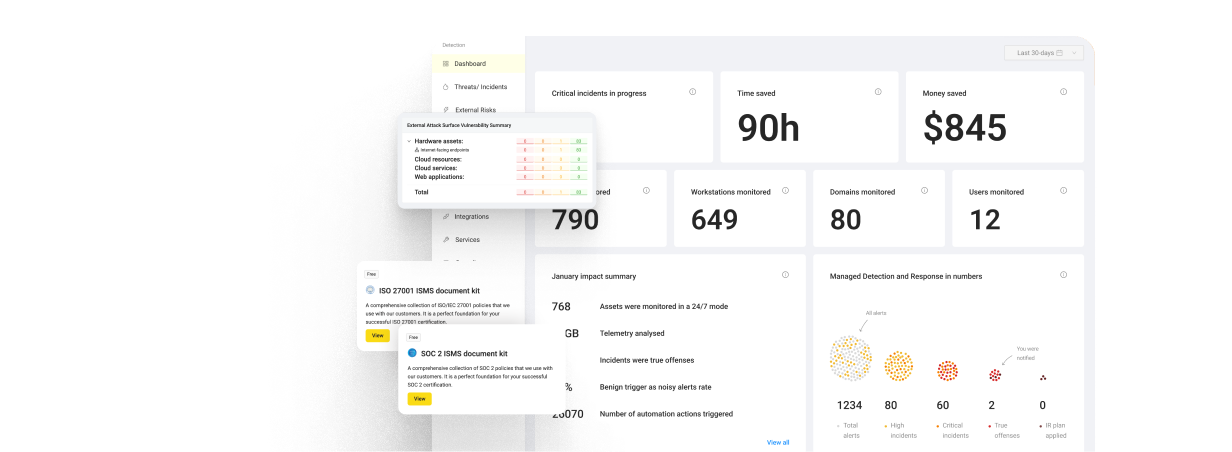
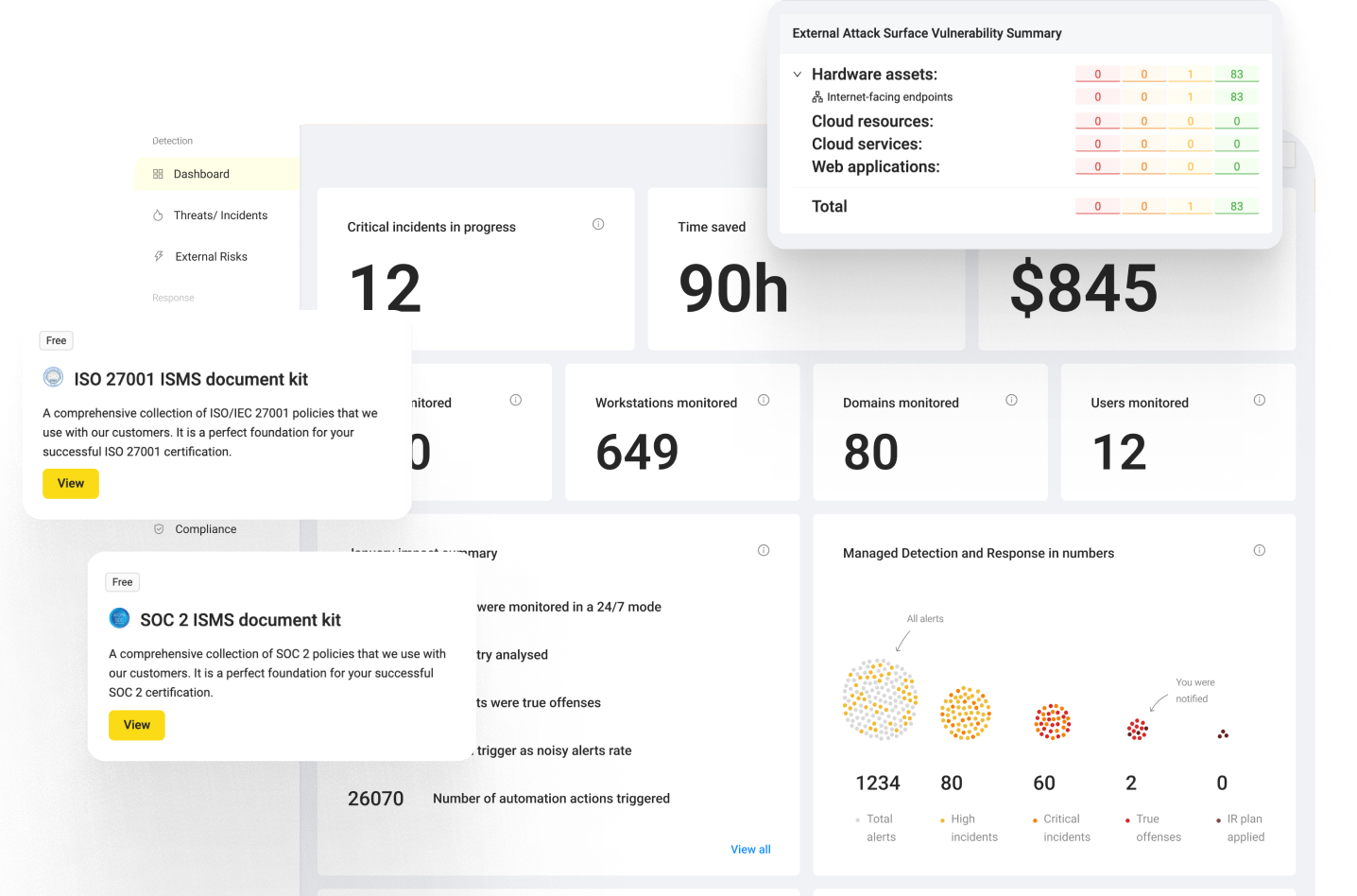
Across our own UnderDefense Agentic AI SOC environment, the platform automatically closes items as false positives for 95-plus percent of investigations. That is the difference between drowning and breathing. You can see how the lifecycle fits together on the UnderDefense Agentic AI SOC platform.
Traditional SOC versus AI SOC
| Dimension | Traditional SOC | AI SOC |
|---|---|---|
| Triage | Manual, queue-by-queue | Autonomous, instant |
| Detection | Mostly static rules | Behavioral plus rules, ATT&CK-mapped |
| Noise handling | Analyst clears each alert | Auto-closes the bulk |
| Response speed | Hours, often a next-day queue | Minutes, with human sign-off |
| Audit trail | Reconstructed by hand | Line-by-line, generated automatically |
My read, and I could be slightly off on the exact percentages per environment, is that the audit-trail row matters most to mid-market teams. When a customer or auditor asks what happened, a generated timeline beats a frantic log hunt every time. That is also why teams pair this with compliance services to document the evidence.
Q3: Problem #1, Why Are Your Senior Analysts Burning Out on the “Zen of Copying”?
The first problem an AI SOC solves is the human cost of manual triage. Analysts spend over a quarter of their time on false positives, and a typical investigation runs 40 to 50 queries across six tools. An AI SOC runs that investigation on its own and returns a line-by-line case in minutes, so analysts stop copying and start deciding.
The woman who found “zen” in copying
Years ago, I hired an analyst for a triage role. I described the day to her honestly: copy this field, paste it there, all day long. I asked how she would feel about that.
She smiled and said she found “the zen in copying.” I admired the attitude. But that toil never goes away on its own, and it quietly burns out even the calmest people.
The credibility tax of keeping up
I have felt the weight myself. During one stretch as a security leader, I broke out in hives because I could not keep up with the volume of issues hitting me. The body keeps score when the queue never empties.
The numbers behind the burnout
This is not just my war story. A 2025 ACM Computing Surveys review of alert fatigue found that 51% of SOC teams feel overwhelmed by alert volume, and analysts spend over 25% of their time handling false positives.
Now layer on the mechanics. From what surfaces when you actually run these investigations, an average one takes 40 to 50 queries across six different tools, with line-by-line detail to gather. That is a quarter of a salaried expert’s week spent on noise, which is why our SOC service exists.
What changes when the machine does the copying
Our system can run about seven minutes of thorough analysis on a single alert. That beats some analysts rushing through a 20-alert-per-hour workload, and it never gets tired or distracted.
Customers feel the relief first in the queue itself.
“The biggest win for me was getting actual control over our security alerts. Before the guys from UD stepped in, we were getting bombarded with alerts from all our security tools… Now when we get an alert, we know it’s something worth looking into.”
Verified User in Marketing and Advertising, Small-Business UnderDefense G2 Verified Review
“Before UnderDefense Agentic AI SOC, we were slightly overwhelmed with alerts and often unsure how to prioritize or respond to them. Now… false positives have become a rarity, ensuring that our team’s focus remains on genuine threats.”
Valeriia D., Marketing Specialist UnderDefense G2 Verified Review
Q4: Problem #2, Can You Win When Attackers Work 24/7 and Break In Within 51 Seconds?
The second problem is a speed mismatch. Median break-in time has fallen to 48 minutes, with the fastest observed breakout at 51 seconds, while AI-driven attacks shrink the exploit window to seconds. A 9-to-5 team loses to a 24/7 adversary. UnderDefense answers with a 2-minute alert-to-triage and a 15-minute escalation on critical incidents, so you cut the attack path off in hours.
The scoreboard does not look good
Let me put it the way I say it to CISOs on a call. If we work 9 to 5 and the attackers work 24/7, we are going to get our butts kicked. The math is not on our side.
Attackers do not take weekends. They automate, they swarm, and they probe while your team sleeps. Humans click, but agents swarm, and that asymmetry only grows.
The numbers that should reset your SLAs
Speed is now the whole game. Recent breakout data shows median break-in time has dropped to 48 minutes, with the fastest observed breakout clocked at 51 seconds.
The exploit window keeps shrinking too. We have seen the time-to-exploit fall to seconds on fresh vulnerabilities, sometimes a 29-second zero-day clock. When that happens, you have to cut the attack path off within hours, not days. Our work on SLAs in cybersecurity breaks down why these two clocks differ.
Matching machine tempo without burning out humans
This is where autonomous investigation earns its keep. The machine triages and investigates at speed; humans step in for the calls that carry real consequences.
UnderDefense pairs that autonomous investigation with concierge analysts who deliver a 2-minute alert-to-triage and a 15-minute escalation on critical incidents. I keep those two numbers separate on purpose, because a single blended “response time” hides whether you are fast at spotting trouble or fast at acting on it. If you are already under attack, our incident response team can step in. Customers tell us the speed is the part they feel.
“Their 24/7 monitoring and incident response have played a pivotal role in safeguarding our sensitive data and systems… we can proactively stay ahead of potential risks and immediately tackle any incidents.”
Oleksii M., Mid-Market UnderDefense G2 Verified Review
My current read is that the 18 to 24 months ahead will reward teams that close this tempo gap with automation plus human judgment. The ones who keep triaging by hand at 9 a.m. will keep losing the scoreboard. If you want to compare options, our guide to MDR services is a practical starting point.
Q5: Problem #3, Are You Still Paying for Alerts You Have to Action Yourself? [toc=5. Alert Without Action]
The third problem is the alert-without-action trap. Legacy MDR and MSSP vendors pride themselves on fewer false positives, yet you still have to action every event they forward. A true AI SOC auto-closes 95-plus percent of investigations as false positives and delivers decision-ready true positives with response options attached, so the work lands handled rather than as another ticket in your queue.
You are paying for a flashlight, not a firefighter
Here is a line I hear from vendors all the time. They proudly say they reduce your false positives. Then they send you an event, and you still have to take action on it yourself.
That is monitoring, not response. A flashlight points at the problem. It does not put the fire out. For a lean mid-market team, a flashlight at 2 a.m. is not the help you bought, which is why our MDR service closes the loop.
The displacement wave of renamed products
A lot of vendors renamed their product to “AI” this past year. The label changed; the workflow did not. You still get a ticket and a to-do list.
Customers feel that gap in the post. Real buyers describe legacy MDR services that detect well, then quietly hand the hard part back to you. This is one of the top reasons businesses switch cybersecurity providers.
“Arctic Wolf provides solid detection and response capabilities, but overly relies on the client’s team for remediation, which really hurts the value of the service.”
VP of Technology Arctic Wolf Gartner Verified Review
“Still not quite there with the remediation side of things. We receive alerts, but not necessarily a clear path to resolution… This is not an extension of our security team as was originally sold.”
Sr Cybersecurity Engineer Arctic Wolf Gartner Verified Review
Detect-and-alert versus detect-and-respond
The structural issue is the operating model, not any one team. Here is how I lay it out for buyers.
| Dimension | Monitoring-only MDR / MSSP | UnderDefense Agentic AI SOC |
|---|---|---|
| Triage | ✅ Reduces false positives | ✅ Auto-closes 95-plus percent as false positive |
| Response | ❌ You action every event | ✅ Decision-ready handoff with response options |
| Context | ❌ Alert with limited detail | ✅ Full line-by-line investigation attached |
| Data ownership | ❌ Often locked to their stack | ✅ Vendor-agnostic, you keep your SIEM |
| Pricing clarity | ❌ Opaque, surprise renewals | ✅ Transparent scope |
What “handled” actually looks like
Triage classification is mature enough to be patented prior art. Rapid7 holds a US patent for machine-learned alert triage. So in any vendor eval, demand response outcomes, not “we have AI triage” as a feature claim. If you are comparing options, our Rapid7 alternatives guide lays out the field.
We sit in position one of that table for a reason. UnderDefense both detects and responds as a vendor-agnostic AI SOC with a human ally on the line. The event arrives investigated, with the next action ready, instead of as homework for your team. For teams keeping their own stack, our managed SIEM preserves data ownership.
Q6: Problem #4, Why Do Static SOAR Playbooks Keep Failing on Real Investigations?
The fourth problem is brittle automation. SOAR playbooks are if/else decision trees, but real alert investigation demands improvisation and dynamic planning, because no two alerts are investigated the same way. An agentic AI SOC plans each investigation adaptively, like a senior analyst, rather than forcing every alert down a rigid branch that attackers simply step around.
The accepted fix that quietly breaks
The standard advice is to automate your SOC with SOAR, which stands for Security Orchestration, Automation, and Response. You build playbooks, you save time, you scale. Most blogs stop there.
I will say the thing the category avoids. Most SOAR playbooks are if/else decision trees, and that is exactly why they break on real work. Our checklist on SOC automation walks through where the gaps appear.
Why investigation resists the decision tree
Think about how you actually investigate an alert. The first finding changes your second question. A weird login leads you to a token, which leads you to a cloud role you did not expect.
No two investigations follow the same path. Investigation needs improvisation and dynamic planning. A rigid branch cannot improvise, so a clever attacker simply steps around the branch you scripted.
Dynamic planning, with a guardrail
Agentic AI fixes the brittleness by planning each step as it learns, the way a senior analyst does. That is the leap from a fixed script to live reasoning. You can see this approach run on the UnderDefense Agentic AI SOC platform.
I will be honest about the risk too. AI agents are a bit like teenagers, supremely capable, with little fear of consequences, so sometimes they do something dumb. That is why we move past plain access control to action control, where we verify the agent’s behavior matches the intent before any consequential move. The dynamic-investigation approach is concrete enough that vendors now patent it, including a multi-phase LLM investigation method. If you want the human-versus-machine debate in full, read our take on whether AI kills or saves your SOC.
Q7: Problem #5, How Do You Prove ROI to a Board That Sees Security as a Cost?
The fifth problem is proving value to a skeptical board. An AI SOC delivers measurable returns: up to 99% noise reduction, as much as 830% ROI over three years, and protection against breach costs that average $4.44M, which faster AI-driven containment directly reduces. The most persuasive proof is often unplanned, like the $300K payroll fraud one team uncovered through new visibility.
Lead with the dollars
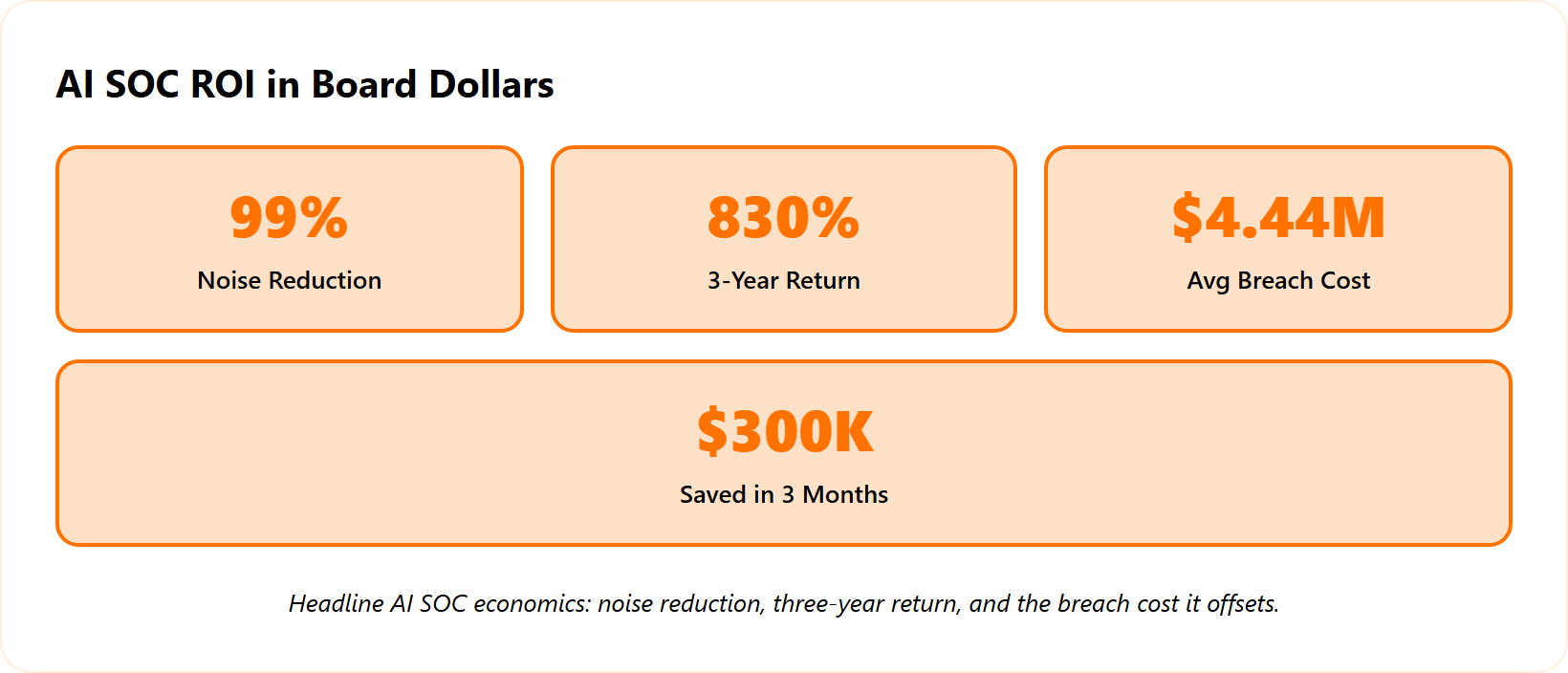
Your board sees security as a cost center until you put it in their language. The governing claim is simple: an AI SOC ROI is provable in board dollars, not vibes. I build that case on three pillars, and our cybersecurity budget guide for mid-market firms frames the same numbers.
Pillar one: the cost of doing nothing
The first pillar is the breach baseline. IBM’s 2025 Cost of a Data Breach Report puts the global average breach at $4.44M, with a mean of 241 days to identify and contain.
That 241-day clock is where speed pays off. Faster autonomous investigation and containment pull that number down, and that is the dollar figure your CFO understands. You can model your own numbers with our SOC cost calculator.
Pillar two: the efficiency return
The second pillar is operational return. Across our deployments, we see up to 99% noise reduction and as much as 830% return on investment over three years.
I will flag a caveat so the number stays honest. IBM also found 97% of AI-breached organizations lacked proper AI access controls. So pair the ROI story with governance, or a board member who reads will rightly poke the hole. You can see how we report this on the UnderDefense Agentic AI SOC platform.
Pillar three: the proof you did not plan for
The third pillar is the memorable one. We once saved a client roughly $300K in their first three months, because the new visibility surfaced a fraud nobody had been looking for.
Buyers describe the same “didn’t see it coming” value in reviews.
“Their proactive threat hunting and rapid response have saved us from incidents that could have been incredibly costly.”
Verified User in Program Development, Mid-Market UnderDefense G2 Verified Review
“As a CISO, my days are packed… nothing is more reassuring than knowing we have solid defenses against ransomware. They literally took care of all our problems.”
Arlin O., Enterprise UnderDefense G2 Verified Review
Q8: How Does an AI SOC Help You Hit Compliance and Breach-Notification Deadlines?
An AI SOC produces the audit-ready evidence and speed that compliance now demands. Faster autonomous investigation and containment help you meet tight notification windows: the SEC’s four-business-day 8-K rule, GDPR Article 33’s 72 hours, and NIS2 reporting timelines. Every investigation generates a line-by-line timeline mapped to MITRE ATT&CK and NIST SP 800-61, ready for auditors and regulators.
The clock is now a compliance problem
Bottom line up front: regulators turned breach response into a stopwatch. The moment you confirm a material incident, a countdown starts, and a slow investigation now carries legal and financial risk.
That changes the math. Investigation speed used to be a security nicety. Now it is the difference between a clean filing and a missed deadline, as our regulatory compliance roadmap explains.
The deadlines an AI SOC helps you hit
Here are the clocks that matter most for mid-market teams, and what an AI SOC produces against each.
| Regulation | Deadline | What an AI SOC delivers |
|---|---|---|
| SEC 8-K, Item 1.05 | 4 business days after materiality | Fast materiality assessment with an evidenced timeline |
| GDPR Article 33 | 72 hours to the supervisory authority | Scope and impact detail to file on time |
| EU NIS2 Directive | 24-hour early warning, 72-hour update | Rapid triage and a structured incident record |
The speed comes from the same engine that handles your daily alerts. UnderDefense pairs autonomous machine-speed investigation with concierge analysts who deliver a 2-minute alert-to-triage and a 15-minute escalation on critical incidents, so the clock starts with facts already in hand. Our breakdown of SLAs in cybersecurity shows why these two clocks stay separate.
The artifact auditors actually want
Auditors do not want a raw log dump. They want a clear story of what happened and when. Every investigation produces a line-by-line record of everything gathered, which is the backbone of our compliance services.
That record maps to the NIST SP 800-61 incident-handling lifecycle and to MITRE ATT&CK techniques. So the same timeline serves your SOC 2 evidence, your ISO 27001 audit, and your regulator, without a frantic reconstruction the night before. For regulated finance teams, our DORA penetration testing closes the resilience-testing requirement.
Q9: Will an AI SOC Replace Your Analysts, or Is a Fully Autonomous SOC a Myth?
No, an AI SOC augments analysts rather than replacing them, and a fully autonomous SOC is not realistic today, given technology readiness and the risk of software quarantining users without oversight. Gartner forecasts multi-agent AI in threat detection rising from 5% to 70% of implementations by 2028, mainly to augment staff. AI collects context; humans decide on consequential actions.
The honest answer is “it depends”
Let me give you the straight version, because the hype is loud here. A fully autonomous SOC is still technically out of reach today.
It is unrealistic on two fronts. The technology is not ready, and the real-world stakes are high. You do not want a piece of software roaming your network, quarantining users, with nobody watching, which is why our SOC service keeps people in the loop.
What the optimists demo, fairly stated
I want to be fair to the other side. Some platforms now demo impressive autonomy.
They show sub-minute containment workflows that deny access or stop a cloud instance, and level-two auto-closing of alerts. That is real progress, and I respect it. My read, and I could be slightly off on the exact maturity, is that this works for narrow, well-bounded cases more than for messy ones, a tension we explore in our piece on whether AI kills or saves your SOC.
Where humans hold the line
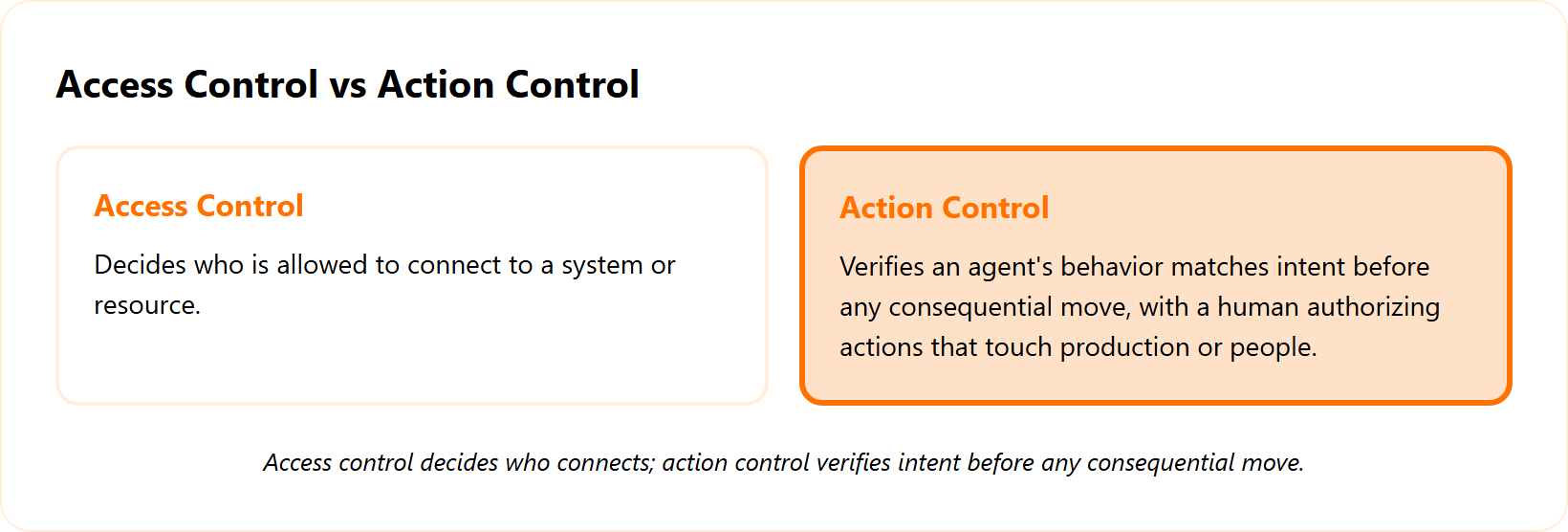
The safe pattern is to separate two things. Access control decides who can connect. Action control verifies that an agent’s behavior matches the intent before any consequential move.
This matters because agentic AI brings its own attack surface. Academic work has now catalogued nine agent-specific threats across five domains. So we keep a human in the loop for actions that touch production or people. This is the AI SOC plus Human Ally model UnderDefense runs on: autonomous investigation everywhere, human authorization on the moves that carry weight. Being a human is a flex in 2026, and our AI SOC red flags guide shows why oversight stays non-negotiable.
Q10: What Should You Do Monday Morning to Evaluate an AI SOC?
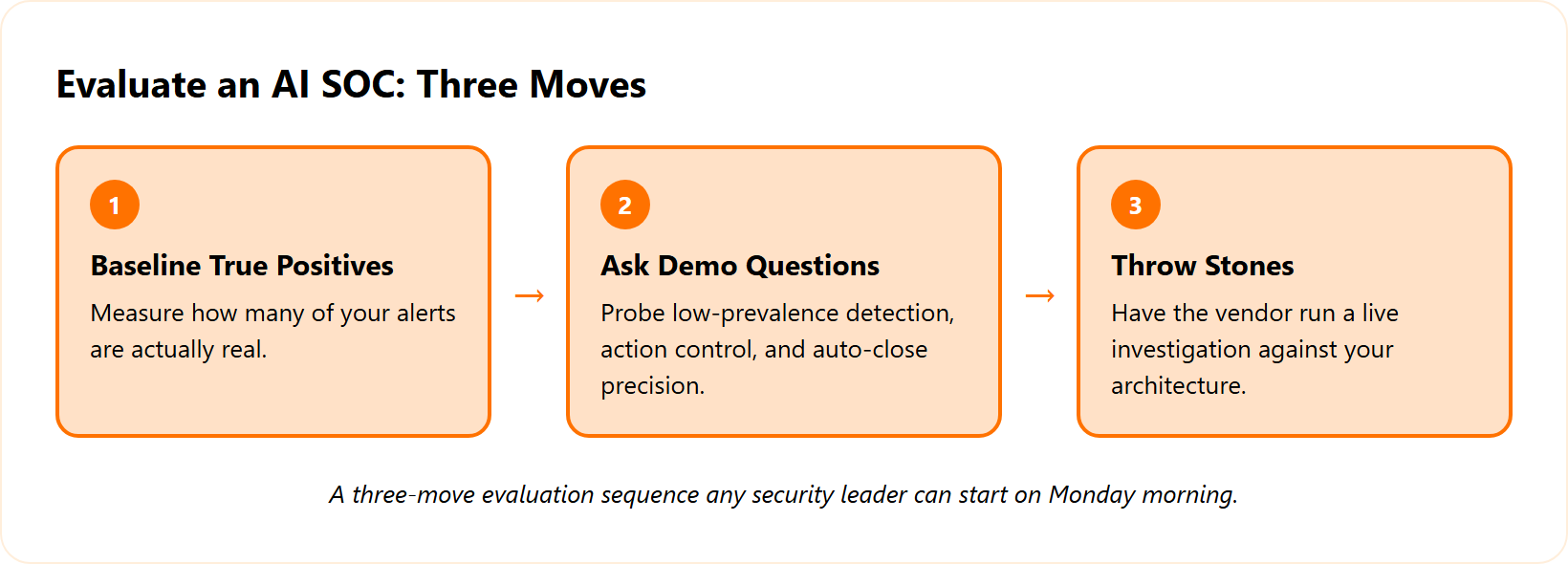
Start with three moves: measure your real true-positive rate as the baseline any AI SOC must beat; in vendor demos, ask how the system handles low-prevalence detections and consequential response, not just bulk noise; and invite the vendor to “throw stones” at your architecture before any tool is installed. Demand outcomes and transparent pricing.
Step one: get your baseline number
You cannot judge improvement without a starting line. So before you talk to any vendor, measure your current true-positive rate.
Out of every hundred alerts your team chases, how many are real? Write that number down. It is the bar every AI SOC must beat, and it makes the sales conversation concrete fast. Our breakdown of SOC metrics helps you set that baseline.
Step two: ask the demo questions that matter
Most demos show the easy win, clearing bulk noise. Push past that. Here is what I would ask:
- How do you handle low-prevalence detections, the rare signals that hide in clean data?
- What is your action control for consequential moves, like isolating a host or a user?
- What is your auto-close rate, and what triage-classification precision backs it?
- Show me the line-by-line investigation, not just the verdict.
That third question matters because triage classification is patented prior art. So “we have AI triage” is not an answer; precision metrics are. If you want a structured framework, our MDR buyers guide covers the right questions to ask.
Step three: let them throw stones, then decide
This is my favorite test. Hand a vendor your messiest, ugliest alert and tell them to throw stones at it. Watch how they investigate live on the UnderDefense Agentic AI SOC platform.
One practical note from building with AI: I test each case five to fifteen times before I trust a true-positive or false-positive call, because one good run is luck. I also start any agent build with a short plan document, then edit it, before a single action runs. Finally, demand transparent pricing, so the renewal does not surprise you later, a discipline our MDR service is built around.
The question I am sitting with
So here is the question I am sitting with for the next 18 to 24 months. As agents get faster, the bottleneck shifts from detection to trust, and trust is earned by showing the work.
If you want to see a real investigation run end to end, hand UnderDefense your messiest alert and tell us what you are trying to fix. You can start that conversation through our team whenever you are ready.
See how UnderDefense Agentic AI SOC resolves a real incident on your stack.
1. What does an AI SOC actually do in day-to-day security operations?
We think of an AI SOC as software plus agentic AI that does the grunt work of investigation for you. A traditional setup sends an alert and waits; an AI SOC takes that alert, investigates it across your logs, identity data, endpoints, and cloud, then closes the noise and escalates only the real thing with full context attached.
In practice it covers five jobs:
- Alert triage the moment a signal fires.
- Autonomous investigation that builds the story behind an alert.
- Response and containment, with human sign-off on big moves.
- Case management with a full record.
- Executive reporting a board can actually read.
Across our own environment, the platform automatically closes 95-plus percent of investigations as false positives. That frees analysts to decide instead of copy-paste. If your detection engineering is broken, though, no AI rescues it, so we tune detections first. You can see the full workflow inside our MDR service, where AI collects context and a human makes the consequential call.
2. Will an AI SOC replace our analysts, or is a fully autonomous SOC realistic?
No, an AI SOC augments analysts rather than replacing them, and a fully autonomous SOC is not realistic today. The technology is not ready, and the stakes are high; you do not want software roaming your network quarantining users with nobody watching.
We are fair to the optimists. Some platforms demo sub-minute containment and level-two auto-closing of alerts, which is real progress. Our read is that this works for narrow, well-bounded cases more than messy ones.
The safe pattern separates two things:
- Access control decides who can connect.
- Action control verifies an agent’s behavior matches intent before any consequential move.
Gartner forecasts multi-agent AI in threat detection rising from 5% to 70% of implementations by 2028, mainly to augment staff. So we keep a human in the loop for actions that touch production or people. This is the AI SOC plus Human Ally model we run, and our virtual CISO team holds that line on consequential decisions every day.
3. How does an AI SOC reduce analyst burnout and alert fatigue?
Manual triage is the quiet killer of good analysts. A 2025 review of alert fatigue found 51% of SOC teams feel overwhelmed by alert volume, and analysts spend over 25% of their time handling false positives. An average investigation runs 40 to 50 queries across six tools.
An AI SOC removes that toil by investigating each alert on its own and returning a line-by-line case in minutes. Our system runs roughly seven minutes of thorough analysis on a single alert, which beats a tired analyst rushing through 20 alerts an hour, and it never gets distracted.
What changes for the team:
- The queue stops being a wall of noise.
- People decide on real threats instead of chasing ghosts.
- Senior talent stays instead of burning out.
Customers feel it first in the queue itself, where genuine threats finally surface fast. We built our SOC service around this exact relief, so your humans do judgment work and the machine does the copying.
4. How does an AI SOC keep up with machine-speed attacks?
If we work nine to five and attackers work 24/7, we lose. The math is not on our side. Recent breakout data shows median break-in time has dropped to 48 minutes, with the fastest observed breakout at 51 seconds, and time-to-exploit on fresh vulnerabilities has fallen to seconds.
That is where autonomous investigation earns its keep. The machine triages and investigates at speed; humans step in for the calls that carry real consequences.
We keep two clocks separate on purpose:
- A 2-minute alert-to-triage, so we spot trouble fast.
- A 15-minute escalation on critical incidents, so we act fast.
A single blended response number hides which one you are actually good at, which is why we report them distinctly. This is also why the human-plus-automation model wins; you cannot scale with humans alone, and you cannot trust full autonomy yet. If you are weighing the trade-offs, our breakdown of SLAs in cybersecurity explains why these two clocks must stay separate.
5. How is an AI SOC different from legacy MDR or MSSP services?
Many vendors proudly say they reduce false positives, then send you an event you still have to action yourself. That is monitoring, not response. A flashlight points at the fire; it does not put it out.
Here is the structural difference:
- Monitoring-only MDR reduces noise but hands the work back to your team.
- An AI SOC auto-closes 95-plus percent of investigations and delivers a decision-ready handoff with response options.
- We stay vendor-agnostic, so you keep your SIEM and your data instead of locking into one stack.
Real buyers describe legacy services that detect well, then quietly return the hard part. One Gartner reviewer noted their MDR “overly relies on the client’s team for remediation.” In any evaluation, demand response outcomes, not a “we have AI triage” feature claim. Our guide to MDR services lays out how detect-and-respond differs from detect-and-alert, so you can spot the gap before you sign.
6. Why do static SOAR playbooks fail where an AI SOC succeeds?
The standard advice is to automate your SOC with SOAR, build playbooks, and scale. Most blogs stop there. We will say the part the category avoids: most SOAR playbooks are if/else decision trees, and that is exactly why they break on real work.
Think about how you actually investigate. The first finding changes your second question. A weird login leads to a token, which leads to an unexpected cloud role. No two investigations follow the same path.
Why rigid automation breaks:
- Investigation needs improvisation, not a fixed branch.
- A clever attacker simply steps around the branch you scripted.
- Static trees cannot reason about context they never anticipated.
Agentic AI fixes this by planning each step as it learns, the way a senior analyst does. We pair that with action control, verifying an agent’s behavior matches intent before any consequential move, because agents can act boldly without fear of consequences. Our take on SOC automation details where playbooks help and where dynamic planning takes over.
7. How do we prove AI SOC ROI to a board that sees security as a cost?
Your board sees security as a cost center until you put it in their language. We build the case on three pillars.
- The cost of doing nothing: IBM’s 2025 report puts the global average breach at $4.44M, with 241 days to identify and contain. Faster investigation pulls that number down.
- The efficiency return: across deployments we see up to 99% noise reduction and as much as 830% return over three years.
- The proof you did not plan for: we once saved a client roughly $300K in three months because new visibility surfaced a fraud nobody was looking for.
One honest caveat keeps the story credible: IBM also found 97% of AI-breached organizations lacked proper AI access controls, so pair ROI with governance or a sharp board member will poke the hole. You can model your own numbers with our SOC cost calculator before the budget conversation.
8. How should we evaluate an AI SOC vendor before buying?
Start Monday with three moves we use ourselves.
- Baseline your real true-positive rate. Out of every hundred alerts, how many are real? That is the bar any AI SOC must beat.
- Ask the demo questions that matter: how it handles low-prevalence detections, its action control for consequential moves, its auto-close rate with backing precision metrics, and a line-by-line investigation rather than just a verdict.
- Invite the vendor to throw stones at your architecture and run a live investigation before any tool is installed.
A practical habit from building with AI: we test each case five to fifteen times before trusting a true or false positive, and we start every agent build with a short plan document we edit first. Finally, demand transparent pricing so renewals never surprise you. For a structured framework of questions, our MDR buyers guide walks through exactly what to ask and what proof to require.