





Q1. How much does Vanta actually cost in 2026? (Real costs by company stage)
Vanta publishes no price card, so real buyers land in four bands: roughly $7,500 to $12,000/yr for Essentials (under 50 employees), $20,000 to $45,000/yr for Plus (50 to 150 employees), and $80,000 to $250,000/yr for Professional or Enterprise (100 to 500+ employees). Headcount is the main lever, each added framework runs about $5,000, and the external audit ($8,000 to $40,000) sits outside the subscription entirely. Budget the full stack, not the platform sticker.
Negotiating a renewal right now?
Try UnderDefense MAXI Compliance AI
What the platform fee really tracks
Vanta prices on headcount, and it steps up hard at specific thresholds. Across tracked deals, the median customer pays around $20,000/yr. The price ladder bends at four points: 50, 100, 200, and 500 employees. So two startups buying “the same SOC 2” can pay very different numbers based purely on staff count.
A real three-stage view
Here is what the all-in first year looks like by stage, including the audit fee that the subscription never covers. If you are sizing this against an internal program, our cybersecurity budget for mid-market firms breaks the math down further.
| Stage | Headcount | Vanta platform | External audit | All-in year one |
|---|---|---|---|---|
| Seed | ~25 | $7,500 to $12,000 | $8,000 to $15,000 | ~$16,000 to $27,000 |
| Series A | ~50 | $20,000 to $30,000 | $10,000 to $20,000 | ~$30,000 to $50,000 |
| Series B | ~200 | $80,000 to $150,000 | $15,000 to $40,000 | ~$95,000 to $190,000 |
Why the sticker understates the bill
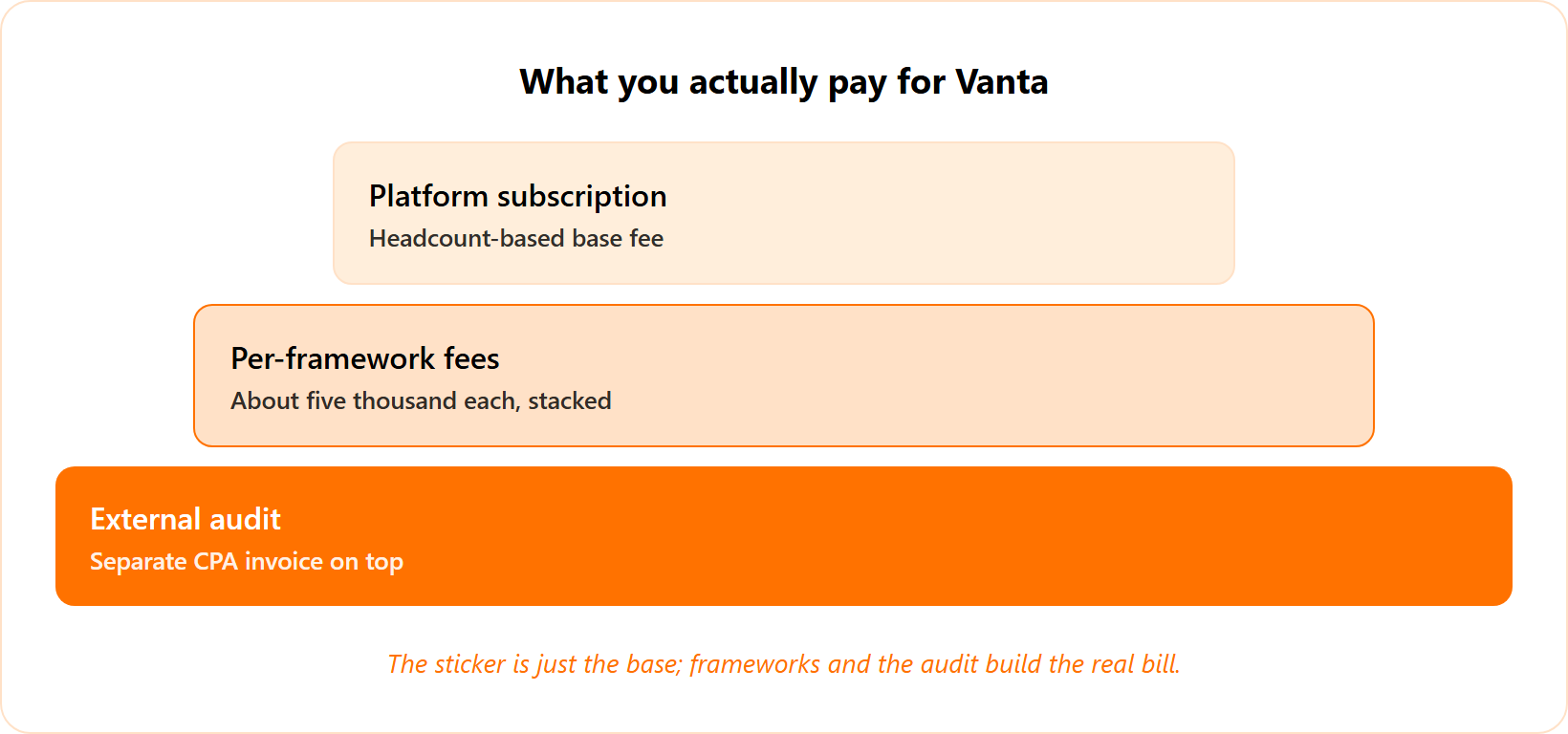
The base subscription rarely ends up being the real cost. Once frameworks, the audit, and add-ons land, the platform spend often climbs 30 to 50% above the first quote. So a “$7.5K” Essentials plan can become a $25,000 line item once a second framework and a coordinated audit attach. Teams that want predictable numbers often map this against our compliance services instead.
The honest read here is simple. Most buyers do not get stuck on the platform price; they get stuck on the gap between the quote and the invoice once everything attaches.
Q2. What do Vanta’s pricing tiers (Essentials, Plus, Professional, Enterprise) include?
Vanta sells four editions of its Trust Management Platform: Essentials (startups under 50, one framework, ~$7.5K to $12K), Plus (50 to 150 employees, multi-framework, Access Reviews, 25 AI questionnaires/yr, ~$20K to $45K), Professional (100 to 500, 144 questionnaires/yr, SCIM, custom monitoring, ~$80K to $250K), and Enterprise (500+, multi-business-unit, custom). Frameworks like SOC 2, ISO 27001, and HIPAA stay separate ~$5K add-ons on every tier.
The headcount model decides your tier
You do not really pick a tier. Your employee count picks it for you, because each edition is gated to a headcount band. That matters because two features buyers assume are standard, SCIM and questionnaire automation, are paid extras below Professional.
Edition-by-edition breakdown
| Edition | Target segment | What’s included | Hard caps | Reported price |
|---|---|---|---|---|
| Essentials | Startups <50 | One framework, core automation | Single framework | $7.5K to $12K |
| Plus | 50 to 150 employees | Multi-framework, Access Reviews | 25 AI questionnaires/yr | $20K to $45K |
| Professional | 100 to 500 | 144 questionnaires/yr, SCIM, custom monitoring | Headcount band | $80K to $250K |
| Enterprise | 500+ | Multi-BU, custom monitoring | Custom | Custom |
The cap most buyers miss
Plus includes only 25 automated questionnaires a year. A growing sales team in security review hell blows through that fast, and the overflow pushes you toward Professional. SCIM and RBAC, which most IT directors treat as table stakes, sit behind that same upgrade.
Where most first-time buyers actually land
The honest answer is that a first SOC 2 buyer under 50 people rarely needs more than Essentials plus one framework. The tier math only gets painful when headcount and frameworks stack at the same time. That is the exact spot where UnderDefense runs SOC 2, ISO 27001, and HIPAA programs end to end, so the edition-versus-add-on decision stops being your team’s problem. If you want a sanity check before signing, contact us for a quick scope.
Q3. Why isn’t the audit included, and what does a SOC 2 audit cost on top?
The Vanta subscription buys compliance automation and evidence collection, while the audit itself is billed separately. An external SOC 2 Type II audit runs $8,000 to $25,000, and ISO 27001 audits run $15,000 to $40,000, paid to a CPA firm such as Schellman, A-LIGN, or Johanson Group. Vanta’s in-platform “Seamless SOC” service ($10K to $25K) coordinates the auditor, but the CPA fee stays additional.
Two invoices, not one
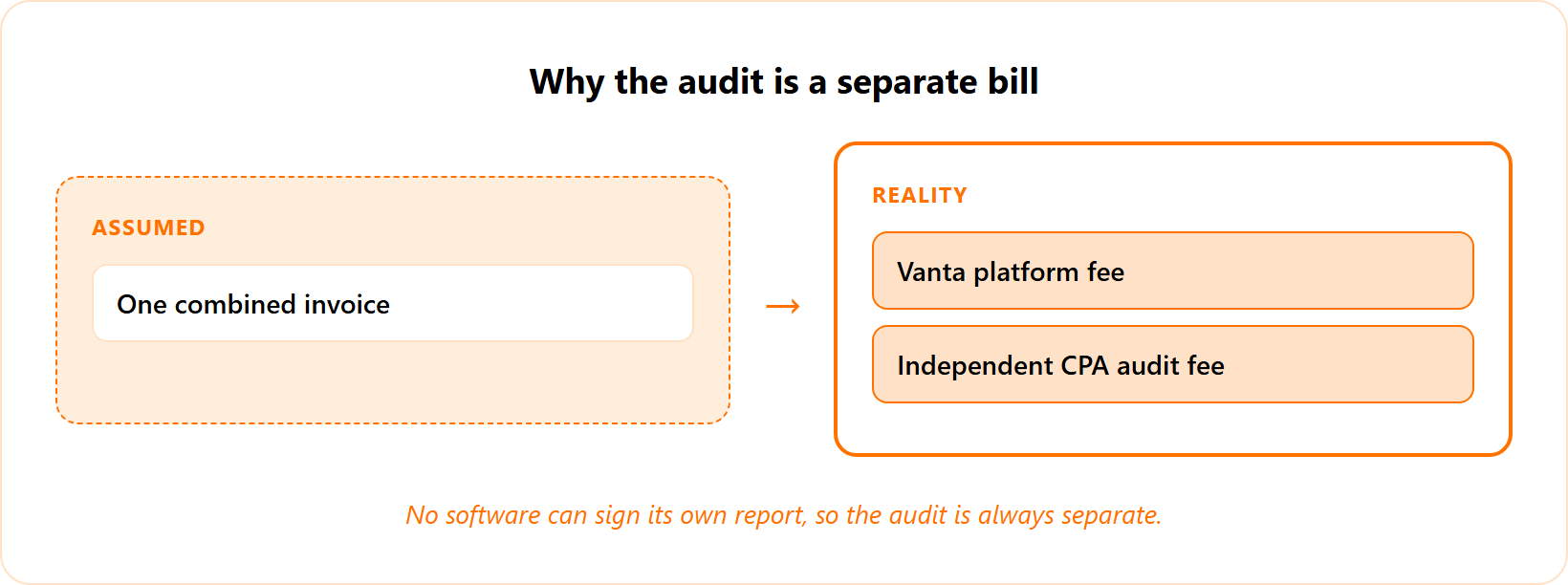
Here is the part first-time buyers conflate. The platform fee and the auditor fee are two separate invoices, because no compliance software can issue its own SOC 2 report. The software helps you collect evidence and map controls; an independent CPA firm has to inspect and sign the attestation. That separation is regulatory, not a Vanta quirk.
A worked example
Take a 50-person startup. The Plus stack runs roughly $24,500, then a SOC 2 Type II audit adds about $12,000 from a CPA partner. So the “compliance budget” the founder approved at signing was only ever half the real number. Bundling Seamless SOC with a partner auditor can shave 15 to 20% off the combined cost. Our compliance roadmap lays out how the evidence and audit steps line up.
What a report actually proves
This is where I will hedge a claim I have earned the right to make. A SOC 2 report is a snapshot of controls over a window of time, not proof your environment is safe today. I have watched reports get printed, bound, and shelved while the live environment kept drifting. Continuous detection and response is what defends the environment between audits, and at UnderDefense that gap is the work we care about most. It is the same reason our MDR service sits alongside any compliance program.
The practical move is to scope the auditor fee into the budget on day one, alongside the platform quote, so the second invoice never blindsides the board.
Q4. What hidden costs and add-on fees do Vanta buyers forget?
The base tier is rarely the real cost. Each extra framework adds about $5,000, Trust Center and Vendor Risk Management (TPRM) together add roughly $17,000/yr, and questionnaire automation and Trust Center each add $3,000 to $8,000/yr. Add-ons bought mid-contract carry a premium, so a buyer’s effective annual cost often runs 30 to 50% above the headline quote.
The stacking problem
Per-framework pricing is where budgets quietly break. SOC 2 plus ISO 27001 plus HIPAA is three separate ~$5,000 line items, not one. Layer on the Trust Center and TPRM bundle at around $17,000/yr, and a tidy “$20K” plan becomes a very different number. The VRM add-on alone has been reported at $11,200/yr.
Top 5 hidden costs, ranked by sting
- Renewal shock. You keep paying full fees long after the heavy certification lift is done, with little price relief.
- Add-on stacking. Trust Center plus TPRM lands near $17,000/yr on top of the base.
- The excluded audit. The CPA fee ($8K to $40K) was never in the subscription.
- Per-framework fees. Each new framework is another ~$5,000, the single biggest pricing differentiator versus rivals.
- Mid-contract premium. Anything you bolt on after signing costs more than if you had negotiated it upfront.
The fix is at signing
The solution is unglamorous but it works. Negotiate every likely add-on, framework, Trust Center, VRM, and questionnaire volume into the original contract before you sign. One tactical check first: Microsoft E5 may already cover some controls, so confirm what you genuinely need to buy separately. Where Vanta’s model rewards add-on stacking, UnderDefense scopes compliance programs with transparent, all-in pricing, so the renewal holds no surprises. A short call with our virtual CISO can map exactly which controls you already own.
What buyers say
To contrast with the service side, here is how buyers describe a transparent, no-surprise engagement model.
“The service delivers what they promised without the typical vendor overselling and underdelivering we’ve experienced with others in this space.”
Verified User, Marketing and Advertising UnderDefense G2 Verified Review
Q5. How much will Vanta cost at renewal, and what is the “subscription trap”?
Year-1 startup discounts (often 20 to 40% off, sometimes up to 70%) are rarely locked in, so renewal quotes commonly land 30 to 50% higher. Contracts also carry 5 to 10% annual escalation clauses that compound: a $50K deal at an uncapped 10% clause grows roughly 33% over four years. Buyers report invoices climbing from $8,000 to $18,000 in Year 2.
The deal that felt great in Year 1
Picture a 50-person startup that just closed its first SOC 2. The founder signs a discounted Vanta deal, often 20 to 40% off, sometimes far more for accelerator-backed teams. The dashboard goes green, the enterprise prospect unblocks, and everyone moves on. So far, the story reads like a win.
Where the trap springs
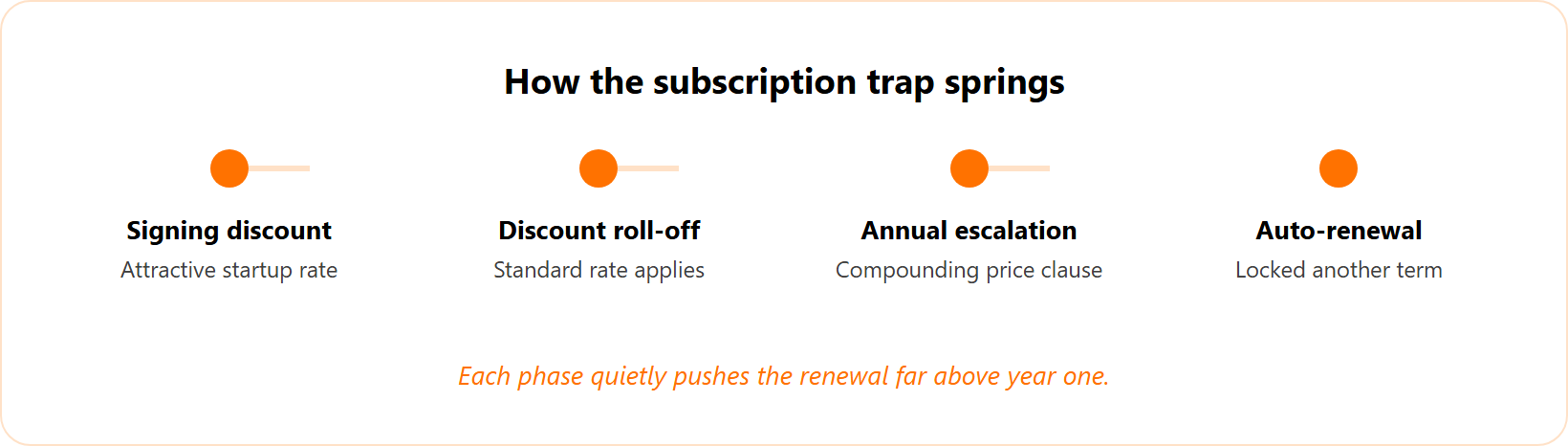
Then renewal arrives, and the discount was never contractually locked in. The startup rate rolls off, the standard rate applies, and the quote lands 30 to 50% higher than Year 1. Reviews describe invoices jumping from $8,000 to $18,000 in the second year. The auto-renewal clause makes it worse, because order forms often require 60 to 90 days notice to cancel, and missing that window locks you in for another term. This is one reason buyers study why businesses switch providers before they re-sign.
How to defuse it before signing
The fix costs nothing at signing and saves thousands later. Negotiate a written 3 to 5% renewal cap on Day 1, lock a multi-year price hold, and strike or shorten the auto-renewal notice window. Buyers who did this report clean renewals; one noted a 3% cap meant “our renewal was straightforward with no changes in scope.” Mapping the spend against our cybersecurity budget for mid-market firms makes that cap easier to justify.
This is the trap I warn operators about most. A subscription that keeps charging full freight long after the certification heavy lifting is done is a recurring cost, not a recurring value. At UnderDefense, we would rather right-size a program to what you actually use than lock you into escalating fees for capacity sitting idle. If you want that scoping conversation, contact us.
Q6. How does Vanta pricing compare to Drata, Secureframe, and Sprinto?
For a 50-person first-SOC-2 buyer, negotiated 3-year TCO is roughly: Vanta Plus ~$77K, Drata Foundation $49K to $72K, Secureframe Fundamentals $39K to $60K, and Sprinto Starter $27K to $49.5K. Vanta usually costs more while leading on integration depth (400+ connectors), brand recognition, and its in-platform Seamless SOC audit workflow. Cheaper rivals narrow the gap once Trust Center and questionnaire add-ons stack up.
The head-to-head numbers
Here is the three-year total cost of ownership for a 50-person team buying its first SOC 2, after typical negotiation.
| Vendor | Year 1 | 3-year total | Per employee/month |
|---|---|---|---|
| Vanta Plus (negotiated) | ~$24,500 | ~$77,236 | ~$21 |
| Drata Foundation | $40K to $60K | $132K to $198K (Advanced) | $37 to $55 |
| Secureframe Complete | $30K to $50K | $99K to $165K | $28 to $46 |
| Sprinto Advanced | $25K to $40K | $82.5K to $132K | $23 to $37 |
Where the gap narrows
The sticker gap is real, but it shrinks fast. Drata and Secureframe ship Trust Center and questionnaire automation as add-ons, so matching Vanta Plus adds $5,000 to $10,000/yr. Adjusted for parity, Drata’s three-year TCO climbs toward $64,000 to $102,000, closing in on Vanta’s negotiated range. A clear security stack guide helps you weigh those add-on lines before you commit.
When each one wins
The honest read is that this is a category UnderDefense does not compete in, so I will call it straight. Vanta wins for integration-heavy, fast-scaling SaaS teams that value 400+ connectors and the Seamless SOC auditor workflow. The leaner tools win for budget-tight teams running a single framework. Whichever you pick, our compliance services can run the program around it.
The platform you pick matters less than the contract you sign. The same dollars buy very different outcomes depending on how many frameworks you stack and whether you negotiated the add-ons upfront.
Q7. Is Vanta worth it, and when does it win versus when does it fall short?
Vanta is worth it when a stalled enterprise deal is worth more than the ~$25K to $80K spend; buyers cite closing their first Fortune 500 as the real ROI rather than labor saved. It wins for integration-heavy, fast-scaling SaaS teams and falls short for tiny teams paying for premium tiers they never use. Compliance buys a ticket to sell, and security posture is a separate job.
The thing the category avoids saying
The standard read frames compliance software as a security investment. From what surfaces when you actually run these programs, that gets it backwards. Most buyers do not purchase Vanta to be safer; they purchase it because a big customer’s procurement team blocked the deal without a SOC 2 report. Compliance is a sales requirement first, and the ROI shows up as a deal you could finally close.
When the spend pays for itself
So the math is simple at the top. If one unblocked enterprise contract is worth more than the $25K to $80K program, the spend pays for itself on signature. That is the real return buyers describe, not hours of evidence collection saved.
| Vanta wins when | Vanta falls short when |
|---|---|
| A named enterprise deal is blocked on SOC 2 | A tiny team pays for Professional features it never uses |
| You run an integration-heavy, fast-scaling SaaS stack | A single framework would be cheaper on a leaner tool |
| You want the in-platform Seamless SOC auditor flow | You assume green checkmarks equal real security |
The green-dashboard problem
A dashboard reading “100% audit-ready” is a control snapshot, and I have watched teams hit that bar while still unprepared for what an attacker actually does. I might be wrong on the exact figure, but in our work, automated quick-answers stay wrong in a meaningful share of real cases. That gap between a passing checklist and live posture is exactly where UnderDefense’s virtual CISO helps leaders decide where compliance spend ends and security begins. A round of penetration testing often makes that gap concrete fast.
Q8. How do you negotiate the best Vanta deal? (8 buyer-tested levers)
Buyers who negotiate land 15 to 40% below initial quotes. The strongest levers: bring a Drata or Secureframe quote as leverage, sign at quarter- or year-end (Vanta’s January window), negotiate a 3 to 5% renewal cap, bundle all add-ons upfront, demand a post-certification discount, and remove the auto-renewal clause. Certified Vanta partners can pass through 20 to 40% off multi-year deals.
Eight levers worth carrying into the room
Vanta’s opening quote often runs 20 to 40% above what prepared buyers actually pay, so anchoring matters.
- Bring a Drata quote. A concrete competitor quote, often 35 to 45% lower, is the single most reliable lever.
- Time it to quarter- or year-end. The December to January window is the strongest moment, worth up to a 40% benefit on new purchases.
- Commit multi-year. A 2 to 3 year term unlocks a consistent 15 to 30% discount.
- Cap the renewal at 3 to 5%. Write it in on Day 1; it costs nothing and curbs the compounding escalator.
- Bundle every add-on upfront. Frameworks, Trust Center, and TPRM cost 15 to 30% more added mid-contract.
- Ask for a post-certification discount. Argue the price should drop once the heavy onboarding lift is done.
- Remove the auto-renewal clause. Buyers have successfully struck it or cut notice to 30 days.
- Buy through a certified partner. Partners can pass through 20 to 40% off multi-year deals.
Make the CFO see the whole map
One move I would add as an operator: map your spend to a framework like NIST CSF before the call. It turns a vague “security budget” into a clear picture of where zero dollars are going toward proactive defense. That same NIST-CSF spend-mapping logic is how UnderDefense helps CISOs justify detection-and-response budget to a board that only speaks in risk and dollars. Our MDR service and the compliance roadmap both plug into that same map.
The best signing moment is the December to January year-end window, when quota pressure gives reps the most room to discount. Signal you are ready to move before quarter-end, then hold until the terms are in writing.
Q9. What does Vanta implementation involve and how long until you’re audit-ready?
Most buyers use Vanta’s free self-serve onboarding, connecting integrations and remediating failing tests over a 2 to 6 week sprint, with optional partner implementation at $10,000 to $50,000. First-time SOC 2 Type II readiness typically takes 3 to 6 months before the observation period, and the largest unpriced cost is internal engineering and ops time spent fixing findings.
Two ways in: self-serve or partner-led
Think of implementation like assembling furniture. Vanta hands most buyers a free self-serve kit: a setup wizard, a connector library, and roughly 400 policy templates. If your stack is messy or multi-framework, you can hire a partner to assemble it for you, which runs $10,000 to $50,000. Some buyers also get quoted a $2,000 to $10,000 onboarding fee that is often negotiable or waivable. A well-run compliance program keeps that scope from sprawling.
The realistic timeline
Here is the concrete shape of it. The integration sprint, connecting tools and clearing the first failing tests, usually takes 2 to 6 weeks. First-time SOC 2 Type II readiness then takes 3 to 6 months before the observation window even starts. So the “fast” platform still sits inside a multi-month arc. Our compliance roadmap maps each of those stages in detail.
The cost the quote never shows
Now apply it to your budget. The license is the visible number, but the real spend is internal engineering and ops hours spent remediating findings. I have watched this tax bite in odd ways, like developers stalling on flash-based compliance training that froze the moment they switched windows. So budget people-hours alongside the subscription. Where remediation outpaces a lean internal team, UnderDefense’s MDR service picks up the work the platform only flags, and a virtual CISO can own the readiness review itself.
Q10. Who should choose Vanta, and which alternative fits your stage?
Vanta fits integration-heavy SaaS companies scaling from 50 to 500 employees that value a mature ecosystem and an in-platform audit workflow. Budget-first seed startups often pick Sprinto or Secureframe, healthcare teams weigh HIPAA-specialist tooling, and PE portfolios standardizing many companies value Vanta’s multi-entity scale. Match the platform to your stage, framework count, and projected headcount rather than today’s size.
Match the tool to the stage
Compliance is a ticket to do business, set by regulators or your customers’ procurement teams. The cheapest ticket that clears your requirement wins. So the right pick depends on stage, framework count, and where your headcount lands at renewal, not where it sits today. A clear security stack guide helps you frame that decision early.
Best fit by buyer profile
| Buyer profile | Best fit | Why |
|---|---|---|
| Seed startup, <50, one framework | Sprinto or Secureframe | Lower entry TCO; Sprinto Starter ~$27K to $49.5K over 3 yrs |
| Scaling SaaS, 50 to 500, multi-framework | Vanta | 400+ connectors, Seamless SOC auditor workflow |
| Healthcare org | HIPAA-specialist tooling, or Vanta plus HIPAA module | HIPAA depth matters; module is a ~$5K add-on |
| PE portfolio standardizing many entities | Vanta | Multi-business-unit scale at Enterprise tier |
| Large enterprise, 500+, 4+ frameworks | Vanta Enterprise or Drata | Custom multi-BU; budget $115K to $250K/yr |
One sizing rule that saves money
The honest read most blogs skip is this. Vanta’s bill steps up hard at 50, 100, 200, and 500 employees. So budget for your projected headcount at the end of the term, because signing at 60 and hitting 100 mid-contract triggers a price conversation at renewal. For healthcare teams specifically, our MDR for healthcare covers the monitoring side HIPAA tooling never touches.
Q11. Compliance got you the ticket, so what defends you between audits?
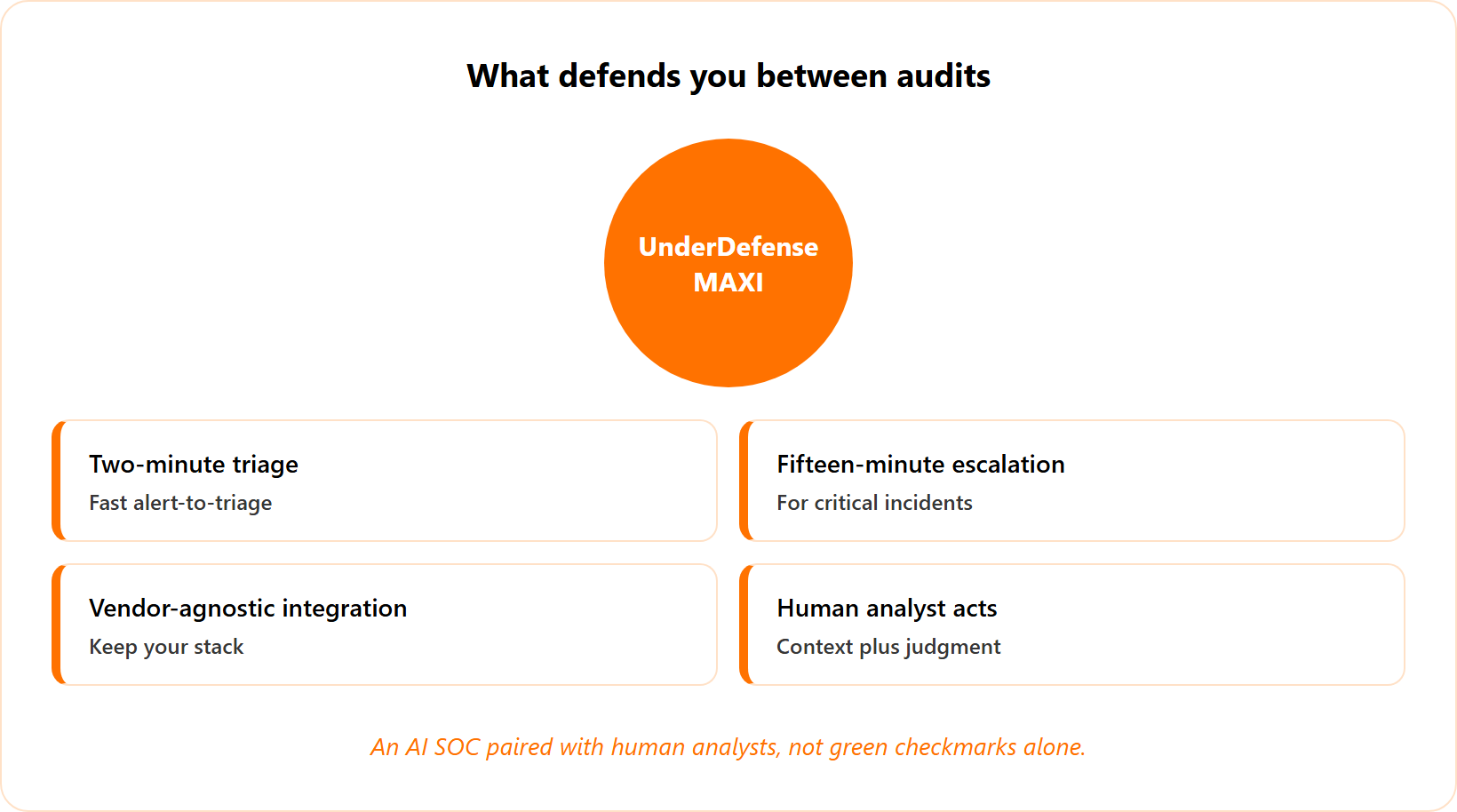
A SOC 2 report is a point-in-time snapshot that proves controls existed on audit day rather than that threats get caught on a random Tuesday. Real defense needs continuous detection and response plus a human who acts. UnderDefense pairs an AI SOC with concierge analysts, delivering 2-minute alert-to-triage and 15-minute escalation for critical incidents, integrating vendor-agnostically across your stack.
Before: the ticket is punched, the SOC still drowns
So you closed the enterprise deal and the dashboard is green. The audit proved your controls existed on one day inside an observation window. What it never proved is whether an alert at 2 a.m. on a Tuesday gets caught and stopped. Most lean teams are still buried in noisy alerts with no one to act after hours, which is why continuous security monitoring matters here.
After: detection plus a human who responds
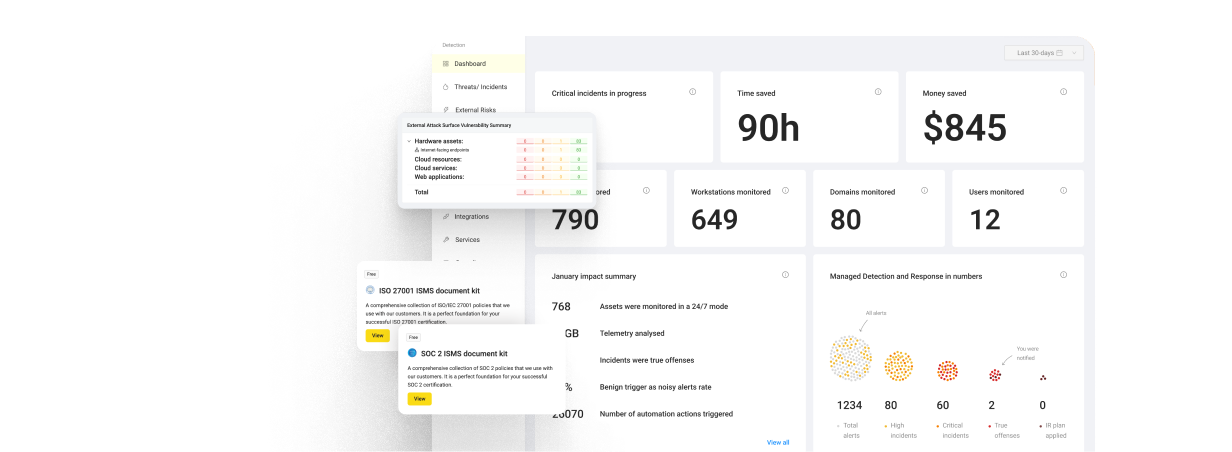
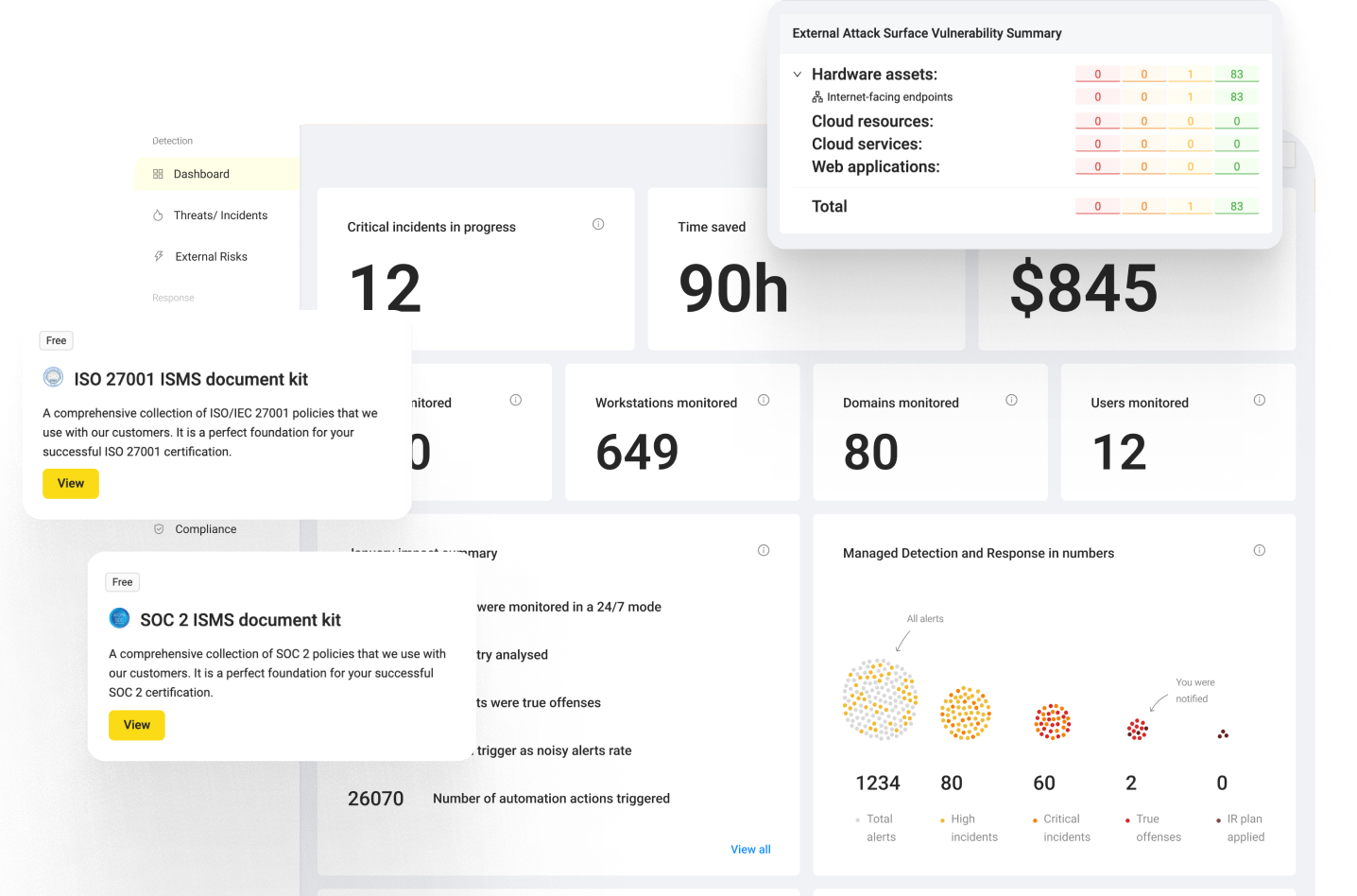
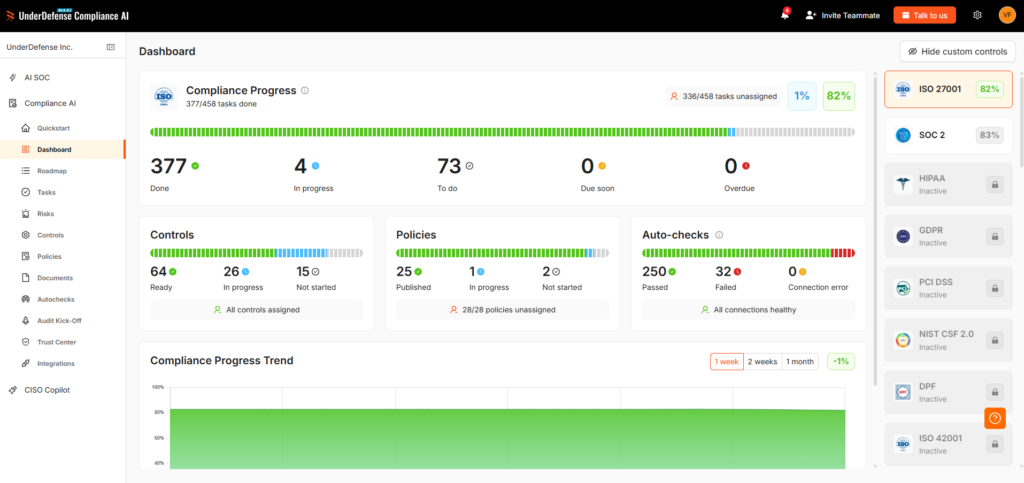
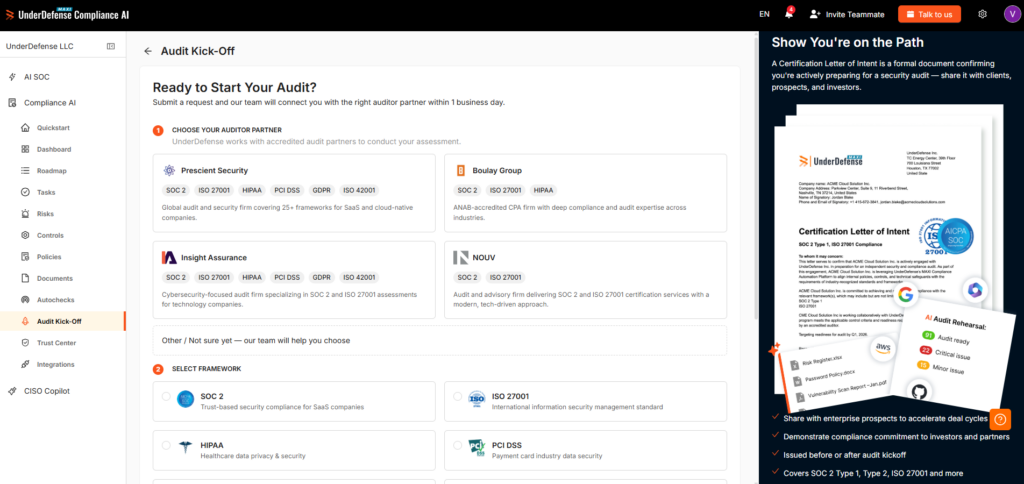
Here is the shift that matters. Continuous detection finds the threat, and a human analyst acts on it with context, fast. UnderDefense MAXI Compliance AI pairs an AI SOC with concierge analysts to deliver exactly that operational tempo. You can see the workflow on the UnderDefense MAXI Compliance AI platform.
What that buys you in practice:
- UnderDefense MAXI Compliance AI plus a human ally, with 2-minute alert-to-triage and 15-minute escalation for critical incidents.
- Vendor-agnostic integration across your existing tools, so you avoid rip-and-replace and keep SIEM ownership.
- Transparent, right-sized pricing without escalating subscription traps.
- Detect-and-respond, where threats get stopped, instead of alert-only feeds that hand you more triage.
The bridge: why a human still matters
I will say plainly what the automation pitch avoids. I cannot get to a fully lights-out security stack, because we always hit situations that need a human to judge them. AI contextualizes and accelerates; a person dictates the strategy and owns the call. That human-plus-automation model is the resilient one, and it is the work we do every day through our incident response team.
“The biggest win for me was getting actual control over our security alerts. When they escalate something, they include the context we need to understand the issue quickly.”
Verified User, Marketing and Advertising UnderDefense G2 Verified Review
“They catch and stop problems quickly, which is a huge relief, and it doesn’t cost a fortune.”
Serhii B., CISO UnderDefense G2 Verified Review
Here is the question I am sitting with for 2026 and beyond. As AI agents start touching production systems on their own, the gap between “audit-ready” and “actually defended” widens, and I would love to hear what you are doing to watch that gap. Tell us what you are defending, and we will tell you, honestly, where a platform ends and a SOC begins.
1. How much does Vanta actually cost per year in 2026?
Vanta publishes no price card, so we see buyers land in four headcount-driven bands. Essentials runs roughly 7,500 to 12,000 dollars per year for teams under 50, Plus sits at 20,000 to 45,000 dollars for 50 to 150 employees, and Professional or Enterprise climbs to 80,000 to 250,000 dollars for 100 to 500-plus staff.
Headcount is the main lever, with the price ladder bending hard at 50, 100, 200, and 500 employees. Two startups buying the same SOC 2 can pay very different numbers based purely on staff count.
The sticker also understates the bill. Each added framework runs about 5,000 dollars, and the external audit sits outside the subscription entirely, so total spend often climbs 30 to 50 percent above the first quote.
We always tell teams to budget the full stack, not the platform line. If you want help sizing that against an internal program, our cybersecurity budget guide for mid-market firms breaks the math down stage by stage.
2. Is the SOC 2 audit included in Vanta's subscription?
No, and this is the gap first-time buyers conflate most. The Vanta subscription buys compliance automation and evidence collection, while the audit itself is billed separately as a second invoice.
An external SOC 2 Type II audit runs 8,000 to 25,000 dollars, and ISO 27001 audits run 15,000 to 40,000 dollars, paid to a CPA firm such as Schellman, A-LIGN, or Johanson Group. Vanta’s in-platform Seamless SOC service (10,000 to 25,000 dollars) coordinates the auditor, but the CPA fee stays additional.
That separation is regulatory, not a Vanta quirk, because no compliance software can issue its own SOC 2 report. An independent CPA firm has to inspect and sign the attestation.
We urge buyers to scope the auditor fee into the budget on Day 1, alongside the platform quote, so the second invoice never blindsides the board. A report proves controls existed on audit day, which is why our compliance services focus on the live posture between attestations.
3. What hidden costs and add-on fees do Vanta buyers forget?
The base tier is rarely the real cost. We see budgets quietly break on per-framework pricing, because SOC 2 plus ISO 27001 plus HIPAA is three separate roughly 5,000 dollar line items, not one.
The most common overlooked add-ons include:
- Trust Center and TPRM together near 17,000 dollars per year; the VRM add-on alone has been reported at 11,200 dollars.
- Questionnaire automation, typically 3,000 to 8,000 dollars per year.
- The excluded audit, a CPA fee of 8,000 to 40,000 dollars.
- Mid-contract premiums, since anything bolted on after signing costs more than negotiating it upfront.
Stacked together, a buyer’s effective annual cost often runs 30 to 50 percent above the headline quote. The fix is unglamorous but it works: negotiate every likely add-on into the original contract before you sign, and confirm whether Microsoft E5 already covers some controls. Where Vanta’s model rewards add-on stacking, we scope managed detection and response programs with transparent, all-in pricing.
4. How much will Vanta cost at renewal, and what is the subscription trap?
Year-1 startup discounts, often 20 to 40 percent off and sometimes up to 70 percent, are rarely locked in. So renewal quotes commonly land 30 to 50 percent higher once the startup rate rolls off and the standard rate applies.
Contracts also carry 5 to 10 percent annual escalation clauses that compound. A 50,000 dollar deal at an uncapped 10 percent clause grows roughly 33 percent over four years, and buyers report invoices climbing from 8,000 dollars to 18,000 dollars in Year 2.
The auto-renewal clause makes it worse, because order forms often require 60 to 90 days notice to cancel, and missing that window locks you in for another term.
The fix costs nothing at signing. We advise buyers to negotiate a written 3 to 5 percent renewal cap, lock a multi-year price hold, and strike or shorten the auto-renewal notice window. A subscription that keeps charging full freight long after the certification lift is done is a recurring cost, which is why teams study why businesses switch providers before re-signing.
5. How does Vanta pricing compare to Drata, Secureframe, and Sprinto?
For a 50-person first-SOC-2 buyer, negotiated three-year total cost of ownership is roughly: Vanta Plus 77,000 dollars, Drata Foundation 49,000 to 72,000 dollars, Secureframe Fundamentals 39,000 to 60,000 dollars, and Sprinto Starter 27,000 to 49,500 dollars.
Vanta usually costs more while leading on integration depth (400-plus connectors), brand recognition, and its in-platform Seamless SOC audit workflow. The sticker gap is real, but it shrinks fast. Drata and Secureframe ship Trust Center and questionnaire automation as add-ons, so matching Vanta Plus adds 5,000 to 10,000 dollars per year and closes the gap.
The honest read is that this is a category we do not compete in, so we will call it straight: Vanta wins for integration-heavy, fast-scaling SaaS teams, while leaner tools win for budget-tight teams running a single framework.
The platform you pick matters less than the contract you sign. The same dollars buy very different outcomes, which is the kind of vendor math our virtual CISO helps leaders work through.
6. Is Vanta worth it, and when does it fall short?
Vanta is worth it when a stalled enterprise deal is worth more than the roughly 25,000 to 80,000 dollar spend. Buyers cite closing their first Fortune 500 as the real ROI, rather than labor saved on evidence collection.
It wins for integration-heavy, fast-scaling SaaS teams that value 400-plus connectors and the Seamless SOC auditor flow. It falls short for tiny teams paying for premium tiers they never use, and for single-framework buyers who would be cheaper on a leaner tool.
Here is the part the category avoids saying. Most buyers do not purchase Vanta to be safer; they purchase it because a big customer’s procurement team blocked the deal without a SOC 2 report. Compliance is a sales requirement first.
A dashboard reading 100 percent audit-ready is a control snapshot, and we have watched teams hit that bar while still unprepared for what an attacker actually does. That gap between a passing checklist and live posture is exactly where our SOC service earns its keep.
7. What does Vanta implementation involve and how long until audit-ready?
Most buyers use Vanta’s free self-serve onboarding, connecting integrations and remediating failing tests over a 2 to 6 week sprint. Optional partner implementation runs 10,000 to 50,000 dollars, and some buyers see a 2,000 to 10,000 dollar onboarding fee that is often negotiable or waivable.
First-time SOC 2 Type II readiness typically takes 3 to 6 months before the observation period even starts, so the fast platform still sits inside a multi-month arc.
The cost the quote never shows is the largest one. The license is the visible number, but the real spend is internal engineering and ops hours spent remediating findings.
We have watched this tax bite lean teams hard, so we tell buyers to budget people-hours alongside the subscription. Where remediation outpaces a small internal team, our incident response and managed services pick up the work the platform only flags.
8. Compliance got us the ticket, so what defends us between audits?
A SOC 2 report is a point-in-time snapshot that proves controls existed on audit day, rather than proof that threats get caught on a random Tuesday. Real defense needs continuous detection and response plus a human who acts.
What the audit never proved is whether an alert at 2 a.m. gets caught and stopped. Most lean teams are still buried in noisy alerts with no one to act after hours.
Here is the shift that matters. Continuous detection finds the threat, and a human analyst acts on it with context, fast. UnderDefense MAXI pairs an AI SOC with concierge analysts, delivering:
- 2-minute alert-to-triage and 15-minute escalation for critical incidents.
- Vendor-agnostic integration across your existing tools, so you avoid rip-and-replace.
- Transparent, right-sized pricing without escalating subscription traps.
We cannot get to a fully lights-out stack, because we always hit situations that need a human to judge them. You can see that workflow on the UnderDefense MAXI platform.