




Q1. What Are the 9 Best Red Canary Alternatives for a Full-Stack SOC in 2026?
The best Red Canary alternatives for a full-stack SOC in 2026 detect and respond across endpoint, identity, network, SaaS, and cloud, not just the endpoint. Top picks: UnderDefense MAXI, Arctic Wolf, CrowdStrike Falcon Complete, SentinelOne Vigilance, eSentire, Expel, Sophos MDR, Cybereason, and ReliaQuest. UnderDefense leads for teams needing vendor-agnostic integration, transparent pricing, and concierge analyst response beyond endpoint coverage.
Choosing an MDR partner is one of the higher-stakes calls a security leader makes, because the wrong pick quietly leaves a whole attack surface unwatched. For this guide, I analyzed 9 providers that show up most often in Red Canary switching evaluations across Gartner Peer Insights, G2, and analyst roundups. I scored each one on how much it sees, how fast it acts, whether it locks you into its own tooling, and how honest its pricing is. The buyers I wrote this for run 1,000 to 10,000-employee environments in tech, healthcare, financial services, and PE portfolio companies, and they are past the point where an endpoint agent alone keeps them safe.
Here is the honest read. Red Canary does endpoint detection engineering well, but reviewers describe it as primarily endpoint-focused with lighter network coverage, and buyers have flagged reduced support after its acquisition. Meanwhile, the identity attack surface has gone from a side door to the main entrance. One bad login from Thailand or Singapore can be a 2020 compromise still logging in today, and an endpoint agent never sees it.
Full-Stack SOC Provider Comparison
| Provider | Best For | Key Strength | Compliance |
|---|---|---|---|
| UnderDefense MAXI 5 stars |
Lean teams needing detection plus hands-on response | Vendor-agnostic full-stack coverage, concierge analyst action, and transparent pricing | SOC 2, HIPAA, ISO 27001, and PCI DSS |
| Arctic Wolf 3 stars |
Mid-market wanting a fully outsourced SOC | Concierge Security model, and broad monitoring | SOC 2, HIPAA, and PCI DSS |
| CrowdStrike Falcon Complete 4 stars |
Endpoint-first enterprises on Falcon | Elite endpoint detection and response | SOC 2, HIPAA, and PCI DSS |
| SentinelOne Vigilance 4 stars |
Teams on the Singularity platform | Autonomous endpoint response | SOC 2, HIPAA, and PCI DSS |
| eSentire 4 stars |
Firms wanting aggressive containment | Fast MDR response, and Atlas platform | SOC 2, HIPAA, and PCI DSS |
| Expel 4 stars |
Cloud and SaaS-heavy shops wanting transparency | Transparent workflows, and strong integrations | SOC 2, HIPAA, and PCI DSS |
| Sophos MDR 4 stars |
Mid-market post-Secureworks buyers | Broad telemetry, and Taegis assets | SOC 2, HIPAA, and PCI DSS |
| Cybereason 3 stars |
ATT&CK-driven detection teams | MITRE ATT&CK-mapped detection | SOC 2, HIPAA, and PCI DSS |
| ReliaQuest 3 stars |
Large SOCs wanting a co-managed layer | GreyMatter automation across tools | SOC 2, HIPAA, and PCI DSS |
Think of most networks like an M&M. There is a hard candy shell on the outside and a soft, squishy center inside. Endpoint-only tooling guards the shell. A full-stack SOC watches the chocolatey middle, where identity, SaaS, and rogue AI agents actually live.
1.1 UnderDefense MAXI
Overview
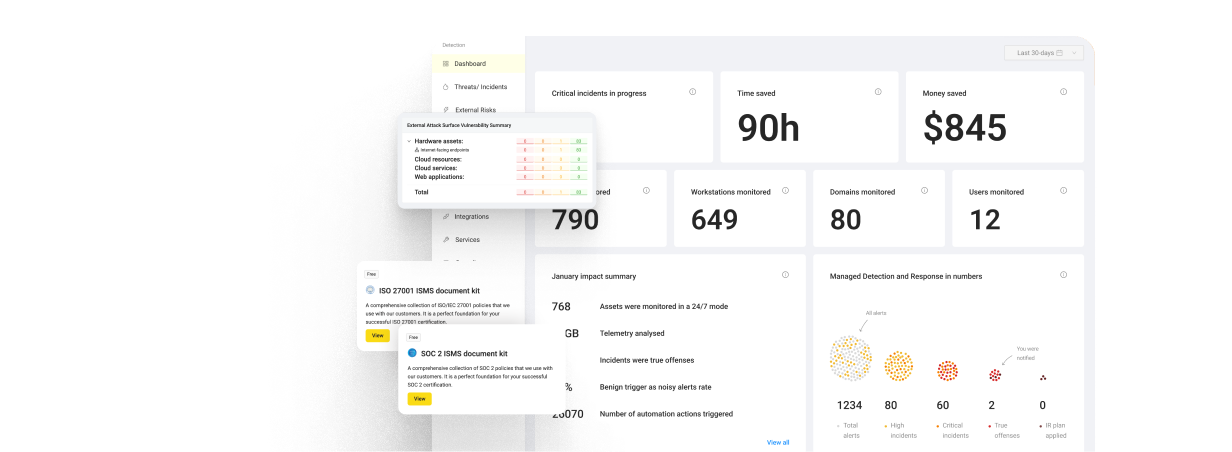
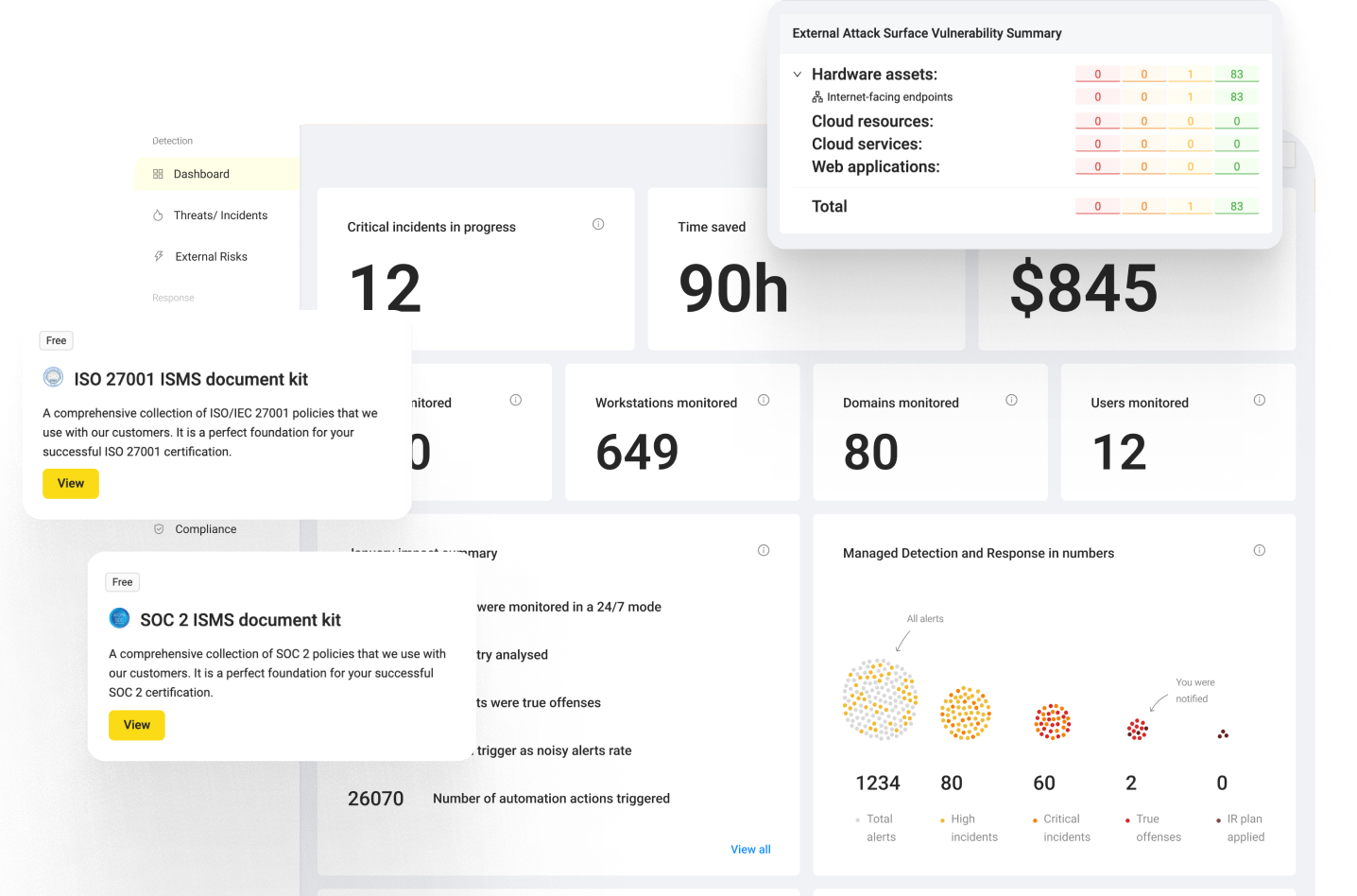
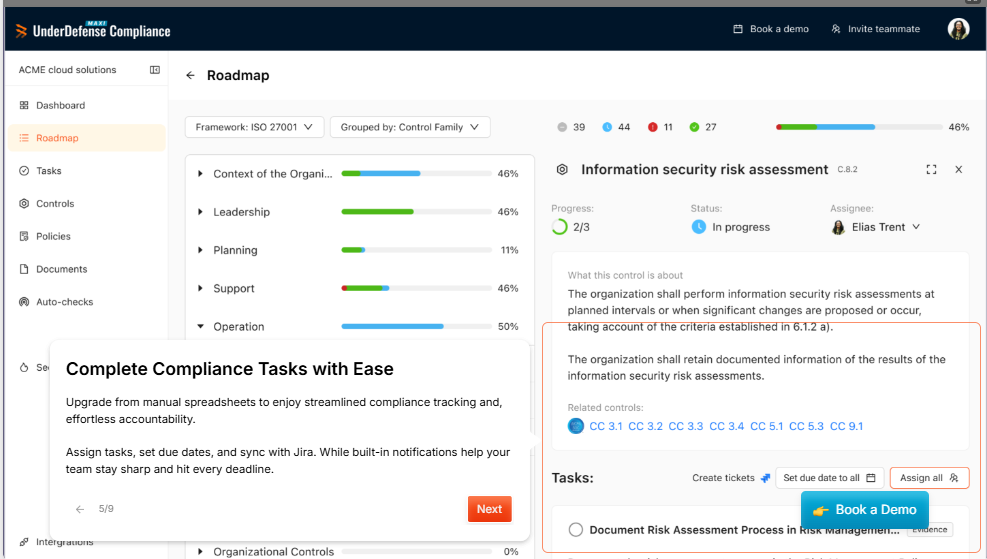
UnderDefense MAXI is our AI SOC plus Human Ally platform, built for teams that need coverage beyond the endpoint without ripping out the tools they already own. We correlate signals across endpoint, identity, network, cloud, and SaaS, then our analysts act on what they find. The MAXI platform sits on top of your existing stack, so you keep your data and avoid vendor lock-in.
The difference here is not the technology alone, but the humans operating it around the clock. Detection without response just moves the alert from one queue to another.
Core Services
- 24/7 detection and response across 250+ integrated security tools, vendor-agnostic by design
- Concierge Response, where our analysts verify suspicious activity directly with affected users over ChatOps
- AI-driven triage that cuts noise heavily before a human ever sees an alert
- Managed SIEM, cloud security, and incident response under one roof
- Compliance-ready reporting for SOC 2, HIPAA, ISO 27001, and PCI DSS
Why Companies Consider UnderDefense
Most mid-market teams cannot staff a 24/7 SOC, and building one runs past $1M a year. We give those teams a force multiplier that understands their environment, validates the alert, and responds, instead of forwarding a raw ticket at 2 a.m. Reviewers repeatedly call out how quickly the noise drops in week one, which is where our SOC service earns its keep.
Ideal Customer Profile
- Technology, healthcare, and financial services firms with 50 to 10,000 employees
- Security-lean teams drowning in alerts from disconnected tools
- Compliance-driven organizations needing audit evidence on demand
- PE portfolio companies standardizing security across acquisitions
Commercial Model
Transparent, published MDR pricing in the roughly $11 to $15 per endpoint per month range, with no SIEM lock-in or forced tool replacement. Onboarding, continuous monitoring, and analyst response are included, not billed as surprise add-ons.
When to Shortlist
Shortlist UnderDefense when you want one partner to both detect across your whole stack and own the response, while keeping your existing managed SIEM and data. It fits teams switching off endpoint-heavy providers that leave identity and SaaS unwatched.
Reviews
“The biggest win for me was getting actual control over our security alerts. Before the guys from UD stepped in, we were getting bombarded with alerts from all our security tools. Their team cleaned up our configurations and got the noise under control within the first week. The platform itself is straightforward, it pulls in data from all our existing security tools, so we didn’t have to rip and replace anything.”
Verified User in Marketing and Advertising UnderDefense G2 Verified Review
“UnderDefense MAXI integrates well with our systems, specifically with our SIEM, Splunk. Their team is proactive in identifying and addressing threats, providing 24/7 oversight.”
Oleg K., Director Information Security UnderDefense G2 Verified Review
1.2 Arctic Wolf
Overview
Arctic Wolf is a managed cybersecurity provider focused on delivering a fully outsourced Security Operations Center experience. It targets organizations that want enterprise-grade monitoring without building an internal team. Its platform bundles continuous monitoring, risk management, and incident response into one managed service.
Core Services
- 24/7 managed detection and response with a Concierge Security Team
- Cloud and endpoint security monitoring
- Vulnerability and risk management
- Log monitoring and threat hunting
- Compliance readiness assistance (SOC 2, HIPAA, and PCI DSS)
Why Companies Consider Arctic Wolf
Many mid-market teams lack the budget or talent to run an in-house SOC. Arctic Wolf positions itself as an operational partner rather than a tool vendor. That appeals to teams moving from reactive security toward continuous monitoring, a shift we cover in our MDR buyers guide.
Ideal Customer Profile
- Mid-market companies with 50 to 1,000 employees
- Compliance-driven organizations handling customer data
- Security-lean teams wanting outsourced monitoring
Commercial Model
Subscription pricing tied to organization size and monitored assets. Pricing is quote-based rather than published, so buyers negotiate per engagement.
When to Shortlist
Shortlist Arctic Wolf for broad, fully managed monitoring, and weigh it against your goals for incident response ownership. Look closely at flexibility first, since reviewers flag that changes route through its engineering team and that remediation often falls back on your team.
Reviews
“Solid detection and response capabilities, but overly relies on the client’s team for remediation, which really hurts the value of the service.”
VP of Technology Arctic Wolf Gartner Verified Review
“Anything you want to look at or changes you need to make in the product must go through their engineering team. As an MSP, this is a horrible way to do business for us.”
Matt C., Manager, Cybersecurity Services Arctic Wolf G2 Verified Review
1.3 CrowdStrike Falcon Complete
Overview
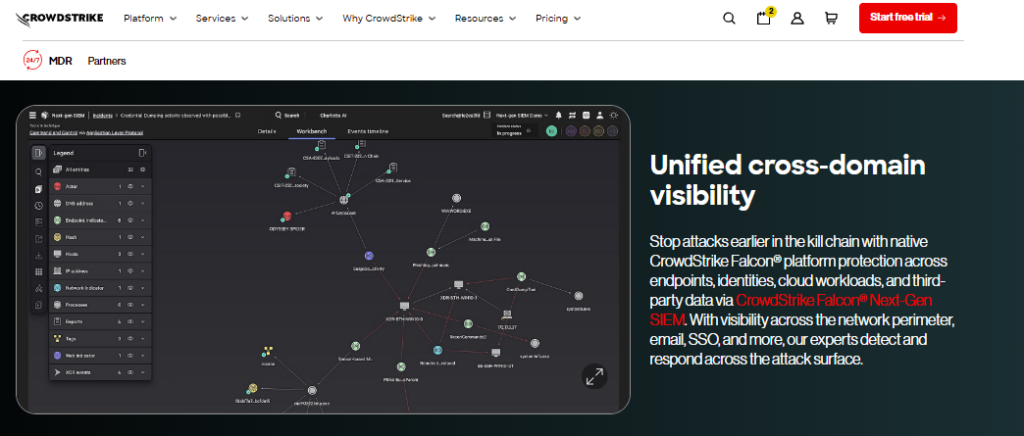
CrowdStrike Falcon Complete is a fully managed detection and response service built on the Falcon endpoint platform. It pairs elite endpoint telemetry with a managed team that handles detection, investigation, and remediation. The catch is that most of its power lives on the endpoint, so identity and SaaS context can thin out.
Core Services
- Fully managed endpoint detection and response on the Falcon agent
- 24/7 threat hunting through the Falcon OverWatch team
- Guided and hands-on remediation
- Threat intelligence enrichment
- Identity and cloud modules as paid add-ons
Why Companies Consider CrowdStrike
Teams pick Falcon Complete when endpoint detection quality is the top priority. Its telemetry and threat hunting are widely respected across enterprise SOCs. For heavy Falcon shops, the managed EDR layer is a natural extension.
Ideal Customer Profile
- Enterprises already standardized on the Falcon platform
- Endpoint-first security programs
- Teams wanting elite hunting over broad tool integration
Commercial Model
Per-endpoint subscription, with identity, cloud, and SIEM capabilities priced as separate modules. Costs climb as you add surfaces beyond the endpoint.
When to Shortlist
Shortlist Falcon Complete when the endpoint is your core battleground and you accept platform standardization. Look elsewhere if you need vendor-agnostic coverage across a mixed stack, which is where a full-stack MDR service fits better.
Reviews
“These guys make one of the best EDR systems available today. Their solutions takes some fine tuning to dial in, but the effort is worth it. I do wish their tool had on demand scanning capabilities though for ongoing PC hygiene.”
Software Company reviewer CrowdStrike TrustPilot Verified Review
“I requested a trial version for Crowdstrike Falcon multiple times, but I never received any response. I had initially planned to purchase Crowdstrike for my business, but now I will have to look for another provider.”
Verified Customer CrowdStrike TrustPilot Verified Review
1.4 SentinelOne Vigilance
Overview
SentinelOne Vigilance is the managed MDR layer on top of the Singularity platform. It leans on autonomous, agent-driven detection and response at the endpoint. Analysts triage and escalate on top of that automation.
Core Services
- Managed detection and response on the Singularity agent
- Autonomous threat containment and rollback
- 24/7 analyst triage and escalation
- Threat hunting through Vigilance Respond Pro
- Digital forensics support as an add-on
Why Companies Consider SentinelOne
Buyers value the autonomous response, where the agent can isolate and roll back an infected machine fast. Gartner Peer Insights buyers recommend it highly, with 97% willing to recommend its XDR in 2025. It suits teams that trust security automation to act first.
Ideal Customer Profile
- Teams standardized on the Singularity platform
- Organizations wanting autonomous endpoint remediation
- SOCs comfortable with agent-led response
Commercial Model
Per-endpoint subscription tied to the Singularity platform, with tiered Vigilance add-ons. Deeper forensics and response tiers cost more.
When to Shortlist
Shortlist Vigilance when autonomous endpoint response is a priority and you run Singularity. Weigh it carefully if you need coverage stitched across third-party tools.
Reviews
“95% of end users expressed willingness to recommend SentinelOne’s MDR services, reflecting strong satisfaction with detection and response outcomes.”
Gartner Peer Insights aggregate SentinelOne Gartner Verified Review
“SentinelOne was recognized as a 2025 Gartner Peer Insights Customers’ Choice for XDR, one of only two vendors with the distinction.”
Gartner Peer Insights SentinelOne Gartner Verified Review
1.5 eSentire
Overview
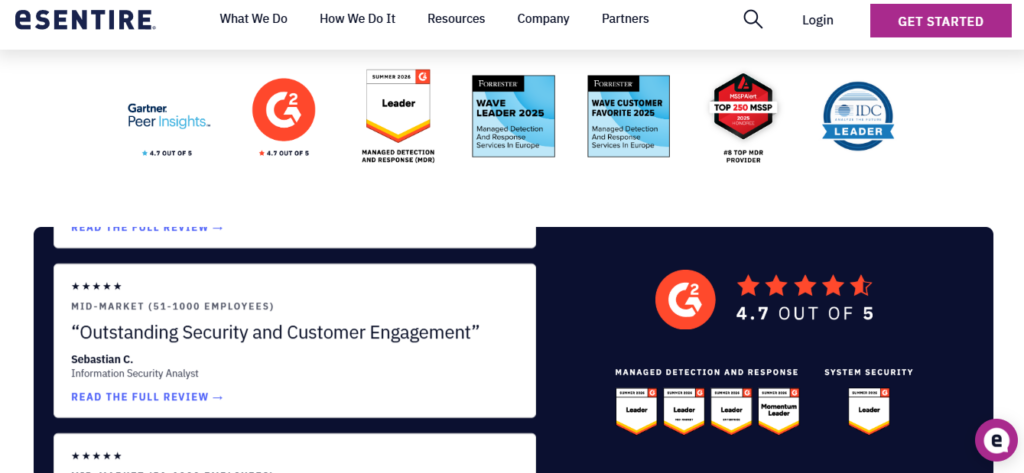
eSentire delivers MDR built around its Atlas platform and aggressive threat containment. It is known for fast response and network visibility. Coverage across every SaaS surface can still leave gaps that need internal follow-up.
Core Services
- 24/7 managed detection and response
- Network, endpoint, log, and cloud monitoring
- Hands-on threat containment
- Threat intelligence and hunting
- Incident response support
Why Companies Consider eSentire
Teams choose eSentire for its speed and its willingness to contain threats directly. Its network-layer visibility appeals to firms worried about lateral movement. The response posture is more active than pure alert-forwarding.
Ideal Customer Profile
- Mid-market to enterprise firms wanting fast containment
- Network-heavy environments
- Compliance-driven organizations in finance and healthcare
Commercial Model
Subscription pricing based on assets and modules, quoted per engagement. Pricing is not publicly published.
When to Shortlist
Shortlist eSentire when speed of containment and network visibility rank highest. Confirm SaaS and identity coverage against your own stack before signing, a step our MDR buyers guide walks through.
1.6 Expel
Overview
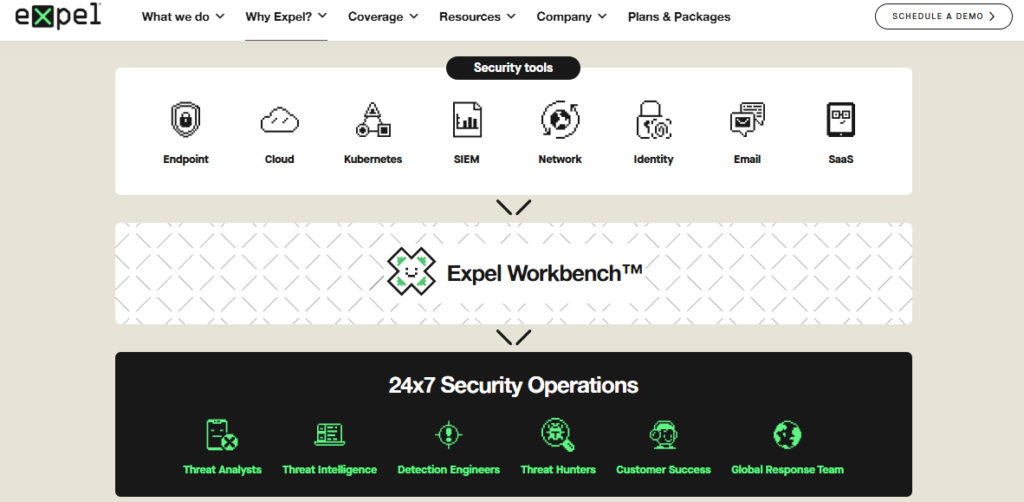
Expel is a transparent MDR provider that ingests logs from your existing tools rather than forcing its own agent. Its workflow visibility is a genuine strength. The tradeoff, per reviewers, is limited retained knowledge of your specific environment.
Core Services
- 24/7 detection and response across endpoint, cloud, and SaaS
- Transparent investigation workflows and dashboards
- Broad API-based integrations
- Alert triage and dispositioning
- Slack-based notifications and support
Why Companies Consider Expel
Buyers like that Expel shows its work, so you see how a decision was reached. It plugs into a wide range of tools through APIs. Small SOC teams use it as a first-line filter to cut noise, easing alert fatigue.
Ideal Customer Profile
- Cloud and SaaS-heavy mid-market companies
- Teams that value transparency over black-box triage
- Small internal SOCs needing a force multiplier
Commercial Model
Subscription pricing based on monitored technologies and device counts. Quoted per engagement.
When to Shortlist
Shortlist Expel when transparent workflows and broad integrations matter most. Plan for repeated verification requests, since organizational context does not always stick.
Reviews
“Despite the capabilities of the technical platform and the strength of the analysts providing the service, there is still a limit to the environmental/organizational knowledge inherent in the service. This leads to a fairly frequent need for engagement with our internal team to get clarification and verification.”
Verified User in Computer Software Expel G2 Verified Review
“Lack of support for EKS in AWS GovCloud. This was promised to us before we signed our contract, but later was removed from the roadmap. GovCloud is an essential part of our business and this lack of support leaves a large gap in our monitoring and alerting.”
Verified User in Manufacturing Expel G2 Verified Review
1.7 Sophos MDR
Overview
Sophos MDR is a broadly adopted managed service, strengthened by the Secureworks Taegis assets after acquisition. It carries strong G2 peer ratings and wide mid-market reach. Integration depth still varies by tool.
Core Services
- 24/7 managed detection and response
- Endpoint, network, and cloud telemetry
- Threat hunting and response
- Third-party tool integrations
- Incident response support
Why Companies Consider Sophos
Mid-market teams like the bundled ecosystem and strong peer reviews. Sophos has ranked as a top-rated MDR service in G2 peer review reports. The Secureworks acquisition widened its telemetry and detection assets.
Ideal Customer Profile
- Mid-market companies wanting a bundled security ecosystem
- Existing Sophos endpoint customers
- Teams post-Secureworks migration
Commercial Model
Per-user or per-endpoint subscription, tiered by MDR Standard and Complete. Pricing scales with add-on integrations.
When to Shortlist
Shortlist Sophos MDR when you want a proven mid-market service with strong reviews. Validate how deeply it integrates with your non-Sophos tools and your managed SIEM.
Reviews
“Sophos MDR was recognized as the number one rated MDR service by G2 peer reviews in the Winter 2023 report.”
G2 Peer Review report Sophos MDR G2 Verified Review
“Filter 498 verified reviews by company size, role, or industry to see how Sophos MDR performs for teams like yours across mid-market and enterprise.”
G2 aggregate Sophos MDR G2 Verified Review
1.8 Cybereason
Overview
Cybereason builds its MDR around detection mapped to the MITRE ATT&CK framework, a public knowledge base of attacker tactics. Its MalOp view links related activity into one story. Coverage strength is centered on endpoint and behavioral detection.
Core Services
- Managed detection and response
- ATT&CK-mapped behavioral detection
- MalOp correlation across related events
- Threat hunting
- Incident response support
Why Companies Consider Cybereason
Detection engineers like the ATT&CK mapping, which frames alerts in attacker terms. The MalOp view reduces the effort of stitching events together. It suits teams that think in adversary tactics and lean on threat hunting tools.
Ideal Customer Profile
- Detection-engineering-focused SOCs
- Teams that operate around MITRE ATT&CK
- Endpoint-centric security programs
Commercial Model
Per-endpoint subscription, quoted per engagement. Pricing is not publicly published.
When to Shortlist
Shortlist Cybereason when ATT&CK-aligned detection is central to your program. Confirm coverage beyond the endpoint for identity and cloud.
1.9 ReliaQuest
Overview
ReliaQuest runs its GreyMatter platform as a co-managed layer that sits across your existing tools. It leans heavily on automation to correlate signals. Buyers have raised transparency questions about how that automation reaches conclusions.
Core Services
- Co-managed detection and response through GreyMatter
- Automation across existing security tools
- Threat hunting and detection engineering
- Alert correlation and triage
- Incident response support
Why Companies Consider ReliaQuest
Larger SOCs use ReliaQuest as an automation and correlation layer over their stack. It aims to unify signals without full tool replacement. That appeals to teams keeping their existing investments while adding a managed SOC service layer.
Ideal Customer Profile
- Larger enterprises with existing SOC teams
- Organizations wanting a co-managed automation layer
- Teams keeping their current security tools
Commercial Model
Subscription pricing based on data and monitored tools, quoted per engagement.
When to Shortlist
Shortlist ReliaQuest when you want an automation layer over a mature stack. Press hard on transparency, since visibility into automated decisions is a common buyer concern, and our take on AI SOC explainability covers why.
Where UnderDefense Fits Against This Field
Here is the pattern I see across 500+ customer environments. The endpoint-led players (CrowdStrike, SentinelOne, and Cybereason) detect beautifully on the endpoint but ask you to standardize on their agent. UnderDefense stays vendor-agnostic across 250+ tools, so you keep your SIEM and your data on the MAXI platform. Our Concierge Response has analysts verify suspicious logins directly with the affected user over ChatOps, which is where organizational context actually lives. Pure MDR providers like Arctic Wolf lean back on your team for remediation, a gap reviewers name directly. We publish pricing openly at roughly $11 to $15 per endpoint per month. Most of this field keeps pricing behind a quote and keeps investigation logic in a black box.
Q2. How Did We Score These Full-Stack SOC Providers?
We scored each provider across five weighted criteria totaling 100%: Cross-Surface Coverage (30%), Response Speed and Active Containment (25%), Vendor-Agnostic Integration (20%), Pricing Transparency (15%), and Verified User Reviews (10%). Scores of 0 to 20 earn 1 star, up to 81 to 100 for 5 stars. Coverage beyond the endpoint carried the most weight, because the identity attack surface is where breaches now start.
The Rubric, In The Open
I will be honest about the bias built into this scoring. We weighted coverage highest on purpose. If a tool only watches the endpoint, it cannot structurally reach 5 stars here, no matter how good its agent is.
Speed matters too, but I weight real containment over speed-theater. Doing the same alert triage faster is not transformation, but just a quicker treadmill that deepens alert fatigue.
Scoring Criteria and Weights
| Criterion | Weight | What Earns Points |
|---|---|---|
| Cross-Surface Coverage | 30% | Detection across endpoint, identity, network, SaaS, and cloud |
| Response Speed and Active Containment | 25% | Analysts who contain threats, not just forward alerts |
| Vendor-Agnostic Integration | 20% | Works with your existing tools, no forced rip-and-replace |
| Pricing Transparency | 15% | Published, predictable pricing |
| Verified User Reviews | 10% | G2 and Gartner Peer Insights ratings |
Star Bands
- 81 to 100 points: 5 stars
- 61 to 80 points: 4 stars
- 41 to 60 points: 3 stars
- 21 to 40 points: 2 stars
- 0 to 20 points: 1 star
This rubric happens to mirror what we built UnderDefense MAXI to do, vendor-agnostic integration and transparent pricing included, which is how it earns its 5-star anchor honestly rather than by fiat. Our MDR pricing is published for exactly this reason.
What Buyers Say About This Model
“The platform itself is straightforward, it pulls in data from all our existing security tools, so we didn’t have to rip and replace anything.”
Verified User in Marketing and Advertising UnderDefense G2 Verified Review
“UnderDefense MAXI integrates well with our systems, specifically with our SIEM, Splunk.”
Oleg K., Director Information Security UnderDefense G2 Verified Review
Q3. Why Are Teams Leaving Red Canary, and What Does “Full-Stack” Actually Cover?
Teams leave Red Canary because it is primarily endpoint-focused and lacks deep network, identity, and SaaS coverage, and buyers cite reduced support after its acquisition. A full-stack SOC fixes that by monitoring every layer an attacker can touch, endpoint, identity, network, email, SaaS, cloud, and AI agents in production, so a crafted request or a rogue login never slips through the gap the endpoint agent cannot see.
The Pain: Watching One Door While Five Stay Open
Here is the problem I keep seeing on migration calls. An endpoint agent (software on laptops and servers) is excellent at catching malware on a machine. It goes blind the moment an attacker skips the machine entirely, which is where a full-stack MDR service earns its place.
Picture your network as an M&M. Hard candy shell outside, soft squishy center inside. Endpoint-only tooling guards the shell while identity and SaaS sit exposed in the middle.
The Proof: Breaches That Never Touch an Endpoint
An attacker can hijack a web session and redirect logins to a server they control, harvesting credential pairs without ever landing on a laptop. No endpoint agent fires, because nothing malicious runs on the endpoint.
The data backs this up. In the 2026 Verizon DBIR, vulnerability exploitation became the top initial access vector at 31% of breaches, ahead of phishing and stolen credentials. One bad login from Thailand or Singapore can be a 2020 compromise still quietly logging in today.
The Payoff: The Five Layers to Demand
A real full-stack SOC watches every surface an attacker uses:
- Endpoint, for malware and process behavior
- Identity, for suspicious logins and privilege abuse
- Network, for lateral movement
- Email and SaaS, for phishing and account takeover
- Cloud and AI agents, for misconfigurations and rogue automation
Each layer maps to MITRE ATT&CK (a public catalog of attacker tactics) and produces the audit evidence SOC 2, HIPAA, and PCI DSS auditors ask for. Humans click one bad link at a time, but AI agents in production can swarm, so that last layer matters more every quarter, as our MDR for AI work shows.
We built UnderDefense MAXI to cover the identity, SaaS, network, and AI-agent layers Red Canary omits, without ripping out the tools you already trust, and our managed SIEM keeps your data in your hands.
What Reviewers Say
“Their team cleaned up our configurations and got the noise under control within the first week.”
Verified User in Marketing and Advertising UnderDefense G2 Verified Review
“Not having to worry about ransomware, alert overload and reporting. Getting a clear view of my security posture, where the threats are coming from and how they are handled.”
Arlin O., CIO UnderDefense G2 Verified Review
Q4. MDR vs EDR vs MSSP: Which One Actually Responds Instead of Just Alerting?
EDR is endpoint software. An MSSP mostly maintains your tools and forwards alerts. MDR adds a 24/7 team that investigates and contains threats. The criterion that matters: does the provider act, or just alert? Legacy MSSPs hand back tickets without clear answers, while a full-stack SOC contains the threat in minutes so your team is not the one waking up at 2 a.m. to a raw alert.
Three Categories, One Real Question
The acronyms blur together, so here is the plain version. EDR (Endpoint Detection and Response) is a tool. MSSP (Managed Security Service Provider) mostly runs tools for you. MDR (Managed Detection and Response) is a service that detects and acts, a distinction our managed SIEM vs MDR vs MSSP breakdown covers in depth.
The question that actually separates them is simple. When something breaks at 2 a.m., who does the work, you or them?
EDR vs MSSP vs MDR
| Attribute | EDR | MSSP | MDR |
|---|---|---|---|
| What it is | Endpoint software | Tool management service | Detection plus response service |
| Who acts | Your team | Mostly your team | The provider’s analysts |
| Typical response | You investigate | Alert forwarded to you | Analyst contains the threat |
| Response time | Depends on staff | Often 30 to 60 minutes to a ticket | Minutes to triage |
Why “Alert-Only” Creates Toil, Not Safety
Cybersecurity has over-specialized into tool babysitting, a cottage industry of dashboard-configurers. An alert-only provider forwards a raw ticket and calls it a day, which just moves the work back onto your team, instead of a real SOC service.
That is where reviewers get frustrated, describing tickets that come back without clear answers. A dashboard full of alerts is not safety, but a queue.
What Response Should Look Like
We built UnderDefense MAXI to detect and respond through concierge analyst support, with 2-minute alert-to-triage and 15-minute escalation for critical incidents. Our analysts verify suspicious activity directly with the affected user over ChatOps, so they own the outcome instead of escalating a mystery, backed by hands-on incident response.
What Reviewers Say
“Solid detection and response capabilities, but overly relies on the client’s team for remediation, which really hurts the value of the service.”
VP of Technology Arctic Wolf Gartner Verified Review
“They catch and stop problems quickly, which is a huge relief. The platform works really well with our other security tools.”
Serhii B., Chief Information Security Officer UnderDefense G2 Verified Review
Q5. Does Full-Stack AI Really Beat Alert Fatigue and Sub-Minute Breaches, or Just Speed Them Up?
Only if it eliminates work, not just accelerates it. Attacker break-in time has dropped hard, with the fastest breakout observed at 51 seconds and the median measured in minutes, so a SOC that escalates raw alerts in 30 to 60 minutes has already lost. Real full-stack AI runs autonomous triage, cutting noise by roughly 99%, while watching Copilot, Cursor, and custom agents that endpoint tools cannot see.
The Clock Nobody Can Beat by Hand
Let me put the urgency in plain numbers. CrowdStrike measured average eCrime breakout time at 48 minutes, with the fastest at 51 seconds. By the 2026 report, that median had fallen to 29 minutes.
Breakout time is how long an attacker needs to jump from one machine to the rest of your network. If your provider takes 30 to 60 minutes just to open a ticket, the attacker is already down the hall, which is why investigation speed matters so much.
Speed Alone Is a Faster Way to Be Wrong
Here is my contrarian read. If you keep the same humans looking at the same alerts, just faster, that is not transformation, but a quicker treadmill.
Speed without accuracy scales your mistakes. When you take millions of automated actions, even 99% accuracy leaves thousands of wrong calls, so precision has to come before raw pace, a principle behind our AI SOC explainability work.
Watching the AI Nobody Approved
The scarier gap is shadow AI, meaning unapproved AI tools employees wire into company data. Banning ChatGPT will not stop people, but they will just photograph their screens.
IBM found that 97% of organizations hit by an AI-related breach lacked proper AI access controls. Shadow AI added about $670,000 to the average breach cost. You cannot defend a Copilot or Cursor agent your endpoint tool never sees, which is where our MDR for AI coverage comes in.
Eliminating Whole Classes of Work
The fix is architecture, not effort. You can hunt rogue AI through OAuth logs (the records of what apps got permission to your data), often at zero extra cost. You can also set callback controls so an agent simply cannot reach an attacker’s server, blocked at the design level.
We built UnderDefense MAXI on an AI-triages, humans-decide model. Our AI runs the heavy triage across every layer, while our analysts own the judgment calls and talk to the affected user directly, backed by hands-on incident response. Automation handles the foot-soldier work, humans stay the generals.
Here is the question I am sitting with going into the next 18 months. As agents start to swarm faster than any human can click, does being a human in the loop become your last real advantage, or your slowest link? I do not think anyone has fully earned the answer yet.
Q6. What Does a Full-Stack SOC Cost, and How Do You Prove ROI to the Board?
Do not quote ROI until you have asked the CFO one question: what is your projected cost of business interruption per day? Staffing a 24/7 in-house SOC runs over $1M a year, and the average breach now costs $4.44M. A full-stack SOC’s value shows up where endpoint tools never look, like the $300K fraud one team caught during onboarding, paired with transparent, no-lock-in pricing.
The Only Honest ROI Anchor
Most ROI decks start with the tool cost, which is backwards. The real anchor is one CFO question: what does one day of business interruption cost us?
Once that number is on the table, the math changes. A 24/7 in-house SOC (your own around-the-clock team) costs north of $1M a year in salaries alone, before tools, as our SOC cost calculator lays out.
Where Opaque Pricing Bites
Here is the trap I see in RFPs. Some providers lock you into their SIEM (the system that stores your security logs), then bill you for every gigabyte you feed it.
Arctic Wolf reviewers describe exactly that dependency and reduced flexibility. Ingestion bloat is real too, one environment we tuned went from 300GB a day down to 35 to 40GB, close to a 90% cut, without losing detection coverage, thanks to our managed SIEM.
Proving Value the Board Can See
The average breach cost fell to $4.44M in 2025, driven mostly by faster AI-assisted containment. That decline is the story your board wants, faster containment equals lower loss, and our AI SOC ROI business case spells out the math.
We price UnderDefense MAXI transparently, roughly $11 to $15 per endpoint per month, with no SIEM lock-in. During one customer’s first three months, we accidentally surfaced a $300K fraud while tuning detections, value that no endpoint-only tool was positioned to catch.
What Reviewers Say
“UnderDefense is surprisingly affordable considering the level of protection we get. Their proactive threat hunting and rapid response have saved us from incidents that could have been incredibly costly.”
Verified User in Program Development UnderDefense G2 Verified Review
“Its reassuring to know they’re always watching for threats, and it doesn’t cost a fortune.”
Serhii B., Chief Information Security Officer UnderDefense G2 Verified Review
Q7. How Do You Choose and Switch to the Right Full-Stack SOC for Your Team?
Match the provider to your reality, not the leaderboard. Endpoint-heavy and content? Stay put. Drowning in identity, SaaS, and AI-agent blind spots with a lean team? Choose a vendor-agnostic full-stack SOC that responds in minutes and lets you own the detection logic like Lego bricks. Demand three things: full-surface coverage, active containment, and pricing you can defend to the board, then run a short, structured RFP.
Pick by Scenario, Not by Ranking
The best provider depends on your environment, so here is how I would map it. No leaderboard replaces knowing your own gaps.
- Lean team, sprawling identity and SaaS: choose a vendor-agnostic full-stack SOC that responds, not just alerts.
- PE portfolio rollup: pick a partner that standardizes coverage across acquisitions without ripping out each company’s tools.
- Healthcare or compliance-heavy: prioritize audit evidence for HIPAA, SOC 2, and PCI DSS on demand.
- AI-agent-heavy dev shop: demand visibility into Copilot, Cursor, and custom agents in production.
The Five-Line RFP Checklist
Put these five items in your request for proposal (the document you send vendors to bid):
- Coverage across endpoint, identity, network, SaaS, and cloud
- A written response SLA, like 2-minute alert-to-triage
- Vendor-agnostic integration with your existing tools
- Transparent, published pricing
- A false-positive burden metric, meaning analyst queries per true threat
Own the Build, Not Just the Bricks
My honest bias here. I want all the Lego bricks, then I want to build the platform my way, keeping my data and detection logic on the MAXI platform.
Black-box MDR hides how decisions get made, which fails you at 2 a.m. when you need to know why something fired. We built UnderDefense MAXI to be the vendor-agnostic, response-capable option that hands you the bricks and still owns the outcome with you, delivered as a full MDR service.
Being a human in this loop is a flex in 2026, so bring us your environment and let us pressure-test it together through our SOC service.
What Reviewers Say
“Underdefense act as an extension of our team, so we don’t need additional resources, ensuring 24/7 protection. It also solved our problem of having separate security tools that didn’t work well together.”
Inga M., CEO UnderDefense G2 Verified Review
“No, Underdefense’s fault entirely, but getting all our logs and stuff flowing took longer than I expected.”
Andriy H., Co-Founder and CTO UnderDefense G2 Verified Review
1. Why are teams looking for Red Canary alternatives in 2026?
We hear the same reasons on nearly every migration call. Red Canary is primarily endpoint-focused, so it lacks deep network, identity, and SaaS coverage, and buyers cite reduced support after its acquisition.
The structural problem is coverage. An endpoint agent catches malware on a machine, but it goes blind the moment an attacker skips the machine entirely, hijacking a web session or a login instead.
- No endpoint agent fires when nothing malicious runs on the endpoint.
- Identity and SaaS sit exposed in the soft center of your network.
- Vulnerability exploitation became the top initial access vector at 31% of breaches in the 2026 Verizon DBIR.
A full-stack SOC fixes this by watching every layer an attacker can touch. We built our MDR service to cover identity, SaaS, network, and AI-agent layers Red Canary omits, without ripping out the tools you already trust.
2. What does full-stack SOC coverage actually include?
We define full-stack coverage as monitoring every surface an attacker can use, not just the endpoint. That means five layers working together instead of one door watched while five stay open.
- Endpoint, for malware and process behavior.
- Identity, for suspicious logins and privilege abuse.
- Network, for lateral movement.
- Email and SaaS, for phishing and account takeover.
- Cloud and AI agents, for misconfigurations and rogue automation.
Each layer maps to MITRE ATT&CK, a public catalog of attacker tactics, and produces the audit evidence SOC 2, HIPAA, and PCI DSS auditors ask for.
The AI-agent layer matters more every quarter, because humans click one bad link at a time, while agents in production can swarm. We built MDR for AI to give teams visibility into Copilot, Cursor, and custom agents that endpoint tools never see, so a crafted request or rogue login never slips through the gap.
3. What is the difference between MDR, EDR, and MSSP?
The acronyms blur together, so here is the plain version. The real question is not the label but this: when something breaks at 2 a.m., who does the work, you or them?
- EDR (Endpoint Detection and Response) is endpoint software; your team investigates.
- MSSP (Managed Security Service Provider) mostly maintains your tools and forwards alerts, often 30 to 60 minutes to a ticket.
- MDR (Managed Detection and Response) adds a 24/7 team that investigates and contains threats in minutes.
An alert-only provider forwards a raw ticket and calls it a day, which just moves the work back onto your team. A dashboard full of alerts is not safety, but a queue.
We built UnderDefense MAXI to detect and respond through concierge analyst support, with 2-minute alert-to-triage and 15-minute escalation for critical incidents. Our full SOC service means our analysts verify suspicious activity directly with the affected user, so they own the outcome instead of escalating a mystery.
4. How do we score and compare full-stack SOC providers?
We scored each provider across five weighted criteria totaling 100%, weighting coverage highest on purpose. If a tool only watches the endpoint, it cannot structurally reach five stars, no matter how good its agent is.
- Cross-Surface Coverage (30%): detection across endpoint, identity, network, SaaS, and cloud.
- Response Speed and Active Containment (25%): analysts who contain threats, not just forward alerts.
- Vendor-Agnostic Integration (20%): works with your existing tools, no forced rip-and-replace.
- Pricing Transparency (15%): published, predictable pricing.
- Verified User Reviews (10%): G2 and Gartner Peer Insights ratings.
We weight real containment over speed-theater, because doing the same triage faster is just a quicker treadmill. This rubric mirrors what we built UnderDefense MAXI to do, and our published MDR pricing is part of how it earns its five-star anchor honestly rather than by fiat.
5. Which Red Canary alternatives offer the best endpoint detection?
If the endpoint is your core battleground, several strong endpoint-led options exist, though most ask you to standardize on their agent.
- CrowdStrike Falcon Complete: elite endpoint telemetry and OverWatch threat hunting, with identity and cloud as paid add-ons.
- SentinelOne Vigilance: autonomous containment and rollback on the Singularity agent.
- Cybereason: ATT&CK-mapped behavioral detection with its MalOp correlation view.
These detect beautifully on the endpoint, but their power lives there, so identity and SaaS context can thin out. That is the same gap that pushes teams away from Red Canary in the first place.
For heavy endpoint shops that still want managed depth, a managed EDR layer can extend detection, but we would pair it with cross-surface coverage so a rogue login or hijacked session does not slip past the agent entirely.
6. What does a full-stack SOC cost, and how do we prove ROI?
We tell teams not to quote ROI until they have asked the CFO one question: what does one day of business interruption cost us? That number reframes the whole conversation.
- Staffing a 24/7 in-house SOC runs over $1M a year in salaries alone, before tools.
- The average breach cost fell to $4.44M in 2025, driven mostly by faster AI-assisted containment.
- Opaque providers lock you into their SIEM, then bill for every gigabyte ingested.
We price UnderDefense MAXI transparently, roughly $11 to $15 per endpoint per month, with no SIEM lock-in. During one customer’s first three months, we surfaced a $300K fraud while tuning detections, value no endpoint-only tool was positioned to catch.
To model your own numbers, our SOC cost calculator compares in-house staffing against a managed full-stack SOC so you can defend the spend to your board.
7. Can AI-driven SOCs really beat alert fatigue and sub-minute breaches?
Only if the AI eliminates work, not just accelerates it. Attacker breakout time has dropped hard, with the fastest observed at 51 seconds and the 2026 median at 29 minutes, so a SOC that takes 30 to 60 minutes to open a ticket has already lost.
- Real full-stack AI runs autonomous triage, cutting noise by roughly 99%.
- Speed without accuracy scales your mistakes across millions of actions.
- Shadow AI added about $670K to average breach cost, and 97% of AI-breached firms lacked proper access controls.
You cannot defend a Copilot or Cursor agent your endpoint tool never sees. We built UnderDefense MAXI on an AI-triages, humans-decide model, so automation handles the foot-soldier work while analysts own the judgment calls.
Precision comes before raw pace, which is why our AI SOC explainability approach lets teams see why something fired at 2 a.m., not just how fast.
8. How do we choose and switch to the right full-stack SOC?
We tell teams to match the provider to their reality, not the leaderboard. No ranking replaces knowing your own gaps.
- Lean team, sprawling identity and SaaS: choose a vendor-agnostic SOC that responds, not just alerts.
- PE portfolio rollup: pick a partner that standardizes coverage across acquisitions.
- Healthcare or compliance-heavy: prioritize audit evidence for HIPAA, SOC 2, and PCI DSS on demand.
- AI-agent-heavy dev shop: demand visibility into Copilot, Cursor, and custom agents.
Then run a short RFP demanding five things: full-surface coverage, a written response SLA, vendor-agnostic integration, transparent pricing, and a false-positive burden metric.
Black-box MDR hides how decisions get made, which fails you when you need to know why something fired. Bring us your environment through our contact page, and we will pressure-test it with you and hand you the bricks while owning the outcome together.