







Starting the journey to a secure organisation is like fixing a broken lock on your front door: you can ignore it and save time today, but every day you wait you make a theft more likely and the eventual bill far larger. Cybersecurity technical debt is exactly this broken-lock problem writ across your IT estate: shortcuts, deferred fixes, and temporary workarounds that accumulate risk and quietly inflate the probability and impact of a future incident.
This article explains what cybersecurity technical debt looks like in practice, how it damages teams and the balance sheet, and—critically—how executives should measure, prioritize, and fund remediation so debt becomes a managed business risk rather than an existential surprise.
Get the Cybersecurity Tech Debt Checklist
Compare your posture to top-tier programs and act now to protect your business.
Cybersecurity technical debt: Why it matters and key risks
Organizations across industries are grappling with technical debt, but in cybersecurity, it’s not just a drag on productivity—it’s a direct invitation to attackers. Unlike general software debt that might slow down developers, cybersecurity debt creates exploitable gaps that can lead to breaches, fines, and reputational hits. At its core, it’s the backlog of security tasks postponed for business expediency, accruing “interest” in the form of escalating risks.
Among the key risks and reasons to address it head-on are:
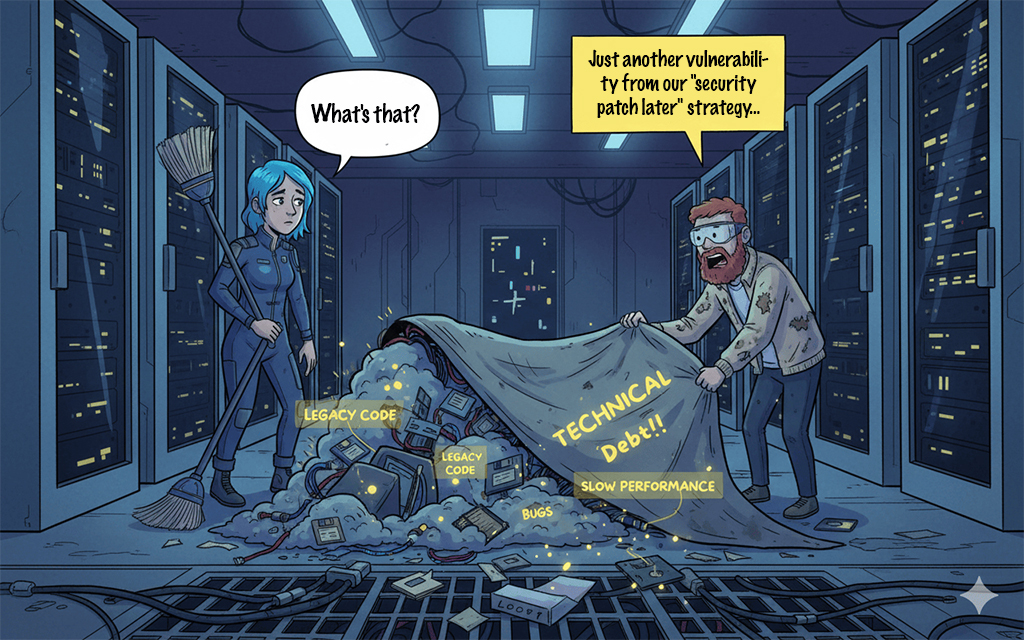
- Technical debt manifests as unpatched software, legacy systems, or weak configurations, making it easier for threat actors to infiltrate. For example, “loud debt” (long-known vulnerabilities left unaddressed) signals to hackers that your defenses are lax, increasing the odds of exploitation.
- Unlike a predictable loan, this debt’s “due date” hits suddenly via a breach, with average costs soaring to $4.44 million per incident (per IBM’s 2025 data). It also invites regulatory penalties, like GDPR fines up to 4% of global revenue.
- Teams bogged down by legacy fixes spend up to 17,700 hours annually patching vulnerabilities for a 100-developer team, equating to about $700,000 in labor alone.
- Siloed security teams and a “negligence culture” from repeated shortcuts can demoralize staff and erode trust. A breach doesn’t just cost money; it damages credibility.
By quantifying and addressing this debt, businesses should shift from reactive firefighting to proactive resilience, treating security as a strategic asset rather than a cost center.
When technical debt becomes a ticking bomb: Use cases and warning signs
Spotting cybersecurity technical debt early is key to avoiding catastrophe, but it often builds invisibly until a crisis strikes. The timing for intervention depends on your organization’s scale, sector, and risk exposure. From a strategic viewpoint, consider these triggers and real-world scenarios:
With AI accelerating both attacks and code generation (potentially introducing insecure outputs), debt compounds quickly. Evaluate if your current setup handles sophisticated threats; if not, it’s a cue for remediation.
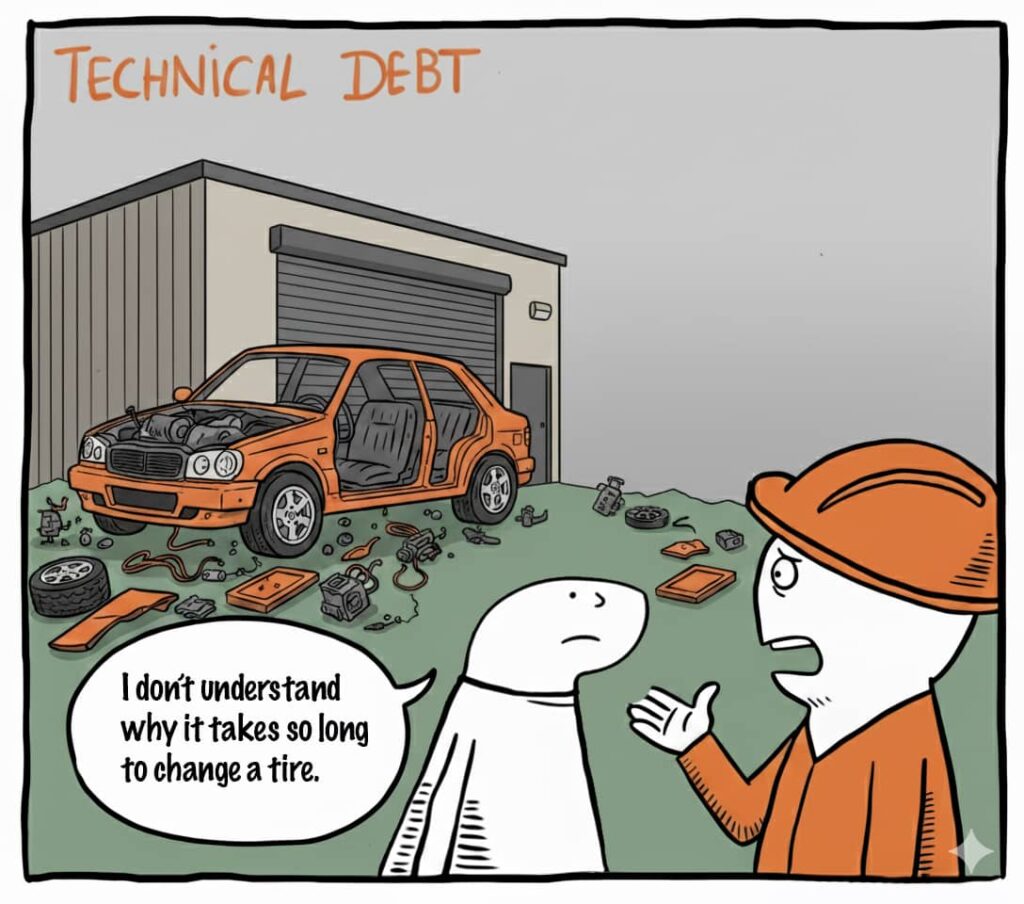
As businesses scale—say, migrating to the cloud—legacy systems create new debt through misconfigurations or incompatible security setups. In the shared responsibility model, you’re liable for your data and apps, so unaddressed debt here can amplify risks exponentially.
If past breaches stemmed from delayed patching (like Equifax’s $1.38 billion fallout from an unpatched Apache Struts flaw), or if regulations like HIPAA demand better monitoring, it’s time to act. Debt often surfaces in audits, revealing gaps in documentation or visibility.
When security tasks consume disproportionate time (e.g., manual vulnerability hunts amid feature deadlines), debt is signaling overload. In operations-heavy sectors like healthcare, this can halt services, as seen in the WannaCry attack crippling the UK’s NHS with £92 million in losses from unsupported Windows XP systems.
Implementation isn’t straightforward, as challenges like siloed teams or tool sprawl can make debt management feel overwhelming. Poorly prioritized backlogs lead to “spiraling vulnerabilities,” where new issues pile on unresolved ones. Success hinges on viewing debt not as an IT headache but a board-level priority, with governance ensuring it’s tracked alongside business KPIs.
Get a Technical Debt Healthcheck—named owners, metrics, and a remediation roadmap.
The hidden costs of ignoring cybersecurity technical debt
Managing cybersecurity technical debt demands awareness, dedicated resources, and a clear-eyed view of expenses. Beyond the obvious like upgrading outdated hardware lie subtler drains that can balloon budgets if unchecked.
Deployment often starts with an inventory audit to map vulnerabilities, but ongoing maintenance involves continuous scanning, patching, and training. For a mid-sized firm, this could mean reallocating 20-30% of dev time to debt reduction, per best practices. Hidden costs include downtime from disruptions (averaging $5,600 per hour) and the exponential remediation spike post-breach—proactive fixes are far cheaper than crisis response.
Storage and tooling add up too: vulnerability databases grow fast, and without automation, teams face alert fatigue from unfiltered data. In cloud environments, misconfigurations introduce fresh debt, passing costs back to you under shared models. Ultimately, unaddressed debt isn’t savings. It’s a liability that siphons innovation funds and exposes you to catastrophic failure when attackers strike.

Technical hurdles in debt management
Tackling security tech debt involves nuanced challenges, from quantifying intangible risks to fostering accountability. A common pitfall is treating all vulnerabilities equally, leading to inefficient efforts—use a “Security Debt Score” (exploitability × impact × detection difficulty) to prioritize high-stakes issues.
Maintenance requires “shift-left” integration, embedding security in DevOps via automated scans, but siloed CIO/CISO dynamics can hinder this. Cultural resistance where speed trumps security perpetuates negligence, demanding executive buy-in to set tones from the top.
To overcome these, leverage AI for flaw detection (countering its debt-creating potential) and partner with security experts for governance frameworks. This ensures remediation aligns with business goals, turning debt into a managed asset rather than a vulnerability vortex.
Strategies for managing technical debt: Build vs. buy and proven frameworks
Organizations face a classic dilemma: build internal remediation capabilities or invest in off-the-shelf tools and services? Building offers customization but demands expertise and time; buying provides scalability but risks vendor lock-in. Factors like team maturity and budget tip the scales—start with a debt scorecard (e.g., tracking MTTR or prevention rates) to inform decisions.
Proven strategies include:
- Focus on “loud debt” first using metrics like Debt Score Velocity.
- Align CISO/CIO roles via committees for shared accountability.
- Adopt DevSecOps, allocate remediation budgets, and train for ownership.
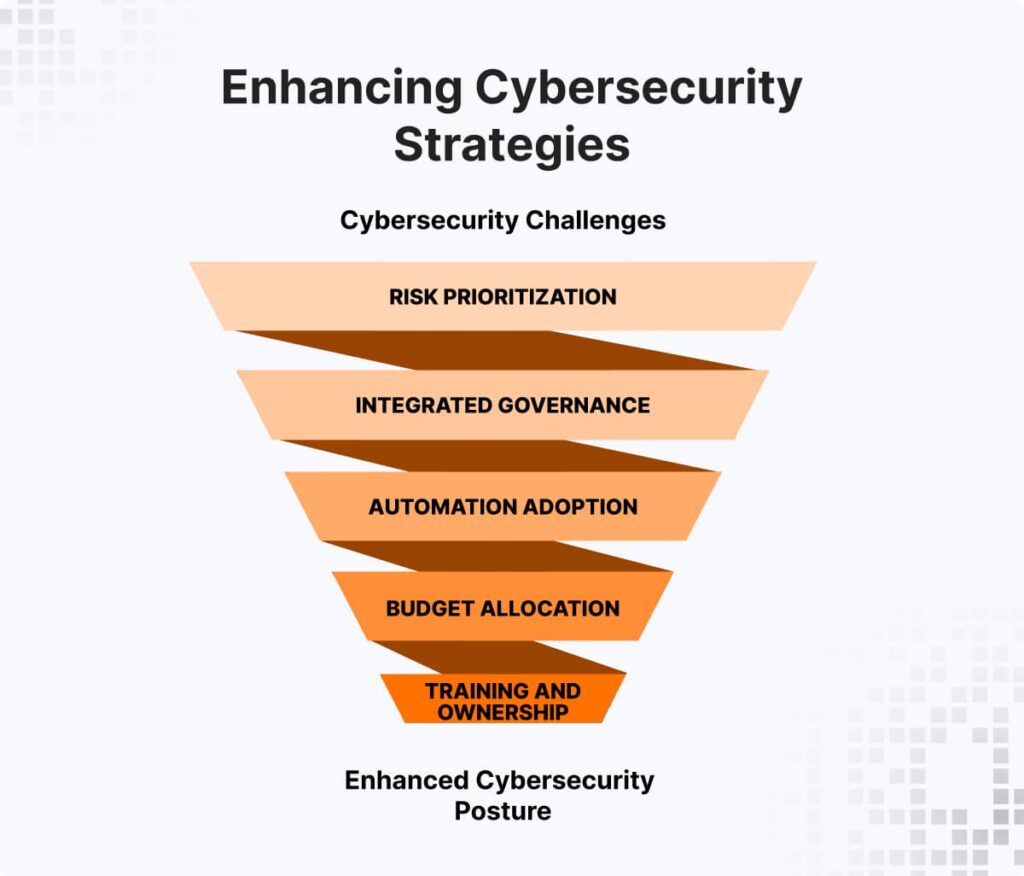
Outsourcing to managed detection and response (MDR) services can bridge gaps, offering audits and AI-supported, human-led remediation without in-house overload—much like how Equifax’s governance failures amplified a simple patch delay into billions in losses.
UnderDefense’s approach to cybersecurity technical debt
At UnderDefense, we help businesses confront and conquer cybersecurity technical debt through comprehensive assessments, prioritized roadmaps, and ongoing support. Whether auditing legacy systems or integrating AI for proactive fixes, our solutions ensure debt doesn’t derail your operations, delivering measurable ROI via reduced breach risks and compliance confidence.
With UnderDefense, you get:
- Debt Audits & Scoring: Custom metrics to quantify and prioritize vulnerabilities.
- Remediation Roadmaps: Tailored strategies blending automation, training, and governance.
- Cost-Effective Management: Scalable models that minimize TCO while maximizing agility.
- Compliance Alignment: Support for GDPR, HIPAA, and more with audit-ready reporting.
- Expert Collaboration: Co-managed or fully handled services integrating with your tools.
- Proactive Threat Hunting: AI-enhanced monitoring to prevent debt accumulation.
We offer flexible models—from full-service remediation to advisory partnerships—empowering you to balance innovation and security seamlessly.
Wrapping up: governance is the multiplier
Cybersecurity technical debt is the unavoidable companion of rapid growth, but neglecting it turns a manageable risk into a looming disaster, from costly breaches to stalled operations. The organizations that win are those that acknowledge its hidden dangers, act at the right time, and follow structured strategies to reduce it.
The real shift comes when leaders stop viewing security debt as a burden and start treating it as a strategic investment. With proactive governance and expert guidance, what once was a liability becomes a source of resilience—a lasting competitive advantage that protects both today and tomorrow.
Protect your assets, ensure compliance, and drive business resilience with our team.
1. What is cybersecurity technical debt?
Cybersecurity technical debt is the accumulated risks and deferred work from security shortcuts, like unpatched systems or weak configurations, that increase vulnerabilities and future costs, distinct from general tech debt by its direct exposure to external threats.
2. How does cybersecurity technical debt differ from financial debt?
Financial debt has predictable terms and interest; cybersecurity debt’s “interest” is unquantifiable risk that snowballs unpredictably, often culminating in sudden breaches rather than scheduled repayments.
3. What are common examples of cybersecurity technical debt?
Outdated legacy systems (e.g., end-of-support OS), delayed patching, hardcoded credentials, poor documentation, and cloud misconfigurations—all stemming from prioritizing speed over security.
4. How can businesses measure and manage cybersecurity technical debt?
Use scorecards with metrics like Security Debt Score, MTTR, and Technical Debt Ratio. Strategies include risk prioritization, DevSecOps integration, budgeting 20-30% of dev time for fixes, and fostering a security-first culture.
5. Can AI solve security debt?
AI can accelerate discovery and remediation suggestions but won’t replace governance, prioritisation, and validation. Use AI to scale repeatable remediation tasks while keeping humans accountable for risk decisions.
6. What's the business impact of unaddressed cybersecurity technical debts?
It leads to higher breach costs ($4.45M average), operational downtime ($5,600/hour), compliance fines (up to 4% revenue), and reputational damage, far outweighing proactive remediation expenses.