







Medusa is one of 2025’s most aggressive multi-extortion ransomware families: it encrypts systems, steals data, and uses public pressure to force payment. Emerging in June 2021, it has evolved into a Ransomware-as-a-Service (RaaS) powerhouse, impacting over 300 victims by February 2025 across critical sectors like healthcare, education, manufacturing, and technology.
With attacks surging 42% from 2023 to 2024 and continuing into 2025—claiming at least 40 more victims this year, including recent hits on Aldagi in Georgia, Florarte in Brazil, and Expert E-commerce GmbH in Germany—Medusa’s rapid encryption, “living off the land” (LOTL) techniques, and double extortion model teach invaluable lessons for the cybersecurity industry.
In this article, we’ll dissect Medusa’s operations, drawing key lessons on why traditional defenses fall short and how a structured response playbook can turn the tide. We’ll cover detection, response, recovery, and prevention, emphasizing practical steps to build resilience against this highly efficient threat.
Fortify Against Medusa Ransomware
How to detect, respond, and recover from one of 2025’s most aggressive extortion groups.
What is Medusa ransomware?
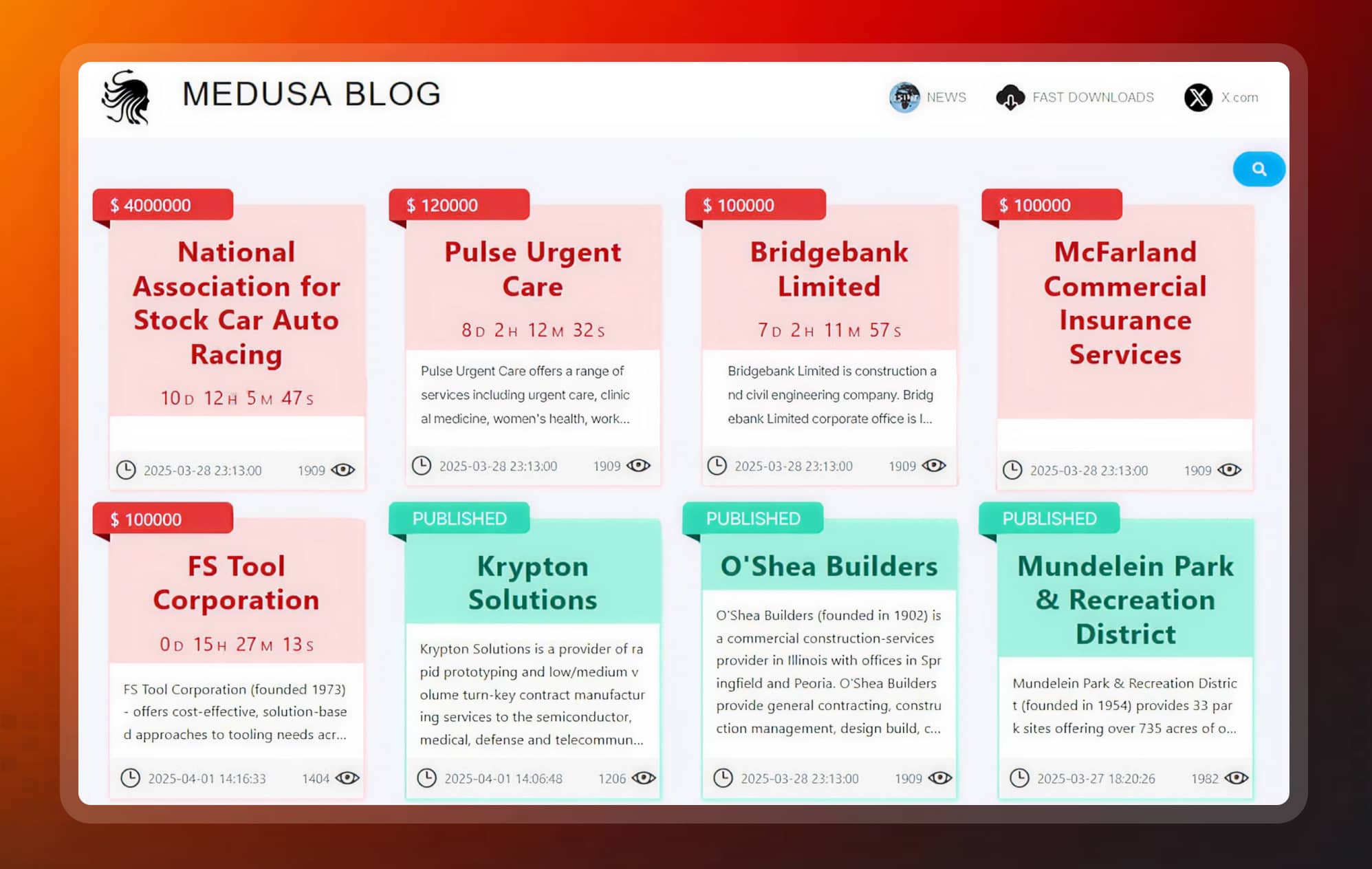
Medusa operates as a sophisticated RaaS platform, where developers recruit affiliates and initial access brokers (IABs) via cybercriminal forums, offering payments from $100 to $1 million for network footholds. Tracked as “Spearwing” by Symantec, it distinguishes itself from variants like MedusaLocker by employing a double extortion tactic: encrypting data with AES-256 and RSA algorithms (appending “.medusa” extensions) while exfiltrating sensitive information for public leaks on its “Medusa Blog” site if ransoms—ranging from $100,000 to $15 million—are unpaid.
Beyond hype, the SLA merges risk with accountability, converting claims like “24/7 monitoring” into measurable benchmarks. This matters whMedusa’s hallmark is its abuse of legitimate tools like PowerShell, WMI, PsExec, AnyDesk, and Rclone, blending malicious activity with normal operations (Lesson 1: Efficiency through legitimacy – the power of LOTL). This evades signature-based detection, teaching us that behavioral analytics and managed detection and response (MDR) are essential. In 2025, with attacks exploiting unpatched vulnerabilities in tools like Microsoft Exchange, Medusa demonstrates how cybercriminals scale efficiently by “living off the land,” minimizing custom malware footprints.
Common Medusa behaviors include:
- Deleting over 280 Windows services, shadow copies, and backups to hinder recovery.
- Lateral movement via RDP, SMB, and remote access software (e.g., ConnectWise, Splashtop).
- Data exfiltration using tunnels like Cloudflared or Ligolo.
- Aggressive follow-ups via phone, email, or Tox messenger, with $10,000 daily penalties for deadline extensions.
- Public pressure via Telegram and X channels, amplifying reputational damage.
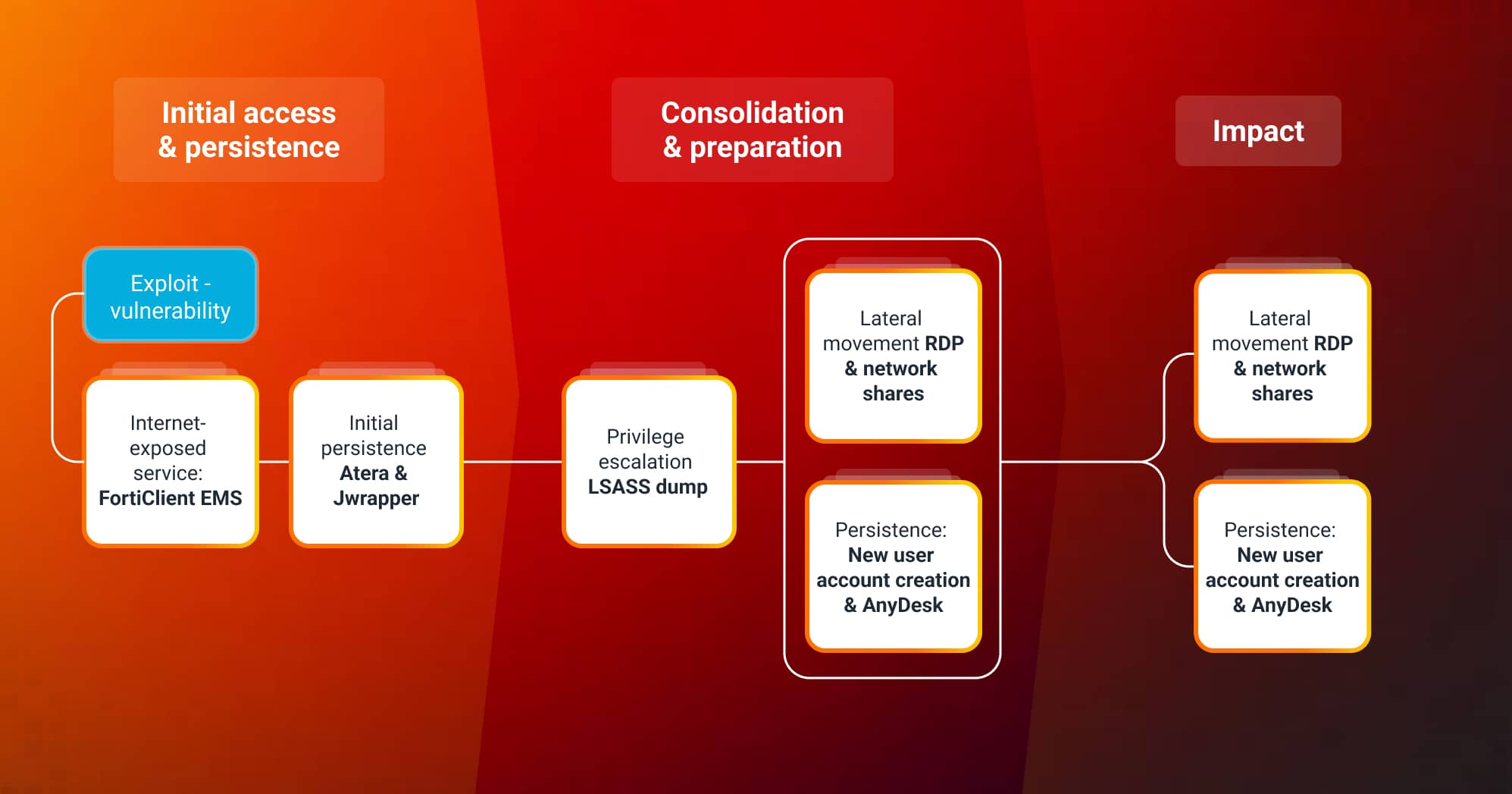
These traits shorten dwell times (often just days from initial access to encryption), complicating forensics and increasing exposure. As of August 2025, Medusa remains active, with recent analyses highlighting its use of vulnerable drivers (BYOVD) to disable EDR and collaboration with other groups on tools like EDR Killer. Phishing campaigns continue to be a key vector, as seen in ongoing alerts.
Why you need a Medusa ransomware response playbook
Medusa’s efficiency lies in its structured attack lifecycle: reconnaissance, evasion, exfiltration, and impact. Without a playbook, responses become chaotic and lead to prolonged downtime or failed recoveries. A tailored playbook provides structure, drawing lessons from Medusa’s 300+ victims.
Key Benefits and Lessons:
- Centralized Detection and Containment (Lesson 2: Speed wins). Medusa’s rapid encryption teaches that delays cost dearly. Aggregate IOCs—”.medusa” files, ransom notes (“!!!READ_ME_MEDUSA!!!.txt”), or Tor sites (e.g., medusacegu2ufmc3kx2kkqicrlcxdettsjcenhjena6uannk5f4ffuyd.onion)—with SIEM/EDR rules for faster spotting of anomalies like unusual PowerShell execution or shadow copy deletions.
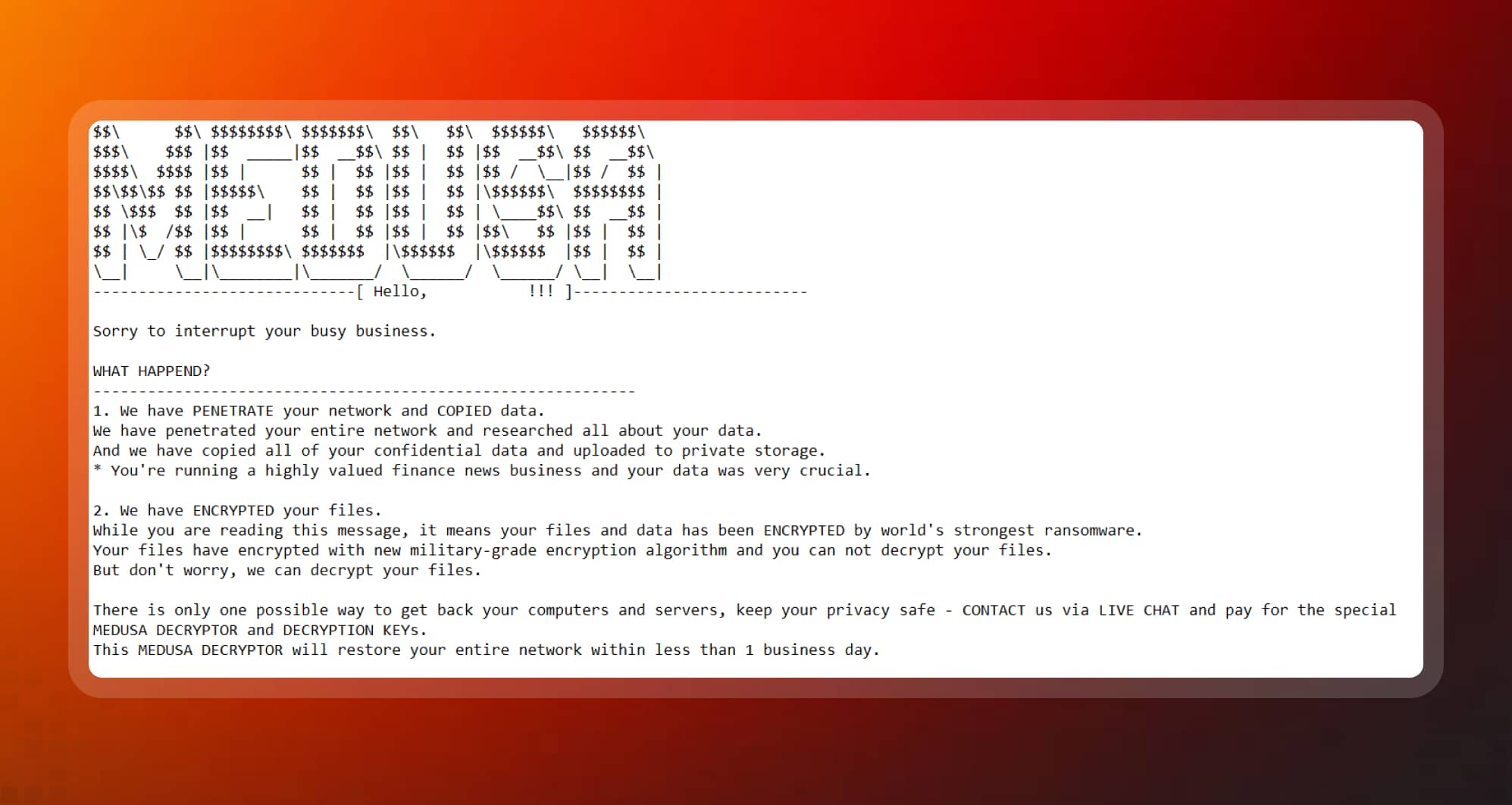
- Regulatory Compliance and Reporting (Lesson 3: Extortion demands holistic response): Double extortion amplifies legal risks under GDPR, HIPAA, or PCI-DSS. Medusa’s public leaks teach the value of structured evidence preservation and out-of-band communications to avoid tipping off attackers.
- Proactive Defense (Lesson 4: Prevention is multi-layered): Medusa avoids certain regions (e.g., Russia, Belarus) but targets high-value sectors in the US, UK, Canada, Australia, and now expanding to Georgia and Brazil. This geopolitical selectivity highlights the need for patch management, network segmentation, and MFA to close initial access vectors like RDP brute-force or phishing.
- Operational Resilience (Lesson 5: Backups are your lifeline): With no public decryptor available, Medusa’s deletion of backups reinforces the 3-2-1 rule (three copies, two media, one offsite). Automate tasks like credential resets and system isolation to reduce chaos.
Medusa’s centralized negotiation control, despite affiliates, shows how organized groups maximize profits, teaching organizations to prepare for rigid, professionalized extortion.
Medusa use cases and challenges
Medusa’s efficiency is evident in real-world cases, like the 2023 Minneapolis Public Schools attack ($1M demand), 2025’s U.S. healthcare breaches infecting hundreds of machines, and August 2025 hits on Aldagi (300.8 GB data compromised) and others. High-risk sectors face rapid lateral spread, teaching that playbooks must activate early.
Activation Triggers:
- Anomalous activity (unexpected RDP logins, outbound Tor traffic, or mass file renames).
- Sector-specific risks (sensitive data or disruption tolerance.
- Compliance pressures (immediate reporting to CISA or FBI post-detection).
Challenges and Lessons:
- Rapid Spread (Lesson 6: Segmentation saves lives): Medusa uses PDQ Deploy for wide deployment, outpacing containment. Challenge: Noisy LOTL leads to alert fatigue. Solution: Tune rules for specifics like BYOVD drivers (e.g., KillAV).
- Multi-Extortion Complexity (Lesson 7: Prepare for public fallout): Leaks on Telegram/X increase PR damage. Challenge: Evidence tampering. Solution: Prioritize memory captures and snapshots.
- Resource Strain: High false positives from generic monitoring. Solution: Invest in tuning and training to avoid burnout.
Engage external partners when exfiltration is active or expertise is lacking—Medusa’s evolution demands it.
Enhance Your Ransomware Readiness
Turn potential crises into controlled recoveries with our tailored playbook.
Resource demands and hidden costs
Building a Medusa playbook isn’t free: ongoing updates for IOCs, YARA/Sigma rules, and forensic tools (e.g., WinPMEM for memory dumps) are essential.
Investments Needed:
- Tools: MDR + SOAR security-as-a-service platform to automatically detect, investigate, and respond to all possible attacks.
- People: EDR for behavioral detection; skilled IR teams for RCA and negotiations.
- Hidden Costs: Downtime from isolation; false positives requiring tuning.
Lesson 8: Expertise trumps DIY: Medusa’s complexity (no public decryptor, self-deletion) makes solo recovery risky, often leading to re-infection or data loss. External MDR reduces time-to-contain by providing pre-vetted workflows.
How UnderDefense helps
At UnderDefense, we’ve drawn from Medusa’s lessons to specialize in ransomware response. Our 24/7 team offers:
- Real-time monitoring for Medusa IOCs like PowerShell obfuscation or Rclone exfiltration.
- Custom playbooks with forensic workflows, integrating with Splunk, Elastic, and EDRs.
- Compliance support for reporting to CISA/FBI.
- Flexible models: Fully Managed, Co-Managed, or Consultative.
Lesson 9: Partnership Builds Resilience: Medusa teaches that no organization fights alone. Our experts handle triage to recovery, minimizing impact.
Need help now?
UnderDefense’s Security Team is available 24/7 for Medusa cases. Immediate triage, containment, and forensic assistance.

Wrapping Up
Medusa’s multi-extortion tactics demand the assumption that prevention can fail. Equal focus on detection, response, and recovery, supported by immutable backups, least privilege access, and rapid IR access, turns a crisis into a controlled event.
Build measurable playbooks, assign clear owners, and run regular drills so your team can respond quickly and confidently. Use this guide to create or refine your Medusa response playbook.
Lesson 10: Evolution Demands Vigilance: As Medusa continues evolving in 2025, with new phishing campaigns and collaborations on evasion tools, stay updated via CISA advisories and threat intel—resilience is ongoing.
1. What makes Medusa more efficient than other ransomware?
Its LOTL techniques, rapid encryption, and double extortion model allow quick scaling while evading detection, impacting over 300 victims efficiently.
2. Should I pay the ransom?
No, it’s discouraged by authorities like the FBI, as it funds crime and doesn’t guarantee recovery. Focus on backups and professional help.
3. How can I detect Medusa ransomware early?
Monitor for IOCs like “.medusa” extensions, shadow copy deletions, or tools like PsExec. Use EDR for behavioral anomalies.
4. What if I'm already infected with ransomware?
Avoid DIY decryption—engage experts. Isolate systems immediately, preserve evidence, report to CISA/FBI, and restore from offline backups.