






Managed Detection
and Response (MDR)
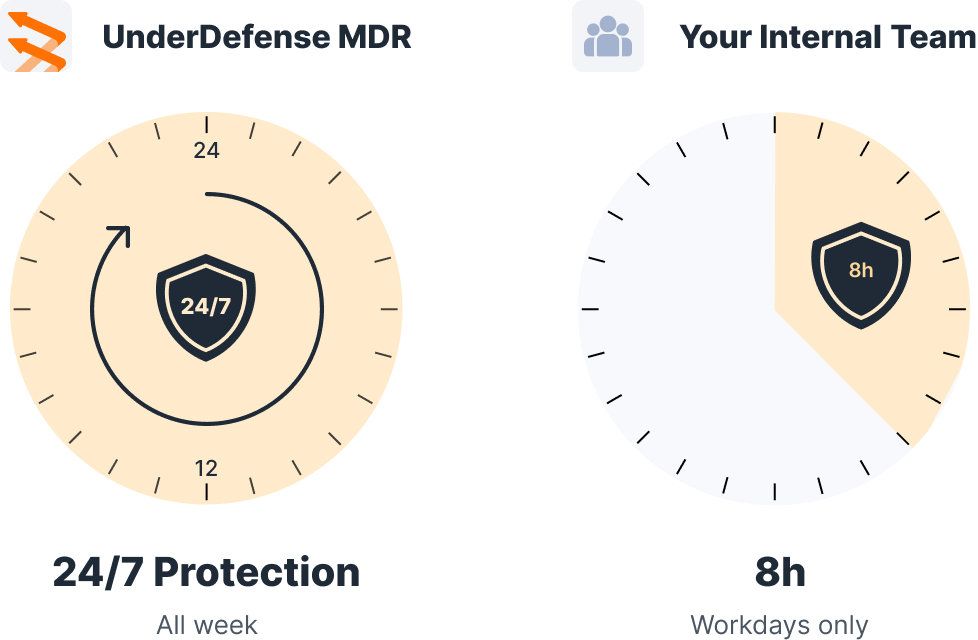
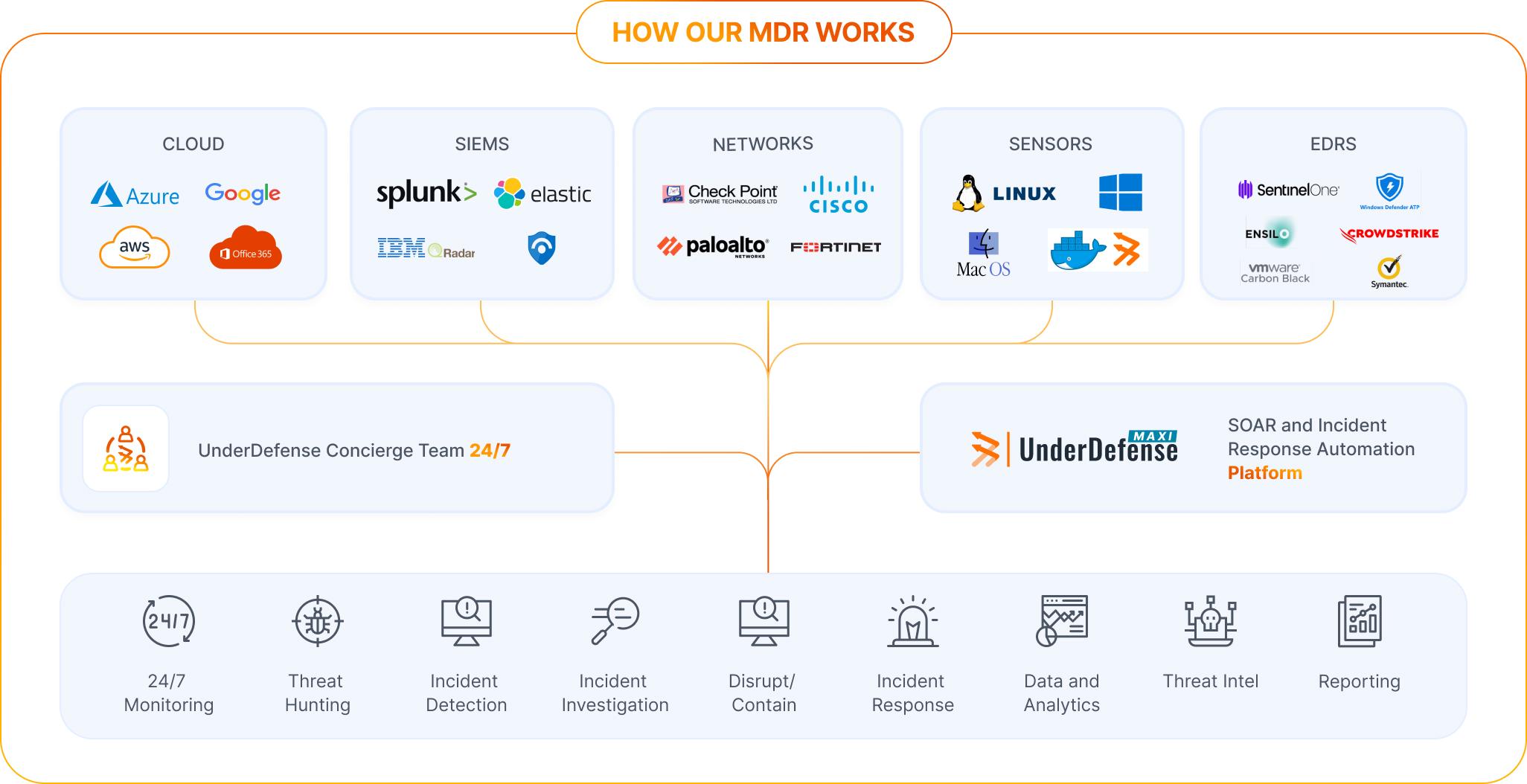
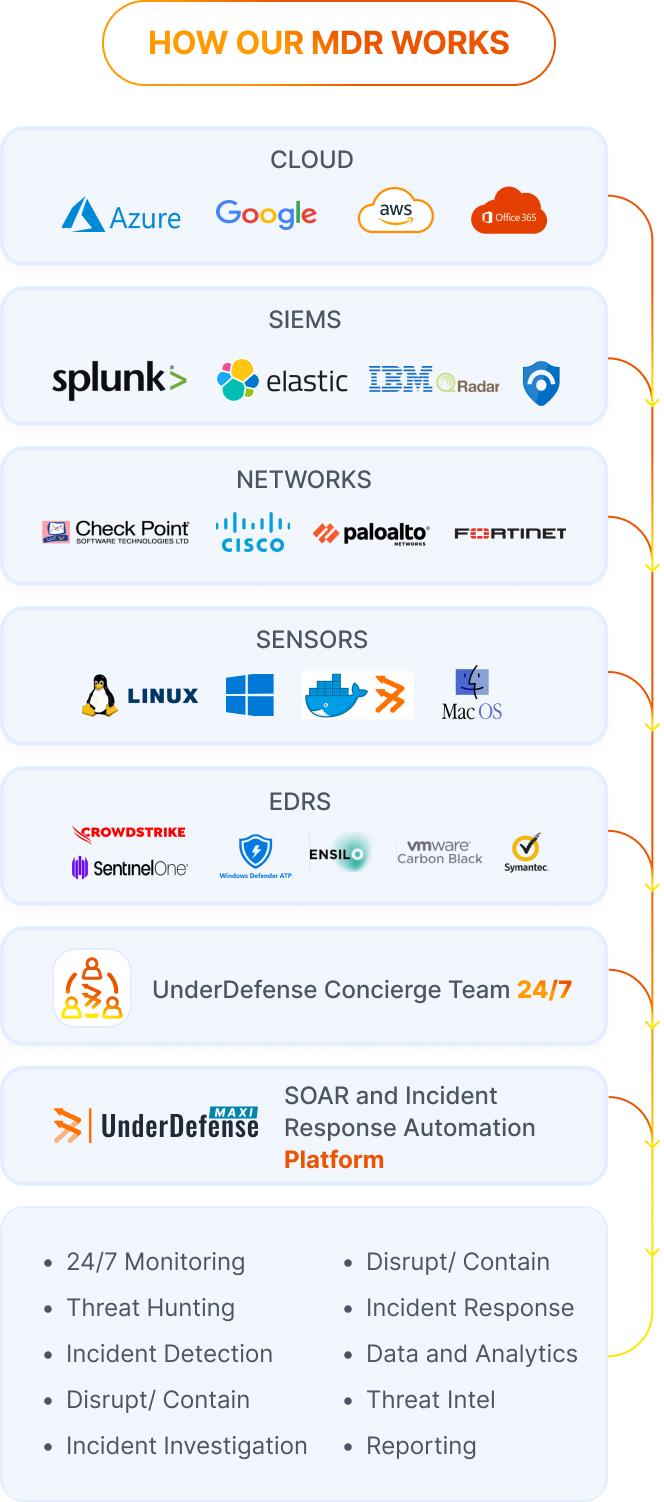
Sleep tight, knowing your MDR provider has your back 24/7. UnderDefense MDR security services leverage the full potential of your existing tools, protecting your networks, endpoints, and cloud to help you detect, triage, and respond to threats in minutes.















UnderDefence MDR Benefits


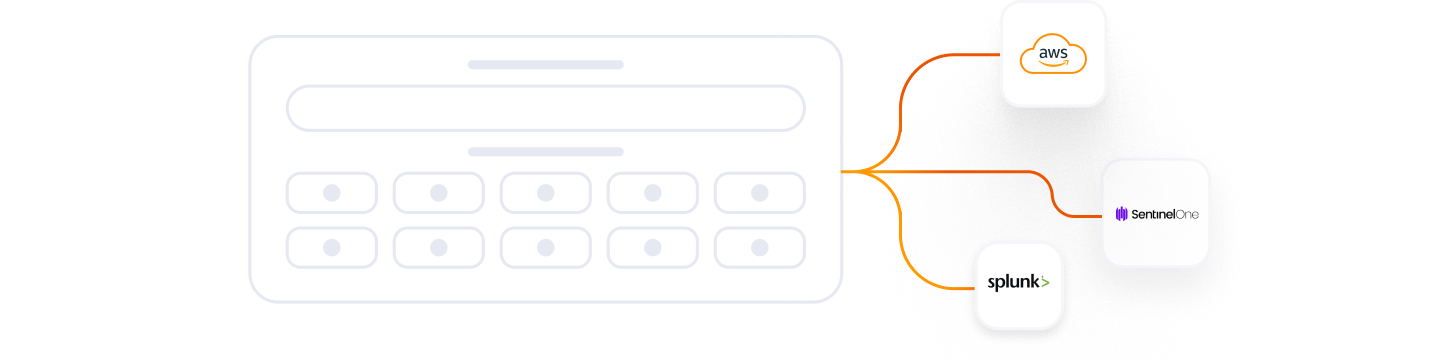




Challenges you face on your way to 24/7 business protection.
Now solved

Lack of human resources
Our seasoned threat hunters tackle existing threats and provide personalized guidance on prevention strategies, ensuring your systems and data remain secure and resilient.
Limited budgets and unclear pricing
Whether you want to extend your existing SOC, opt for a turnkey service, co-manage your SIEM or EDR, or build a new one, our MDR provides you with tailor-made and cost-effective MDR solutions.
Misconfigured tools
Overloaded with false positives team
MDR provider to cover it all 24x7 under your CONTROL
Book a DemoStay in the driver's seat: detect, triage, and enrich in minutes with UnderDefense MAXI platform
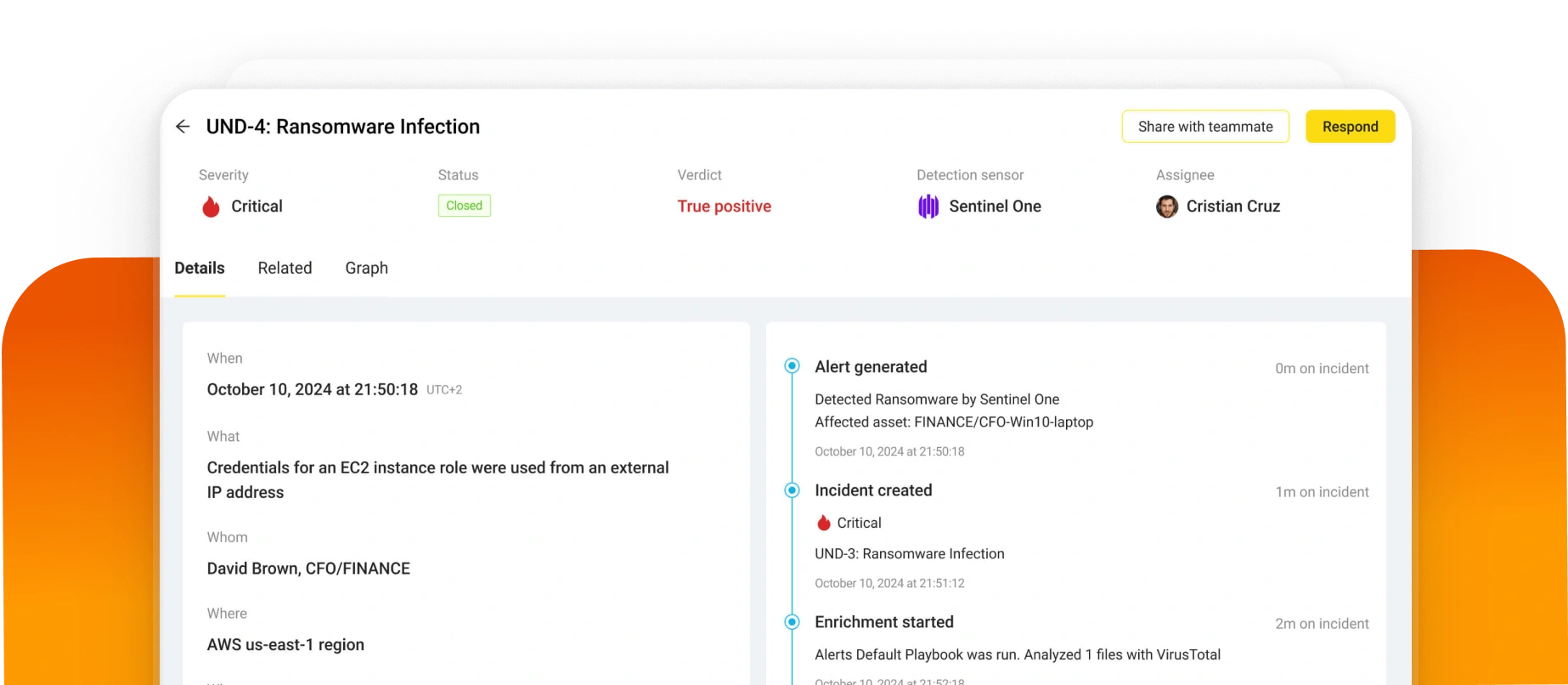
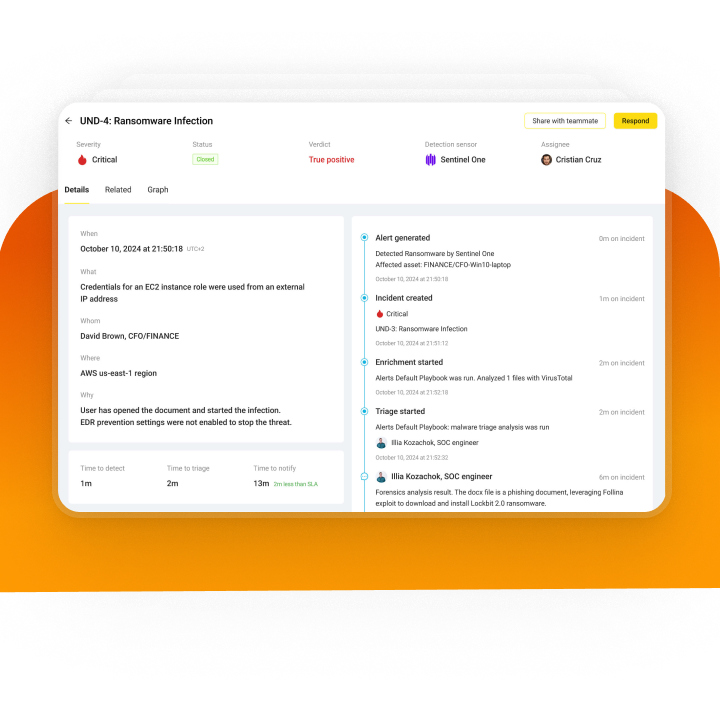
We work around the clock, monitoring, threat hunting, and handling alerts so you can focus on strategic goals and projects.
Our global team of threat hunters map out threat intelligence to your unique infrastructure, enabling a rapid response to protect and defend it.
Alert-to-Triage with enrichment and context automation
MTTC for critical Incidents
MITRE coverage
Security telemetry processed daily
ROl over three years
UnderDefense is your go-to MDR provider with a 100% clean record against ransomware
Experts. Finalists.Winners.






UnderDefense MAXI MDR: Earning High Praise
Calculate your MDR Price
Frequently asked questions
What is managed detection and response (MDR)?

How much does the managed detection and response services (MDR) cost?
The average cost of Managed Detection and Response (MDR) ranges from $11 to $15 per asset monthly, depending on your organization's size and IT environment complexity.
Contact our sales team and get a free quote for managed threat detection and response services aligned with your specific needs.
What is the UnderDefense MAXI platform?
How do I purchase the UnderDefense MAXI platform?
UnderDefense offers a freemium model. You can start with a sign-up and get immediate access to many valuable features, including:
- 360° security assessment
- Forever-free certification kits
- AWS cloud security assessment
- On-demand threat hunting
But we don’t stop here. UnderDefense MAXI grows with you, supporting you at every step of the way. Benefit from a modular, fully integrated suite of cybersecurity solutions and add advanced tools for your end-to-end business protection on the go. Create your free account today and see where better and easier cybersecurity happens.
As an MDR provider, what data will you see in my environment and have access to?
What is an MDR solution?
Managed Detection and Response (MDR) is a comprehensive security solution that provides organizations with round-the-clock threat monitoring, detection, and response. It combines human expertise and advanced technologies to proactively identify and mitigate threats. Key benefits include:
- Continuous monitoring: MDR providers monitor networks, endpoints, and cloud environments 24/7.
- Threat detection: Advanced analytics and threat intelligence are used to identify potential threats.
- Incident response: Security experts rapidly respond to incidents, minimizing damage and downtime.
- Managed security operations: MDR providers handle the day-to-day management of security operations, freeing up internal resources.
MDR vs. EDR: What is the Difference?
MDR offers a more comprehensive approach to cybersecurity, while EDR focuses on endpoint protection.
- Scope: MDR provides broader coverage, encompassing the entire network infrastructure, including endpoints, network devices, and cloud environments, while EDR is endpoint-focused.
- Response: MDR includes response and remediation activities, while EDR relies on internal teams.
- Resources: MDR is a managed service, while EDR requires in-house expertise.
MDR vs. SIEM: What is the difference?
SIEM and MDR both enhance security, but they have distinct approaches:
- Focus: SIEM: known threats, MDR: unknown threats
- Technology vs. Humans: SIEM: technology-driven, MDR: human-led
- Reactive vs. Proactive: SIEM: reactive, MDR: proactive
- Cost: SIEM: is typically more expensive, and MDR: is cost-effective for smaller organizations
MDR offers a more practical and cost-effective solution for many organizations.
MDR vs. XDR: What’s the difference?
MDR and XDR both address the challenges faced by security teams, but they take different approaches:
- MDR Supplements internal security teams with external resources.
- XDR Simplifies and automates tasks for security analysts.
Key Differences:
- Resource Allocation: MDR: outsources security functions, XDR: streamlines internal processes.
- Cost: MDR: is often more cost-effective than building an in-house SOC.
- Focus: MDR: comprehensive security management, XDR: tool-based threat detection and response.
The best solution for an organization depends on its existing security capabilities, budget, and specific needs.