




Splunk pricing pivots on various factors and heavily depends on the chosen pricing model. For example, Splunk’s ingestion-based pricing can range from $1,800 to $18,000 per year for a data volume of 1-10 GB/day, depending on the features and support level. Splunk stands out as a top-notch SIEM solution that provides advanced analytics, real-time monitoring, and flexible deployment options. It offers scalable solutions adjusted to a wide array of business needs, whether we’re talking about small organizations or huge corporations.
In this guide, we’ll take a look at Splunk SIEM pricing in detail and the differences between different Splunk offerings and pricing principles used for various cases.
Disclaimer: This guide provides only estimated prices to give you a sense of the costs, pricing models, and features you can expect from their packages.
Splunk SIEM pricing is often difficult to forecast because it’s heavily influenced by data ingestion volume, retention, and query usage. As environments grow, teams face not only higher licensing expenses but also increased operational effort to manage alerts and investigate incidents effectively.
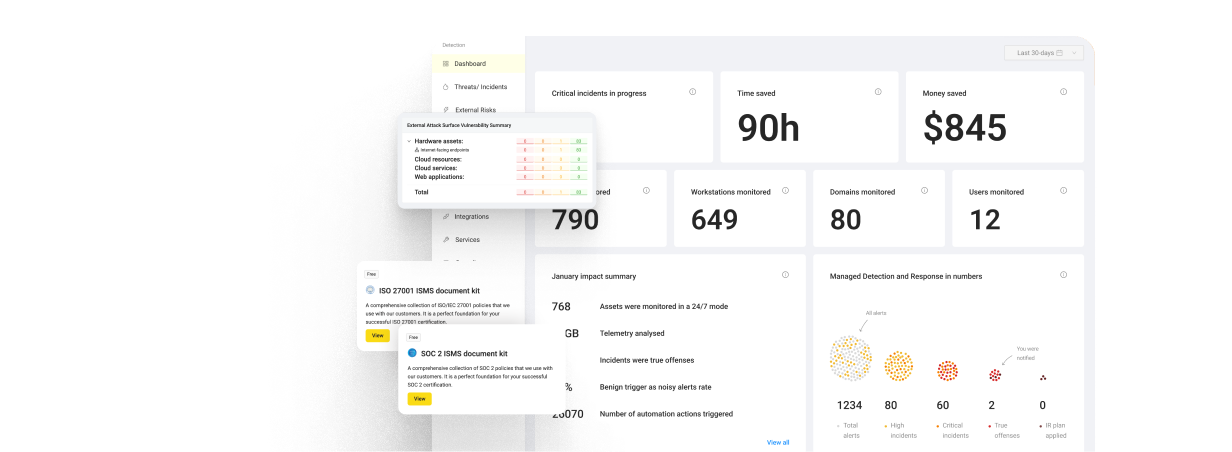
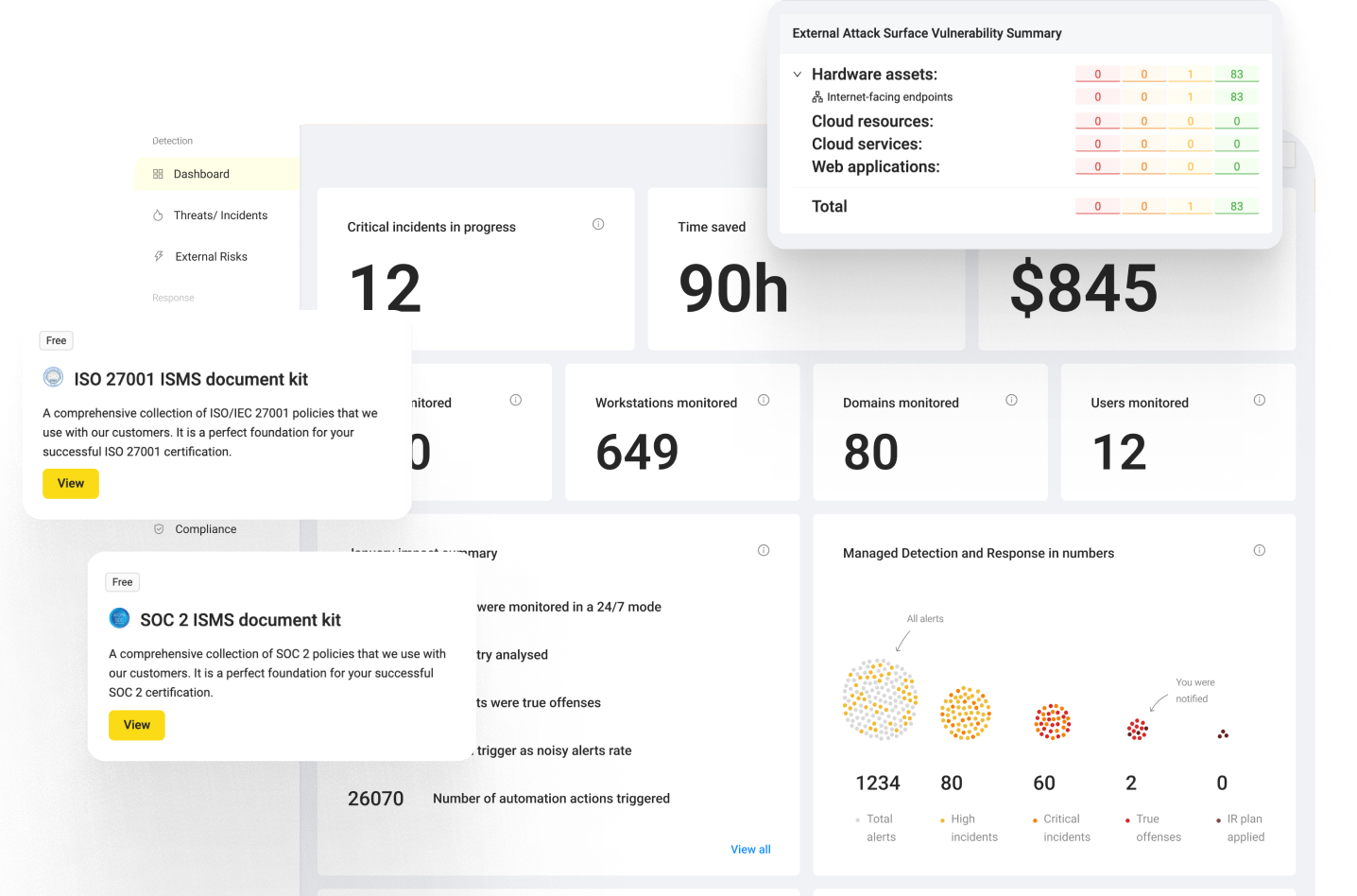
UnderDefense MAXI enhances Splunk SIEM by adding an AI-assisted MDR layer that focuses on interpretation and response. We help turn high-volume telemetry into actionable insights, with 24/7 human SOC analysts available to investigate and escalate critical threats.
Add AI-assisted MDR, built-in SOAR, and 24/7 human-led SOC operations to Splunk SIEM
Try UnderDefense MAXI
How much does Splunk cost?
When assessing Splunk SIEM pricing, you should consider the deployment model, data ingestion volume, and specific operational requirements. Splunk’s ingestion-based pricing can range from $1,800 to $18,000 per year for a data volume of 1-10 GB/day, depending on the features and support level. Splunk provides yearly pricing options, with the possibility of shorter periods, offering flexibility for various budgets.
The pricing approaches include three models.
Pricing model | Description | Best for |
Workload pricing | Charges are based on the compute capacity consumed, measured in Splunk Virtual Compute (SVC) units. | This model works best for organizations with variable data ingestion and search requirements. |
Ingest pricing | The volume of data ingested daily determines pricing. | This straightforward approach makes it economical to expand use cases on ingested data. |
Entity pricing | Pricing is based on the number of hosts utilizing Splunk observability products. | This works best for customers who need to solve defined ITOps and DevOps use cases with bespoke capabilities. |
Splunk SIEM pricing ranges widely, depending on the chosen pricing model and organizational scale. They also offer a pricing calculator for more precise calculations.
Splunk SIEM pricing comparison table
Splunk offers a variety of pricing models to accommodate different organizational needs and data usage patterns. Below is an overview of the available pricing options.
Package | Pricing model | Ideal for |
Splunk Cloud | Workload Pricing | Scalable, cloud-first organizations |
Splunk Enterprise | Ingest Pricing | Organizations with strict compliance needs |
Splunk Enterprise Security | Ingest Pricing | Organizations with sophisticated SIEM needs |
Splunk packages overview
Splunk offers distinct packages to cater to varying organizational needs:
- Splunk Cloud — basic SIEM capabilities in a cloud deployment model.
- Splunk Enterprise — basic SIEM capabilities in an on-premises deployment model.
- Splunk Enterprise Security (ES) — can be deployed both on Splunk Enterprise and Splunk Cloud, for advanced SIEM use cases.
Splunk Cloud
Splunk Cloud is a solution designed for organizations that prioritize scalability and minimal infrastructure management. Pricing for this solution is based on workload consumption, with the flexibility for ever-changing operational demands.
Features of Splunk Cloud:
- Elastic infrastructure to accommodate fluctuating data volumes for optimal performance during peak loads.
- Built on resilient cloud architecture to maintain uptime and service reliability.
- Machine learning algorithms to detect anomalies and uncover hidden threats.
- Cross-references multiple data sources to identify complex attack patterns.
- Centralized dashboards to see a clear timeline of events, affected assets, and response recommendations.
Pros of Splunk Cloud:
- Scalability to support growing business needs.
- Reduced infrastructure management.
- Faster deployment and updates.
Cons of Splunk Cloud:
- Dependency on Internet connectivity.
- Potentially higher costs for extensive workloads.
Splunk Enterprise
Splunk Enterprise is a widely used platform for log management and basic SIEM functionalities in on-premises environments. It offers a foundation for organizations looking to monitor, search, and analyze machine data, with the option to enhance its capabilities through add-ons like Splunk Enterprise Security (ES).
Features of Splunk Enterprise:
- Centralized storage and management of machine-generated data from diverse sources.
- Provides real-time visibility into system and application activity.
- Splunk Processing Language (SPL) allows users to create complex queries for data analysis.
- Enables the creation of visual dashboards and tailored reports for monitoring and insights.
- Supports configurable alerts for specific thresholds or anomalies.
- Compatible with various data sources and systems for enhanced interoperability.
Pros of Splunk Enterprise:
- Capable of managing and analyzing massive amounts of data efficiently.
- Users can build custom dashboards, alerts, and workflows tailored to organizational needs.
- Designed to scale with growing data volumes in an on-premises environment.
- A wide user base and comprehensive documentation help troubleshoot and optimize usage.
- Supports a wide range of add-ons and third-party integrations to expand functionality.
Cons of Splunk Enterprise:
- Licensing and operational costs can be substantial, especially for large-scale deployments.
- Requires skilled personnel for configuration, optimization, and ongoing maintenance.
- Demands significant infrastructure investments, including storage and compute resources.
- Lacks out-of-the-box advanced SIEM functionalities like automated threat intelligence and machine learning-based detection unless paired with Splunk ES.
- SPL and platform intricacies may be challenging for new users or teams without prior experience.
Splunk Enterprise Security
Splunk Enterprise Security offers advanced control and customization, making it suitable for organizations with strict compliance and data sovereignty requirements. Pricing can be based on either ingest volume or workload capacity, giving a chance to optimize costs.
Features of Splunk Enterprise Security:
Splunk Enterprise Security (ES) is a robust solution tailored to meet sophisticated SIEM requirements, offering comprehensive features that are ready for deployment. It operates seamlessly on Splunk Enterprise, Splunk Cloud, or a combination of both. Key security functionalities include:
- Customizable tools like dashboards and reports are designed specifically for security-centric applications.
- Pre-built correlation rules and alerts to simplify and accelerate threat detection and response.
- Incident review and workflow management for more efficient incident tracking and response workflows.
- Third-party threat intelligence integration to augment security with data from external threat feeds.
- Various security frameworks to support compliance, application security, incident management, advanced threat detection, and real-time monitoring.
- Maps events over time to provide a clear view of multi-stage attacks, aiding in faster response.
- Business context for alerts to improve threat detection, monitoring, and reporting by incorporating organizational relevance into alerts.
Pros of Splunk Enterprise Security:
- Complete control over data and infrastructure
- Tailored configurations to meet specific needs
Cons of Splunk Enterprise Security On-Premises:
- Requires dedicated IT resources for maintenance
- Higher initial costs
How can UnderDefense help you maximize Splunk productivity and outcomes?
UnderDefense Managed SIEM services enhance your Splunk deployment with:
- Expert configuration: Ensuring optimal setup for cost efficiency and threat detection.
- 24/7 monitoring and response: Rapidly addressing threats to minimize risks.
- Proactive threat hunting: Leveraging advanced analytics and expertise to uncover hidden threats.
- Cost optimization: Streamlining data ingestion and operational practices to reduce expenses.
Most SIEM solutions may be confusing and complicated, with overwhelming data and alerts. You should know how to cut through the noise, what to look at, and what to do about that. With UnderDefense, your business protection becomes efficient and understandable.
UnderDefense enhances your Security Information and Event Management (SIEM) system by transforming alerts into valuable sources of data, ensuring optimal performance. With our co-managed or fully managed SIEM services, you gain improved security visibility while maintaining 24/7 control over your IT infrastructure.
1. What pricing models does Splunk offer for its SIEM solutions?
Splunk provides several pricing models:
- Workload Pricing: Based on compute capacity.
- Ingest Pricing: Charged per data volume ingested daily.
Entity Pricing: Determined by the number of hosts using observability products.
2. Are there volume discounts available for Splunk's SIEM solutions?
Yes, Splunk offers volume discounts based on the product and data volume ingested or compute resources consumed.
3. Does Splunk offer a free trial for its SIEM products?
Splunk provides free trials, allowing organizations to evaluate the solutions before committing. Check their website or contact their sales team for specifics.
4. How can I estimate the cost of implementing Splunk's SIEM in my organization?
Utilize Splunk’s Pricing Calculator to input parameters such as data ingestion volume and workload types, providing a preliminary cost estimate.
5. What factors influence the total cost of ownership for Splunk's SIEM solutions?
- Data Ingestion Volume
- Compute Capacity Requirements
- Deployment Model (Cloud vs. On-Premises)
- Support and Maintenance Options
- Add-On Features and Integrations
6. How can I reduce my Splunk costs?
Optimize costs by:
- Aligning with the appropriate pricing model (Workload, Ingest, Entity).
- Monitoring and adjusting data ingestion settings.
- Using volume discounts and pre-purchase plans.