
How to Monitor Threats in AWS: A Cloud Security Architecture Guide

Our Executive AWS Security Guide lays out a blueprint for embedding Managed Detection & Response (MDR) into your cloud stack so you can outpace threats, automate response, and maintain continuous compliance:

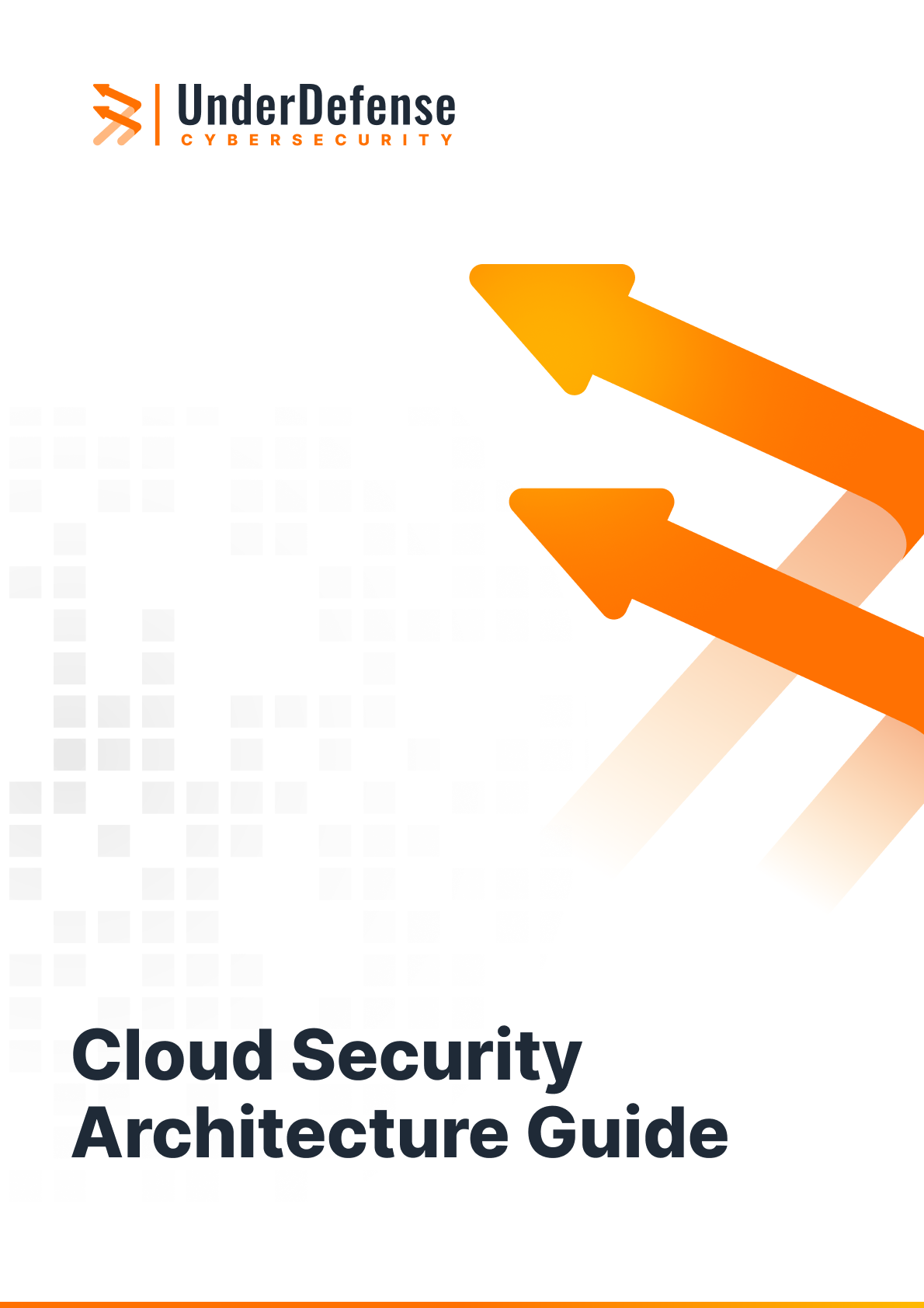
  • 9 strategic chapters covering MDR fundamentals
  • Actionable diagrams
  • Decision checkpoints
Why you need the AWS Security Guide
Cloud agility introduces new risks, rendering traditional MSSPs and periodic scans ineffective. Our guide will help you:
checkmark
Build security as code, not afterthought—embed MDR throughout your CI/CD and IaC processes
checkmark
Gain real-time visibility across hundreds of accounts, regions, and hybrid workloads
checkmark
Shift from reactive alerts to proactive hunting with 24/7 AWS-native threat intelligence
checkmark
Optimize cost and performance using pay-as-you-go pipeline architectures
Download the Cloud Security Architecture Guide and learn what truly effective cloud security looks like and how to achieve it without overspending.
Get the Guide
What’s inside?
No matter if you're building cloud defenses from the ground up or refining an existing strategy, this guide delivers a practical roadmap. It brings together expert insights and proven strategies to help security teams strengthen their posture and maximize MDR value in cloud environments:
checkmark
The MDR framework and its business impact
checkmark
Scaling security across complex environments
checkmark
Threat detection, hunting, and cost-efficient operations
checkmark
Next steps: Your AWS Cloud security architecture roadmap
Make informed cloud security decisions. Get the Cloud Security Architecture Guide: Architectures that work.
Get the SOC Transformation Guide: Best AI integration practices.
Download the Cloud Security Architecture Guide

Why choose UnderDefense for AWS MDR

Your cloud-security partner should do more than flip switches: they must architect, integrate, and continuously optimize. UnderDefense brings:

  • AWS-focused, human-led MDR leveraging GuardDuty, Security Hub, CloudTrail, and more
  • 24/7 monitoring & hunting by certified AWS architects and threat analysts
  • Automated playbooks built on EventBridge, Lambda, and Security Hub response actions
  • Transparent SLAs & usage-based pricing—no hidden fees for log ingestion or “advanced” rules
  • Custom detection logic & proactive threat hunting tailored to your environment
Ready to move beyond alerts and into active defense?
Talk to an AWS MDR Expert

Frequently asked questions

What is a cloud security architecture, and why is it critical for AWS environments?

A cloud security architecture defines how security controls and tools are integrated across your AWS environment to protect workloads, identities, and data. It ensures that security is embedded by design—not bolted on later—supporting resilience, compliance, and scalability.

How does Managed Detection and Response (MDR) enhance my cloud security posture?

Managed detection and response delivers 24/7 threat monitoring, detection, and active response by experienced analysts using AWS-native tools. It helps reduce dwell time, automate response, and ensure threats are addressed before damage occurs.

What's the difference between MDR and traditional MSSP services?

Unlike traditional MSSPs that rely on periodic scans or generic alerts, MDR leverages continuous monitoring and cloud-native integration to detect and respond to threats in real time, adapting to cloud-scale environments.

How does SOC 2 compliance relate to my MDR strategy?

SOC 2 compliance ensures that your security operations meet recognized standards for data protection and privacy. Integrating MDR helps fulfill key SOC 2 criteria, including continuous monitoring, incident response, and audit readiness.

What AWS services does UnderDefense leverage?

We integrate GuardDuty, Security Hub, CloudTrail, Config, Detective, Security Lake, and more into a unified MDR pipeline.

How do you control MDR costs?

By filtering for high-priority events at the source, leveraging pay-as-you-go AWS services (EventBridge, SQS, Lambda), and batching lower-severity alerts.