-
 Platform
Security & Compliance Automation Platform
Request a DemoUnderDefense MAXI is the solution to day-to-day cybersecurity problems of IT leaders and teams. It builds your 24/7 business protection together with you on the driver’s seat.
UnderDefense MAXI Platform
 UnderDefense Secures Top Honor at the 2025 Global Infosec Awards
Read More
UnderDefense Secures Top Honor at the 2025 Global Infosec Awards
Read MoreWe’re proud of being a winner at the 2025 Global Infosec Awards…
-
 Our AI
10-Point AWS Security Checklist for Executives
Download the ChecklistQuickly assess your cloud security posture with this executive-ready checklist covering IAM, monitoring, and compliance essentials.
 Anti-Phishing Playbook
Download the Playbook
Anti-Phishing Playbook
Download the PlaybookYour free PDF guide to spotting and stopping phishing attacks before they reach your team or data.
-
Services
24/7 Threat Detection & MAXImum Responsiveness
Talk to an ExpertOur human-led MDR service combines expert insight and automation and AI for fast, precise threat response. Get full context in 2 minutes and cut MTTC to 15, staying ahead of ransomware and other attacks.
 Calculate your MDR price
Estimate MDR Cost
Calculate your MDR price
Estimate MDR CostPay only for the services you actually need, with no hidden costs.
-
Solutions
10-Point AWS Security Checklist for Executives
Download the ChecklistQuickly assess your cloud security posture with this executive-ready checklist covering IAM, monitoring, and compliance essentials.
Anti-Phishing Playbook
Download the PlaybookYour free PDF guide to spotting and stopping phishing attacks before they reach your team or data.
-
 Company
Spot threats faster and respond smarter than tools alone
Request a Quote24/7 MDR and SOC services led by award-winning security experts. We act as an extension to your team or as a fully remote team, providing detailed threat insights and actionable responses to secure your environment immediately.
 UnderDefense is an AWS Partner
Read More
UnderDefense is an AWS Partner
Read MoreWe’re excited to announce that UnderDefense is now an AWS partner and available on AWS Marketplace…
-
Resources
Managed SOC at Your Service
Talk to an ExpertAugment your SOC with 24/7 monitoring, threat detection, and expert response—without the overhead. Integrated with your existing tools, our SOCaaS stops attacks before they cause harm.
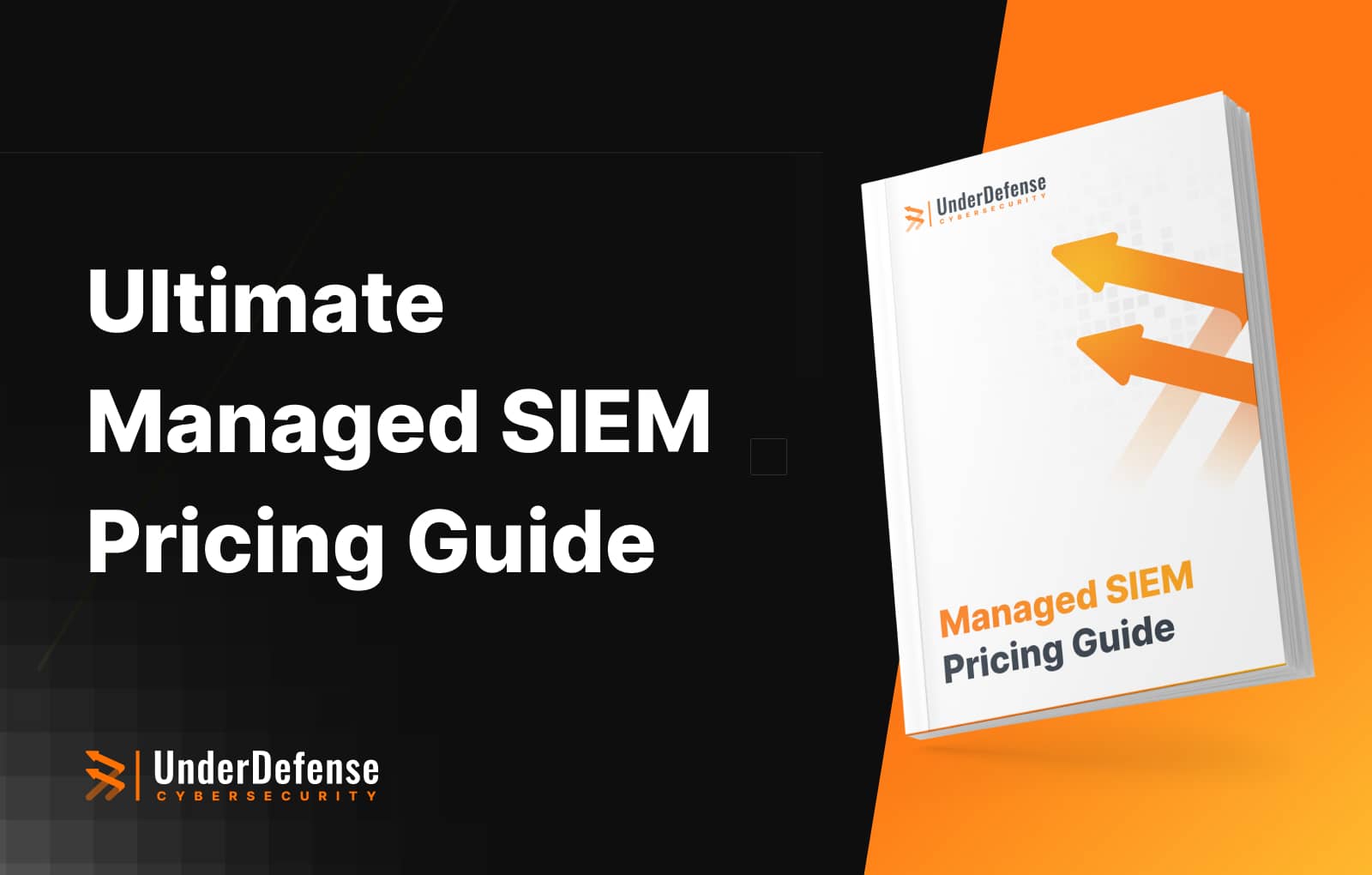
Managed SIEM Pricing Guide
Check the guideDownload a clear, practical overview of Managed SIEM pricing, featuring detailed breakdowns by service type, pricing model, real-world pros and cons, and key cost factors.
-
Partners
Managed SOC at Your Service
Talk to an ExpertAugment your SOC with 24/7 monitoring, threat detection, and expert response—without the overhead. Integrated with your existing tools, our SOCaaS stops attacks before they cause harm.
Managed SIEM Pricing Guide
Check the guideDownload a clear, practical overview of Managed SIEM pricing, featuring detailed breakdowns by service type, pricing model, real-world pros and cons, and key cost factors.