





Managing cloud risk in 2025 is a high-stakes balancing act. Many organizations turn to AWS CloudTrail as their first and sometimes only security control, seeing it as the cornerstone for auditing, compliance, and incident response. Yet this comfort is dangerously misleading.
The truth is that CloudTrail was never designed to stop attackers in their tracks. It was built for looking back—not fighting back, and putting all your trust in CloudTrail logs alone means playing perpetual catch-up.
Security teams need to distinguish between having evidence and having protection. This article draws on analysis and best practice frameworks to show why CloudTrail is just the beginning and how you can close critical gaps with a genuinely proactive approach.
CloudTrail: Essential, but Fundamentally Retroactive
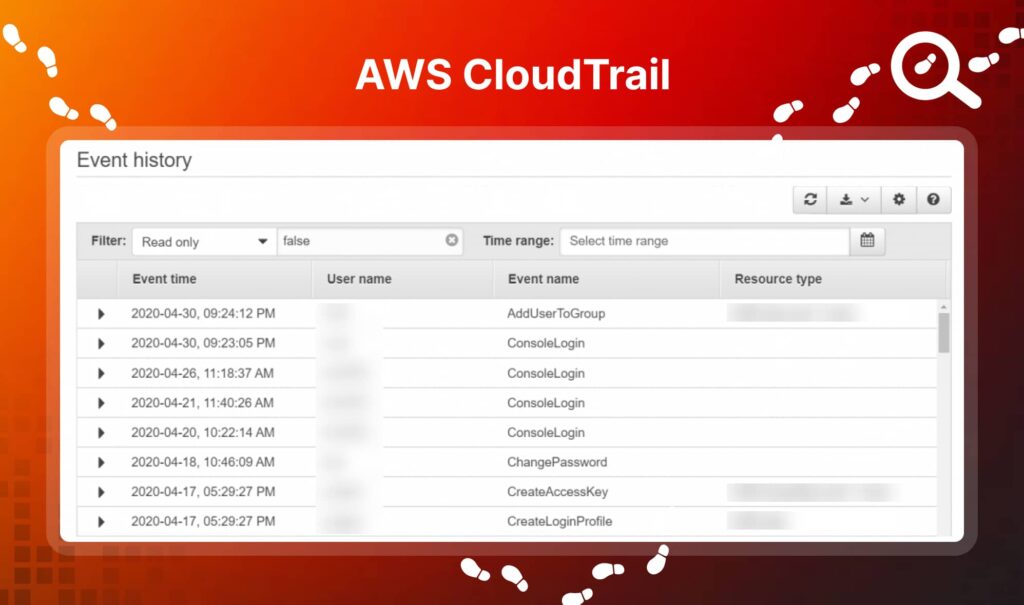
It’s important to understand exactly what CloudTrail brings to the table. For auditing, detection of changes, and regulatory compliance, CloudTrail provides a crucial record: it offers a historical ledger of every API call, user action, and change within your AWS environment.
Grab CloudTrail Risk-Exposure Checklist
Your One-Stop Guide to CloudTrail Risks and Proactive Strategies in 2025
What Does CloudTrail Do Well?
CloudTrail is a powerful ally during forensic investigations. When security teams need to reassemble the sequence of events behind an incident, these logs are the ultimate “source of truth.” They track:
- API calls across all AWS services, including who initiated the call, when, from where, and which resources were affected
- Activities performed from the AWS Management Console, SDKs, and even command-line tools
This level of granularity is invaluable for proving compliance with frameworks like PCI DSS or GDPR, troubleshooting configuration changes, and ultimately understanding the villains in hindsight.
The Reactive Trap: Why Logs Alone Can’t Protect You
Too many teams confuse “logging” with “defense.” However, logs alone are never an actionable shield. The risk is not theoretical but plays out during real breaches, leading to damaging delays, ballooning attacker dwell times, and ultimately, significant financial and reputational fallout.
CloudTrail Is a Collector, Not an Analyst
CloudTrail’s main role is data collection, not analysis. This distinction is critical: logs have to be analyzed, not just stored, for you to catch threats. In reality, most organizations:
- Manually sift through vast amounts of log data after an incident occurs
- Attempt basic search queries with limited filters on the CloudTrail console
- Try to “connect the dots” without correlation, enrichment, or real intelligence
The result? Far too often, a crucial indicator of compromise is buried under routine noise. Manual analysis is error-prone, labor-intensive, and slow, especially under the stress of an active security incident.
The Problem of Scale
The explosive growth of cloud resources means that every action, from spinning up an EC2 instance to tweaking IAM permissions, generates an API event. For large organizations, this can result in millions of log entries per day. Without advanced automation or correlation, separating signal from noise becomes nearly impossible.
This “data overload” leads to two unwanted outcomes:
- Important events hide in a sprawling haystack.
- By the time your team reconstructs the attack, the intruder is long gone, and the damage is done.
Fragility and Blind Spots Are Real
Perhaps most worrisome, logs are only as secure as your AWS permissions. If an attacker manages to gain highly privileged access, they can:
- Change, delete, or disable CloudTrail itself, thereby wiping the tracks needed for investigation
- Exploit oversight in IAM policies to escalate privileges or move laterally without detection
- Manipulate the very evidence you rely on during incident response
If your processes start with reactively pulling logs and searching for clues after suspicious activity, you’re already losing the race.
Calculate Your AWS Security Services Costs
CloudTrail Over-Reliance Risk Checklist
Many organizations continue with the daily routine of manual log reviews, believing this performs due diligence. But this masks torrents of hidden risk—delayed detection, blind spots, and missed threats.
It’s crucial for businesses to honestly assess their current cloud security posture. Are you truly proactive—or just retroactively analyzing logs? Answering “yes” to any of the points below is an immediate signal that your incident response plan may be outdated and dangerously reactive:
Symptom of Over-Reliance | Associated Risk Exposure |
Your incident response starts with manual CloudTrail review | High Attacker Dwell Time: Delays give attackers space to pivot, escalate, and exfiltrate data. |
No automated alerts for critical API activity | Silent Misconfigurations & Delayed Detection: You won’t detect issues until it’s too late. |
No centralized or real-time log correlation across regions | Incomplete Forensic Trail: Investigations are fragmented, missing context, and slow. |
No automated containment/remediation playbooks | Limited Response Capability: All steps are manual, extending mean time to respond (MTTR). |
Primarily using CloudTrail for non-API-based threats | Blindness to Non-API Threats: You’ll miss port scans, brute-force attacks, and malware activity. |
No log integrity validation process | Log Tampering & Evidence Destruction: Attackers may alter or delete logs, erasing true history. |
Data events and Insights events not enabled on trails | Fragmented Forensic Record: Crucial details about attacks are simply missing. |
Secure Your Ephemeral Assets
Learn how MDR fills gaps that standalone services miss—Get the Cloud Security Architecture Guide
The Proactive Imperative: Why You Need Real-Time, Automated Defense
Recognizing CloudTrail’s role as a “system of record” not a “system of action” is the first step. Building true defense means layering capabilities for vigilant detection and immediate response.
Modern cloud incident response is not a single sprint or checklist; it is a continuous, iterative lifecycle. The goal is not only to spot threats, but to interrupt, contain, and learn from them in real-time. Here’s how the process should unfold for a mature, cloud-native organization:
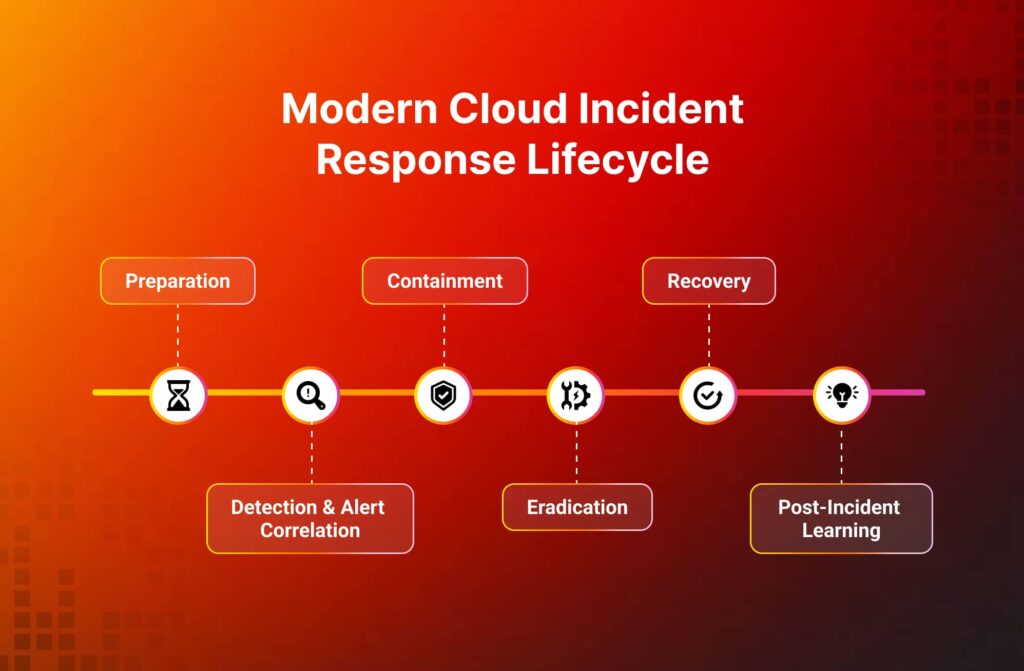
- Preparation: Assemble specialized teams, enforce strict access controls, and centralize all logs (including Data and Insights events).
- Detection & alert correlation: Use live analysis to surface real anomalies—don’t rely on raw logs alone. SIEMs and machine learning-driven analytics are crucial for discovering patterns and attacks early.
- Containment: Respond at “cloud speed” by using SOAR playbooks, which automatically quarantine compromised assets and rotate credentials as needed.
- Eradication: Remove threats decisively—block access, patch vulnerabilities, and roll back malicious changes.
- Recovery: Restore trusted states, resume operations, and communicate clearly with stakeholders.
- Post-incident learning: Feed learnings back into playbooks, rules, and detection models, ensuring each incident makes the next less likely or damaging.
Adopting this phased approach ensures your security strategy adapts to modern threats, where detection, response, and learning happen in cycles. This stands in stark contrast to the “log and hope” mentality and is foundational for strong, auditable security practices.
Modern Security Arsenal: Moving Beyond CloudTrail
Before organizations can claim robust cloud security, they must invest in additional detection and response layers. CloudTrail alone cannot fulfill operational, compliance, and business protection objectives.
What does a truly modern cloud security stack look like? It starts by integrating multi-layered detection and response tools with CloudTrail as a foundational data source—but never treating logs as the end of the story.
Essential Technologies:
- Security Information and Event Management (SIEM): Correlates, analyzes, and visualizes log data from CloudTrail and other sources for real-time alerting and rapid triage.
- Security Orchestration, Automation, and Response (SOAR): Executes automated playbooks (e.g., isolating instances, rotating credentials) in response to alerts, closing the window of exposure.
- Cloud-native Intrusion Detection System (IDS): Monitors network traffic and uncovers threats that do not trigger API activity, filling CloudTrail’s biggest blind spot.
- AWS GuardDuty, Security Hub, Incident Manager: Provide AWS-native threat detection, prioritized alerting, and orchestrated responses—surfacing high-fidelity threats and automating remediation across environments.
- Enforced IAM & S3 Access Controls: Protect log files from tampering, enforce least privilege, and ensure long-term integrity and auditability.
These elements work together to create a cohesive, defense-in-depth approach, drastically reducing attacker dwell time and minimizing the blast radius of any successful compromise.
Best Practices for Securing CloudTrail as a Log Foundation
While logs alone aren’t enough, having a secure, reliable source of forensic truth remains non-negotiable. With CloudTrail as the record-keeper, make it as resilient and actionable as possible.
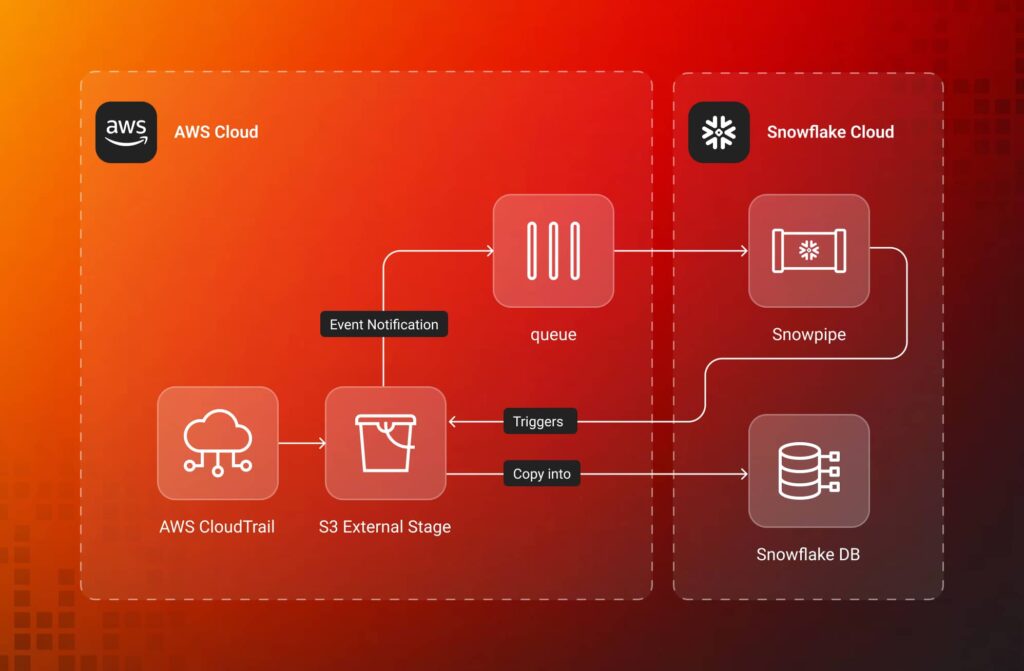
CloudTrail security is not “set and forget.” The following best practices are essential to ensuring your logs can serve as reliable evidence and inputs for automated threat detection tools. Consider these steps mandatory:
- Centralize All Logging: Configure a single, multi-region CloudTrail trail sending logs across all AWS accounts to one hardened S3 bucket.
- Enable All Log Types: Turn on Data and Insights events in every trail, ensuring the most granular forensic view possible.
- Enforce Log File Integrity Validation: Use hashing and digital signatures (e.g., SHA-256) to prevent undetected log tampering.
- Implement Strong Access Controls: Secure the S3 bucket with tight policies and limit IAM permissions on logs, restricting changes to a minimum set of trusted users.
- Integrate With CloudWatch and SIEM: Enable near real-time analysis by feeding logs into CloudWatch Logs and external SIEM or security analytics platforms.
- Block Public Access: Ensure that no CloudTrail log or S3 bucket is open to the public, preventing unauthorized data exfiltration or tampering.
By implementing and frequently auditing these practices, organizations can avoid common mistakes like fragmented logging, weak controls, and gaps in their historical forensic trail.
Case Studies and the Cost of Delay
Real-world incidents highlight the risks of relying exclusively on logs. Here’s what happens when reactive, log-centric postures go up against sophisticated attackers:
- After an over-permissioned IAM user was compromised, attackers quickly pivoted to redirect websites and expose sensitive data. CloudTrail logs eventually revealed the breach, but only after it had played out, with extensive impact and regulatory consequences.
- In another scenario, attackers exploited misconfigurations to access S3 data and disable backup systems. Again, logs recorded the evidence, but live detection was absent, extending dwell time and escalation.
- Enterprises with nothing more than CloudTrail and manual log reviews classically report organizational “paralysis by analysis,” only reconstructing the attack sequence days or weeks after customer trust is destroyed and fines are looming.
On the other hand, organizations that invested in automation, real-time alerts, and rigorous incident playbooks contained similar attacks quickly, often before data exfiltration or disruption could occur. The moral? Delay is not neutral—it’s the most expensive mistake you can make.
Your One-Stop Guide to CloudTrail Risks and Proactive Strategies
The Path Forward: Maturity and Measurable Resilience
So how do you actually know if you’ve outgrown the “CloudTrail is enough” fallacy? Industry leaders now measure IR maturity through process automation, real-time visibility, and reduction in key metrics (dwell time, mean time to respond).
Test Yourself:
- Are you alerted the moment a critical change or suspicious event occurs or are you discovering it later in a log search?
- Do you have clear, automated playbooks for isolating affected resources, rotating credentials, and restoring from backups?
- Is your security stack capable of detecting non-API threats (like network scans or privilege escalation) before attackers exploit them?
- Have you run tabletop or simulated breach exercises to validate your detection and response? What do your test response times say?
- Do you continuously review and adapt your controls after every incident, closing blind spots, updating rules, and learning in real time?
If any answers are “no,” the time to act is now. Your organization’s resilience is not set by checklists or log storage, but by actionable, orchestrated, and continuous threat management.
From Forensics to Proactivity — Change the Mindset
AWS CloudTrail is a must-have for compliance and forensics, but it is not a bulletproof vest. When attackers script, probe, pivot, and exploit at “cloud speed,” only a layered, automated, and intelligent response will suffice.
Don’t get left in the past. Build a modern, proactive cloud defense that matches the speed, sophistication, and unpredictability of today’s threats. Audit, analyze, and automate because in the cloud, being reactive is just not good enough.
With a managed cloud security partner, you get 24/7 monitoring, intelligent analysis, and automated responses—transforming CloudTrail from a lone ledger into part of a powerful defense. Is proactive cloud security worth it? When breaches can cripple operations, the answer is resounding.
Need help now?
UnderDefense’s Security Team is available 24/7. Immediate triage, containment, and forensic assistance.
1. What is AWS CloudTrail?
AWS CloudTrail is a logging service that records API calls and account activity in your AWS environment, supporting governance, compliance, and auditing through detailed event histories.
2. Why isn't CloudTrail enough for incident response?
It’s designed for retrospective analysis, not real-time detection or automation. Delays, incomplete defaults, and lack of correlation make it reactive, leaving gaps for fast-moving threats.
3. What’s in the Risk Exposure Checklist?
It includes symptoms like manual log workflows, no automated alerts, and incomplete event enabling, with associated risks such as high dwell time and log tampering.
4. How much does over-relying on CloudTrail cost?
Beyond S3 storage fees, risks include breach costs (millions in remediation/fines) and operational inefficiencies from manual processes.
5. Are there hidden risks with CloudTrail?
Yes, like tampering without validation, delays in log delivery, and blind spots for non-API threats—always enable integrity checks and layer in detection tools.
6. Is CloudTrail suitable for small and middle businesses?
Yes, as a starting point for logging, but SMBs should integrate with affordable services like GuardDuty to avoid over-reliance.
7. How quickly can threats be detected with CloudTrail alone?
Logs may take 5-15 minutes to appear, and manual analysis adds hours—proactive tools reduce this to minutes.
8. Does CloudTrail help with compliance?
Absolutely, for auditing and forensics (e.g., GDPR, PCI DSS), but pair it with reporting tools for full requirements.
9. Can I integrate CloudTrail with other tools?
Yes, easily with SIEM, SOAR, GuardDuty, or CloudWatch—custom integrations enhance real-time capabilities at higher maturity levels.
10. How does Managed Detection and Response (MDR) enhance my cloud security posture?
Managed detection and response delivers 24/7 threat monitoring, detection, and active response by experienced analysts using AWS-native tools. It helps reduce dwell time, automate response, and ensure threats are addressed before damage occurs.
11. What's the difference between MDR and traditional MSSP services?
Unlike traditional MSSPs that rely on periodic scans or generic alerts, MDR leverages continuous monitoring and cloud-native integration to detect and respond to threats in real time, adapting to cloud-scale environments.
12. How can I measure security maturity?
Time your detection and response against simulated threats. The faster and more automated your detection (vs. log pull + analysis), the more mature your defense.